
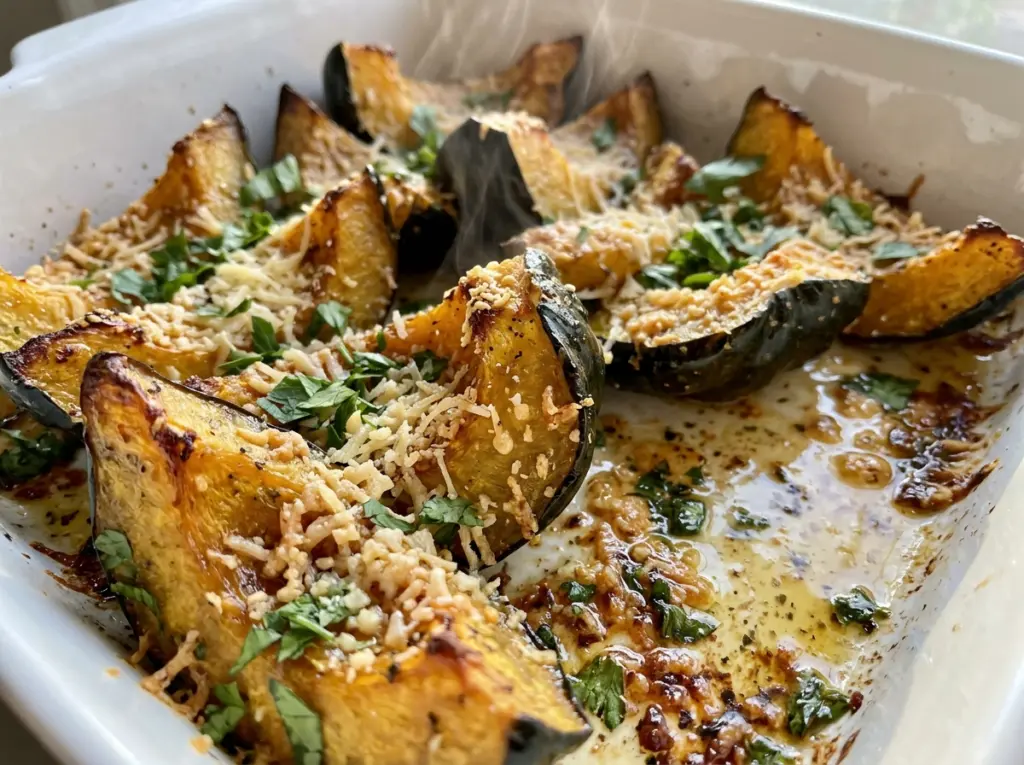
The cut sides of acorn squash turn deeply golden in the oven while the ridged edges soften, and the wedges come out sturdy enough to lift straight onto a serving platter. I like this approach because you get tender squash without mashing it or fussing over a sauce. A little olive oil and fresh thyme go on before roasting; Parmesan joins near the end, where it melts over the browned surfaces instead of spending the whole time in the oven.
Cutting the squash into even wedges gives you the best chance of having each piece finish at the same time. I leave the skin on, which helps the wedges hold their shape as they roast and makes them easy to turn. The finishing parsley adds a fresh note against the savory cheese, and the whole dish is ready to serve while the Parmesan is still warm and soft.
Kitchen Note
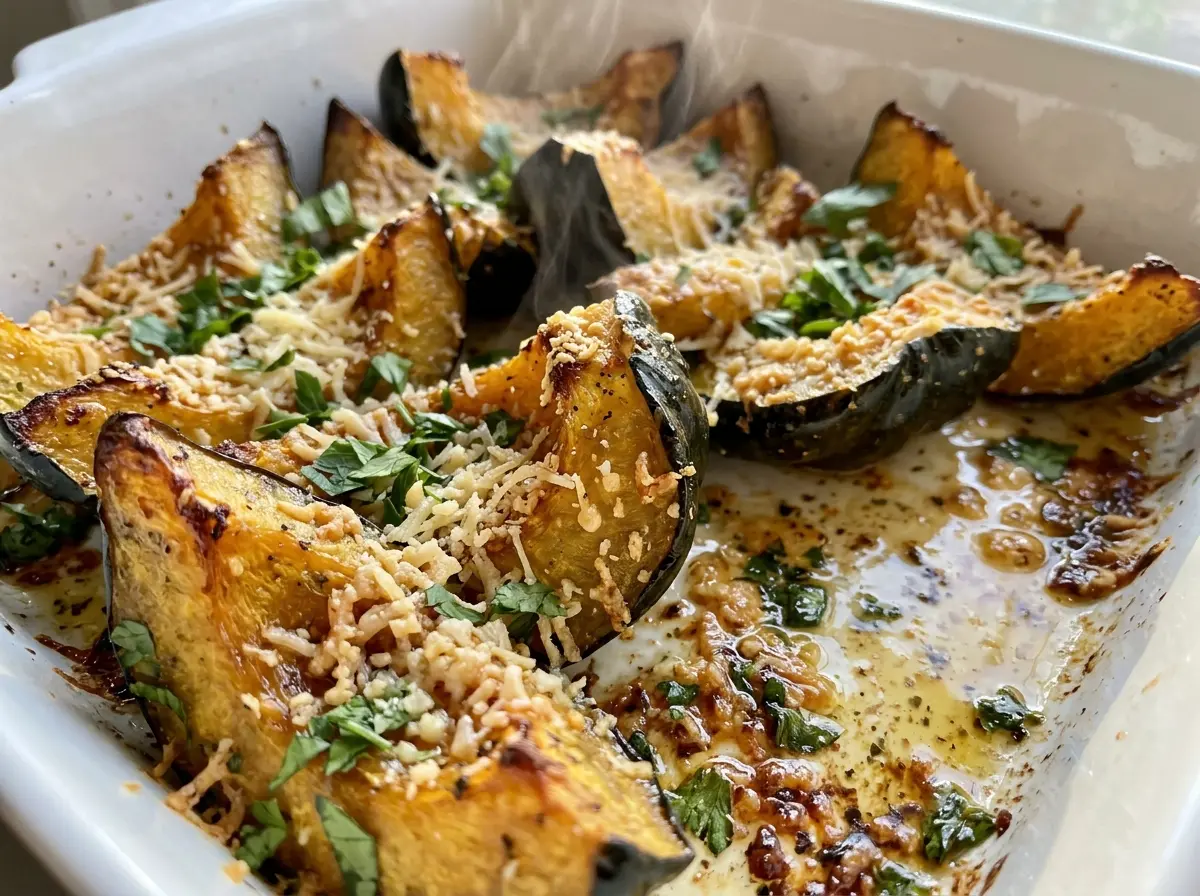
Add the Parmesan only after the squash has roasted and browned. It needs just a short turn in the oven to melt and color lightly; if it went in at the beginning, it would have much longer to darken.
Save this roasted acorn squash with Parmesan and herbs for a side dish with browned edges, fresh thyme, and a crisp finish of parsley.
Why Acorn Squash Wedges Roast Better With the Skin Left On
Peeling acorn squash before roasting is awkward because the ridges make it hard to get an even strip of skin off. For this dish, there’s no need to fight the shape. The squash is cut into wedges with the skin still attached, and the skin helps each piece stay intact while you turn it and move it to the serving dish.
Once roasted, the skin is edible, though it can remain firmer than the flesh. If you prefer not to eat it, the roasted flesh pulls away easily with a fork. Leaving the skin on also gives you a convenient handle, especially when the wedges are hot and tender. What matters most is cutting through the squash carefully and keeping the wedges close to the same thickness. That way, thin pieces aren’t drying out while thicker ones are still firm in the middle.
The squash’s natural shape means the wedges won’t all look identical, and that’s fine. Look for a browned edge and tender flesh rather than expecting every piece to color in exactly the same way. A parchment-lined pan keeps cleanup simple and gives you a surface that’s easy to work with when the melted Parmesan reaches the pan.
How Thyme, Parmesan, and Parsley Build the Flavor

- Acorn squash — Choose squash that feels heavy for its size and has a firm, unbroken rind. Medium squash make manageable wedges; avoid pieces with soft spots, which can roast unevenly.
- Fresh thyme — Chopped thyme leaves bring an earthy, woodsy note that holds up well in the hot oven. If fresh thyme isn’t available, dried thyme works; use less because its flavor is more concentrated, and scatter it evenly through the oil before tossing.
- Parmesan — Finely grated cheese coats the curved wedges more evenly than thick shreds and melts quickly in the finishing minutes. A wedge of Parmesan grated at home gives the clearest savory flavor, but packaged finely grated Parmesan is convenient and works here too.
- Fresh parsley — Parsley is a fresh, mild contrast to the browned squash and salty cheese. Flat-leaf or curly parsley both work; chop it shortly before serving so it stays bright rather than wilting on the cutting board.
- Olive oil — The oil carries the salt, pepper, and thyme across the squash and helps the surfaces brown. A basic everyday olive oil is plenty; there’s no need to use an expensive finishing oil for roasting.
Roasting the Wedges Until Tender and Browned
Cutting the squash into even wedges
Heat the oven to 425°F and line a large rimmed baking sheet with parchment paper. Halve each squash lengthwise, scoop out the seeds, and cut the halves into wedges about 1 inch thick. Keep your fingers clear as you work through the firm rind, and aim for similar-sized pieces so they cook at a similar pace. The wedges should be substantial enough to turn without breaking apart.
Coating each piece with thyme and oil
Toss the wedges with olive oil, kosher salt, black pepper, and chopped fresh thyme until the seasoning is distributed over the pieces. A few leaves may cling more heavily to one wedge than another, so give the bowl a second toss if you see bare patches. Arrange the squash in a single layer on the prepared pan. Crowding makes it harder for the hot oven to brown the surfaces, so spread the pieces out rather than piling them.
Turning once for browned edges
Roast for 20 minutes, then turn the wedges and return the pan to the oven for 8 to 12 minutes more. The browned sides should look golden at the edges, and a fork should meet little resistance in the thickest part of the flesh. If the squash still feels firm, give it a little more time before adding the cheese. Use a spatula to turn the pieces gently; the flesh softens as it cooks.
Melting the Parmesan and finishing with parsley
Sprinkle the finely grated Parmesan over the roasted wedges and bake for 5 to 8 minutes, until the cheese has melted and turned lightly golden. Keep an eye on it near the end, since grated cheese can go from melted to too dark quickly. Transfer the squash to a serving dish and scatter the chopped parsley over the top. Serve while the cheese is still warm.
Simple Ways to Change the Herb and Cheese Finish
Make it dairy-free with vegan Parmesan
Replace the Parmesan with a finely grated vegan Parmesan-style topping. Add it during the final few minutes and watch for it to soften and take on a little color; plant-based versions vary, and some won’t melt as smoothly as dairy Parmesan. The result keeps the savory finish without the dairy.
Use rosemary for a deeper herbal note
Swap the fresh thyme for finely chopped fresh rosemary in the oil toss. Rosemary is more assertive and piney, so chop it small to spread its flavor throughout the wedges. The squash will taste more woodsy, with the Parmesan still bringing a salty, savory finish.
Add a little warmth with smoked paprika
Toss a small pinch of smoked paprika with the oil, salt, pepper, and thyme. It gives the squash a gentle smoky note and deepens the color, without changing the roasting method. Keep the amount modest so it supports the thyme instead of taking over.
Storage and Reheating
- Refrigerator: Store leftovers in an airtight container for up to 4 days. The squash softens as it sits, and the Parmesan won’t stay crisp.
- Freezer: Freeze the cooled wedges in a single layer, then transfer them to a freezer-safe container for up to 2 months. The flesh will be softer after thawing, so the texture won’t be quite as firm as freshly roasted squash.
- Reheating: Warm the wedges on a baking sheet in a 375°F oven until heated through. Avoid covering them, which traps steam and makes the squash softer.
Questions That Come Up When Roasting Acorn Squash
Roasted Acorn Squash with Parmesan and Herbs
Ingredients
Equipment
Method
- Heat the oven to 425°F.
- Line a large rimmed baking sheet with parchment paper.
- Halve the squash lengthwise and scoop out the seeds.
- Cut each half into 1-inch-thick wedges.
- Toss the squash wedges with the olive oil, kosher salt, black pepper, and thyme.
- Arrange the wedges in a single layer on the prepared baking sheet.
- Roast for 20 minutes.
- Turn the wedges.
- Roast for 8 to 12 minutes more, until tender and browned at the edges.
- Sprinkle the Parmesan over the squash.
- Roast for 5 to 8 minutes, until the cheese is melted and lightly golden.
- Transfer the squash to a serving dish.
- Sprinkle with the parsley and serve.