
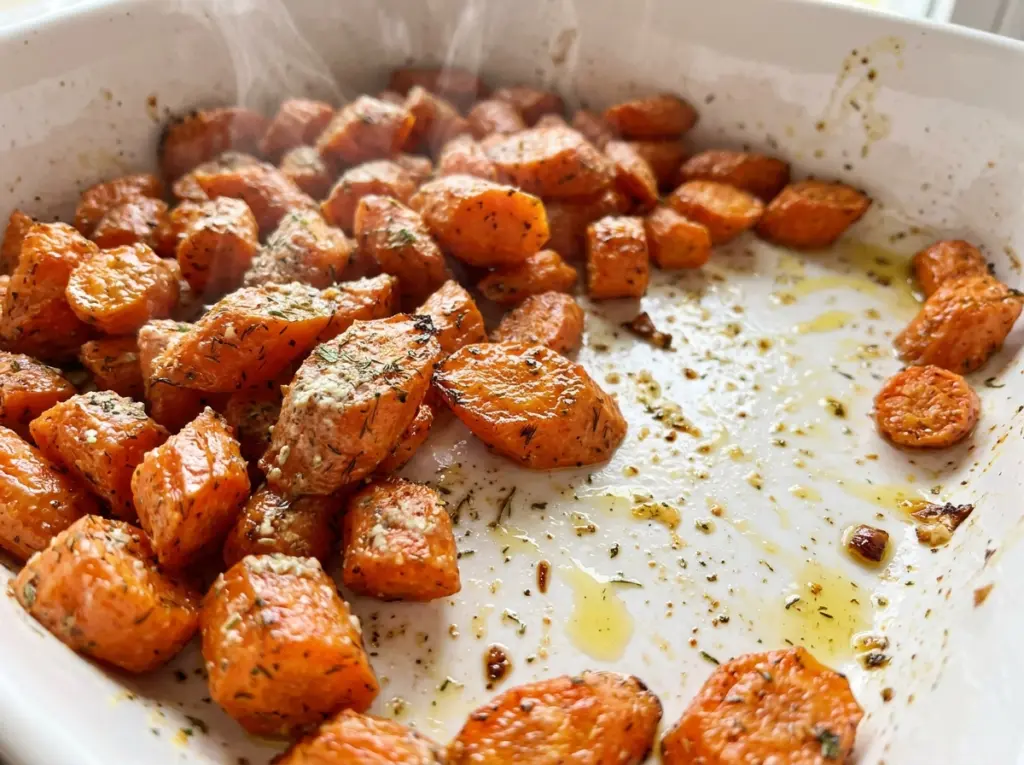
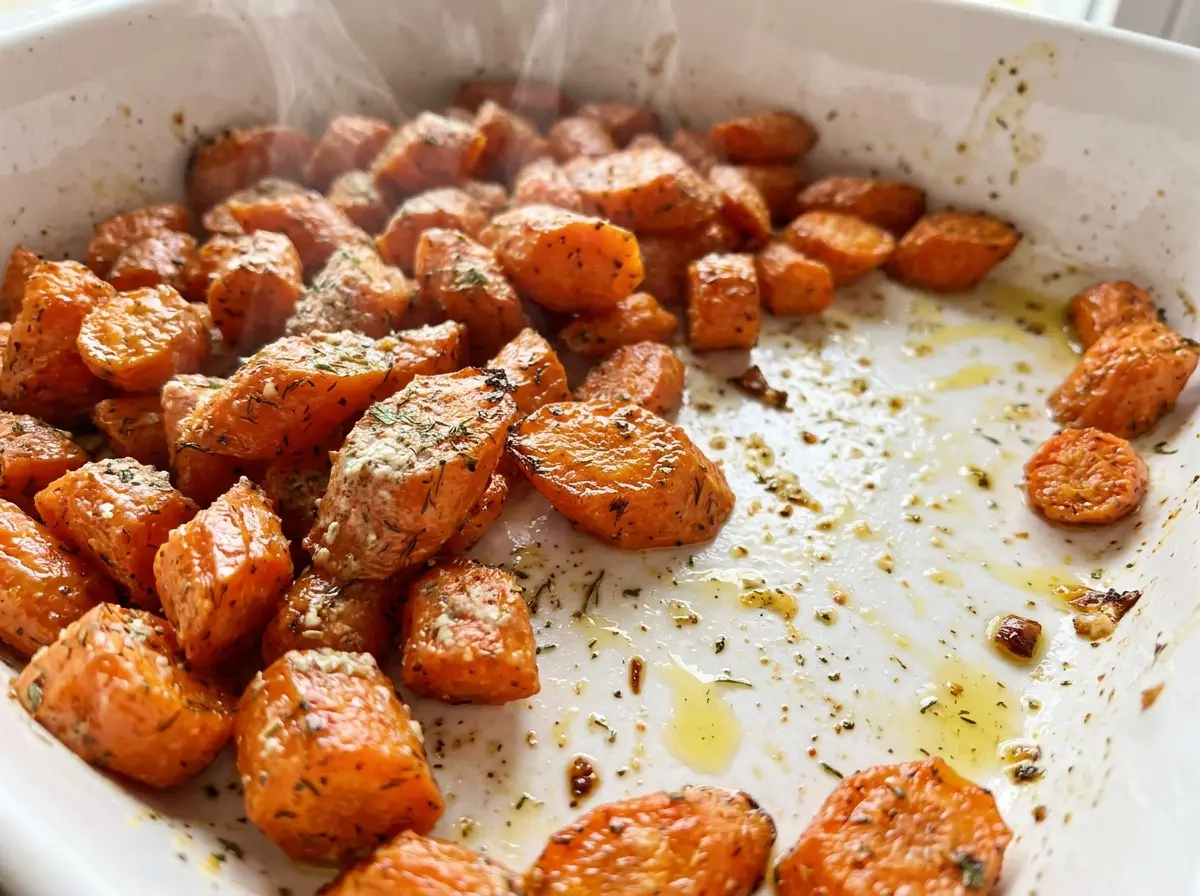
The edges are the first thing I watch when a tray of carrots comes out of the oven: they should be browned in spots, while the thicker centers stay tender. Ranch seasoning makes that balance especially satisfying, because its herbs and tangy notes cling to the carrots instead of disappearing into the pan. These ranch roasted carrots turn a familiar vegetable into a side dish with plenty of savory flavor and very little hands-on work.
I toss the carrots with olive oil and the seasoning in a large bowl before they go onto the baking sheet. That gives the dry mix a chance to coat the sticks evenly, so you get ranch flavor throughout rather than a few salty patches. Cut the carrots to the same thickness and give them room on the pan; each piece can roast against the hot surface instead of sitting in a pile. The finished carrots are sweet at the center, savory around the edges, and easy to bring to the table while they’re still warm.
Kitchen Note
The seasoning should look like a light, even coating, not a thick crust. If you see dry clumps in the bowl, keep tossing until the olive oil has picked them up and spread them across the carrots.
Save these ranch roasted carrots for a savory, browned-edge side that starts with just carrots, olive oil, and ranch seasoning.
Why a Crowded Carrot Pan Turns Soft Instead of Brown
Carrots release moisture as they roast. When the pieces are piled on top of one another, that moisture gets trapped between them, and the pan starts acting more like a steamer than a roasting surface. The carrots can turn tender, but their edges stay pale and soft instead of picking up those browned spots that make this side dish taste roasted.
Use the full 18×13-inch rimmed baking sheet and spread the sticks in one layer, with a little breathing room around them. The oil helps the surface roast, but it can’t make up for a crowded pan. If you have carrots stacked across the middle or tucked tightly into the corners, rearrange them before the tray goes in. That small pause gives the hot air and pan contact a chance to do their work. The aim isn’t to dry the carrots out; it’s to let their natural sweetness concentrate while the edges color. You want browned spots, not a uniformly dark, shriveled surface.
The tray also gives you a useful visual check: carrots in a single layer are easy to turn once and inspect together. If a few sticks are especially thick, they’ll take longer to soften than the thinner ones, so even cutting matters as much as spacing. A little attention before roasting saves you from trying to fix uneven cooking at the end.
What the Carrots, Olive Oil, and Ranch Seasoning Each Bring
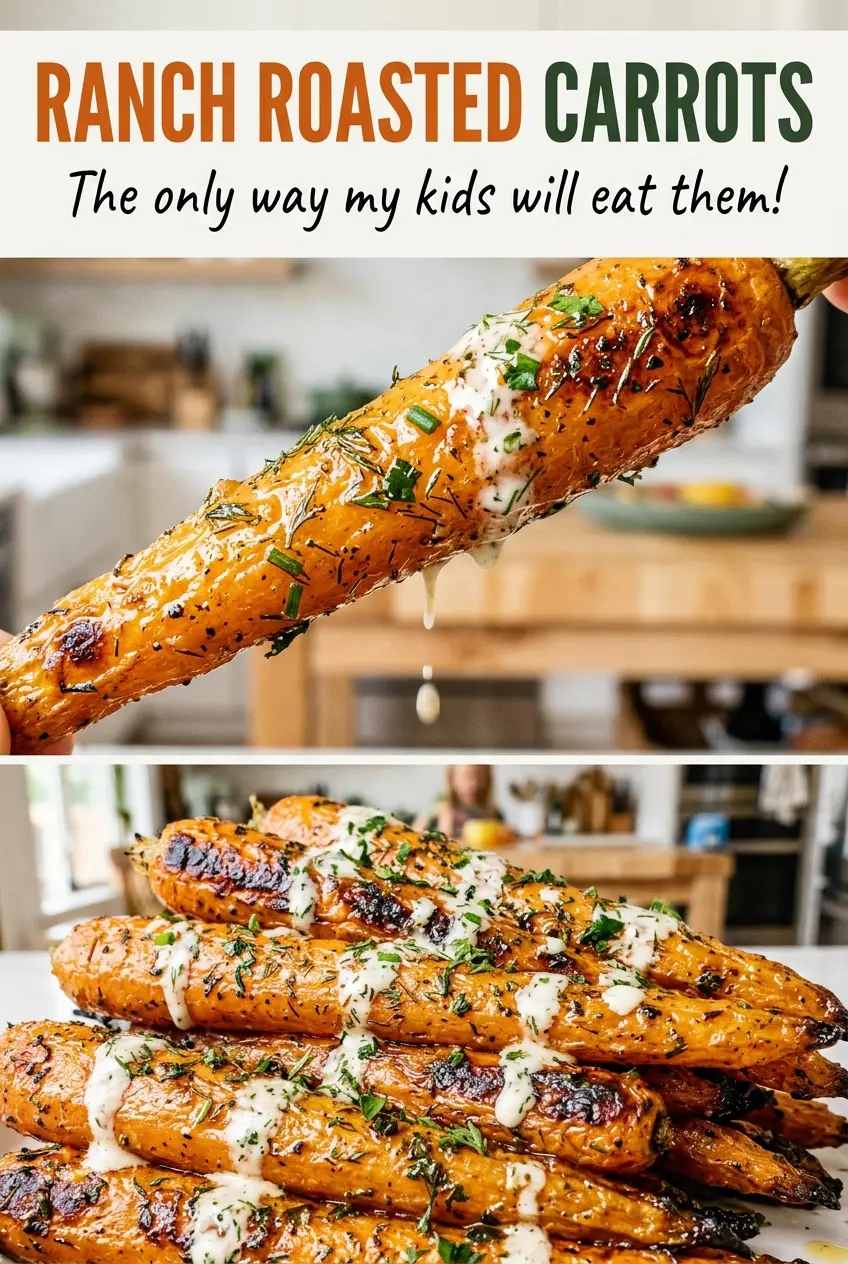
- Carrots — Choose firm carrots without limp tips or soft spots; freshness matters more here than getting the largest or fanciest ones. Peeling gives the sticks a clean surface for the oil and seasoning to cling to. Keep the cut consistent at 1/2 inch thick so the centers have time to turn tender as the edges brown. Rainbow carrots work too, with a more varied color and a slightly different sweetness from one color to another.
- Olive oil — The oil coats the carrots, helps the dry seasoning adhere, and carries heat across their surfaces. A basic olive oil is perfectly useful here; a delicate, expensive bottle won’t make a noticeable difference after roasting. A neutral cooking oil can stand in at the same amount if you prefer less olive-oil flavor, though the finished carrots will lose that faint fruity note.
- Ranch seasoning mix — The packet brings the dried herbs, tang, and salt in one step, so no separate spice blend is needed. Seasoning mixes vary in saltiness and herb balance by brand, which is why I don’t add extra salt before tasting the finished carrots. Use a fresh, dry packet; a damp or clumpy mix is harder to distribute evenly and can leave some sticks much more seasoned than others.
How to Get the Edges Brown Without Drying the Centers
Cut the Carrots into Even Sticks
Peel the carrots and cut them into sticks that are 1/2 inch thick. Try to keep their thickness consistent from end to end, since thin pieces can soften sooner than thick ones. If a carrot has a narrow tip, cut it into a shorter stick rather than leaving one end much thinner than the other. Even pieces give you a tray that cooks at a more reliable pace.
Coat Everything in the Bowl
Put the carrots in a large bowl with the olive oil and ranch seasoning mix. Toss until the sticks are evenly coated and you don’t see dry patches of seasoning sitting at the bottom. Using a bowl gives you room to lift and turn the carrots without spilling the oil or leaving seasoning behind. If the coating looks patchy, keep tossing before transferring the carrots to the pan.
Roast and Turn Once
Heat the oven to 425°F, then spread the coated carrots in a single layer on an 18×13-inch rimmed baking sheet. Roast for 25 to 30 minutes, turning the carrots once halfway through. Look for tender sticks with browned edges; a fork should enter the thicker centers without the carrots collapsing. Don’t wait for every surface to turn dark, because the edges should be browned while the centers remain pleasantly tender.
Two Smart Changes for Ranch Roasted Carrots
Use a Gluten-Free Ranch Seasoning Packet
For a gluten-free version, replace the regular ranch mix with a gluten-free ranch seasoning packet that is also 1 ounce. Keep the carrots and olive oil the same, then toss and roast the same way. The flavor stays ranch-forward, though a different blend may lean more herby or salty, so choose a mix you already like.
Make a Rainbow Carrot Tray
Replace some or all of the orange carrots with purple, yellow, or white carrots, keeping the total weight and the 1/2-inch stick cut the same. They take the same ranch coating, and the finished tray has a mix of colors with small differences in sweetness. Keep an eye on the thinner pieces as they roast, since mixed sizes—not the color—are what can make the tray cook unevenly.
Storage and Reheating
- Refrigerator: Store leftovers in a covered container and use them within 3 to 4 days. The carrots soften as they sit, so the browned edges won’t stay crisp.
- Freezer: Freeze in an airtight container for up to 2 months. They remain safe to eat, but thawed carrots will be softer, so freezing is best when texture matters less than having a ready-to-use vegetable.
- Reheating: Spread the carrots in a single layer in a hot oven until warmed through. Avoid covering them, which traps steam and makes the edges softer; a microwave works for convenience but won’t bring back the roasted surface.
Questions That Come Up Before the Tray Goes In
Ranch Roasted Carrots
Ingredients
Equipment
Method
- Heat the oven to 425°F.
- Toss the carrots with the olive oil and ranch seasoning mix in a large bowl until evenly coated.
- Spread the carrots in a single layer on an 18x13-inch rimmed baking sheet.
- Roast for 25 to 30 minutes, turning once halfway through, until tender and browned at the edges.