
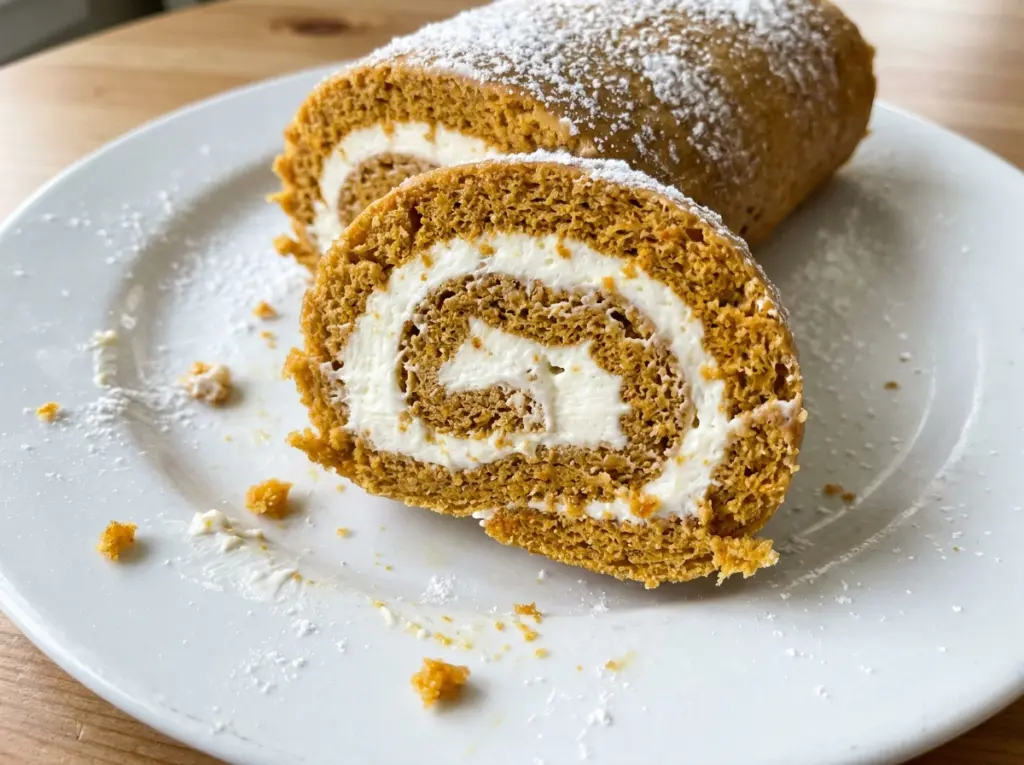
The cake comes out of the oven soft and flexible, but it won’t stay that way for long. With a pumpkin roll, the short trip from pan to towel matters: roll it while it’s hot, and it cools into a shape that’s much easier to fill. This pumpkin roll cake with cream cheese filling has a tender pumpkin sponge, a cinnamon-and-clove aroma, and a smooth cream cheese spiral in every slice.
I beat the eggs and sugar until they’re thick and pale before folding in the dry ingredients. That gives the sponge a light structure without making it tough. Canned pumpkin puree keeps the batter consistent, while a brief bake leaves the cake springy enough to roll. Once the filling is tucked inside and the roll has chilled, each slice shows a neat swirl against the warm-colored cake.
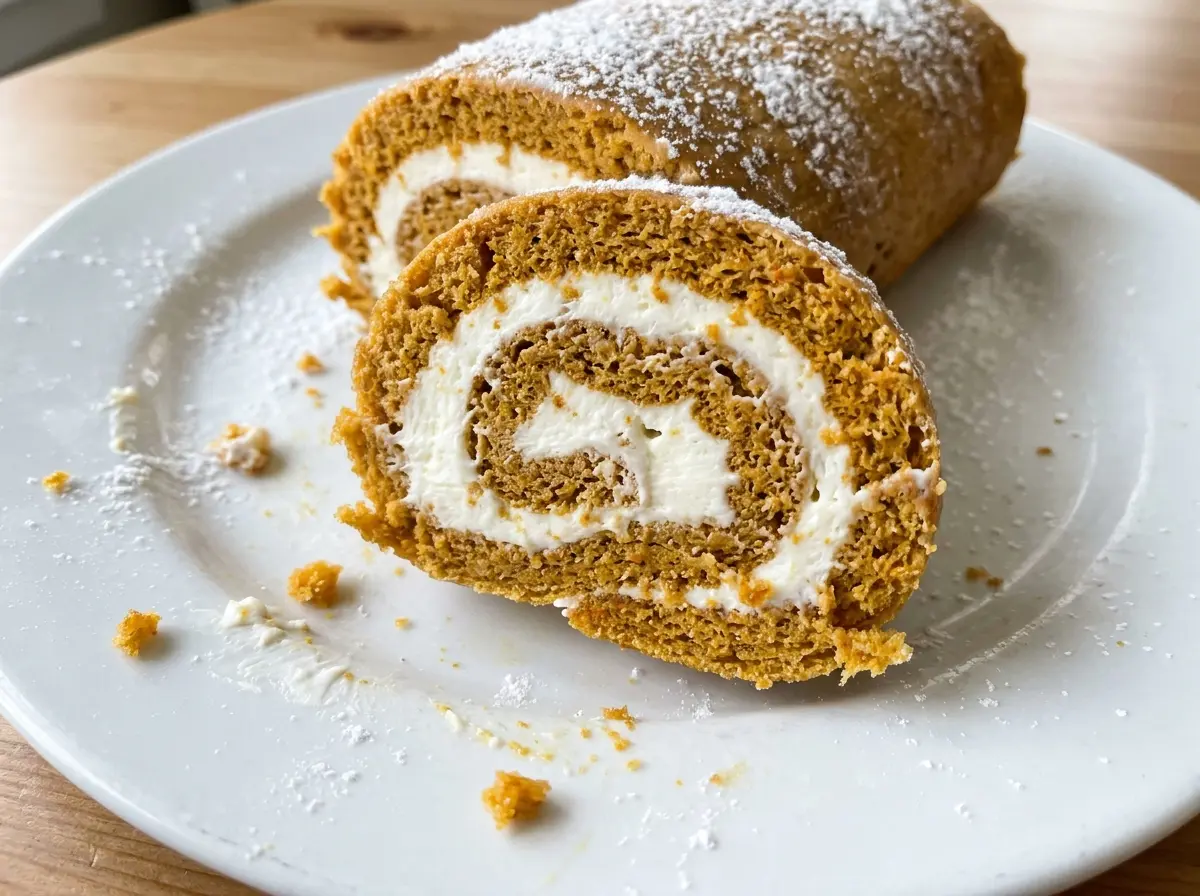
Kitchen Note
Use a clean, lint-free towel and dust it evenly with confectioners’ sugar before the cake comes out. Any bare patches are where the warm sponge is most likely to cling when you unroll it.
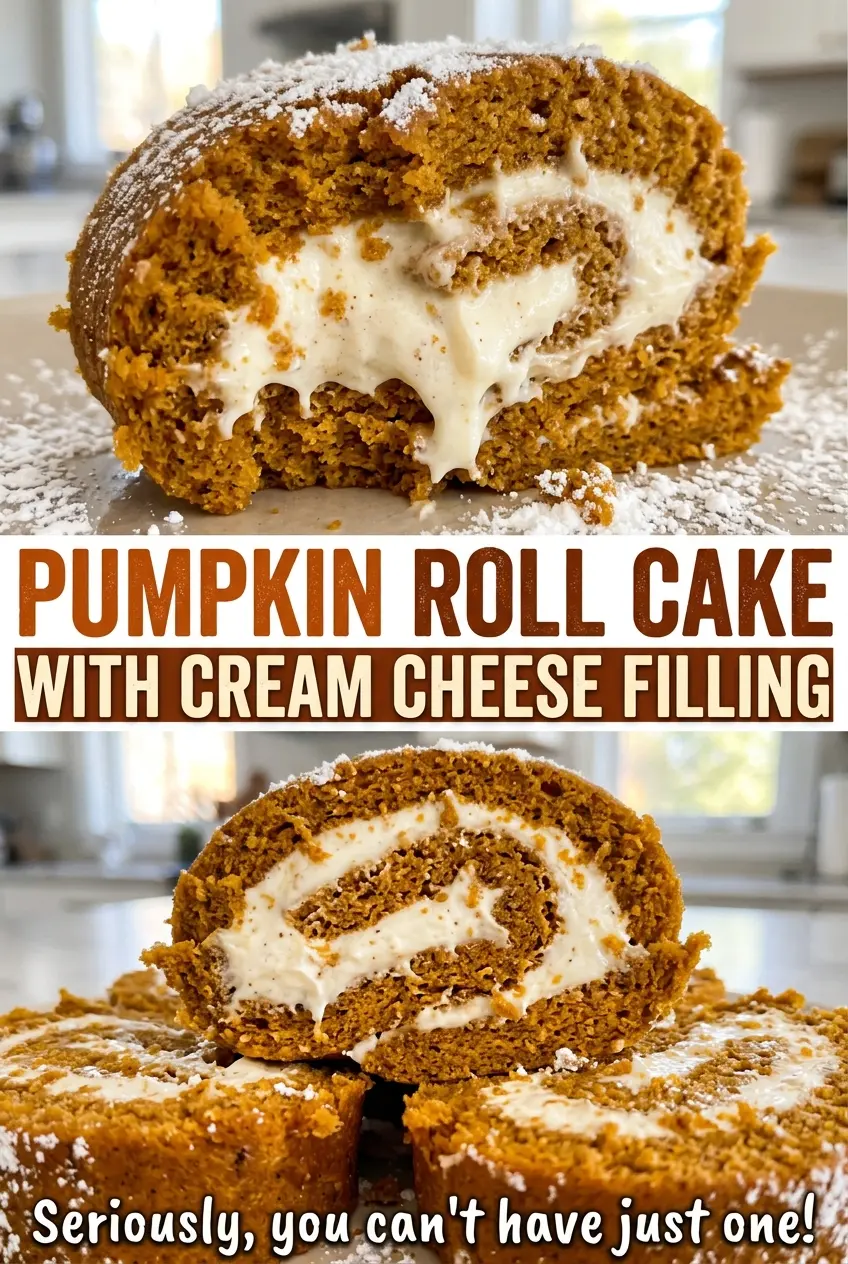
Save this pumpkin roll cake for its tender spiced sponge and creamy spiral—both the roll and filling come together with familiar pantry ingredients.
Why This Pumpkin Cake Gets Rolled Before It Cools
A warm sponge is flexible; a cooled sponge is set. Rolling the cake as soon as it leaves the pan gives it a chance to cool in a curve instead of being asked to bend for the first time after it has firmed up. The sugared towel supports the cake as you turn it out and roll it, so you’re not trying to lift the thin sponge by its edges.
That first roll is a shaping step, not the final assembly. Once the cake has cooled completely in the towel, you can open it gently, spread the filling over the surface, then roll it back up without the towel. The cake already has a curve, which makes the second roll less stressful and helps keep the filling from shifting as you work.
Cracks are most likely when the cake cools flat and then gets bent sharply, or when it’s overbaked and loses its flexibility. Keep an eye on the short bake and use the spring-back cue rather than waiting for the edges to darken. A small surface crack doesn’t spoil the flavor, but a flexible sponge makes a much tidier spiral.
What the Pumpkin, Eggs, and Cream Cheese Each Bring
- Canned pumpkin puree — Choose plain puree, not pumpkin pie filling, which is already sweetened and spiced. A store-brand can works well; the useful thing is a consistent puree rather than a premium label. This batter depends on the balance of moisture and dry ingredients, so I stick with canned puree instead of making an unmeasured swap.
- Eggs and granulated sugar — Beating them until thick and pale builds air into the batter and gives the thin cake enough lift to stay tender. The sugar also helps create the sponge’s structure. Don’t cut the beating short or expect the flour mixture to make up for it.
- All-purpose flour and leaveners — The flour gives the cake enough body to hold the filling, while baking powder and baking soda help it rise. Keep the separate leaveners in place; self-rising flour isn’t a direct replacement because it changes the leavening balance.
- Cinnamon and cloves — Cinnamon brings the familiar warm spice, while cloves add a sharper, deeper note. Ground spices from an ordinary grocery-store jar are fine; freshness matters more than buying an expensive brand.
- Cream cheese and butter — Let both soften before mixing so the filling turns smooth instead of lumpy. Standard grocery-store cream cheese and butter work; there’s no need for specialty products. The vanilla rounds out the tangy filling without covering up the pumpkin cake.
The Four Stages That Keep the Roll Intact
Build a Light, Even Batter
Heat the oven to 375°F and grease a 10×15-inch jelly-roll pan, then line the bottom with parchment and grease the parchment. Whisk the flour, baking powder, baking soda, cinnamon, cloves, and salt in a medium bowl. In a large bowl, beat the eggs and granulated sugar with a mixer on medium-high for 3 to 4 minutes, until thick and pale. Beat in the pumpkin, then fold in the flour mixture just until no dry streaks remain; mixing past that point can make the sponge less tender.
Bake Until the Sponge Springs Back
Spread the batter evenly in the prepared pan so the cake bakes to a consistent thickness. Bake for 13 to 15 minutes, checking for a surface that springs back when you touch it lightly. If the center still looks wet or stays indented, give it the additional time it needs within that range. Avoid waiting for deep browning, which can leave the thin cake dry and more likely to crack.
Roll the Cake While It’s Hot
While the cake bakes, dust a clean towel evenly with confectioners’ sugar. As soon as the cake comes out, invert it onto the towel and carefully peel away the parchment. Starting at a short end, roll the cake and towel together into a log; work steadily while the sponge is still warm and flexible. Set it seam-side down on a wire rack and leave it to cool completely, about 1 hour.
Fill, Reroll, and Chill Before Slicing
Beat the softened cream cheese, butter, and vanilla until smooth, then beat in the remaining confectioners’ sugar until creamy. Gently unroll the cooled cake and spread the filling evenly, leaving a 1/2-inch border around the edges. Reroll the cake without the towel, wrap it tightly, and refrigerate for at least 1 hour before slicing. If filling reaches the edges, it’s more likely to squeeze out as you make the final roll.
Two Ways to Adapt the Pumpkin Roll
Make the spice gentler by leaving out the cloves
Leave out the ground cloves and keep the cinnamon. The pumpkin flavor comes through more plainly, with a softer spice note; the batter method and bake time stay the same.
Make a dairy-free, unfilled pumpkin sponge roll
The cake itself contains no dairy. Leave out the cream cheese, butter, vanilla, and confectioners’ sugar reserved for the filling, then roll and cool the sponge as usual. You’ll have a dairy-free cake roll without the creamy center, rather than a filled cream cheese roll.
Storage and Reheating
- Refrigerator: Keep the wrapped roll refrigerated for 3 to 4 days. The cake may become a little firmer as it chills.
- Freezer: Wrap the whole roll or individual slices tightly, then freeze for up to 1 month for best texture. Thaw in the refrigerator before serving.
- Reheating: Serve chilled; reheating isn’t a good fit for cream cheese filling because it softens and can slide out of the cake.
Questions That Come Up When Making a Pumpkin Roll
Pumpkin Roll Cake with Cream Cheese Filling
Ingredients
Equipment
Method
- Heat the oven to 375°F.
- Grease a 10x15-inch jelly-roll pan, line the bottom with parchment paper, and grease the parchment.
- Whisk the flour, baking powder, baking soda, cinnamon, cloves, and salt in a medium bowl.
- Beat the eggs and granulated sugar in a large bowl with a mixer on medium-high speed for 3 to 4 minutes, until thick and pale.
- Beat in the pumpkin.
- Fold in the flour mixture just until no dry streaks remain.
- Spread the batter evenly in the prepared pan.
- Bake for 13 to 15 minutes, until the cake springs back when lightly touched.
- While the cake bakes, lay a clean, lint-free kitchen towel on the counter and dust it evenly with 1/4 cup confectioners' sugar.
- Immediately invert the hot cake onto the towel.
- Carefully peel off the parchment.
- Starting at a short end, roll the cake and towel together into a log.
- Set the rolled cake seam-side down on a wire rack and cool completely, about 1 hour.
- Beat the cream cheese, butter, and vanilla in a medium bowl until smooth.
- Beat in the remaining 1 cup confectioners' sugar until creamy.
- Gently unroll the cooled cake.
- Spread the filling evenly over the cake, leaving a 1/2-inch border around the edges.
- Reroll the cake without the towel.
- Wrap it tightly and refrigerate for at least 1 hour before slicing.