
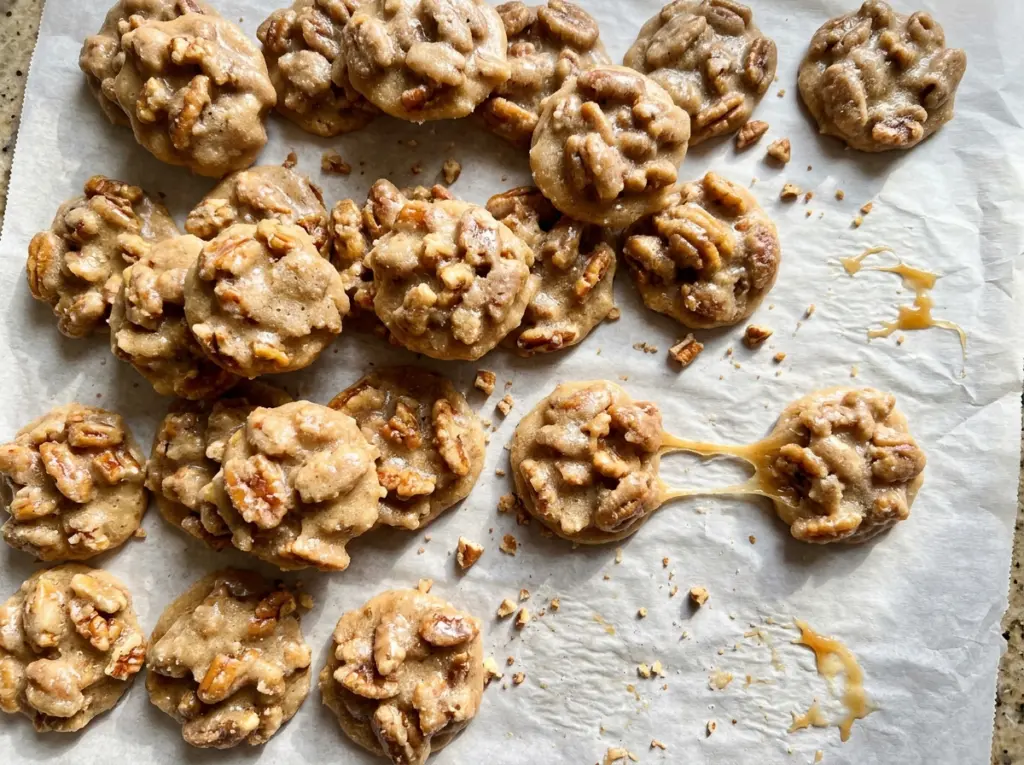
The syrup can look finished before it’s ready to become candy. If it hasn’t reached the right temperature, the pralines may stay soft instead of setting into those sturdy, pecan-studded rounds. I keep a candy thermometer close and watch the reading rather than guessing from the bubbles.
Once the pecans and vanilla go in, the mixture changes quickly. Beating it brings on the shift from glossy syrup to thick, opaque candy, and that’s when I move fast with the spoon. These pecan pralines have a buttery sweetness and a firm, tender bite, with pecans in every mouthful.
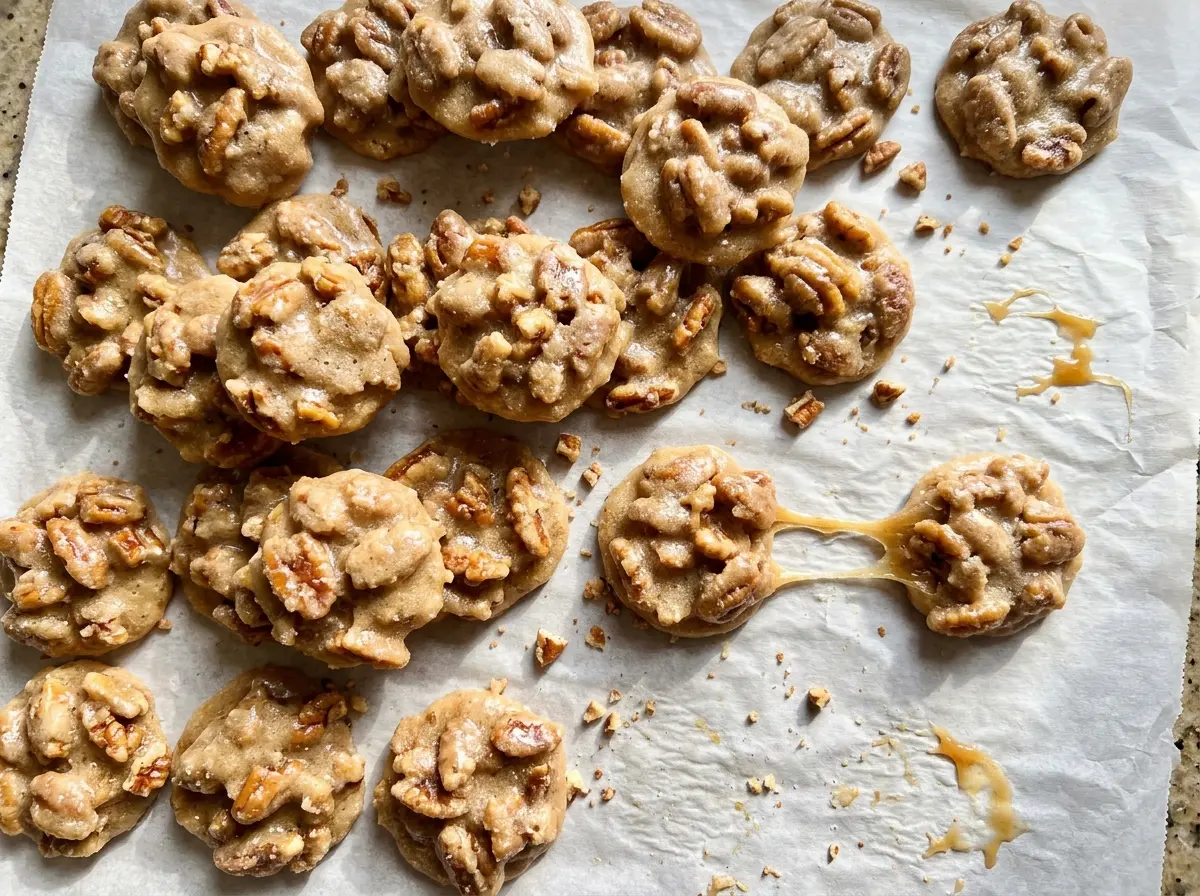
Kitchen Note
Keep the candy thermometer in the syrup, not resting against the saucepan’s bottom. That small placement detail gives you a reading of the candy itself, which is what matters here.
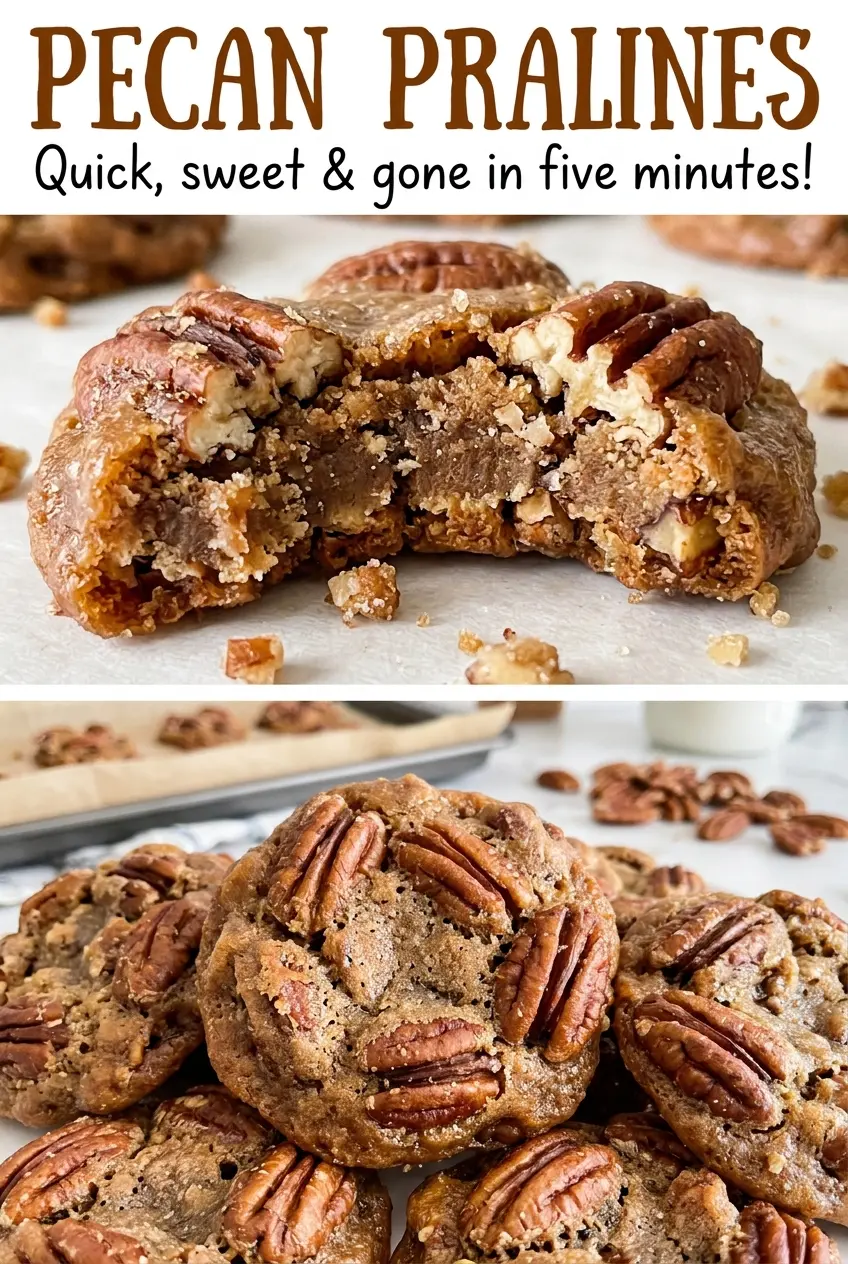
Save these pecan pralines for a homemade candy tin—each one has a buttery base and a generous pecan bite.
Why the Glossy-to-Matte Shift Is the Praline’s Narrow Window
Before the pecans go in, the mixture is a smooth syrup. After it reaches temperature and comes off the heat, beating starts a different stage: the sugar begins to crystallize, and the mixture thickens. The change from shiny to opaque and matte is the cue that the pralines are ready to portion, not a sign that the batch has gone wrong.
There’s a short window between that transformation and a mixture that’s too firm to scoop neatly. Beat until the gloss disappears, then start dropping heaping spoonfuls onto the parchment without delay. The candy will finish firming as it cools. If you wait until it’s completely stiff in the saucepan, the pralines won’t spread into tidy rounds.
This is also why a thermometer helps more than watching the bubbles alone. The syrup needs to reach 236°F before it comes off the heat; the later change in texture is a separate cue, and both stages matter for a batch that sets properly.
Why These Two Sugars and Evaporated Milk Belong in Pecan Pralines
- Granulated and light brown sugars — Together, they make the candy’s sweet base: granulated sugar brings a clean sweetness, while packed light brown sugar adds a mellow molasses note. Keep both in the mixture; changing the balance can affect how the candy cooks and sets.
- Evaporated milk — This gives the syrup its creamy character without adding the extra sugar found in sweetened condensed milk. Those two cans aren’t interchangeable here, so stick with evaporated milk for the intended sweetness and texture.
- Unsalted butter — It adds richness while letting the measured kosher salt control the seasoning. Salted butter varies by brand and can make the finished candy saltier than intended, so unsalted is the reliable choice.
- Pecan halves or pieces — Both work in this batch. Halves give you larger, distinct nut bites; pieces spread through each praline more evenly. Fresh pecans matter because stale or rancid nuts are easy to taste in a candy with so few ingredients.
- Vanilla extract — It rounds out the brown-sugar flavor when stirred in after the pan comes off the heat. Use vanilla extract rather than a flavored syrup, which would add liquid and sweetness.
The listed ingredients contain no wheat or flour, so these pralines need no gluten-containing ingredient swap. They do contain pecans, which are tree nuts and are central to the candy.
Getting the Syrup to 236°F Before the Pralines Set
Prepare the Landing Spot
Line a large baking sheet with parchment and set it near the stove before heating the syrup. Once the pecans and vanilla are mixed in, you’ll want the sheet within easy reach. Leave room between spoonfuls so the pralines can cool without running into one another.
Dissolve the Sugars in the Butter and Milk
Combine the granulated sugar, packed light brown sugar, evaporated milk, butter, and kosher salt in a 3-quart heavy-bottomed saucepan over medium heat. Stir until the sugars dissolve and the mixture comes to a boil. Keep the stirring gentle and steady as it heats; the goal is a smooth, controlled boil rather than splashing syrup up the sides.
Cook the Syrup to Temperature
Attach the candy thermometer and cook, stirring gently and steadily, until it reaches 236°F. Watch the thermometer as the syrup heats instead of relying on the size or speed of the bubbles. Don’t pull the pan early: the temperature is the doneness cue for this stage, before the texture changes during beating.
Beat, Portion, and Let Them Firm
Take the saucepan off the heat, stir in the pecans and vanilla, then beat the mixture with a wooden spoon. It usually takes about 1 to 3 minutes to thicken, turn opaque, and lose its glossy look. Drop heaping tablespoons onto the parchment, spacing them apart, and work promptly as the candy thickens. Let the pralines cool and firm completely, about 30 minutes.
Choose Pecan Halves or Pieces for a Different Bite
Use pecan pieces for an even crunch
Choose pecan pieces when you want the nuts spread more evenly through each spoonful. The pralines will have a more consistent crunch from bite to bite, without the larger pockets of pecan you get from halves.
Use pecan halves for bigger nut bites
Pecan halves make the finished pralines feel more rustic, with larger pieces of nut in each candy. They’re a good fit when you like a pronounced pecan bite; the trade-off is that the nuts won’t be as evenly distributed as pieces.
Storage and Reheating
- Refrigerator: Refrigeration isn’t needed and can make the candy tacky from condensation. Store the pralines in an airtight container in a cool, dry place for up to 1 week.
- Freezer: Freeze in an airtight freezer-safe container, with parchment between layers, for up to 2 months. Thaw them in the closed container so condensation forms on the container rather than the candy.
- Reheating: These candies don’t need reheating. If frozen, let them come to room temperature while still covered; don’t microwave them, since heat can soften or melt the sugar.
Questions I Get Asked About Pecan Pralines
Pecan Pralines
Ingredients
Equipment
Method
- Line a large baking sheet with parchment paper and set it near the stove.
- Combine the granulated sugar, packed light brown sugar, evaporated milk, unsalted butter, and kosher salt in a 3-quart heavy-bottomed saucepan over medium heat.
- Stir until the sugars dissolve and the mixture comes to a boil.
- Attach a candy thermometer to the pan, making sure it does not touch the bottom.
- Cook, stirring gently and steadily, until the mixture reaches 236°F.
- Remove the pan from the heat and stir in the pecans and vanilla extract.
- Beat the mixture with a wooden spoon until it thickens, turns opaque, and loses its glossy look, about 1 to 3 minutes.
- Quickly drop heaping tablespoons of the mixture onto the prepared baking sheet, spacing them apart.
- Let the pralines cool and firm completely, about 30 minutes.