
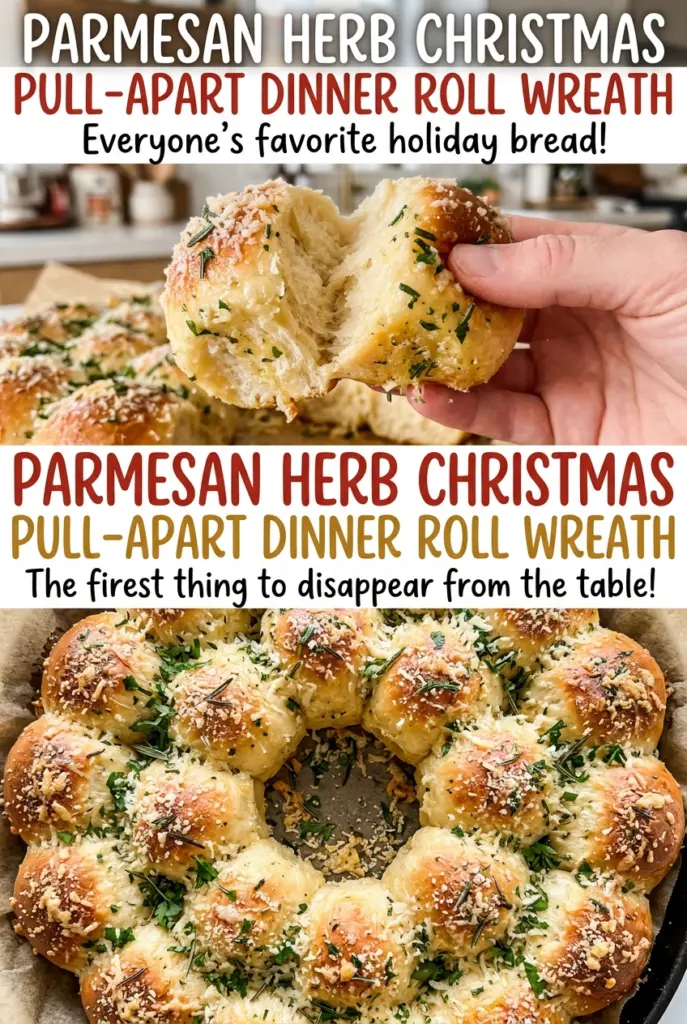
The rolls puff into a wreath as they bake, with their sides touching and the tops turning golden while the Parmesan and herbs perfume the kitchen. I like this shape for a holiday table because everyone can pull off a roll without cutting through the center of the Parmesan Herb Christmas Pull-Apart Dinner Roll Wreath.
The dough is enriched with milk, egg, and softened butter, so it bakes up tender rather than crusty. Equal portions matter more than fancy shaping: when the 16 dough balls are close in size and arranged in one ring, they rise and bake at a similar pace. The finished wreath is soft in the middle, lightly browned on top, and easy to share while it’s still warm.
Kitchen Note
Wait for the yeast mixture to look visibly foamy before adding the egg and butter. If it still looks flat after the rest, pause there rather than mixing in the flour; that foam is your first sign the yeast is active.
Save this Parmesan herb pull-apart wreath for a table centerpiece that’s made of soft, cheesy dinner rolls.
Why Equal Dough Balls Make a Better Wreath Than One Long Rope
A wreath made from separate rolls has a different feel from one long coil of dough. Each ball rises on its own, so the baked shape pulls apart neatly and gives you soft sides all around. Dividing the dough into 16 equal pieces helps the rolls finish at about the same time; smaller pieces can brown sooner, while larger ones may still need time in the center.
The arrangement does the rest. Set the balls in a single ring about 12 inches across, with their edges just touching. They need contact to join into a pull-apart wreath, but packing them tightly into a small circle can crowd the middle and make the shape harder to define. The second rise gives the dough time to puff in that ring before it goes into the oven. You’re looking for plump rolls, not a fully expanded wreath that has already lost its spaces and shape on the baking sheet.
What Parmesan and Fresh Herbs Contribute to the Dough

- All-purpose flour — This gives the rolls the structure they need to rise into individual, pull-apart portions. Spoon it into the measuring cup and level the top instead of scooping directly from the bag, which can pack in too much flour and leave the dough firm. A gluten-free flour blend isn’t a reliable one-for-one swap for this yeast dough.
- Whole milk, egg, and butter — Together, these enrich the dough and help give the baked rolls a soft, tender crumb. Whole milk brings more richness than lower-fat milk; 2% milk works if that’s what you have, though the rolls may be a little less tender. Let the egg come to room temperature and soften the butter so they blend into the yeast mixture without leaving cold lumps.
- Active dry yeast — This is what gives the dough its rise, so check that it’s active before you build the dough. Keep the milk within the stated warm range; milk that’s too hot can damage the yeast. Don’t replace the active dry yeast with another type unless you also adjust how you activate it.
- Finely grated Parmesan — Fine shreds distribute through the dough more evenly than large pieces, so each roll gets a little savory cheese. A wedge grated at home has a fresh, distinct flavor, but finely grated packaged Parmesan is convenient and works here, too.
- Parsley and rosemary — Fresh herbs give the rolls their fragrant, savory character. Chop them finely so you don’t end up with large leafy or woody pieces in a bite. Rosemary is assertive, while parsley keeps the herb flavor fresh and mild; leaving out either changes the balance but won’t keep the dough from rising.
From Foamy Yeast to a Golden Pull-Apart Ring
Wake Up the Yeast and Enrich the Mixture
Stir the warm milk with the active dry yeast and sugar in a large bowl, then leave it for 5–10 minutes. The surface should turn foamy rather than stay smooth and still. Whisk in the room-temperature egg and softened butter once the foam appears. If the butter is too firm, it may stay in little pieces instead of blending in easily.
Build a Soft, Elastic Dough
Stir in the flour, salt, Parmesan, parsley, rosemary, and garlic powder until you have a shaggy dough with no dry pockets of flour. Knead it by hand on a clean counter for 8–10 minutes, or use a stand mixer with a dough hook on medium-low for 6–8 minutes. At first it may look rough; keep working until it feels smooth and elastic. Adding extra flour too quickly can make these enriched rolls dense, so give the dough time to come together before deciding it needs more.
Let the Dough Double
Lightly grease a large bowl with the neutral oil and return the dough to it. Cover the bowl and leave it in a warm place for 60–90 minutes, until the dough has doubled in size. The exact time depends on how warm the room is, so judge by the dough rather than the clock alone. If it hasn’t doubled yet, give it more time instead of moving on while it’s still compact.
Shape and Proof the Wreath
Line a 13×18-inch rimmed baking sheet with parchment paper, then divide the dough into 16 equal pieces and shape each into a ball. Arrange them in one ring about 12 inches across, with the edges just touching. Cover loosely and let the wreath rise for 30–45 minutes, until the rolls look puffy; preheat the oven to 350°F during this rise. If the balls still look tight and small at the end of the timing range, let their appearance guide you.
Bake Until the Center Roll Is Done
Bake the wreath for 22–27 minutes, until the tops are golden brown and a roll from the center registers about 190°F on an instant-read thermometer. The middle is the best place to check because those rolls are surrounded by dough on both sides. If the top is browning but the center hasn’t reached that temperature, continue baking and check again. Let the wreath cool on the baking sheet for 10 minutes before pulling the rolls apart.
Easy Changes to the Herb Wreath Without Changing the Dough
A Milder Parsley-Only Wreath
Leave out the rosemary and keep the chopped parsley. The rolls will still have the Parmesan and garlic in the dough, but the herb flavor will be gentler and less piney. This is a handy adjustment if you prefer a milder taste or need to avoid rosemary.
A Garlic-Free Version
Omit the garlic powder and keep the rest of the dough the same. Parmesan, parsley, and rosemary still give the rolls plenty of savory character, though the finished wreath will have a softer, less garlicky aroma.
A Pull-Apart Roll Slab
For a different shape, arrange the same 16 dough balls in close rows on the parchment-lined baking sheet instead of forming a ring. The rolls will join into a rectangular pull-apart slab rather than a wreath, with the same soft texture and herb-Parmesan flavor.
Storage and Reheating
- Refrigerator: Store in an airtight container for up to 3 days; the rolls will firm up faster in the refrigerator than at room temperature.
- Freezer: Freeze the fully cooled rolls in an airtight freezer-safe container for up to 2 months. Freeze the whole wreath or separate rolls, then thaw before reheating.
- Reheating: Cover loosely with foil and warm in a 300°F oven until heated through. Avoid reheating uncovered for too long, which dries the exposed edges.
Questions That Come Up While Making This Roll Wreath
Parmesan Herb Christmas Pull-Apart Dinner Roll Wreath
Ingredients
Equipment
Method
- In a large bowl, stir together the warm milk, yeast, and sugar.
- Let stand for 5–10 minutes until foamy.
- Whisk the egg and softened butter into the yeast mixture.
- Stir in the flour, salt, Parmesan, parsley, rosemary, and garlic powder until a shaggy dough forms.
- Knead by hand on a clean counter for 8–10 minutes, or with a stand mixer and dough hook on medium-low for 6–8 minutes, until smooth and elastic.
- Lightly grease the bowl with the oil and return the dough to it.
- Cover and let rise in a warm place for 60–90 minutes, until doubled in size.
- Line a 13x18-inch rimmed baking sheet with parchment paper.
- Divide the dough into 16 equal pieces and shape each into a ball.
- Arrange the balls in a single ring about 12 inches across, with their edges just touching.
- Cover loosely and let rise for 30–45 minutes, until puffy.
- Preheat the oven to 350°F during this rise.
- Bake for 22–27 minutes, until golden brown and a center roll registers about 190°F on an instant-read thermometer.
- Cool on the baking sheet for 10 minutes.
- Pull the rolls apart.