
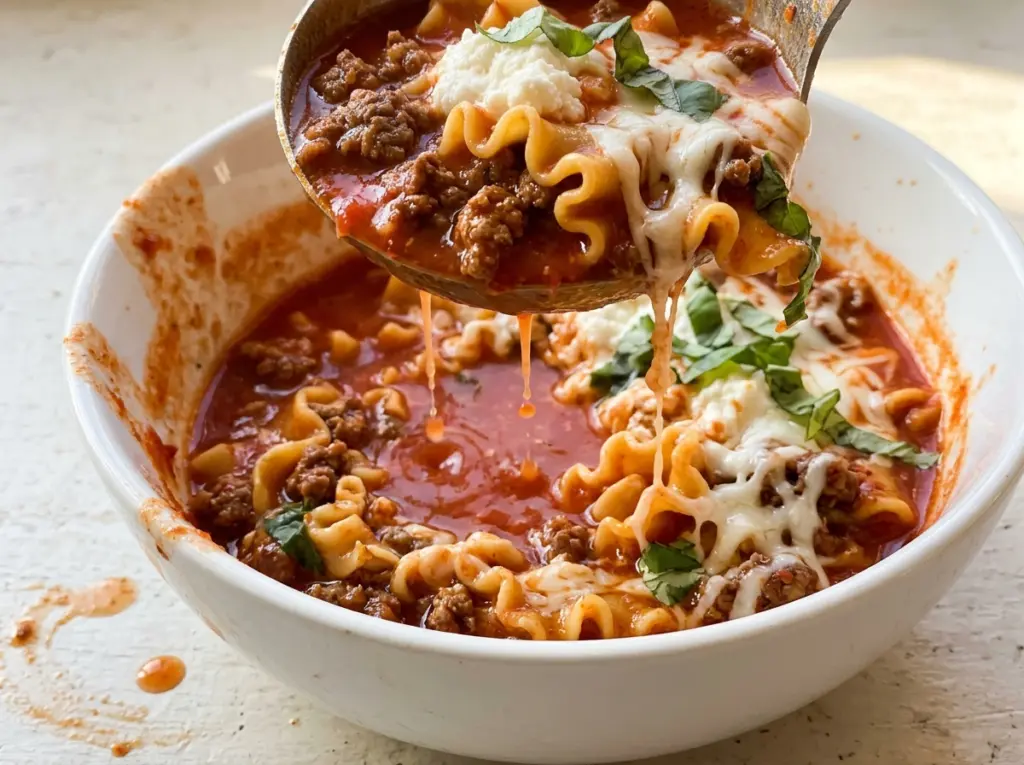
When the broken lasagna noodles hit the bubbling tomato broth, they sink out of sight and make the pot look thinner than it is. A few minutes later, they swell and curl at the edges, turning the broth into something that eats like lasagna rather than pasta floating in soup. That direct-in-the-pot method is what makes One Pot Lasagna Soup work so well: the noodles cook in the beefy tomato broth, and there’s no separate pasta water to drain or extra saucepan to wash.
I brown the beef and onion first, then give the garlic and tomato paste a minute in the pot before adding the tomatoes and broth. That short pause builds a deeper base without adding another step or ingredient. At the table, each bowl gets its own spoonful of ricotta, mozzarella, Parmesan, and parsley, so the creamy topping stays distinct against the hot, savory soup.
Kitchen Note
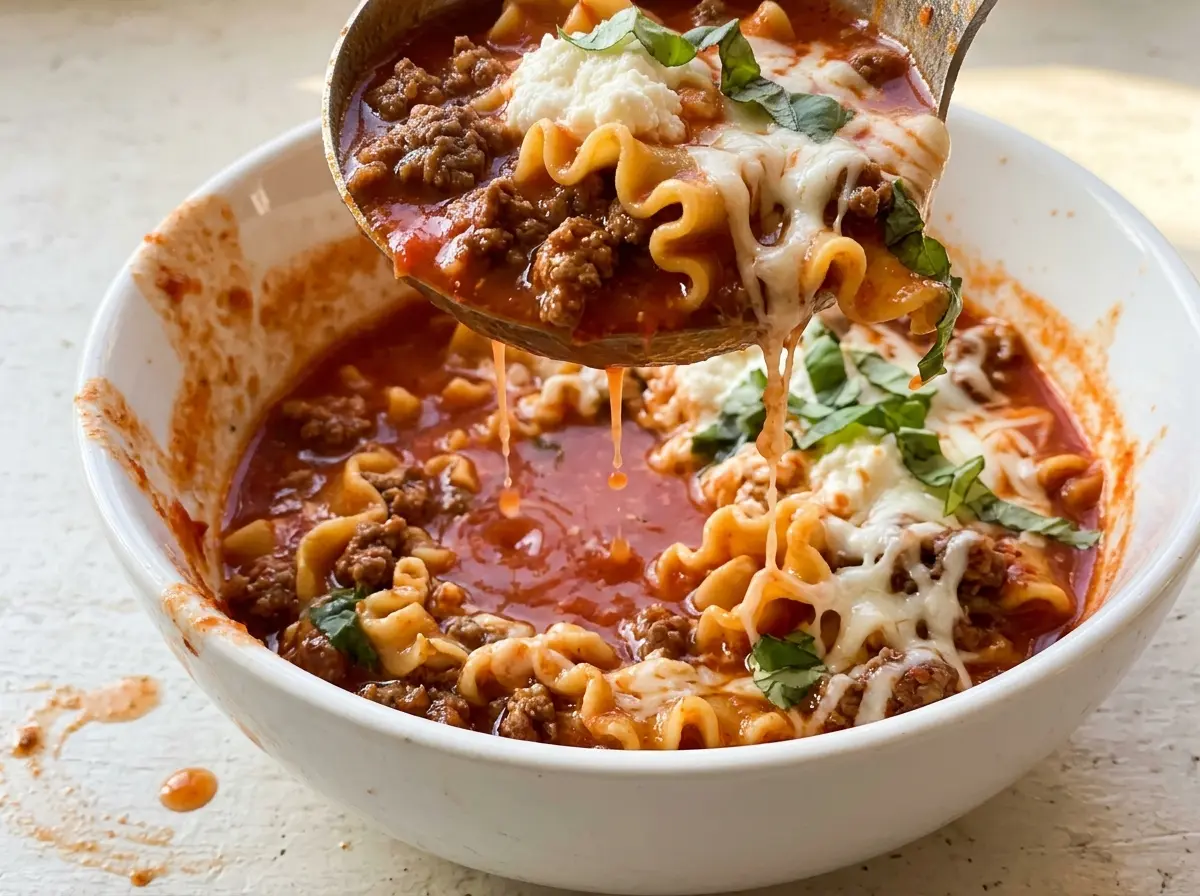
Keep the ricotta mixture in a bowl until the soup is ready to serve. A spoonful on each bowl gives you a creamy bite without making the whole pot cloudy.
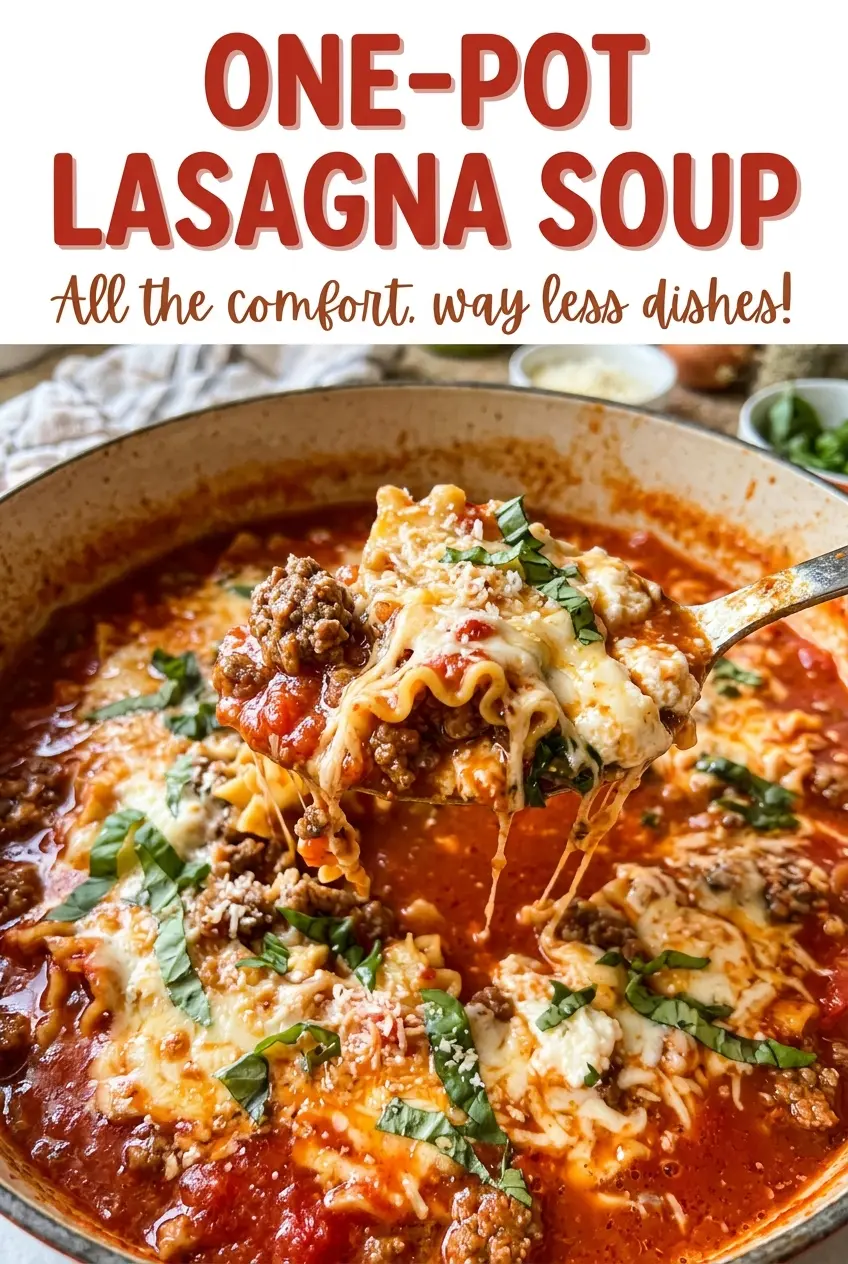
Save One Pot Lasagna Soup for a cozy dinner with tender noodles, tomato-rich broth, and a creamy ricotta topping in every bowl.
Why the Noodles Go Straight Into the Broth
Cooking the lasagna noodles in the soup does more than save a pot. As they soften, they release a little starch into the tomato and beef broth, giving it a fuller, more cohesive texture. The noodles also take on the flavor of the seasoned liquid as they cook, instead of being boiled separately and added at the end.
That’s why the broth should be at a steady simmer before the noodles go in. Add them too early, while the liquid is still heating, and they spend longer soaking in the pot; leave them untouched during cooking, and pieces can settle and stick. Broken into short pieces, the noodles fit easily on a spoon and cook right in the broth. You’ll get the most lasagna-like bowl when they’re tender but still holding their shape, not swollen and falling apart.
What the Beef, Tomato Paste, and Ricotta Bring to the Pot
- Ground beef — The 85% lean beef gives the broth savory depth while leaving enough fat to brown well. If you use ground turkey instead, the soup will taste lighter; the variation below covers the cooking adjustment.
- Yellow onion and garlic — The onion softens into the base, while garlic adds a sharper note. Standard grocery-store onion and garlic work well here; dice the onion evenly so it softens at the same pace.
- Tomato paste and crushed tomatoes — Tomato paste concentrates the tomato flavor before the broth goes in, and crushed tomatoes give the soup its body. Canned crushed tomatoes are the right texture; diced tomatoes leave larger pieces and a looser, chunkier base.
- Low-sodium beef broth — This gives you room to season the soup without the salt level being set by the broth. Regular beef broth works, but the finished soup may taste saltier, so taste before adding any extra salt.
- Lasagna noodles — The wide, ruffled pieces give the bowl its lasagna feel. Break them into short pieces so they’re easy to eat with a spoon; gluten-free lasagna noodles are an option, though their cooking time can differ.
- Whole-milk ricotta, mozzarella, Parmesan, and parsley — Whole-milk ricotta makes the topping rich and soft, mozzarella adds a mild stretchy quality, and Parmesan brings a salty, savory edge. Fresh parsley gives the mixture a clean finish; the topping is best stirred together just before serving.
Brown First, Then Simmer the Noodles in the Soup
Brown the Beef and Soften the Onion
Heat the olive oil in a 6-quart Dutch oven over medium-high heat, then add the ground beef and diced onion. Break the beef into small pieces as it cooks so it browns across the pot instead of steaming in large clumps. Cook for 6–8 minutes, until the beef is browned, the onion has softened, and the beef reaches 160°F. If liquid pools in the pot, keep cooking until the beef has browned rather than moving on while it’s still gray.
Cook the Garlic and Tomato Paste
Stir in the minced garlic and tomato paste, and cook for 1 minute. Keep the mixture moving so the garlic doesn’t catch on the hot bottom of the pot. Add the Italian seasoning, salt, black pepper, and red pepper flakes, stirring until the spices are distributed through the beef. The tomato paste should look darker and smell more concentrated by the time you add the liquids.
Bring the Tomato Broth to a Boil
Pour in the crushed tomatoes and beef broth, then scrape the bottom of the Dutch oven to loosen the browned bits. Those bits blend into the broth and carry the flavor from browning through the rest of the soup. Bring the liquid to a boil before adding the noodles; if anything is still stuck to the pot, keep scraping as the broth warms. Stir the mixture once it reaches the boil.
Simmer the Noodles Until Tender
Stir in the broken lasagna noodles, then reduce the heat to maintain a steady simmer. Cook uncovered for 10–12 minutes, stirring frequently, until the noodles are tender. A gentle, consistent bubble is what you want; a hard boil can make the noodles bang around and break up. Check a piece near the end of the cooking time, since noodle thickness can affect when it turns tender.
Mix the Topping and Ladle the Bowls
While the soup simmers, stir the ricotta, mozzarella, Parmesan, and chopped parsley together in a small bowl. The mixture should be thick enough to sit on a spoon. Ladle the hot soup into bowls, then add a spoonful of the cheese mixture to each serving. Give the topping a moment to soften at the edges before taking a bite.
Simple Swaps That Keep the Soup Comforting
Use Ground Turkey for a Lighter Bowl
Replace the ground beef with the same amount of ground turkey and brown it with the onion in the olive oil. Turkey is leaner and has a milder taste, so the tomato and Italian seasoning stand out more. Cook ground turkey to 165°F before continuing.
Make It Gluten-Free with Gluten-Free Lasagna Noodles
Swap in gluten-free lasagna noodles, broken into pieces. Their texture and cooking time vary by brand, so start checking for tenderness before the usual noodle timing is up and stir carefully to keep the pieces intact. The soup keeps its tomato, beef, and cheese character, though the noodles may be more delicate.
Leave Out the Red Pepper Flakes
Omit the red pepper flakes for a milder soup without changing the tomato-and-herb base. The bowl will lose its gentle heat, but the beef, Italian seasoning, and Parmesan still give it plenty of savory character.
Storage and Reheating
- Refrigerator: Store the soup in an airtight container for 3–4 days. The noodles will continue to absorb broth and soften as it sits.
- Freezer: Freeze the soup in airtight containers for up to 2 months for the best texture. The noodles will be softer after thawing; freeze the cheese topping separately rather than adding it to the soup.
- Reheating: Warm it gently on the stovetop, stirring often, until it reaches 165°F. Add a splash of beef broth if the noodles have absorbed too much liquid; avoid a hard boil, which can make them mushy.
Questions That Come Up Once the Soup Is on the Stove
One Pot Lasagna Soup
Ingredients
Equipment
Method
- Heat the olive oil in a 6-quart Dutch oven over medium-high heat, then add the ground beef and onion. Cook for 6–8 minutes, breaking up the beef, until browned, the onion is softened, and the beef reaches 160°F.
- Stir in the garlic and tomato paste and cook for 1 minute.
- Stir in the Italian seasoning, salt, black pepper, and red pepper flakes.
- Add the crushed tomatoes and beef broth, scraping up any browned bits from the bottom of the pot.
- Bring the soup to a boil.
- Stir in the broken lasagna noodles, reduce the heat to maintain a steady simmer, and cook uncovered for 10–12 minutes, stirring frequently, until the noodles are tender.
- While the soup simmers, stir together the ricotta, mozzarella, Parmesan, and parsley in a small bowl.
- Ladle the soup into bowls and top each serving with a spoonful of the cheese mixture.