
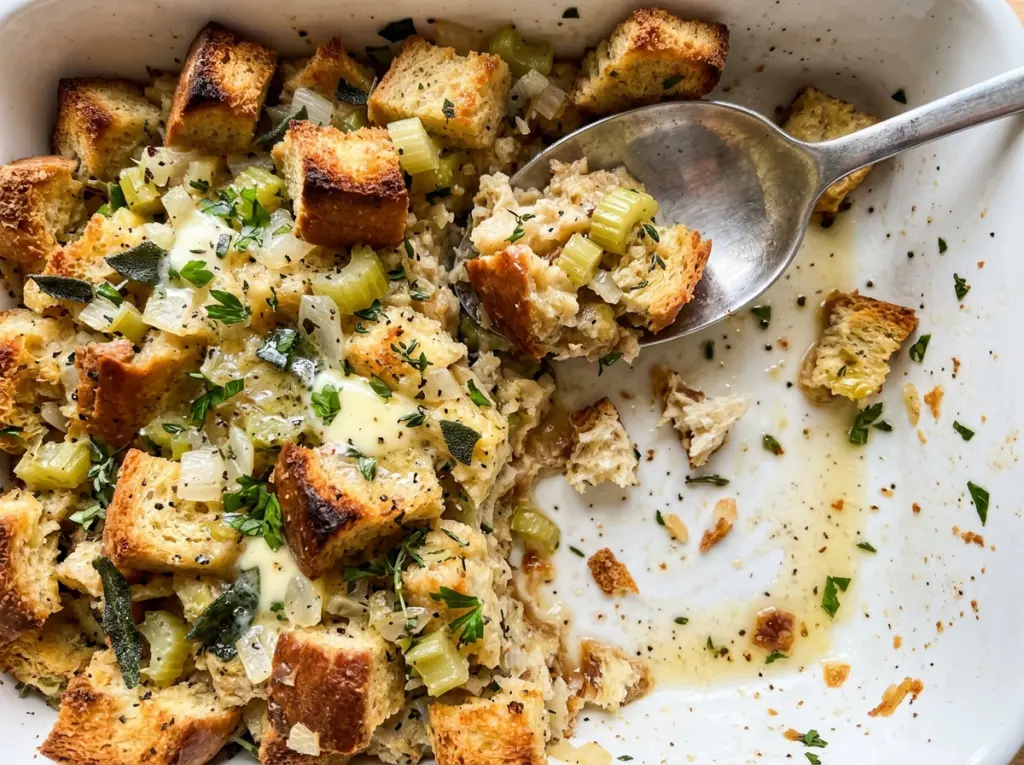
The bread cubes should feel dry and crisp before they go anywhere near the broth. If they’re still soft in the middle, they can turn to mush instead of holding their shape. That’s the small detail that gives this old fashioned bread stuffing with fresh herbs its tender center and golden top.
I dry the cubes low and slow, then give them a good toss halfway through so they crisp evenly. While they cool, the onion and celery soften in butter, and the sage and thyme go in at the end so their fragrance has a moment to bloom without scorching.
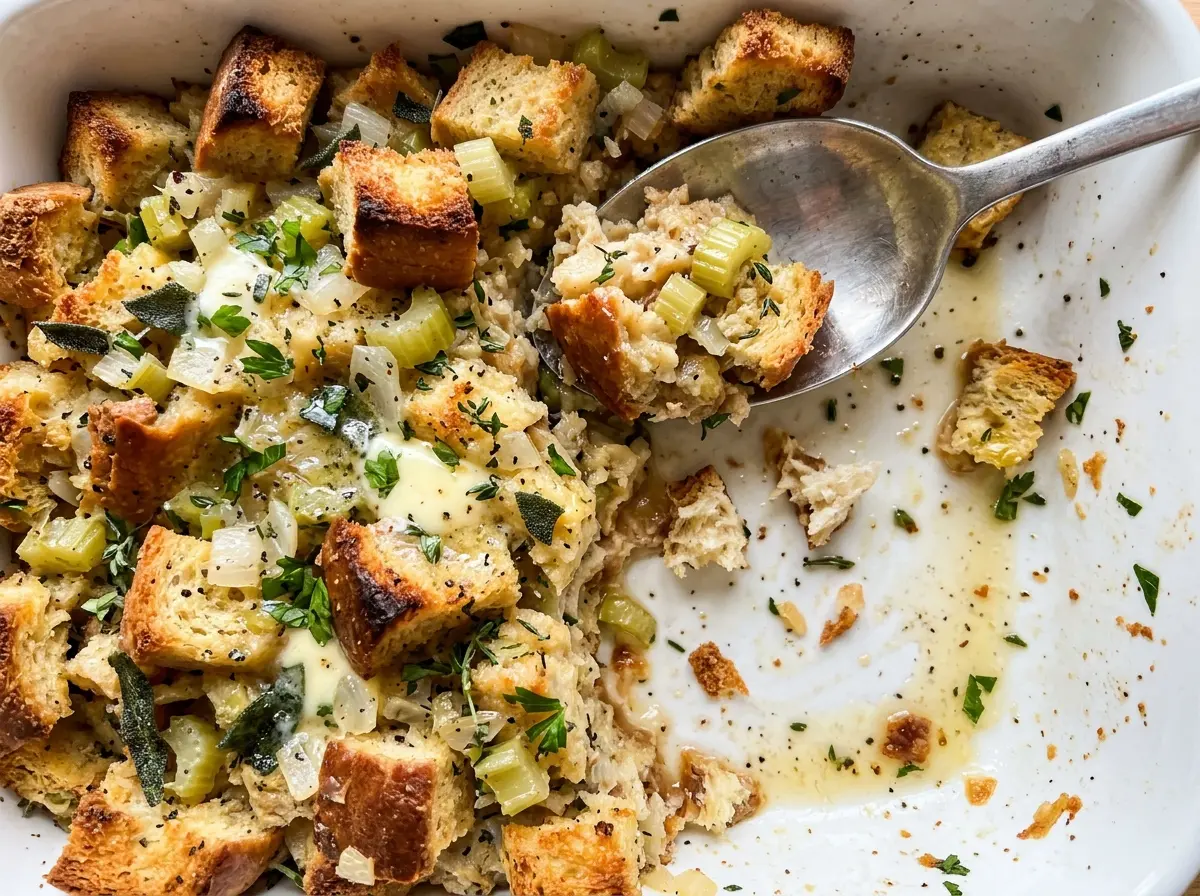
Once the broth and eggs are tossed through, the bread should be evenly moistened, not sitting in a puddle. Baked in a 9×13-inch dish, it comes out with a soft middle, browned edges, and the familiar savory smell of fresh herbs and butter.
Kitchen Note
Don’t rush the bread-drying stage. The cubes should feel dry and crisp, not just a little stale, and stirring them once halfway through helps them dry evenly.
Save this old fashioned bread stuffing with fresh herbs for its crisp golden top and soft, savory center.
The Broth Should Coat the Bread, Not Pool Under It
Stuffing can land in an awkward place between dry cubes and a soggy casserole. The goal here isn’t to drench the bread until it collapses; it’s to distribute the broth and eggs evenly, so each cube is moistened and the mixture holds together once baked. Whisking the eggs into the broth first helps the liquid spread through the bowl instead of leaving egg in one spot.
Give the bread a thorough toss after pouring in the liquid, reaching down to bring the cubes at the bottom back to the top. Pause for a moment and check the mixture: the cubes should look moist, but there shouldn’t be a layer of liquid beneath them. If a few pieces look dry, toss again before transferring everything to the dish.
That balance matters because the casserole has two different textures to deliver. The covered portion of baking lets the center heat through, while uncovering it gives the top time to turn golden. A short rest after baking helps the center settle, so it serves in soft, distinct pieces rather than falling apart in the dish.
Why Sturdy Bread and Fresh Herbs Matter in This Stuffing
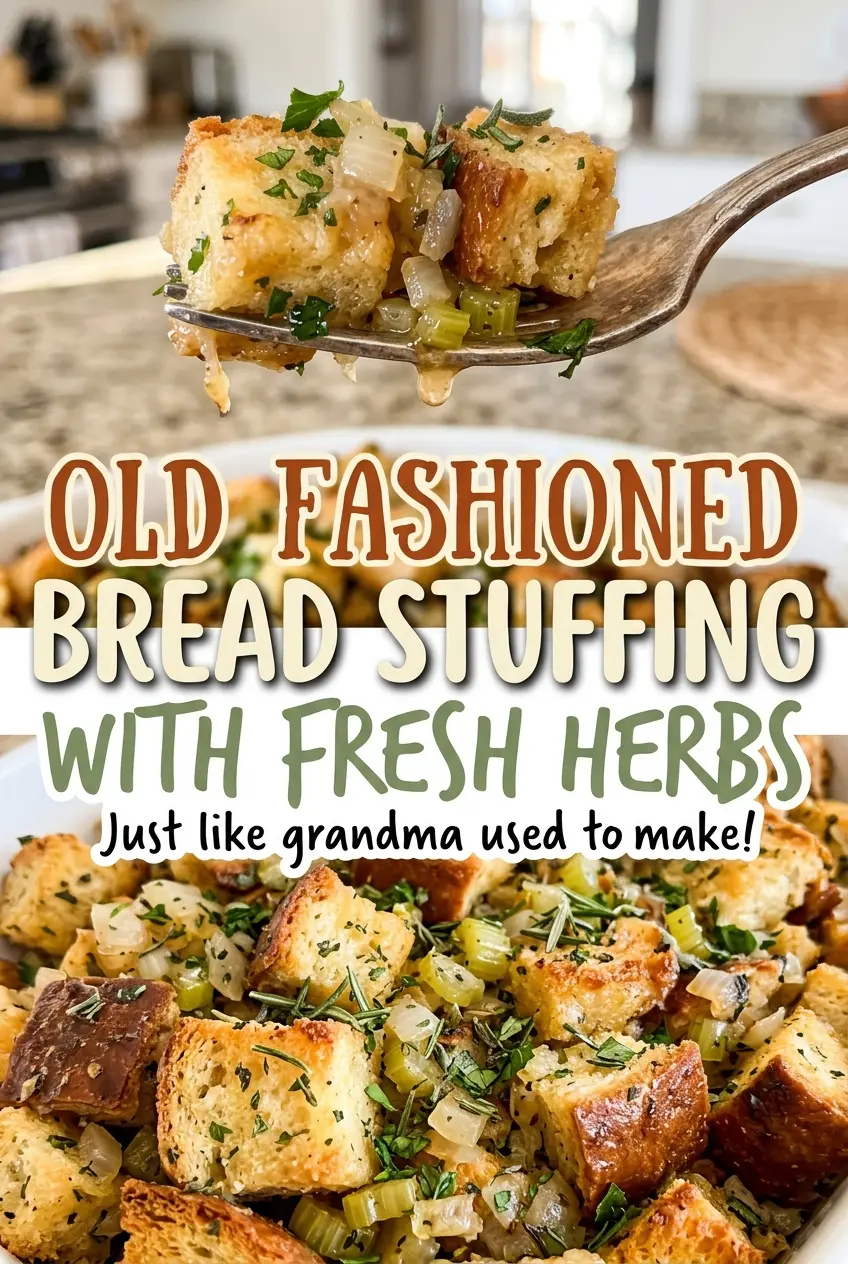
- Sturdy white bread — A loaf with enough structure to hold a cube shape gives you a better mix of tender interior and intact pieces. Day-old bread is a good fit; a soft, fresh loaf is more prone to breaking down once the broth goes in. Leave the crusts on and cut the cubes evenly so they dry at a similar pace.
- Unsalted butter — Butter carries the onion, celery, and herbs through the dish with a rounded, savory taste. Since the vegetables cook directly in it, use butter you enjoy, but there’s no need for a specialty brand. Stick-style unsalted dairy-free butter is a useful swap if you need to avoid dairy.
- Yellow onion and celery — These soften into the base of the stuffing and add a gentle savory sweetness. Finely chop the onion and chop the celery so both soften during their skillet time; larger pieces stay more noticeable in the finished texture.
- Fresh sage, thyme, and flat-leaf parsley — Sage and thyme give the stuffing its woodsy, savory aroma, while parsley brings a greener note. Fresh herbs are especially welcome here because they’re stirred into the warm mixture just before it meets the bread. Choose leaves that look fresh rather than wilted; dried herbs work too, with a more concentrated flavor.
- Low-sodium chicken broth and eggs — The broth moistens the bread without bringing in as much salt as a regular broth might, and the eggs help the mixture hold together as it bakes. Use broth with a flavor you like, since it makes up the savory liquid in the casserole.
Dry the Cubes, Soften the Vegetables, Then Bake Until Golden
Dry the bread until it’s crisp
Heat the oven to 250°F and spread the 3/4-inch bread cubes in a single layer on a large rimmed baking sheet. Bake for 45 to 60 minutes, stirring once halfway through, until the cubes feel dry and crisp. They shouldn’t still feel soft in the center. Let them cool before tossing them with the other ingredients.
Soften the onion and celery in butter
Raise the oven temperature to 350°F and grease a 9×13-inch baking dish. Melt the butter in a 12-inch skillet over medium heat, then add the onion, celery, salt, and pepper. Cook for 8 to 10 minutes, stirring occasionally, until the vegetables have softened; if they’re still crisp, give them more time within that range rather than turning up the heat. Stir in the sage and thyme and cook for 1 minute.
Toss until the broth mixture is evenly distributed
Put the cooled bread cubes in a large bowl and add the parsley and warm butter-vegetable mixture. Toss to combine. Whisk the broth and lightly beaten eggs together, pour the liquid over the bread, and toss until everything is evenly moistened. Transfer the mixture to the greased baking dish without packing it down tightly.
Bake covered, then brown the top
Cover the baking dish with foil and bake for 30 minutes. Uncover and continue baking for 15 to 20 minutes, until the top is golden and the center reaches 160°F. If the top is golden before the center reaches that temperature, cover it again while it finishes baking. Let the stuffing rest for 10 minutes before serving.
Three Simple Swaps for a Different Table
Make it vegetarian with vegetable broth
Replace the chicken broth with the same amount of low-sodium vegetable broth. The stuffing keeps its soft, savory texture, with a slightly less poultry-forward taste.
Use dairy-free butter
For a dairy-free version, use an unsalted stick-style dairy-free butter in the same quantity. Melt it and cook the onion and celery as usual; the finished stuffing may have a slightly different buttery taste depending on the product.
Reach for dried sage and thyme
If fresh sage and thyme aren’t available, use 2 teaspoons dried sage and 1 teaspoon dried thyme in their place. Stir them into the softened vegetables for the same brief minute, and leave out the fresh parsley if you don’t have it; the result will taste more concentrated and less green.
Storage and Reheating
- Refrigerator: Refrigerate leftovers within 2 hours and keep them for 3 to 4 days. The top will soften as it sits.
- Freezer: Freeze cooled portions in an airtight container for up to 1 month for the best texture. Thaw overnight in the refrigerator before reheating.
- Reheating: Cover and reheat in a 350°F oven until hot throughout, reaching 165°F in the center. Keeping it covered helps prevent the bread from drying out; uncover briefly at the end if you’d like to bring back some browning.
Questions That Come Up While Making This Stuffing
Old Fashioned Bread Stuffing with Fresh Herbs
Ingredients
Equipment
Method
- Preheat the oven to 250°F.
- Spread the bread cubes in a single layer on a large rimmed baking sheet.
- Bake the bread cubes for 45–60 minutes, stirring once halfway through, until dry and crisp.
- Let the bread cubes cool.
- Raise the oven temperature to 350°F.
- Grease a 9x13-inch baking dish.
- Melt the butter in a 12-inch skillet over medium heat.
- Add the onion, celery, salt, and pepper, and cook for 8–10 minutes, stirring occasionally, until softened.
- Stir in the sage and thyme and cook for 1 minute.
- Put the bread cubes in a large bowl, add the parsley and butter-vegetable mixture, and toss to combine.
- Whisk the broth and eggs together, pour over the bread mixture, and toss until evenly moistened.
- Transfer the mixture to the prepared baking dish.
- Cover with foil and bake for 30 minutes.
- Uncover and bake for 15–20 minutes, until golden on top and the center reaches 160°F.
- Let the stuffing rest for 10 minutes before serving.