
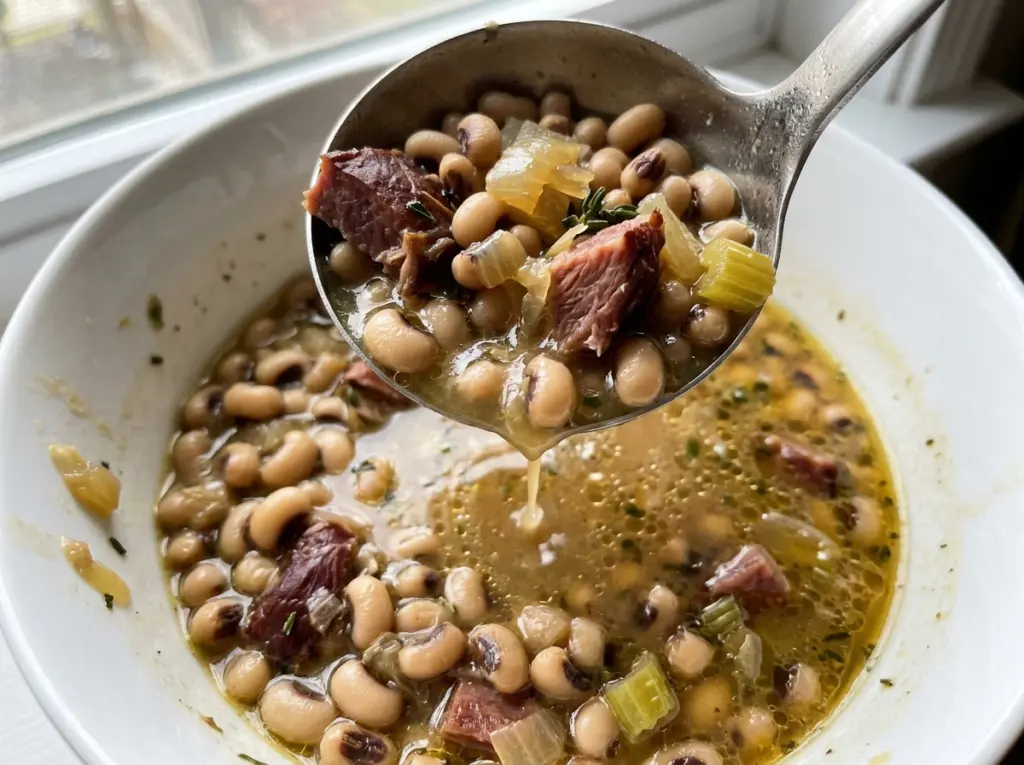
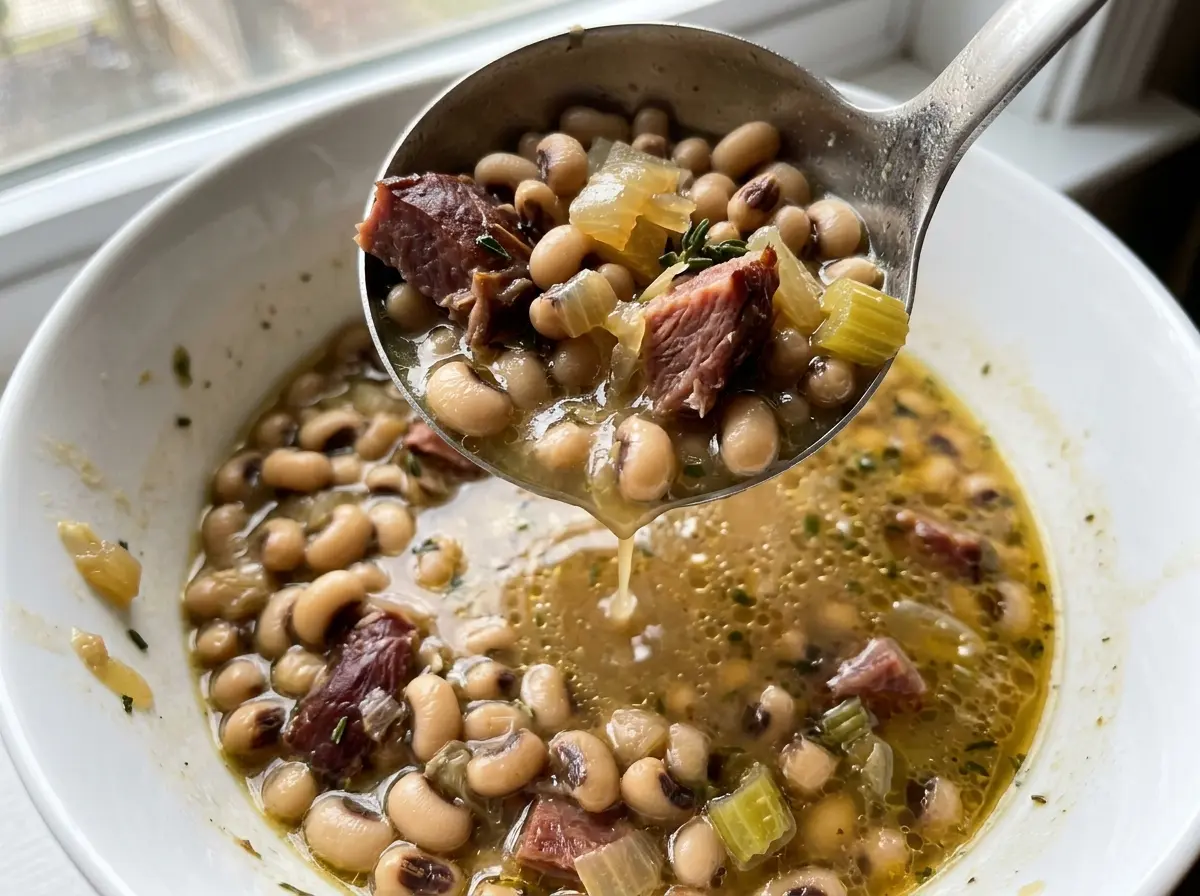
At the start of the simmer, the peas are still firm and the broth looks thin; the pot needs time before it turns into something spoonable and savory. I keep the heat low and the Dutch oven partially covered so the black-eyed peas soften while the smoked ham hock seasons the broth. That slow change is what I want from New Year’s Day Black Eyed Peas: tender beans, a little smoky meat in every bowl, and broth that still has body.
The peas soak in the refrigerator before they go into the pot, which gives them a head start before the long simmer. Onion cooks until soft in olive oil, then garlic goes in briefly so it smells fragrant without browning. Low-sodium chicken broth lets the ham hock bring its own savory depth, while black pepper and a little cayenne keep the flavor from feeling flat. I stir in apple cider vinegar at the end, after the meat goes back in. It gives the rich broth a clean, tangy finish.
Kitchen Note
I wait until the last 15 minutes to add the kosher salt. The ham hock and broth already bring savory seasoning, so adding salt near the end gives you a better chance of keeping the finished pot balanced.
Save New Year’s Day Black Eyed Peas for a cozy pot of tender peas, smoky ham, and a bright finish of apple cider vinegar.
The Overnight Soak Helps the Peas Cook Evenly
Dried black-eyed peas don’t all hydrate at the same pace once they hit the pot. Soaking them first gives the centers time to take up water before the outside has softened in the broth. That head start matters here because the peas simmer alongside a ham hock for an hour or more; you want them to become tender without the outside turning to mush while the middle stays firm.
Give them 8 to 12 hours in cold water in the refrigerator, then drain and rinse them before cooking. The soak water doesn’t go into the Dutch oven; the peas cook in low-sodium chicken broth, where they can pick up flavor from the onion, garlic, bay leaf, and ham hock. If you shorten the soaking time, the peas may need more time to soften, so use tenderness—not the clock alone—as your cue during the simmer.
This is also why I start with dried peas rather than treating canned peas as a shortcut in the same pot. Dried peas need that gradual simmer to become tender and absorb the savory broth. Already-cooked peas would soften too much during the same cook.
Why the Ham Hock and Low-Sodium Broth Matter

- Dried black-eyed peas — Pick through them before soaking to catch any small debris, then drain and rinse. The dried peas are what make the long, slow simmer work; canned peas won’t hold up to the same cooking time.
- Smoked ham hock — This is the source of the pot’s smoky depth and the tender meat stirred back in at the end. Choose a meaty hock if you want more pork in each serving; the bone and skin are discarded after cooking.
- Low-sodium chicken broth — It gives the peas a savory cooking liquid without starting the pot overly salty. The ham hock adds more seasoning as it simmers, so low-sodium broth gives you better control over the final taste.
- Yellow onion and garlic — Chopping the onion gives it time to soften into the broth, while minced garlic cooks quickly. Add the garlic after the onion has softened and stir it for only 30 seconds so it doesn’t brown.
- Bay leaf, black pepper, and cayenne — The bay leaf adds a gentle background note, black pepper brings steady warmth, and cayenne gives the pot a small spark. Remove the bay leaf before serving.
- Apple cider vinegar — Stir it in after the ham meat returns to the pot. Its tang lifts the smoky broth; adding it at the finish keeps that bright note distinct.
How to Simmer the Peas Without Losing the Broth
Soak and Rinse the Peas
Put the picked-over peas in a large bowl, cover them with cold water, and refrigerate for 8 to 12 hours. They should look plumper after soaking, though they won’t be cooked yet. Drain and rinse them before they go into the pot. Don’t pour the soaking water into the Dutch oven.
Soften the Onion Before Adding Garlic
Heat the olive oil in a 6-quart Dutch oven over medium heat, then add the chopped onion. Cook it for 5 to 7 minutes, stirring now and then, until it has softened rather than browned. Add the minced garlic and stir for 30 seconds. Garlic browns quickly, so move straight to the next ingredients once it smells fragrant.
Let the Peas Simmer Gently
Add the drained peas, chicken broth, ham hock, bay leaf, black pepper, and cayenne. Bring the pot to a boil over high heat, then lower the heat and simmer partially covered for 60 to 90 minutes. Look for a gentle simmer, not a hard boil that tosses the peas around and drives off liquid too quickly. The peas are ready when they’re tender through the center.
Finish with Salt, Meat, and Vinegar
Stir in the kosher salt during the last 15 minutes of cooking. When the peas are tender, remove the ham hock and bay leaf; pull the meat from the hock, discard the bone and skin, and return the meat to the pot. Stir in the apple cider vinegar just before serving. The finished broth should taste savory with a light tang, not sharply sour.
Two Simple Changes for a Milder or Pork-Free Pot
Leave out the cayenne for a milder bowl
Omit the cayenne and keep the black pepper. You’ll still have warmth in the broth, but without the extra chili heat. This is a simple adjustment if you want the smoky ham and black-eyed peas to lead.
Make the pot without the ham hock
Leave out the hock for a pork-free version, keeping in mind that the chicken broth means the dish still isn’t vegetarian. The broth will be less smoky and you’ll have no pulled ham to stir back in, but the peas, onion, garlic, and seasonings still make a savory pot.
Storage and Reheating
- Refrigerator: Store in a covered container for 3 to 4 days. The peas will continue to absorb broth, so leftovers may be thicker.
- Freezer: Freeze in airtight containers for up to 3 months. Leave a little room at the top for expansion; the peas may be softer after thawing.
- Reheating: Warm gently on the stovetop or in the microwave, stirring occasionally, until the leftovers reach 165°F. Avoid boiling them hard, which can break down the peas.
Questions That Come Up While the Peas Simmer
New Year's Day Black Eyed Peas
Ingredients
Equipment
Method
- Place the peas in a large bowl and cover them with the cold water. Refrigerate for 8 to 12 hours.
- Drain and rinse the peas.
- Heat the olive oil in a 6-quart Dutch oven over medium heat.
- Add the onion and cook for 5 to 7 minutes until softened.
- Add the garlic and cook for 30 seconds, stirring.
- Add the peas, chicken broth, ham hock, bay leaf, black pepper, and cayenne pepper.
- Bring to a boil over high heat.
- Reduce the heat to low and simmer partially covered for 60 to 90 minutes, until the peas are tender.
- Stir in the salt during the last 15 minutes of cooking.
- Remove the ham hock and bay leaf.
- Pull the meat from the hock, discard the bone and skin, and return the meat to the pot.
- Stir in the apple cider vinegar and serve.