
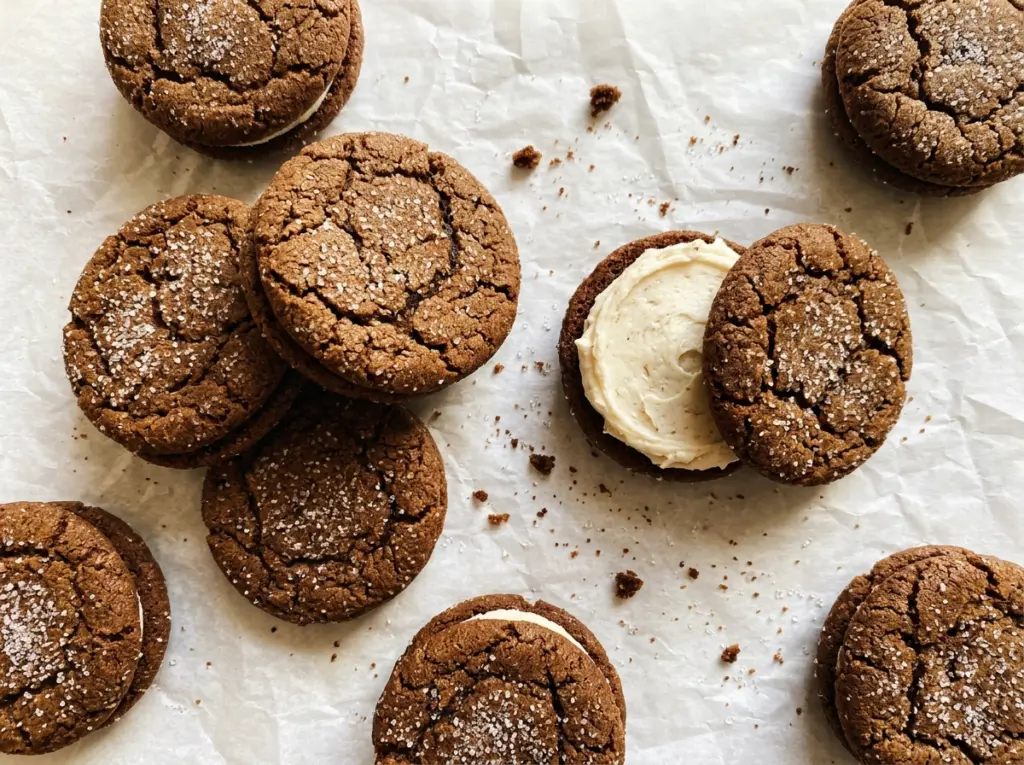
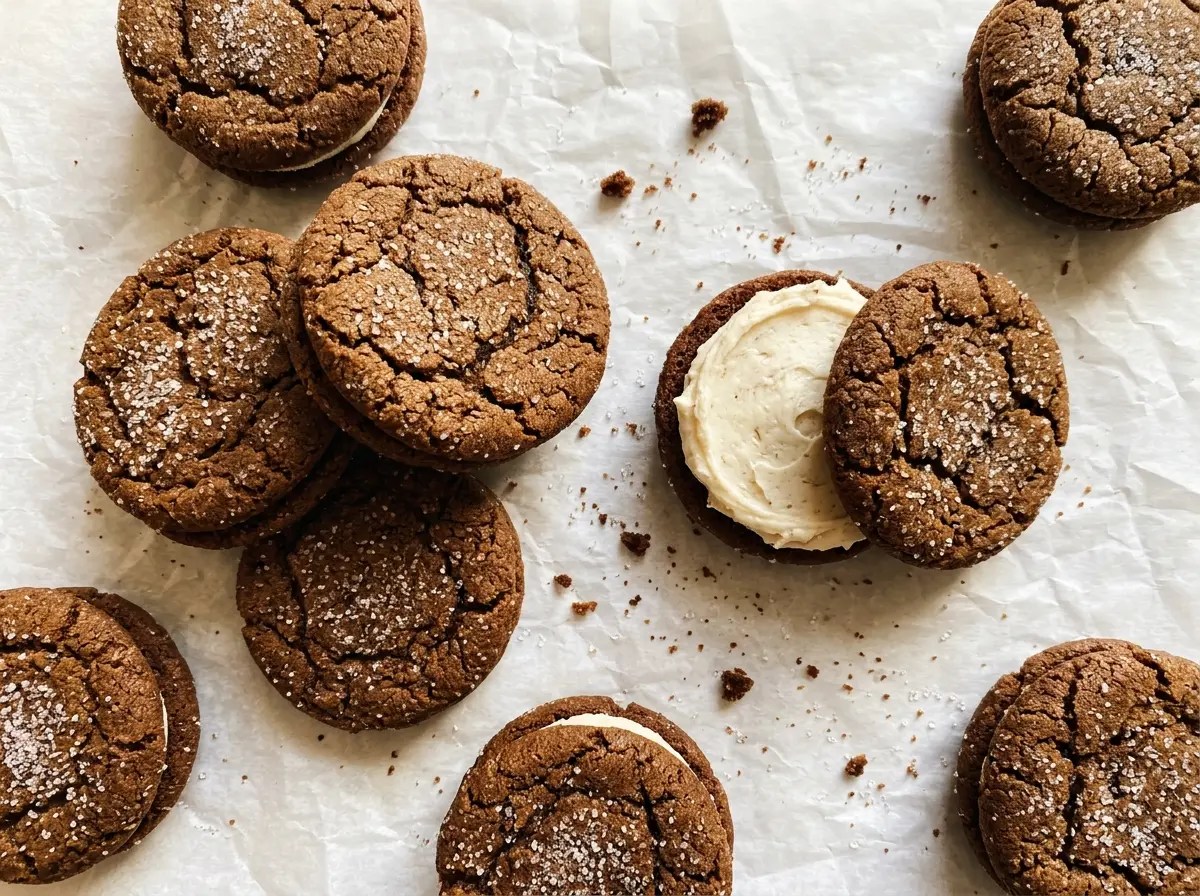
The sugar on the dough balls starts to crack as the cookies puff, and the edges set before the centers look fully baked. That’s the moment to pull them from the oven. I used to wait for the middles to look firm, and the cookies came out too crisp to make the soft sandwich I wanted. These molasses sandwich cookies are better when the centers still feel tender as they cool.
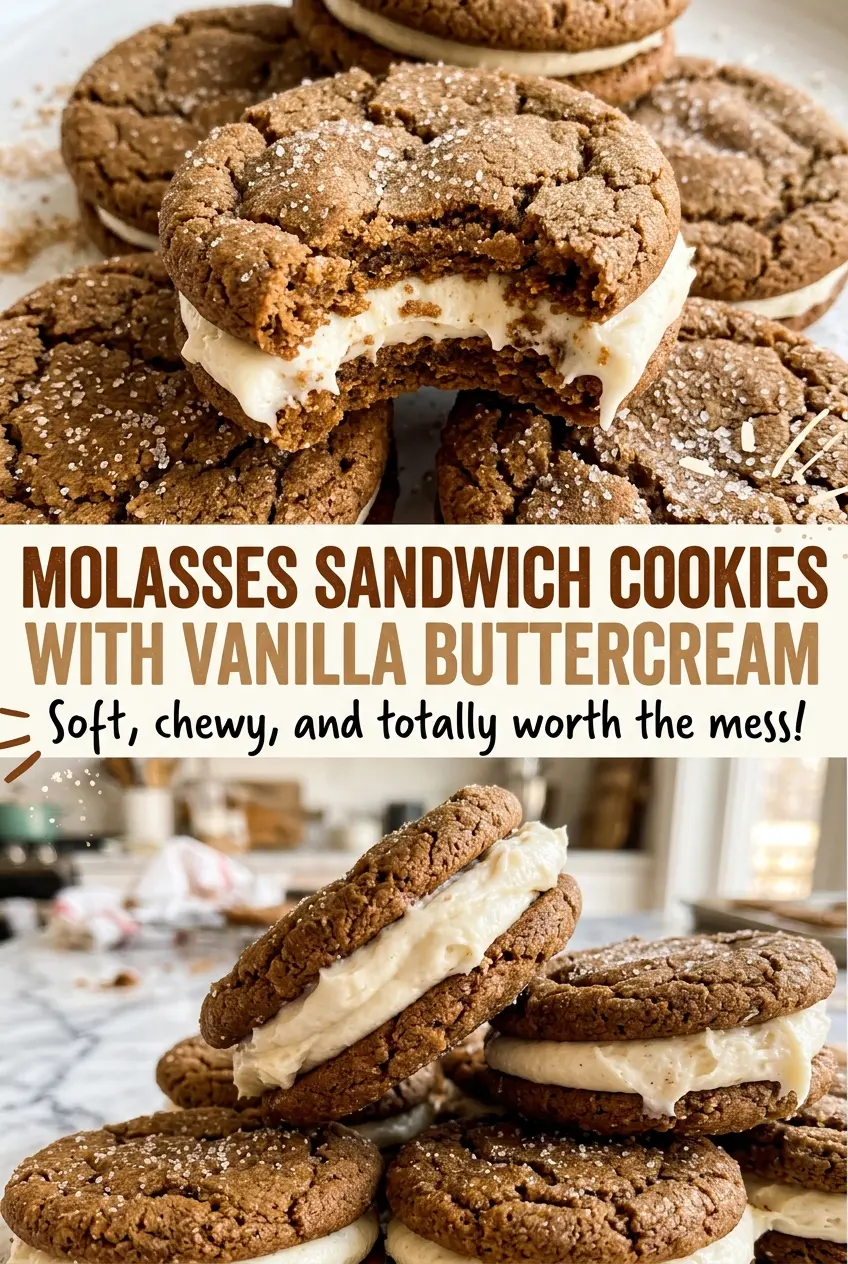
The dough gets a short chill before shaping, which makes it easier to roll into even balls and helps the cookies hold their shape. Rolling each ball in granulated sugar gives the tops a delicate, crackled finish that plays nicely against the smooth vanilla buttercream. Once the cookies are completely cool, the filling spreads neatly on the flat sides and turns the batch into 12 generous sandwiches.
Unsulphured molasses brings a warm, rounded spice flavor without the bitter edge blackstrap can add. With ginger, cinnamon, and just a little clove in the dough, each bite is soft in the middle, lightly crisp at the edges, and creamy where the buttercream meets the cookie.
Kitchen Note
I stop mixing the buttercream as soon as it looks smooth and fluffy. The heavy cream loosens it quickly, so add it after the powdered sugar is incorporated rather than trying to beat everything in at once.
Save these molasses sandwich cookies with vanilla buttercream for a bake with crackled spice cookies and a soft, creamy center.
Why the Sugar-Coated Tops Crack Instead of Staying Smooth
The granulated sugar coating does more than add a little crunch. As the dough warms in the oven, the surface stretches and splits, giving the cookies their characteristic crackled tops. It also creates a fine, crisp shell around a center that stays soft, so the contrast is there before you even add the buttercream.
For that finish, roll all the dough balls in sugar just before they go onto the baking sheets. A light, even coating is enough; pressing the sugar into the dough isn’t necessary. Leave about 2 inches between the cookies so the dough has room to spread without the edges running together. Chilling the dough first makes the balls easier to handle and helps keep their shape while they bake.
Don’t judge the bake by whether the centers look firm. The edges should be set and the tops cracked, while the middles still look soft. They continue to settle on the baking sheets during the short cooling rest, which is how you get a cookie that can hold buttercream without turning hard.
What the Molasses and Spice Blend Bring to These Cookies
- Unsulphured molasses — It gives the dough its deep, rounded sweetness and the familiar molasses-cookie flavor. Blackstrap is much more bitter and intense, so stick with unsulphured molasses; an ordinary grocery-store bottle works well here.
- Ground ginger, cinnamon, and cloves — Ginger leads, cinnamon rounds it out, and a small amount of clove adds depth. Fresh, fragrant spices make a difference, but there’s no need for specialty brands. Fresh ginger isn’t a direct swap for ground ginger because it adds moisture and a brighter, sharper flavor.
- Light brown sugar — Its molasses content helps keep the cookie centers tender and complements the molasses in the dough. Dark brown sugar works measure for measure if that’s what you have, but the finished cookies will taste a little deeper and more caramel-like.
- Unsalted butter — Softened butter creams evenly with the brown sugar and gives the cookies their tender texture. A standard store-brand butter is fine; let it soften until it yields to a light press but isn’t greasy or melted. Salted butter adds extra salt, so unsalted gives you more control over the finished dough.
- Large egg — The egg binds the dough and adds structure. Use a large egg for the right balance; smaller or larger eggs can change how soft the dough feels, and there isn’t a simple one-for-one substitute that keeps the same result.
- Powdered sugar, vanilla, and heavy cream — Powdered sugar makes the filling smooth, while vanilla gives it a clear, mellow flavor and heavy cream helps it beat fluffy. Basic vanilla extract is just right. Granulated sugar won’t dissolve into the same smooth frosting, and a thinner dairy swap can leave the buttercream loose.
From Chilled Dough to Neat Buttercream Sandwiches
Mixing the Dough Without Overworking It
Whisk the flour, baking soda, ginger, cinnamon, cloves, and salt together so the leavening and spices are evenly distributed. Beat the softened butter and brown sugar with an electric mixer on medium until light and fluffy, about 2 to 3 minutes. Mix in the molasses and egg until smooth, scraping down the bowl as needed. Add the flour mixture on low and stop as soon as no dry streaks remain; mixing longer can make the cookies tougher.
Chilling and Rolling Each Cookie
Cover the dough and chill it for 30 minutes. Put the granulated sugar in a shallow bowl, then roll the dough into 24 balls, about 1 tablespoon each, and coat each ball in sugar. Arrange 12 on each parchment-lined 18×13-inch rimmed baking sheet, leaving about 2 inches between them. If the dough sticks to your hands, work steadily and roll one ball at a time rather than warming the whole batch in your palms.
Baking for Cracked Tops and Soft Centers
Bake at 350°F for 9 to 11 minutes, switching and rotating the sheets halfway through. Look for cracked tops and edges that have set; the centers should still look soft. A fully firm-looking center is a sign you’ve gone farther than you need for tender sandwich cookies. Let the cookies cool on the sheets for 5 minutes before transferring them to a wire rack to cool completely.
Whipping the Filling and Assembling the Sandwiches
Beat the softened butter for the filling in a medium bowl on medium until creamy, about 2 minutes. Add the powdered sugar in two additions, mixing on low after each, then add the vanilla and heavy cream and beat on medium until smooth and fluffy, 1 to 2 minutes. Spread about 1 tablespoon of buttercream on the flat side of 12 completely cooled cookies. Top with the remaining cookies, flat sides against the filling, and press gently so the buttercream reaches close to the edges.
Two Useful Ways to Adapt the Cookies
Gluten-Free Molasses Sandwich Cookies
Replace the all-purpose flour with a measure-for-measure gluten-free baking blend that contains xanthan gum. The dough may feel a little different to handle, and the cookies can have a slightly more delicate crumb, but the ginger-molasses flavor and buttercream filling still come through. Chill and bake the dough using the same method, watching for the cracked tops and set edges.
Dairy-Free Cookies and Filling
Use a firm, stick-style dairy-free butter in place of the butter in both the cookies and the filling, and use an unsweetened plant-based milk in place of the heavy cream. Choose a butter alternative intended for baking rather than a soft tub spread, which can make the dough greasy and the frosting slack. Expect a slight change in richness, with the spices still carrying the flavor.
Storage and Reheating
- Refrigerator: Store assembled sandwiches in an airtight container for up to 4 days. The cookies soften a little as they sit against the buttercream.
- Freezer: Freeze unfilled, fully cooled cookies in an airtight container for up to 2 months, with parchment between layers. Thaw at room temperature, then make the buttercream and assemble.
- Reheating: These cookies are best served without reheating. Let refrigerated sandwiches sit at room temperature briefly before serving; microwaving can melt the buttercream and make the cookies soft around the edges.
Questions That Come Up When Baking Molasses Sandwich Cookies
Molasses Sandwich Cookies with Vanilla Buttercream
Ingredients
Equipment
Method
- Preheat the oven to 350°F.
- Line two 18x13-inch rimmed baking sheets with parchment paper.
- Whisk the flour, baking soda, ginger, cinnamon, cloves, and salt together in a medium bowl.
- Beat the 3/4 cup butter and brown sugar in a large bowl with an electric mixer on medium speed until light and fluffy, 2 to 3 minutes.
- Beat in the molasses and egg until smooth, scraping down the bowl as needed.
- Add the flour mixture and mix on low just until no dry streaks remain.
- Cover and chill the dough for 30 minutes.
- Put the granulated sugar in a shallow bowl.
- Roll the dough into 24 balls about 1 tablespoon each and coat them in the sugar.
- Arrange 12 cookies on each baking sheet with about 2 inches between them.
- Bake at 350°F for 9 to 11 minutes, switching and rotating the sheets halfway through, until the cookies are cracked on top and set at the edges but still soft in the centers.
- Cool the cookies on the baking sheets for 5 minutes.
- Transfer the cookies to a wire rack to cool completely.
- Beat the 1/2 cup butter in a medium bowl with an electric mixer on medium speed until creamy, about 2 minutes.
- Add the powdered sugar in two additions, mixing on low after each.
- Add the vanilla and heavy cream and beat on medium until smooth and fluffy, 1 to 2 minutes.
- Spread about 1 tablespoon of buttercream on the flat side of 12 cookies.
- Top with the remaining cookies, flat sides against the filling.