
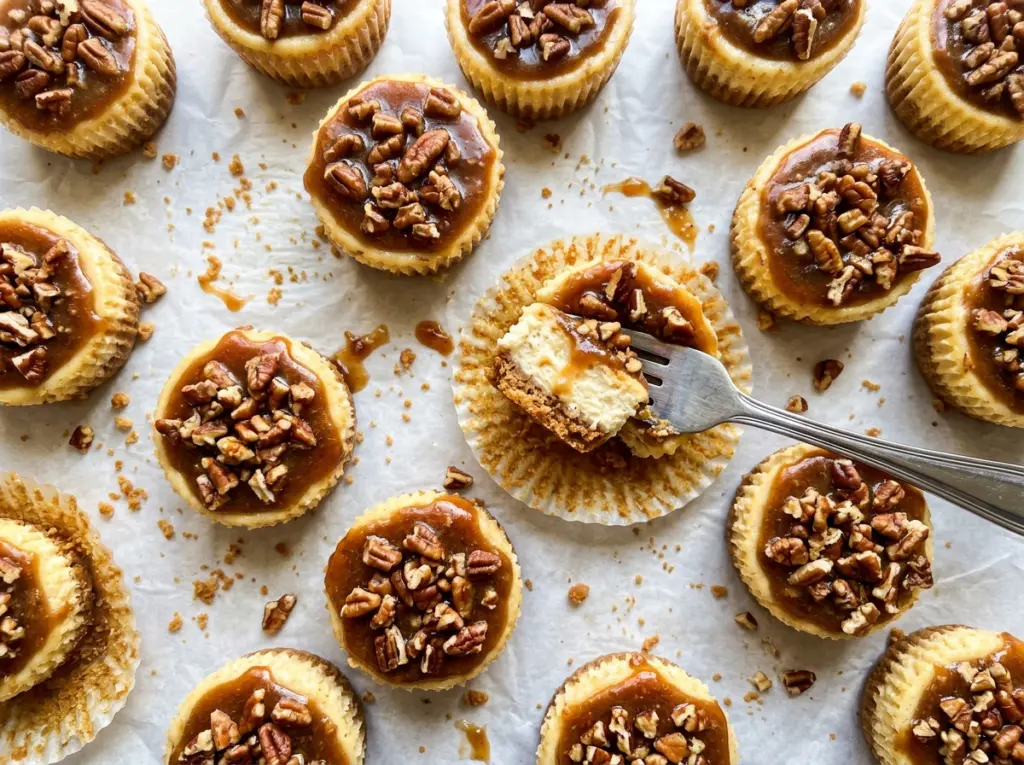
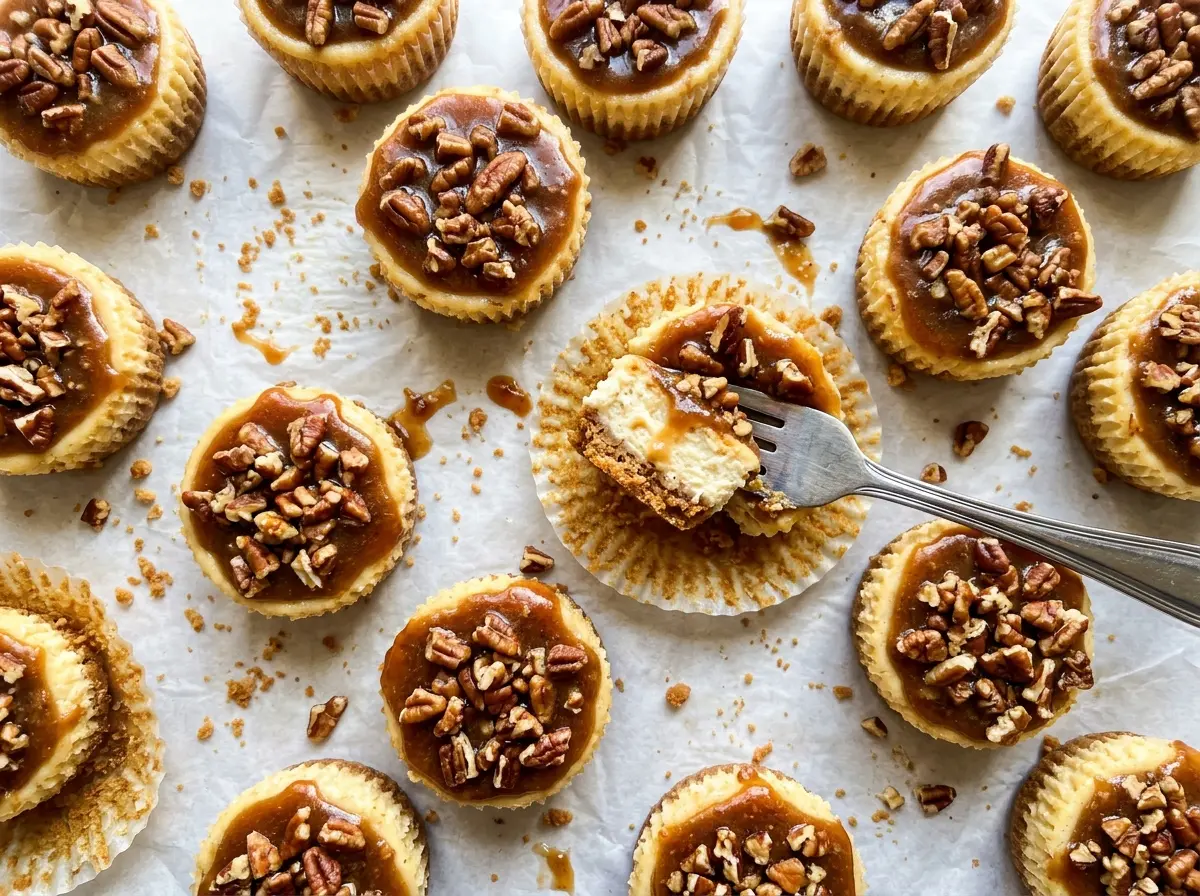
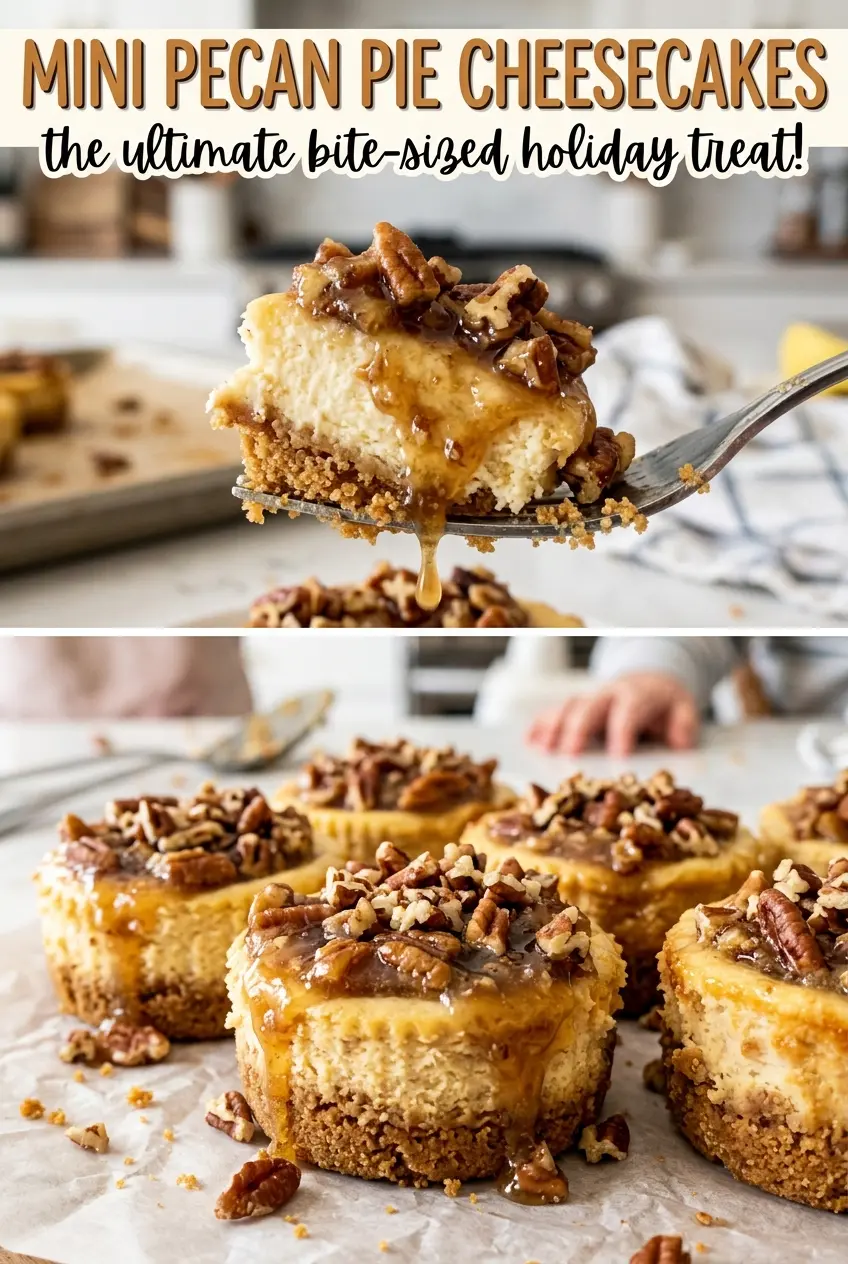
The crust gives a quiet little crunch before you reach the creamy center, and then the pecan topping brings the buttery, brown-sugar finish. I like these mini pecan pie cheesecakes because each one has a clear layer of graham cracker, cheesecake, and pecans instead of asking one bite to do everything at once.
One detail that makes a difference is mixing the filling in the right order. Get the softened cream cheese and sugar smooth first, then add the eggs one at a time and stop mixing once the sour cream and vanilla are incorporated. That keeps the filling even without beating extra air into it.
The topping is cooked separately and spooned over the cheesecakes after they’ve chilled, so it stays glossy and distinct from the soft filling. They’re rich, but small enough to serve neatly, with a crisp crumb base and a generous pecan finish.
Kitchen Note
Give the pecan topping its full 10 to 15 minutes to cool before spooning it onto the cheesecakes. If it’s still hot and loose, it runs off the tops instead of settling into a neat layer.
Save these mini pecan pie cheesecakes for a make-ahead dessert with creamy centers and a glossy, brown-sugar pecan topping.
Why the Eggs Go In Only After the Cream Cheese Is Smooth
Cream cheese is easiest to smooth out before the eggs enter the bowl. At that point, you can scrape down the sides and work out any stubborn lumps without worrying about overbeating the eggs. Once eggs are mixed in, extra beating adds air to the filling, and those air pockets can show up as puffing during baking and sinking as the cheesecakes cool.
Adding the eggs one at a time gives each one a chance to blend into the cream cheese mixture before the next goes in. Sour cream and vanilla come last, mixed just until combined. The goal isn’t a fluffy batter; it’s a smooth, even filling that bakes into a compact, creamy layer. That order is especially helpful in small portions, where a little unevenness is easy to notice from one cheesecake to the next.
The crust and topping also have different jobs. The pressed graham base gives each cheesecake a firm bottom, while the pecan mixture stays on top, where its syrupy texture can contrast with the cool filling. Keeping those layers distinct is what gives each bite its pecan-pie character without turning the cheesecake batter into a heavy, nut-filled mixture.
What the Cream Cheese, Sour Cream, and Syrup Each Bring
- Graham cracker crumbs — Fine, even crumbs press into a compact base and hold together once baked. Stir them thoroughly with the melted butter so there aren’t dry pockets; a coarse, uneven crumb mixture is more likely to break apart when you lift a cheesecake from its liner.
- Cream cheese — This is the structure and the main source of the filling’s rich, tangy body. Let it soften before mixing; cold cream cheese is harder to smooth and can leave small lumps in the finished batter. Plain, full-fat brick cream cheese gives a dependable texture, while whipped or spreadable cream cheese is less consistent for baking.
- Eggs and sour cream — Room-temperature eggs blend more readily into the softened cream cheese. Sour cream loosens the filling and adds a gentle tang that balances the sweetness of the topping. Plain full-fat Greek yogurt can replace the sour cream in the same amount; expect a slightly tangier filling with a firmer texture.
- Light corn syrup and brown sugar — Together, they make the pecan topping sticky and glossy rather than sandy. Light corn syrup helps keep the cooked sugar mixture smooth, so it isn’t a swap I’d make casually; a different syrup can change both the flavor and the consistency.
- Pecans — Chopped pecans give the topping its characteristic buttery, tender crunch. Fresh pecans matter more than a premium brand: if they smell stale or bitter, that flavor will stand out in the topping. The pieces should be chopped small enough to spoon evenly over the individual cheesecakes.
Building the Crust, Filling, and Pecan Topping in Separate Stages
Set the Crumb Base
Heat the oven to 325°F and line a standard 12-cup muffin pan with paper liners. Stir the graham cracker crumbs, granulated sugar, and melted butter until the crumbs are evenly moistened. Divide the mixture among the liners and press it firmly into the bottoms; loose crumbs won’t make as stable a base. Bake for 5 to 7 minutes, then set the pan aside while you mix the filling.
Mix a Smooth, Low-Air Filling
Beat the softened cream cheese and granulated sugar in a large bowl until smooth, scraping down the sides as needed. Add the eggs one at a time, beating after each addition so the mixture stays even. Mix in the sour cream and vanilla just until combined. If you keep beating after the batter is smooth, you’re adding air without improving its texture.
Bake Until the Centers Are Set
Divide the filling among the prepared crusts, keeping the portions as even as you can. Bake for 20 to 25 minutes, until the edges are set and the centers reach 160°F on an instant-read thermometer. The edges should look set rather than wet, while the middle can still have a slight softness. Cool the cheesecakes in the pan for 30 minutes, then refrigerate them for at least 4 hours, until fully chilled.
Cook and Spoon on the Pecan Layer
Melt the butter in a small saucepan over medium heat, then stir in the brown sugar, corn syrup, heavy cream, and kosher salt. Bring the mixture to a gentle simmer while stirring, and cook for 1 minute. Take the pan off the heat and stir in the chopped pecans. After the topping has cooled and thickened but remains spoonable, divide it over the chilled cheesecakes.
Two Easy Ways to Adapt These Mini Cheesecakes
Use a Gluten-Free Graham Crust
Replace the graham cracker crumbs with the same amount of gluten-free graham cracker crumbs. Keep the sugar and melted butter unchanged, then press and bake the crusts the same way. The base may be a touch more delicate, so press it firmly into each liner.
Make the Topping With Walnuts
Swap chopped walnuts for the pecans in the same amount. The topping keeps its chunky texture, but the flavor is a little earthier and less buttery than the classic pecan version.
Storage and Reheating
- Refrigerator: Keep the cheesecakes covered and refrigerated for up to 4 days. The crust softens a little as it sits under the topping.
- Freezer: Freeze the finished cheesecakes in a single layer until firm, then wrap each one well and freeze for up to 1 month for best quality. Thaw overnight in the refrigerator; the topping may be a little softer afterward.
- Reheating: These are best served chilled, so don’t microwave them. Warming can soften the cheesecake and make the syrup topping run.
Questions That Come Up When Making Mini Pecan Pie Cheesecakes
Mini Pecan Pie Cheesecakes
Ingredients
Equipment
Method
- Heat the oven to 325°F and line a standard 12-cup muffin pan with paper liners.
- Stir the graham cracker crumbs, granulated sugar, and melted butter together, then divide the mixture among the liners and press it firmly into the bottoms.
- Bake for 5 to 7 minutes, then set the pan aside while you make the filling.
- Beat the cream cheese and granulated sugar in a large bowl until smooth, scraping down the sides as needed.
- Beat in the eggs one at a time, then mix in the sour cream and vanilla just until combined.
- Divide the filling among the crusts and bake for 20 to 25 minutes, until the edges are set and the centers reach 160°F on an instant-read thermometer.
- Cool the cheesecakes in the pan for 30 minutes, then refrigerate them for at least 4 hours until fully chilled.
- Melt the butter in a small saucepan over medium heat, then stir in the brown sugar, corn syrup, heavy cream, and salt.
- Bring the mixture to a gentle simmer, stirring, and cook for 1 minute; remove it from the heat and stir in the pecans.
- Cool the topping for 10 to 15 minutes until thickened but still spoonable, then divide it over the chilled cheesecakes.