
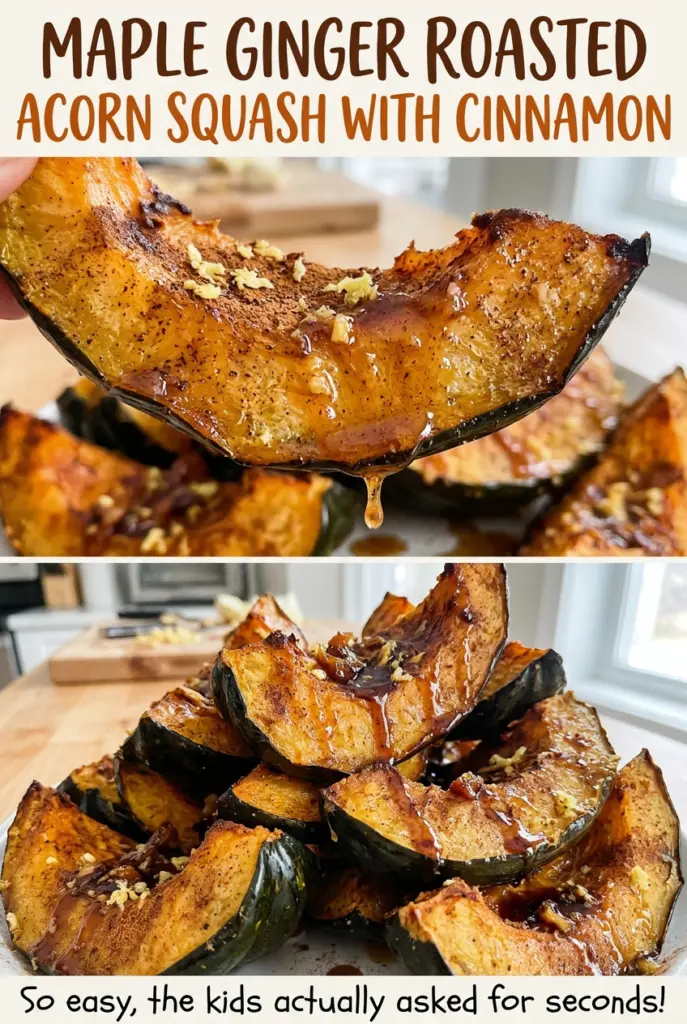
At 400°F, maple syrup starts to caramelize around the edges of these squash wedges while the centers are still softening. That’s the part I watch most closely: deep golden spots are welcome, but color alone doesn’t tell you whether the thickest pieces are tender. Cutting the squash into even wedges helps the whole pan finish together, and the butter keeps the maple and spices clinging to each piece.
For this maple ginger roasted acorn squash with cinnamon, I toss everything in a large bowl before the wedges go onto the pan. That gives each piece an even coat without pouring extra syrup over the top, where it could pool and brown too fast. Turn the wedges halfway through roasting so both sides get time against the hot pan. They come out tender, warmly spiced, and browned at the edges.
Kitchen Note
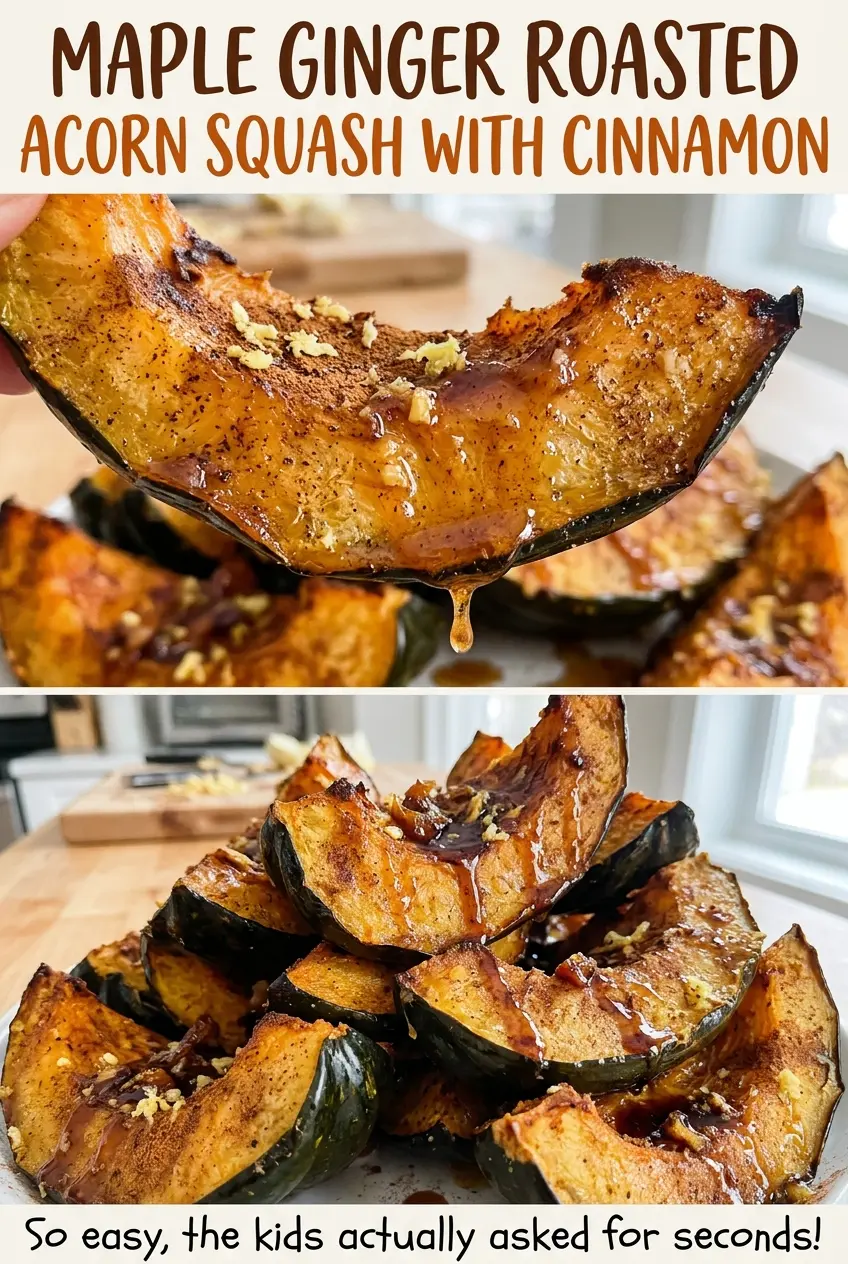
Turn the wedges at the halfway point, not just when you happen to remember. The browned side releases more easily once it has had time to roast, and turning then gives the other side a chance to color too.
Save these maple ginger roasted acorn squash wedges for a side dish with tender centers, browned edges, and a cinnamon-maple coating.
Why Acorn Squash Works Better as Wedges Than Halves
Roasting acorn squash in halves is common, but wedges are a better fit for this maple coating. A wedge has more cut surface exposed to the butter, syrup, and spices, so the seasoning gets distributed across the squash instead of sitting mostly in the hollow where the seeds were. Those broad surfaces also give the pieces room to brown as they roast.
Wedges are easier to turn than large squash halves, too. That matters here because the coating contains maple syrup, which can brown before a thick piece of squash is tender all the way through. Cutting the halves into pieces about an inch thick keeps the pieces manageable and helps them cook at a similar pace. Keep the rind on while cutting and roasting; it helps each wedge hold its shape, and the tender flesh can be eaten away from it once served. If the wedges vary a little, arrange the thicker ones toward the middle of the pan, where they’re easy to keep an eye on.
What Butter, Maple, and the Spices Each Bring to the Pan
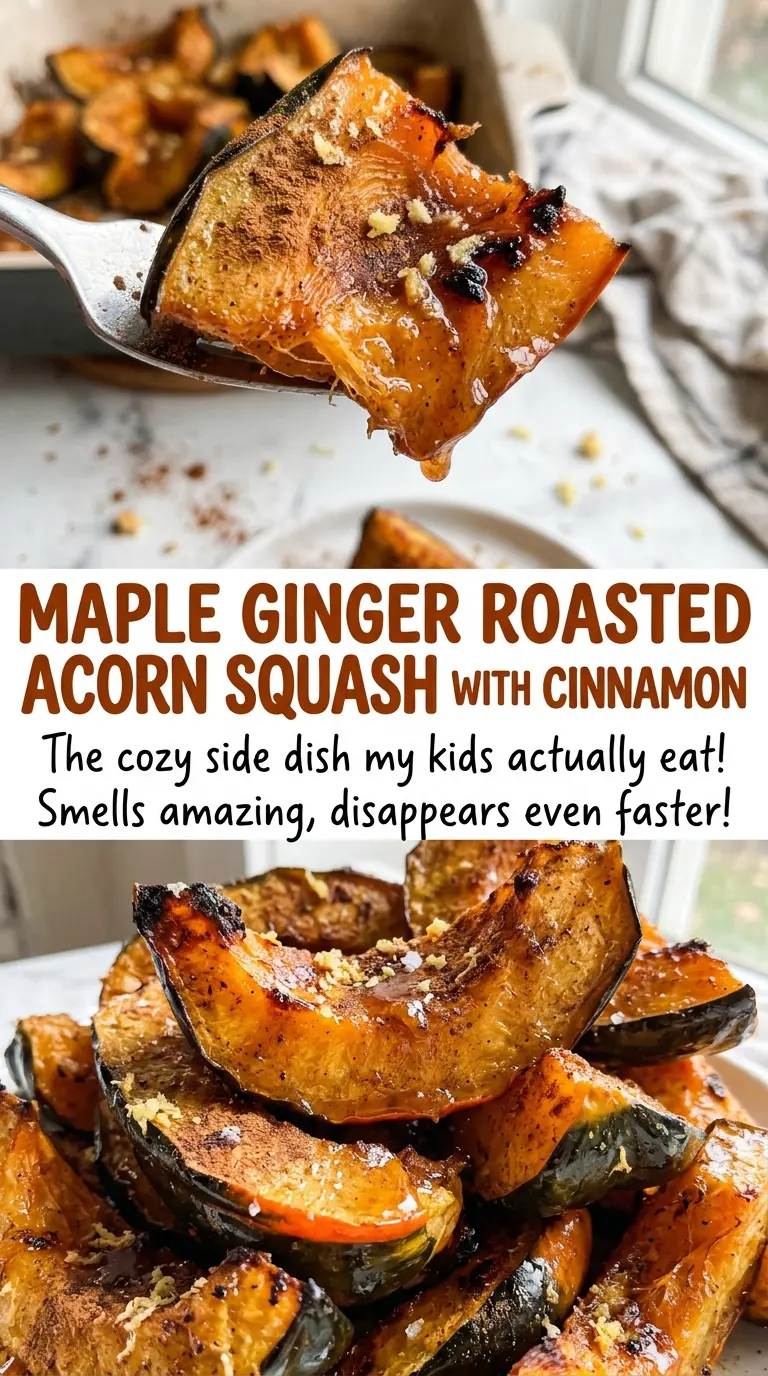
- Acorn squash — Choose squash that feels heavy for its size and has firm skin without soft spots. The two medium squash should be close to the stated total weight so the amount of coating suits the panful. There’s no need to peel them; cut through the rind when making wedges and scoop out the seeds first.
- Unsalted butter — Melted butter carries the spices over the squash and softens the maple’s sweetness with a rich, savory note. Unsalted butter gives you control over the salt in the finished coating. A standard grocery-store butter works well; there’s no need to seek out a specialty brand.
- Pure maple syrup — Its clear maple flavor and natural sweetness are central to the glaze. Use pure maple syrup rather than pancake syrup, which has a different sweetness and can make the coating taste less like maple. A bottle you already enjoy at the table is a good choice.
- Ground ginger and cinnamon — Ginger brings a gentle warmth, while cinnamon makes the squash taste rounder and sweeter without adding more syrup. Fresh, fragrant spices give the clearest aroma; if a jar has been open for a long time and smells faint, the finished wedges will too.
- Kosher salt — A little salt keeps the maple and cinnamon from tasting one-note sweet. If you use salted butter, leave out the kosher salt so the seasoning doesn’t become too salty.
From Cutting the Squash to Browning the Wedges
Cut Even Wedges Before the Oven Heats
Heat the oven to 400°F and line a rimmed baking sheet with parchment paper. Cut each squash in half lengthwise and scoop out the seeds, then slice the halves into wedges about an inch thick. Keep the pieces as even as you can; a mix of thin and thick wedges tends to brown unevenly. The squash is firm, so use a stable cutting board and keep your fingers clear of the blade.
Coat Every Surface in the Spiced Maple Mixture
Stir the melted butter, pure maple syrup, ground ginger, ground cinnamon, and kosher salt together in a large bowl. Add the squash and toss until the wedges are coated all over. If some seasoning settles at the bottom, give the bowl another toss before moving the pieces to the pan. Arrange the wedges in a single layer on the parchment-lined baking sheet rather than stacking them.
Roast Until Tender and Browned
Roast for 30–35 minutes, turning the wedges halfway through. Look for browned patches along the cut surfaces and flesh that gives when pierced with a fork; the thickest pieces should be tender, not firm in the center. If they’re browned but still firm, keep roasting until tender rather than pulling them based on color alone. The maple coating will darken as it cooks, so use the squash’s tenderness as your final cue.
Three Small Changes for Different Tables
A Dairy-Free Pan
For a dairy-free version, leave out the butter and toss the squash with the maple syrup, ginger, cinnamon, and salt. The coating will be less rich and won’t cling quite as evenly, but the maple and spices still give the wedges their sweet, warm character.
A Cinnamon-Forward Version
Leave out the ground ginger if you want a softer, more familiar cinnamon sweetness. The texture and roasting method stay the same, but you’ll lose ginger’s peppery warmth. Keep the cinnamon and other ingredients unchanged.
A Smaller Batch
Make half the recipe when you need fewer servings: halve each ingredient and roast the wedges in a single layer on the prepared baking sheet. Start checking toward the lower end of the roasting time, since a smaller number of pieces may brown sooner depending on their size and spacing.
Storage and Reheating
- Refrigerator: Store cooled leftovers in an airtight container for 3–4 days. The flesh softens as it sits, but the maple-spice flavor holds up well.
- Freezer: Freeze the roasted wedges in a single layer until firm, then transfer them to a freezer-safe container for up to 2 months. Thawed squash will be softer than freshly roasted wedges.
- Reheating: Warm the wedges in a 350°F oven until heated through. Avoid reheating them for too long in the microwave, which can make the squash very soft.
Questions That Come Up When Roasting Acorn Squash
Maple Ginger Roasted Acorn Squash with Cinnamon
Ingredients
Equipment
Method
- Heat the oven to 400°F.
- Line a rimmed baking sheet with parchment paper.
- Cut each squash in half lengthwise.
- Scoop out the seeds.
- Cut the halves into 1-inch-thick wedges.
- In a large bowl, stir together the melted butter, maple syrup, ginger, cinnamon, and salt.
- Add the squash wedges and toss to coat.
- Arrange the wedges in a single layer on the prepared baking sheet.
- Roast for 30–35 minutes, turning the wedges halfway through, until tender and browned.