
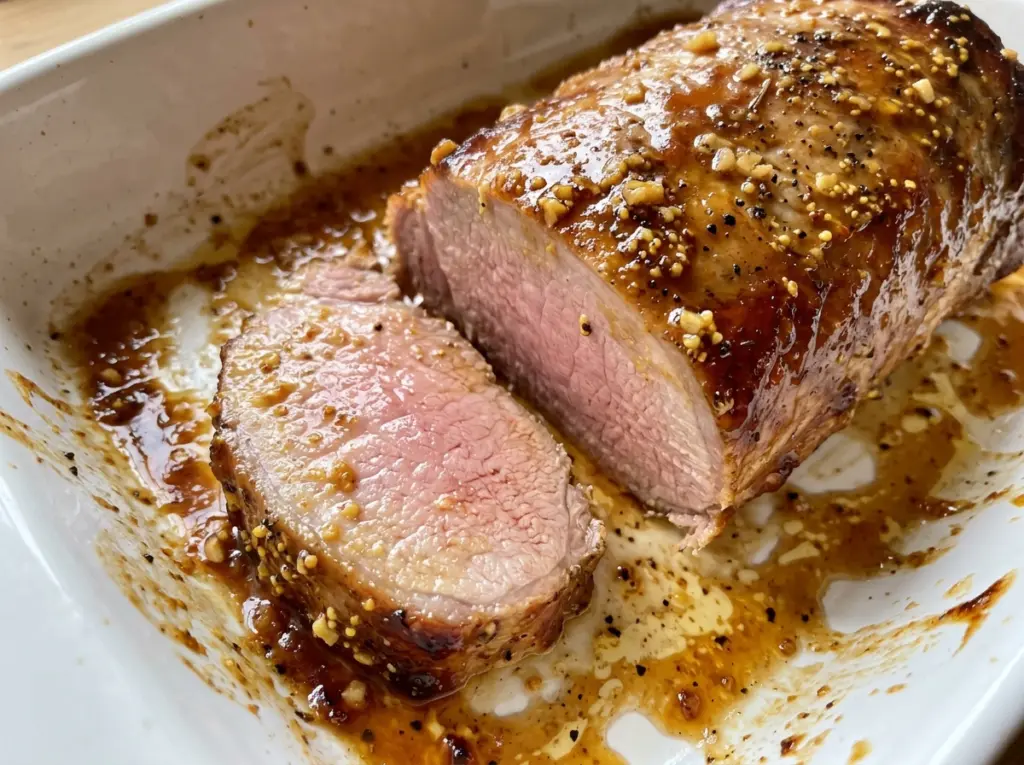
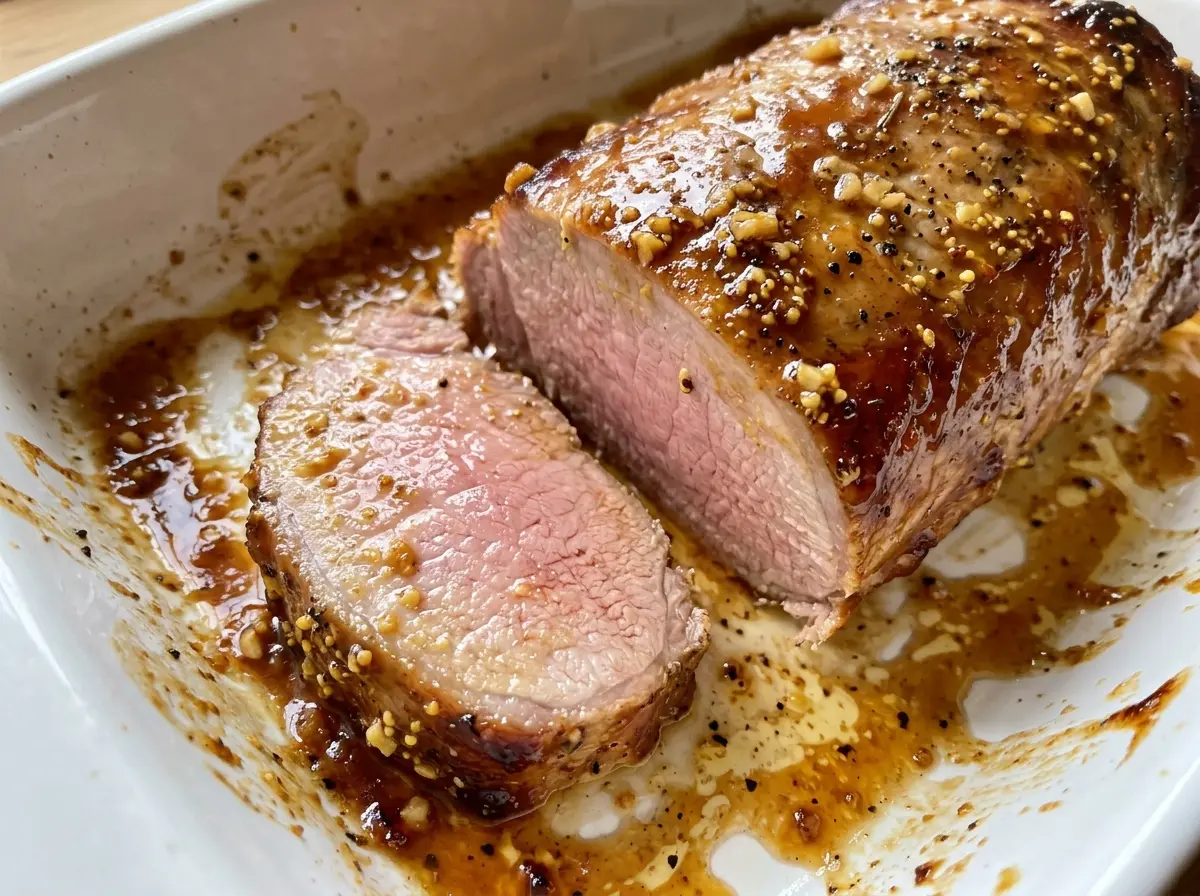
As the roast comes out of the oven, the maple and Dijon have turned into a thin, glossy coat that clings to the top instead of running into the pan. That late glaze is what makes this pork loin feel special without asking you to babysit it. The meat gets a head start in the oven, then the sweet-tangy mixture goes on for the final stretch.
I like this approach for a boneless pork loin because it keeps the maple flavor bright while the outside browns. The roast stays on a rack in a 9×13-inch pan, fat side up, and an instant-read thermometer tells you when it’s ready far more reliably than the clock alone. After its rest, the loin slices neatly into tender rounds with a savory edge and a shiny maple Dijon finish.
Kitchen Note
Let the roast rest for the full 10 minutes before slicing. I’ve found that cutting too soon sends the juices onto the board instead of leaving the pork moist.
Save this Maple Dijon Roast Pork Loin for a dinner that pairs tender slices with a glossy, sweet-tangy finish.
The Maple Goes on Late for a Reason
Maple syrup tastes wonderful on pork, but it’s also full of sugar that can darken quickly in a hot oven. If it went on at the beginning, it would spend the entire roast cooking against the heat and could turn too dark before the center was ready. Giving the pork time to roast on its own first lets the surface brown without putting the glaze through that long stretch of heat.
Dijon makes the glaze more than a sweet coating. Its sharp, tangy flavor cuts through the maple, and it helps the mixture cling when you brush it over the roast. The garlic gives that sweet-and-savory balance a little depth. Together, they coat the outside without hiding the pork’s flavor, and the short finish in the oven gives the glaze time to settle into a shiny layer.
This timing also gives you a clear cue to work with: the pork is already partway cooked when the glaze goes on. The glaze doesn’t need to cook the meat from raw; it only needs the final roasting stretch to warm through and adhere. That’s how you get a browned roast with a maple finish that tastes rounded rather than scorched.
The Roast, Mustard, and Maple Each Have a Job
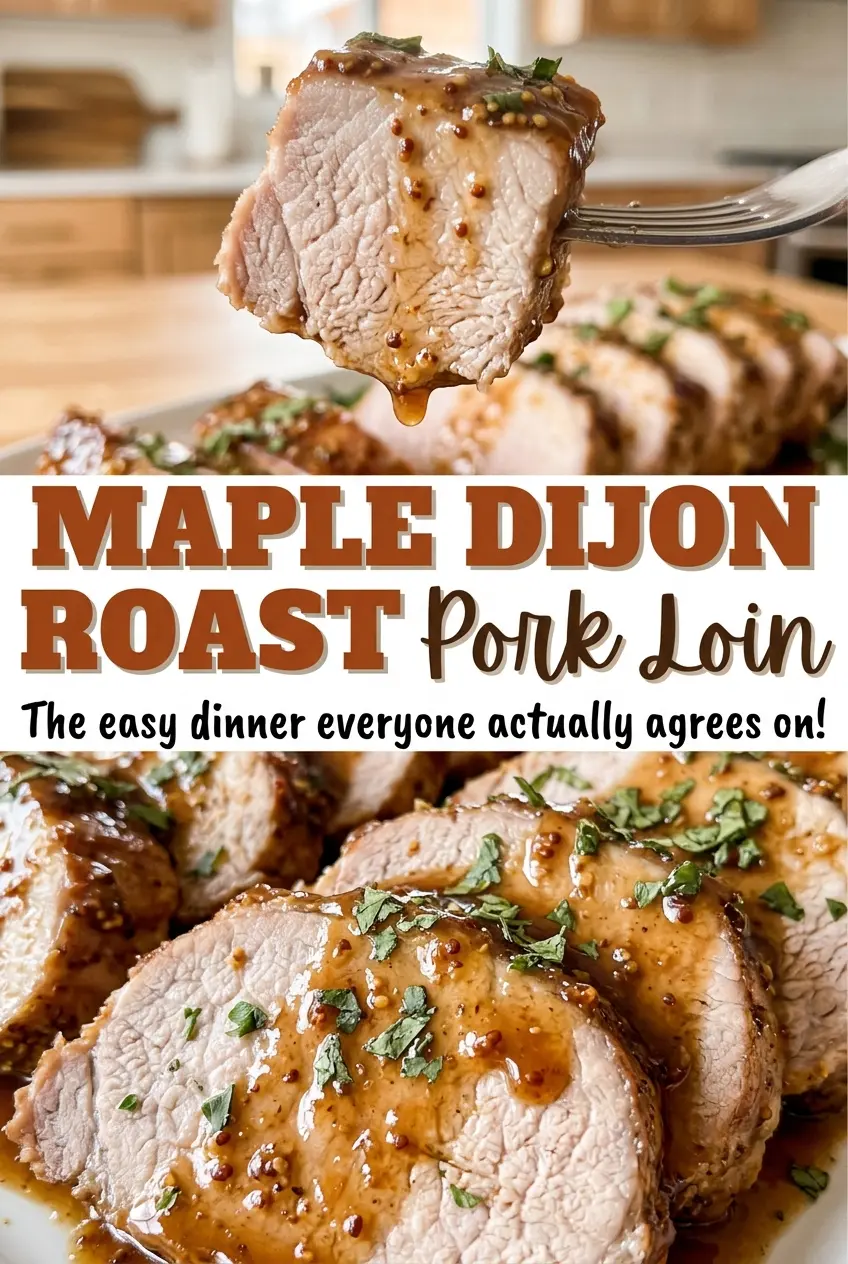
- Boneless pork loin — Choose a roast that’s labeled pork loin, not pork tenderloin. A loin is a larger, thicker cut that suits this roasting time; tenderloin cooks much faster and won’t behave the same way. The fat cap can help protect the top as the roast cooks, which is why it goes fat side up.
- Pure maple syrup — Pure syrup brings a woodsy sweetness that pancake syrup won’t quite match. Since it’s a defining flavor in a short ingredient list, use the real thing; there’s no need to seek out an expensive specialty grade.
- Dijon mustard — Dijon brings acidity and a smooth texture to the glaze. A standard jar works well here, so save the special-occasion mustard for a dish where its subtleties have more room to stand out.
- Garlic — Mince the clove finely so it disperses through the syrup and mustard instead of leaving a large bite of raw garlic in one spot. Fresh garlic gives the glaze a more direct savory note than a dried seasoning would.
- Olive oil and black pepper — The oil helps the seasonings spread over the pork, while pepper adds a little warmth to the outside. Ordinary olive oil and freshly ground or pre-ground black pepper both work; there’s no need for a specialty bottle.
How to Roast the Loin Before the Glaze Can Darken
Set Up the Roast for Even Browning
Heat the oven to 375°F and set a rack inside a 9×13-inch roasting pan. Pat the pork dry before rubbing it with olive oil, then season all over with kosher salt and black pepper. Place it on the rack with the fat side facing up. A dry surface gives the roast a better start than one coated with moisture.
Roast Until the Center Is Partway Cooked
Let the pork roast for 40 to 50 minutes before glazing. Check the center with an instant-read thermometer; you’re looking for 120 to 125°F at this stage. Insert the thermometer into the middle of the thickest section so you’re measuring the meat rather than the pan or the rack. If the first reading is below that range, give it more time and check again.
Whisk the Glaze While the Pork Roasts
While the roast is in the oven, whisk the pure maple syrup, Dijon mustard, and minced garlic together in a small bowl. Keep whisking until the mustard is distributed and the mixture looks uniform, with no thick streaks of mustard left at the bottom. The glaze is ready to brush on once the pork reaches its first temperature range.
Brush, Finish Roasting, and Rest
Brush the glaze over the pork, then return it to the oven for another 15 to 25 minutes. Use the thermometer again and take the roast out when the center registers 145°F; the clock gives you a window, but the center temperature is the cue that matters. Move the pork to a cutting board and let it rest for 10 minutes before slicing. The glaze will look glossy on the outside, and the rested meat will be easier to carve cleanly.
Three Useful Twists on the Maple Dijon Glaze
A more textured mustard finish
Replace the Dijon with the same amount of whole-grain mustard. The glaze will have visible mustard seeds and a less smooth texture, while keeping its tangy contrast with the maple.
A honey-sweet glaze
Use honey in place of the maple syrup, keeping the same amount. Honey makes the finish taste more straightforwardly sweet and less distinctly maple; keep the glaze on for the same final roasting stage and watch the temperature rather than extending the time.
A lower-sodium seasoning
Leave out the kosher salt and keep the black pepper and glaze. The pork will taste less seasoned throughout, and the Dijon still contributes some sodium, so this change reduces added salt but doesn’t make the dish sodium-free.
Storage and Reheating
- Refrigerator: Refrigerate leftovers within 2 hours in a covered container and use them within 3 to 4 days. The chilled slices will firm up but remain easy to portion.
- Freezer: The cooked pork freezes well. Slice and pack it in an airtight freezer-safe container; use it within 2 to 3 months for the best texture.
- Reheating: Warm slices covered in a baking dish with a spoonful of water, just until heated through to 165°F. Avoid leaving them uncovered in a hot oven, which can dry the lean meat.
Questions That Come Up While Roasting Pork Loin
Maple Dijon Roast Pork Loin
Ingredients
Equipment
Method
- Preheat the oven to 375°F.
- Place a rack in a 9x13-inch roasting pan.
- Pat the pork dry.
- Rub the pork with the olive oil.
- Season the pork all over with the salt and pepper.
- Place it fat side up on the rack.
- Roast for 40-50 minutes, until the center registers 120-125°F on an instant-read thermometer.
- While the pork roasts, whisk the maple syrup, Dijon mustard, and garlic together in a small bowl.
- Brush the glaze over the pork.
- Continue roasting for 15-25 minutes, until the center registers 145°F.
- Transfer the pork to a cutting board.
- Rest for 10 minutes before slicing.