
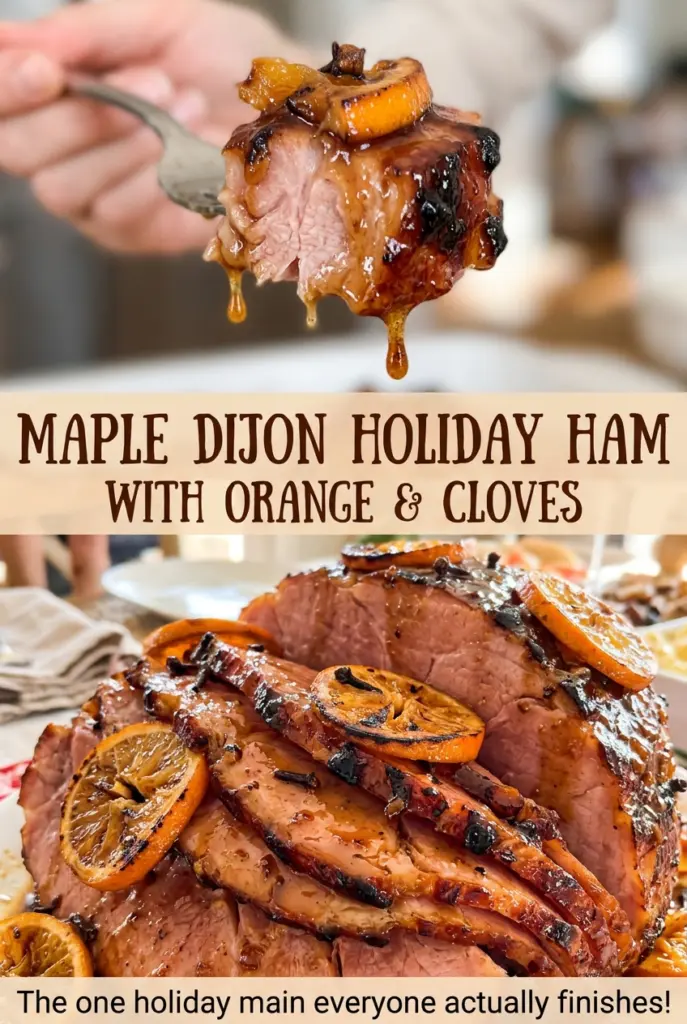
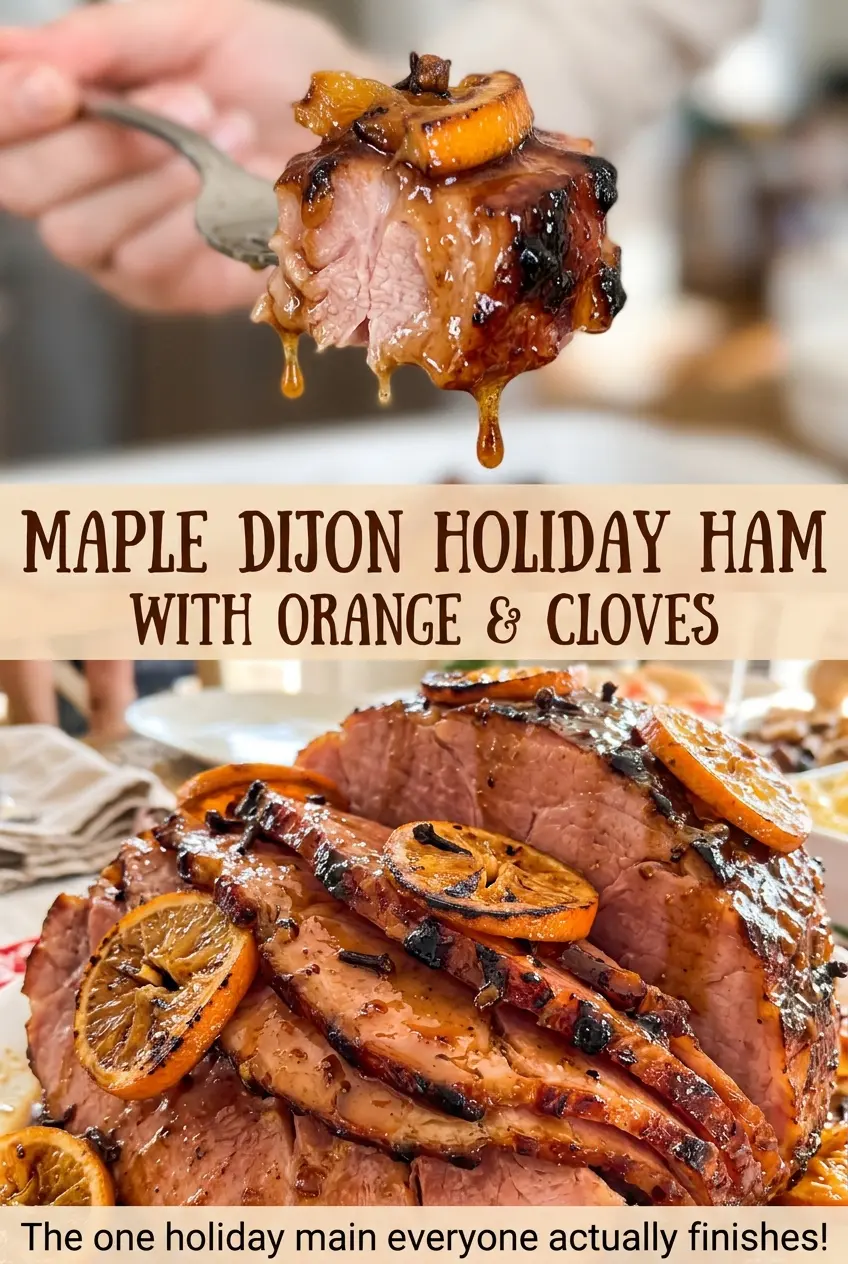
When the foil comes off, the ham is warm and fragrant, but it still looks more like dinner than a holiday centerpiece. That last stretch in the oven is where the maple-orange glaze turns glossy and clings to the scored fat. I keep the ham whole and unspiraled so there’s a broad surface to score and glaze, and the slices stay together neatly when it’s time to carve.
The glaze balances pure maple syrup with Dijon, orange juice, brown sugar, and a little orange zest. It simmers while the ham heats, which gives it time to thicken without pulling you away from the oven. Brushing it on in two rounds gives the first layer time to set before the final coat goes on. The finished ham is savory, gently sweet, and scented with orange and cloves.
Kitchen Note
Press the whole cloves into selected intersections in the scored fat, then take them out after the ham rests. I look over the surface before carving so nobody gets an unexpected whole clove in a slice.
Save this maple Dijon holiday ham for a glossy orange glaze, warm clove aroma, and a centerpiece that carves cleanly.
Why the Ham Stays Covered Until the Glaze Is Ready
A long, uncovered roast can dry the outside before the center of a large ham is hot. Keeping the pan tightly covered for the first bake protects the surface while the heat works through the meat. Because this ham is already fully cooked, the goal isn’t to roast it like raw pork; it’s to warm it gently, then use the uncovered finish to set the glaze.
The timing depends on the ham’s size, so use the thermometer rather than treating the clock as the only signal. Once the center reaches 120°F, the ham is ready for its first glaze layer. The final uncovered baking brings it to 140°F and gives the maple mixture time to turn shiny. If you glaze too early, the sugars spend longer in the oven and can darken before the ham is heated through.
Scoring the fat gives the glaze little ridges and diamonds to catch on. Keep the cuts shallow—about 1/4 inch deep—so you score the fat without cutting deeply into the meat. That measured scoring, the covered warming, and the short glazed finish each have a different job; together they help the outside look burnished without leaving the ham’s surface tough.
What the Maple, Dijon, and Orange Each Bring to the Glaze

- Bone-in, fully cooked ham — Choose a commercially packaged ham that hasn’t been spiral-cut. The intact surface is easier to score and glaze, and the bone gives you a useful landmark to avoid when checking the center temperature. A boneless ham changes the shape and heating pattern, so it isn’t a direct stand-in for this method.
- Whole cloves — Whole cloves give the ham its warm, aromatic note and are easy to remove after resting. If you don’t want that flavor, leave them out rather than replacing them with ground cloves; ground spice won’t stay in place on the scored surface and can make the glaze taste harsh.
- Pure maple syrup — Maple brings a distinct woodsy sweetness that pairs well with mustard and orange. Use pure maple syrup rather than pancake syrup for that flavor. Honey can replace it in the same amount, though the glaze will taste more floral and less like maple.
- Dijon mustard — Dijon gives the glaze a sharp, savory edge that keeps the sweet ingredients in check. A smooth, basic Dijon is a good choice; whole-grain mustard works in the same amount but leaves the glaze visibly speckled and slightly textured.
- Orange juice and zest — The juice adds brightness and liquid to the glaze, while finely grated zest supplies fragrant orange oils. Fresh juice is lovely, but plain bottled orange juice works when that’s what you have. If you’re out of orange zest, finely grated lemon zest gives a brighter, more tart citrus note.
- Packed light brown sugar — Brown sugar helps the simmered glaze thicken and gives it a mellow caramel note. Dark brown sugar can stand in for light brown sugar in the same amount, with a deeper molasses flavor; pack it into the measuring cup just as you would the light brown sugar.
The Covered Bake, the Simmer, and the Glossy Finish
Score and Set the Ham on the Rack
Heat the oven to 325°F and set a rack in a large 16×13-inch roasting pan. Pat the ham dry, then score the fat in a 1-inch diamond pattern about 1/4 inch deep; deeper cuts can reach the meat rather than just opening the fat for the glaze. Place the ham cut side down on the rack and press the whole cloves into selected intersections. Cover the pan tightly with foil so the ham warms without its surface drying out.
Warm the Ham to the First Temperature Check
Bake the covered ham for 1 1/2 to 2 1/2 hours, checking the center with an instant-read thermometer inserted away from the bone. The bone can interfere with an accurate reading, so angle the thermometer into the thickest central area without touching it. Pull the foil back carefully when the center reaches 120°F. The ham should be warm throughout, but it still needs the glazed finish to reach the serving temperature.
Simmer the Maple-Orange Glaze
While the ham bakes, combine the maple syrup, Dijon mustard, orange juice, brown sugar, and orange zest in a 2-quart saucepan. Bring the mixture to a simmer over medium heat, stirring often so the sugar dissolves and the glaze doesn’t catch on the bottom. Cook for 6 to 8 minutes, until it looks slightly thickened. It will still be brushable; don’t reduce it until it turns stiff or candy-like.
Brush in Two Coats and Rest Before Carving
Remove the foil and brush half the glaze over the ham, coating the scored surface. Bake uncovered for 15 minutes, then brush on the remaining glaze and bake for 5 to 15 minutes more, until the center reaches 140°F and the glaze looks glossy. If the glaze is already deeply browned before the center reaches temperature, loosely shield the surface with foil while it finishes heating. Rest the ham for 15 minutes, remove the cloves, and carve.
Two Ways to Shift the Sweetness and Citrus
A brighter lemon-orange glaze
For a sharper citrus finish, use 1/4 cup orange juice and 1/4 cup lemon juice in place of the 1/2 cup orange juice. Keep the orange zest; it preserves the familiar orange aroma while the lemon makes the glaze taste more tart. The glaze will still simmer and brush onto the scored surface as usual.
A less-sweet, more savory finish
Leave out the brown sugar for a glaze that leans more on Dijon and maple than on caramel sweetness. It will be a little less thick and less candy-like after simmering, but it still brushes over the ham; stir often and stop when it has reduced slightly.
Storage and Reheating
- Refrigerator: Refrigerate carved leftovers within 2 hours and use them within 3 to 4 days. The glaze will firm up when cold, and the ham may be a little less juicy after chilling.
- Freezer: Freeze carved portions in airtight freezer packaging for up to 1 to 2 months for best quality. Thaw in the refrigerator before reheating; the glaze may look less glossy once thawed.
- Reheating: Warm slices covered in a 325°F oven with a splash of water until the center reaches 165°F. Avoid reheating uncovered, which can dry the slices before they’re hot all the way through.
Questions That Come Up Before the Ham Goes in the Oven
Maple Dijon Holiday Ham with Orange and Cloves
Ingredients
Equipment
Method
- Heat the oven to 325°F.
- Set a rack in a large 16x13-inch roasting pan.
- Pat the ham dry.
- Score the fat in a 1-inch diamond pattern, about 1/4 inch deep.
- Place the ham cut side down on the rack.
- Press the cloves into selected intersections.
- Cover the pan tightly with foil.
- Bake for 1 1/2 to 2 1/2 hours, until the center of the ham reaches 120°F on an instant-read thermometer inserted away from the bone.
- While the ham bakes, combine the maple syrup, Dijon mustard, orange juice, brown sugar, and orange zest in a 2-quart saucepan.
- Bring the glaze to a simmer over medium heat.
- Cook for 6 to 8 minutes, stirring often, until slightly thickened.
- Remove the foil.
- Brush half the glaze over the ham.
- Bake uncovered for 15 minutes.
- Brush the ham with the remaining glaze.
- Bake for 5 to 15 minutes more, until the ham reaches 140°F and the glaze is glossy.
- Rest the ham for 15 minutes.
- Remove the cloves.
- Carve to serve.