
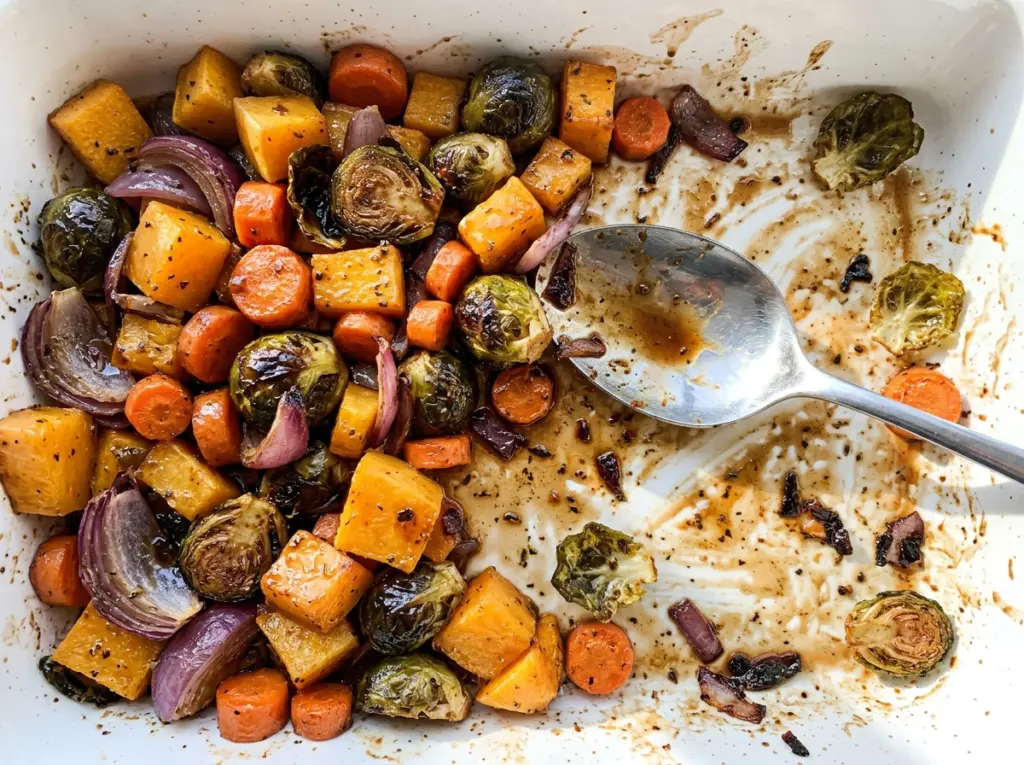
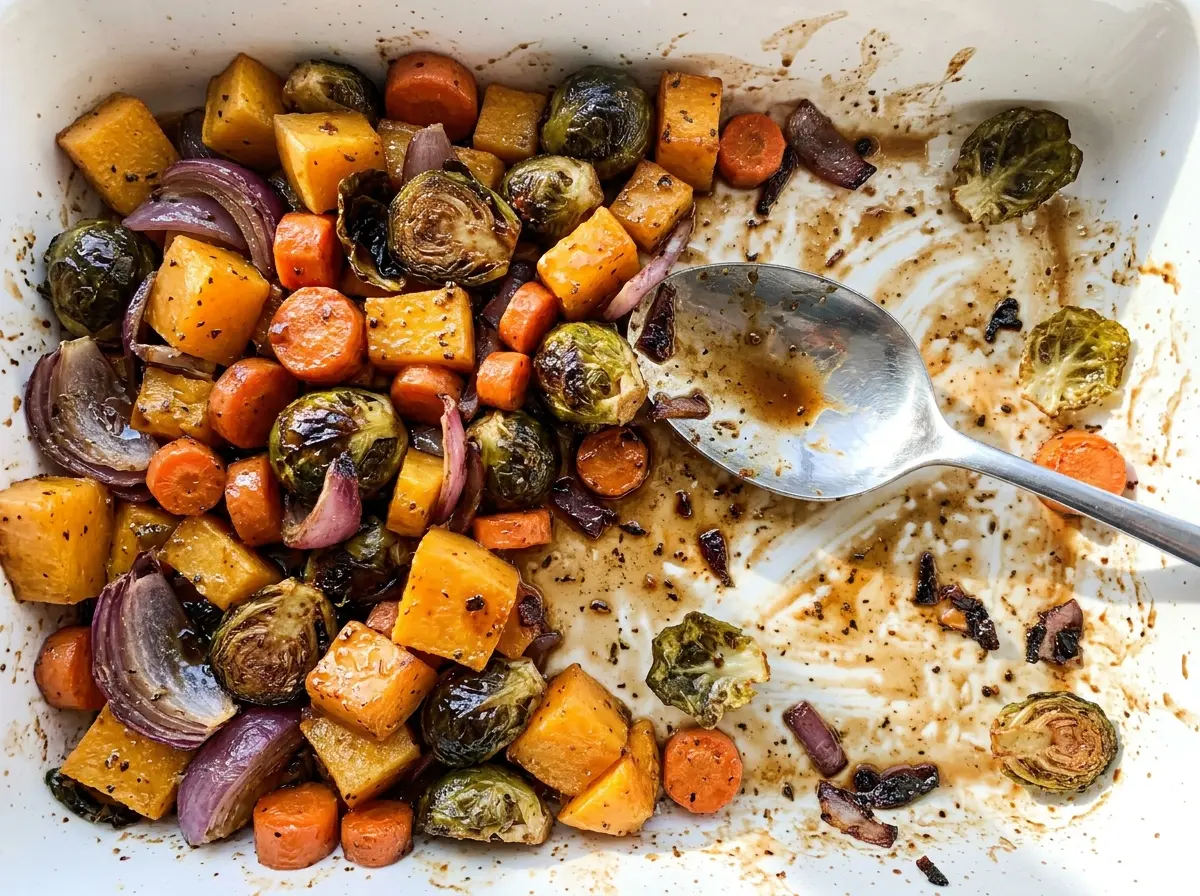
As the vegetables roast, the squash softens while the Brussels sprouts and carrots pick up browned edges. The maple-balsamic glaze goes on near the end, so it turns glossy around the vegetables instead of spending the whole roast in the hot oven. These maple balsamic roasted fall vegetables make a generous side dish for eight, with a sweet-tart finish that keeps the squash from tasting overly sweet.
I cut the vegetables to different sizes for a reason: the squash gets 3/4-inch cubes, while the carrots are cut into 1/2-inch pieces. That balance helps them finish together, even though the vegetables don’t all cook at the same speed. Two baking sheets give everything room to roast rather than steam.
The method is straightforward, but the order matters. Roast the vegetables first, then toss them with the maple and balsamic for the final few minutes. The finished tray has tender centers, browned edges, and a thin, shiny coating that clings to each piece.
Kitchen Note
I add the maple-balsamic glaze after the vegetables have roasted for 25 minutes, not at the start. Give it just 5–8 minutes in the oven afterward; that’s enough time for the glaze to turn glossy without letting the maple syrup scorch.
Save these maple balsamic roasted fall vegetables for a dinner that needs a colorful side with browned edges and a glossy sweet-tart finish.
Why These Vegetables Need Two Pans to Brown Properly
When root vegetables and Brussels sprouts are packed tightly together, moisture from the vegetables gets trapped between them. That damp heat softens the pieces, but it makes browning harder. Two 18×13-inch rimmed baking sheets let you spread the squash, sprouts, carrots, and onion in a single layer, with space around the pieces for hot air to circulate.
Dividing the vegetables between the pans also helps keep the mix from becoming lopsided. Squash cubes are larger and soft inside; the carrots are cut smaller, and Brussels sprouts have exposed cut sides that brown readily. If a few pieces touch, that’s fine. What you want to avoid is a crowded mound, especially in the middle of a pan.
Parchment keeps the maple-balsamic coating from sticking at the finish, while the rimmed pans hold the oil and vegetable juices. Rotate the pans between oven racks partway through roasting so each tray gets time in the hotter and cooler spots. That small adjustment helps the two pans finish more evenly.
What Each Vegetable Brings to the Maple-Balsamic Tray
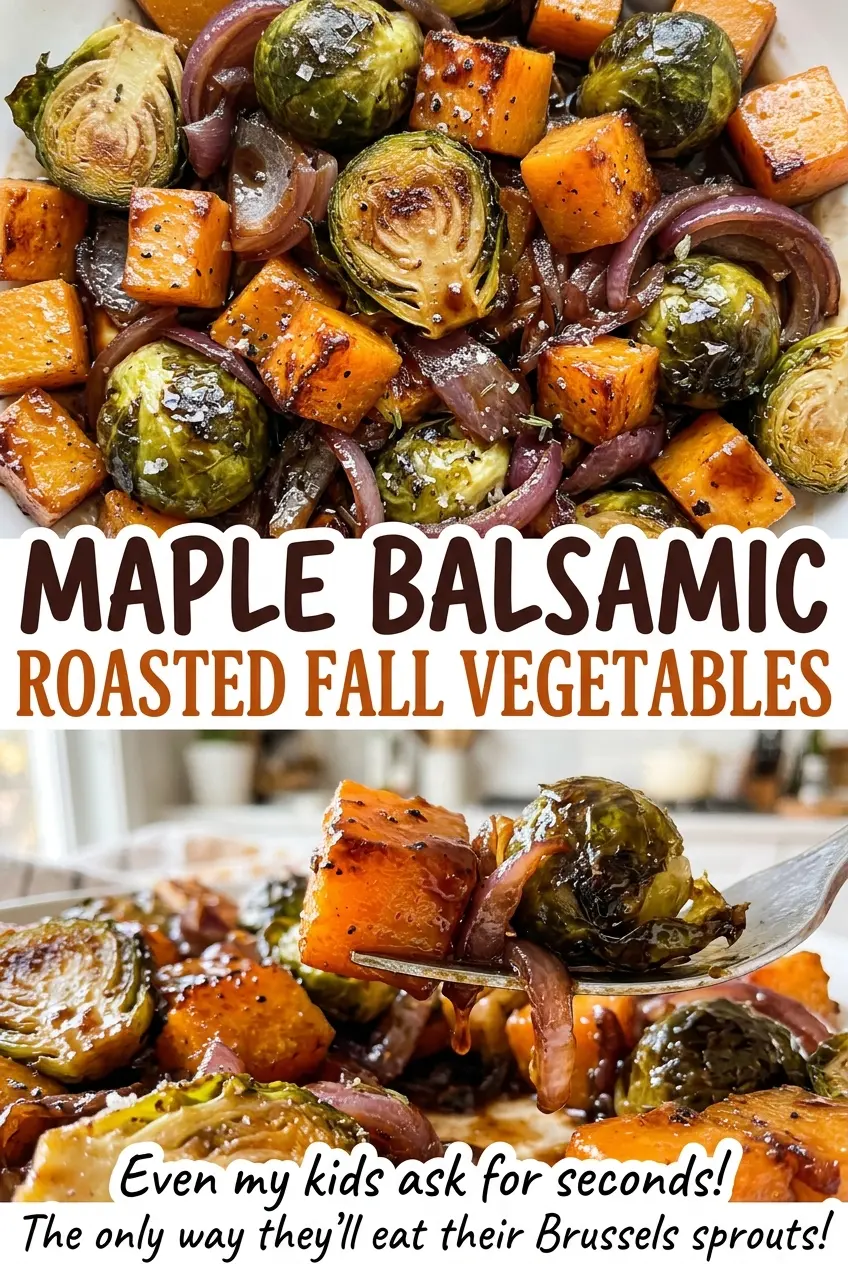
- Butternut squash — Its mild sweetness and soft, creamy center balance the sharper balsamic. Choose a firm squash, peel it fully, and cut the cubes evenly so the centers soften during the roast without the edges falling apart.
- Brussels sprouts — Halving them exposes the cut sides to the hot pan, where they can brown. Trim only the dry stem end; taking off too many outer leaves leaves smaller pieces that can darken before the larger vegetables are tender.
- Carrots — The diagonal cut gives each piece a broad surface and keeps the carrots substantial beside the squash. Cut them into consistent 1/2-inch pieces; thick chunks are more likely to stay firm when the rest of the tray is ready.
- Red onion — The wedges add a savory edge to the sweeter vegetables and glaze. Keep the pieces about an inch wide so they hold together through stirring rather than breaking into thin strands.
- Olive oil — It coats the vegetables so they roast evenly and carries the salt and pepper across the tray. A standard everyday olive oil works well here; there’s no need to use a strongly flavored finishing oil.
- Balsamic vinegar and pure maple syrup — Balsamic brings acidity while maple syrup rounds it with sweetness. Pure maple syrup gives the glaze its clean maple note; pancake syrup has a different flavor and can make the finish taste more one-dimensional.
The Roast-Then-Glaze Sequence That Keeps the Finish Shiny
Cut and coat for even roasting
Heat the oven to 425°F and line two 18×13-inch rimmed baking sheets with parchment paper. Divide the squash, Brussels sprouts, carrots, and red onion between the pans, then toss them with the olive oil, kosher salt, and black pepper. Spread everything in a single layer instead of leaving a pile in the center. The vegetables should be lightly coated, not sitting in a pool of oil.
Whisk the glaze while the oven heats
Whisk the balsamic vinegar and pure maple syrup together in a small bowl until combined. There’s no need to cook the glaze separately; it finishes on the vegetables in the oven. Keep it nearby so it’s ready when the first roast is complete. If the syrup settles while it sits, give it another quick whisk before using it.
Roast, rotate, and finish with the glaze
Roast the vegetables for 15 minutes, then rotate the pans between oven racks and stir the vegetables. Return them to the oven for 10 minutes more before drizzling the glaze over the pans and tossing to coat. Roast for another 5–8 minutes, until the vegetables are tender and browned and the glaze looks glossy. If the vegetables need a little longer to become tender, use those visual and texture cues rather than expecting every oven to finish at the same moment.
Two Simple Ways to Adjust the Tray Without Changing Its Character
Make a half batch for a smaller table
Halve every ingredient, including the vinegar and maple syrup, and use one of the same 18×13-inch rimmed baking sheets. Keep the vegetables in a single layer and use the same oven temperature and sequence; the smaller quantity is easier to spread out, but the pieces still need enough time to become tender.
Leave out the red onion for a milder tray
Omit the onion if you want the squash, carrots, and Brussels sprouts to stand out without the onion’s savory bite. Divide the remaining vegetables between the two pans as usual. The finished tray will taste sweeter and less savory, with the balsamic providing most of the contrast.
Storage and Reheating
- Refrigerator: Store in an airtight container for 3–4 days. The vegetables soften and the glaze loses some of its shine as they chill.
- Freezer: These can be frozen in an airtight container, but thawed vegetables will be softer and less browned. Freeze only if that texture change works for how you plan to use them.
- Reheating: Spread leftovers on a baking sheet and warm them in a 425°F oven until heated through, or microwave a portion until it reaches 165°F. Avoid reheating them in a deep, tightly packed pile if you want the edges to regain some color.
Questions That Come Up Before the Vegetables Go in the Oven
Maple Balsamic Roasted Fall Vegetables
Ingredients
Equipment
Method
- Heat the oven to 425°F.
- Line two 18x13-inch rimmed baking sheets with parchment paper.
- Divide the squash, Brussels sprouts, carrots, and onion between the baking sheets.
- Toss the vegetables with the olive oil, salt, and pepper.
- Spread the vegetables in a single layer.
- Whisk the balsamic vinegar and maple syrup together in a small bowl.
- Roast the vegetables for 15 minutes.
- Rotate the pans between oven racks.
- Stir the vegetables.
- Roast for 10 minutes more.
- Drizzle the glaze over the vegetables and toss to coat.
- Return the vegetables to the oven for 5–8 minutes, until the vegetables are tender and browned and the glaze is glossy.