
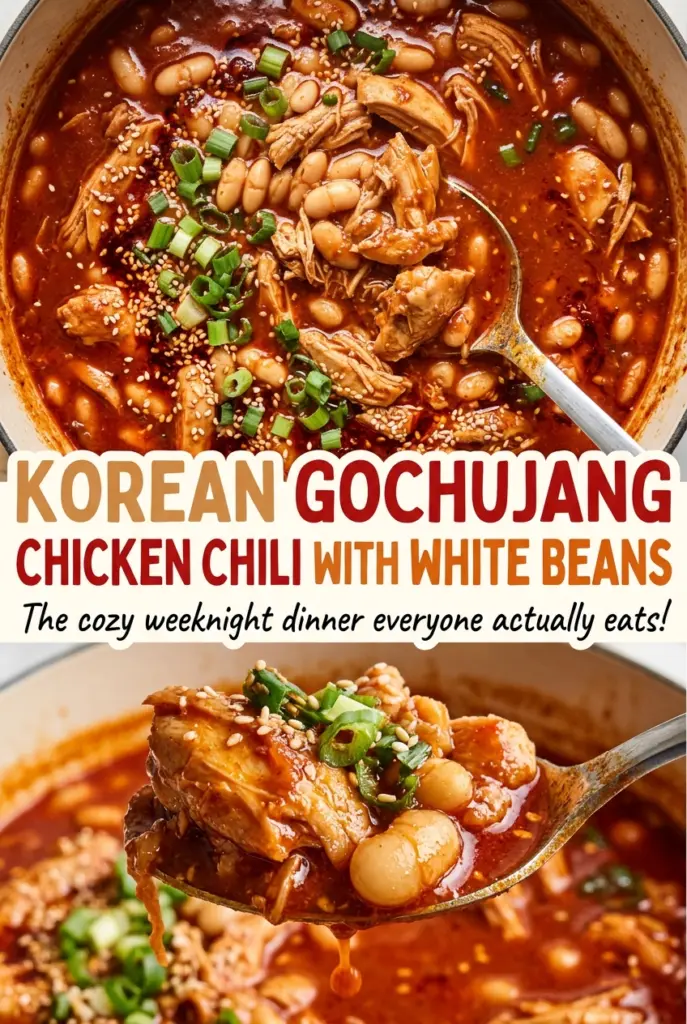
The chicken should sizzle as it hits the hot oil; if the Dutch oven is crowded, that sound fades and the pieces start steaming instead. I brown the chicken in batches, then let the onion soften in the same pot so the browned bits stay right where they belong. That first bit of attention gives this Korean gochujang chicken chili with white beans a deeper, savory base.
Gochujang brings chile heat and a fermented, savory edge, while tomato paste and smoked paprika make the broth taste rounded rather than sharp. The chicken simmers in that sauce before the cannellini beans go in, so they keep their shape instead of turning to mush. A little mashing at the end thickens the pot without needing flour or a long reduction.
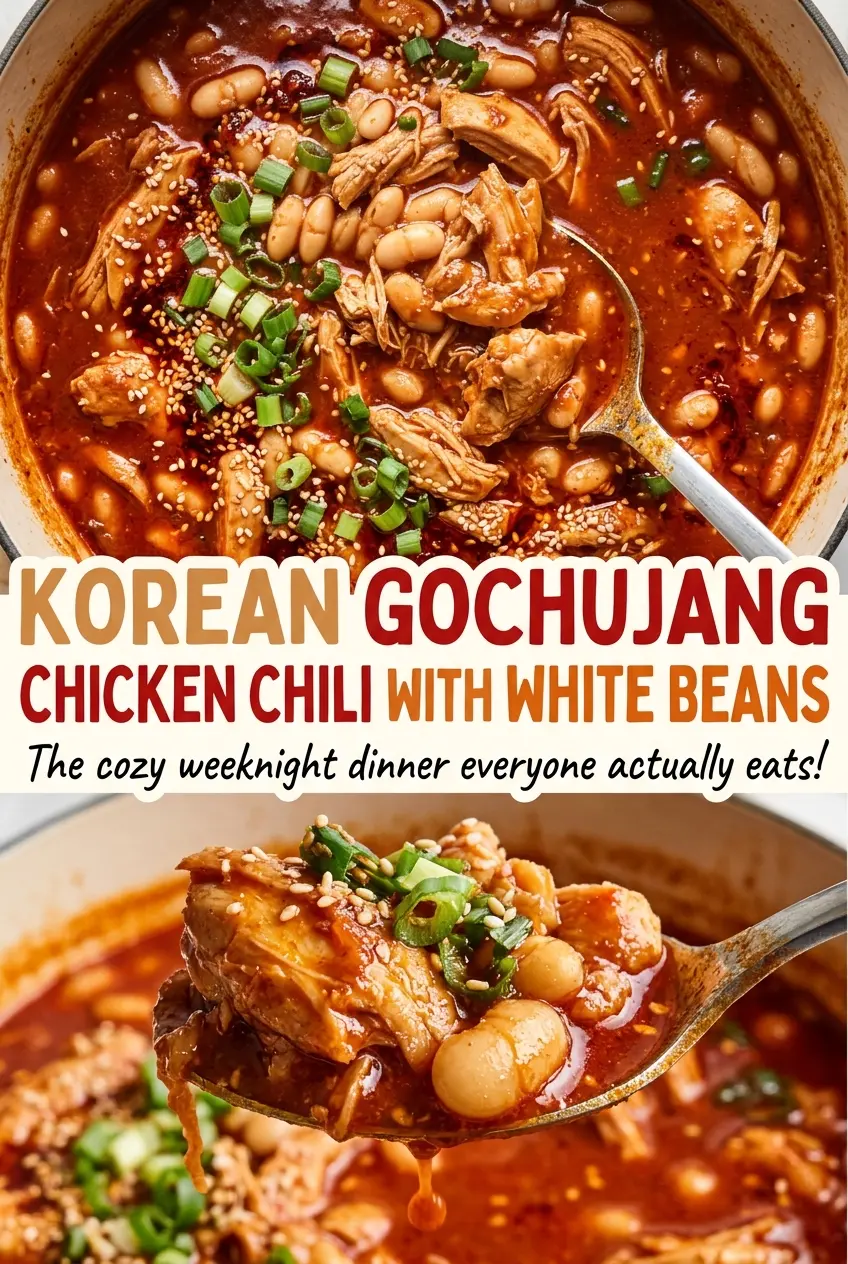
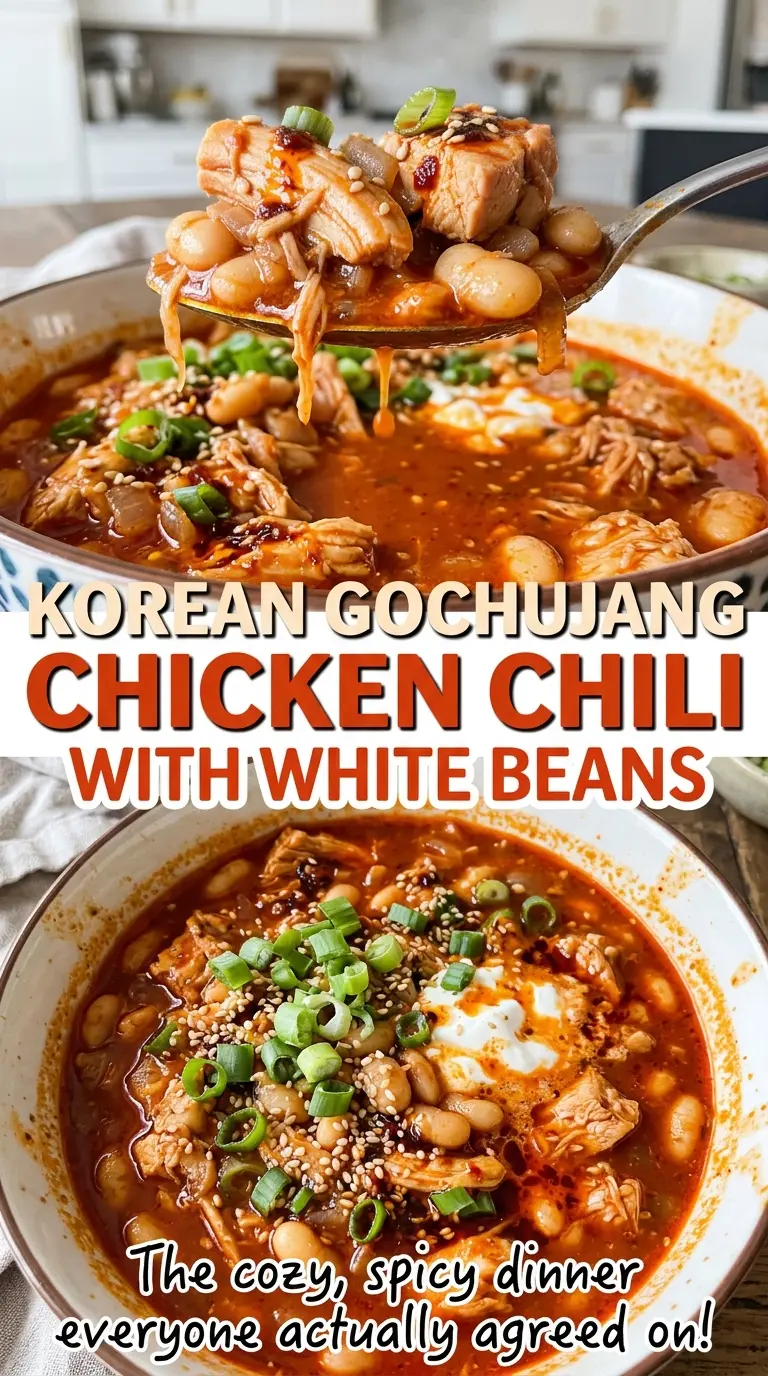
The finish is hearty but still bright: tender chicken, creamy beans, and a gentle lift from lime juice. It’s a good bowl to ladle when you want chili with a different kind of warmth.
Kitchen Note
I stir in the lime juice after the beans have simmered, not before. It keeps the finish bright against the rich tomato-and-gochujang broth.
Save this Korean gochujang chicken chili for a cozy bowl with tender chicken, creamy white beans, and a bright lime finish.
The Browned Bits Are Doing More Than Adding Color
It’s easy to treat browning as a quick step before the “real” chili starts, but those dark bits on the bottom of the pot are part of the sauce. Chicken browned in batches leaves behind savory fond, and the onion softens right in that same pot. When the broth, tomatoes, and soy sauce go in, scraping the bottom loosens those bits and carries their flavor through the whole batch.
There’s a second benefit to keeping the browning stage separate from the simmer. The chicken gets color without needing to cook through in the pan, then finishes gently in the liquid. That keeps the pieces tender and gives the broth time to take on flavor. If the pot looks dry or the fond is getting too dark while you brown, lower the heat slightly before adding the next batch; scorching the bits would make the finished chili taste bitter rather than deeply savory.
Gochujang also needs a short turn in the pot before the liquid goes in. Thirty seconds with the cumin and smoked paprika wakes up the paste’s aroma, but a longer cook risks scorching it. Keep the broth and tomatoes close so you can pour them in as soon as the spices smell fragrant.
The Ingredients That Give This Chili Its Heat and Creamy Body
- Gochujang — This Korean fermented chile paste gives the broth its distinctive savory heat and a little sweetness. Brands vary in intensity, so use a brand you enjoy; there isn’t a direct swap that recreates its character. The paste is cooked briefly with the spices, which brings out its aroma.
- Chicken thighs — Boneless, skinless thighs stay juicy through browning and simmering, and cutting them evenly into 1-inch pieces helps them cook at the same pace. Chicken breast is a workable leaner option, but it’s less forgiving; see the FAQ for how to handle it.
- Cannellini beans — Their mild taste and creamy centers soften the chile heat and help thicken the chili when a few are mashed. Great Northern beans are the closest swap; drain and rinse them just as you would the cannellini.
- Tomato paste and diced tomatoes — The paste adds concentrated tomato depth, while canned diced tomatoes bring liquid and small pieces of tomato throughout the broth. A standard store-brand can works well here; cooking the paste briefly with the aromatics keeps it from tasting raw.
- Fresh ginger, garlic, and lime — Fresh ginger and garlic bring a clean, pungent base that jarred dried seasonings don’t quite match. Fresh lime juice gives the finished pot a sharper lift than bottled juice. Grate the ginger finely so it blends into the broth rather than leaving stringy pieces.
- Low-sodium chicken broth and soy sauce — The broth supplies the simmering liquid, and soy sauce adds a rounded salty savoriness. Low-sodium broth gives you more control over the final seasoning; regular broth can make the chili taste saltier.
The Pot Sequence That Builds Flavor Without Overcooking the Chicken
Brown the chicken in uncrowded batches
Heat the oil in a 6-quart Dutch oven over medium-high heat. Season the chicken with kosher salt and black pepper, then brown it in batches for 2 to 3 minutes per side before transferring each batch to a plate. Leave space between the pieces so they sear instead of releasing moisture into a crowded pot. The chicken won’t be cooked through yet; it finishes in the simmering broth.
Soften the onion before adding the aromatics
Add the remaining oil and cook the diced onion over medium heat for 4 to 5 minutes, stirring until it softens. Stir in the tomato paste, minced garlic, and grated ginger, and cook for 1 minute. Keep the mixture moving so the garlic doesn’t catch on the bottom. The onion should look softened, and the tomato paste should darken slightly.
Bloom the gochujang, then loosen the pot
Stir in the gochujang, cumin, and smoked paprika, cooking for 30 seconds until fragrant. Add the chicken broth, diced tomatoes, and soy sauce, then scrape up the browned bits from the bottom of the Dutch oven. The liquid should lift the fond easily; if anything is stuck, give it a few extra strokes with a wooden spoon before the chicken goes back in. Return the chicken and its accumulated juices to the pot.
Simmer the chicken, then thicken with beans
Bring the chili to a simmer, then reduce the heat so it bubbles gently and cook uncovered for 15 to 20 minutes, until the chicken reaches 165°F. Avoid a hard boil, which can make the chicken fibers tighten. Stir in the drained and rinsed beans and simmer uncovered for 8 to 10 minutes. Mash some beans against the side of the pot to thicken the broth, then stir in the lime juice.
Two Easy Changes for Less Heat or a Gluten-Free Bowl
Make the chili gentler
Use 2 tablespoons of gochujang instead of 1/4 cup for a milder pot. You’ll lose some of the chile paste’s fermented depth along with the heat, but the tomato, ginger, and smoked paprika still give the broth plenty of character.
Make it gluten-free
Use tamari in place of the soy sauce and choose gochujang labeled gluten-free, since some brands contain wheat. The broth will keep the same savory, chile-forward character, though tamari may taste a little less sharp than some soy sauces.
Storage and Reheating
- Refrigerator: Store in an airtight container for 3 to 4 days. The beans will continue to soften and the chili may thicken as it sits.
- Freezer: Freeze in airtight portions for up to 2 to 3 months. Thaw overnight in the refrigerator; the beans may be a little softer after thawing.
- Reheating: Warm gently on the stovetop, stirring often, until steaming hot throughout. If it has thickened, loosen it with a splash of chicken broth; avoid a vigorous boil, which can break up the beans.
Questions That Come Up Before the First Bowl
Korean Gochujang Chicken Chili with White Beans
Ingredients
Equipment
Method
- Heat 1 tablespoon oil in a 6-quart Dutch oven over medium-high heat.
- Season the chicken with the salt and pepper.
- Brown the chicken in batches for 2 to 3 minutes per side, then transfer to a plate.
- Add the remaining 1 tablespoon oil and the onion to the pot and cook over medium heat for 4 to 5 minutes, until softened.
- Stir in the tomato paste, garlic, and ginger and cook for 1 minute.
- Stir in the gochujang, cumin, and smoked paprika and cook for 30 seconds.
- Add the chicken broth, diced tomatoes, and soy sauce, scraping up any browned bits from the pot.
- Return the chicken and any accumulated juices to the pot and bring to a simmer.
- Reduce the heat to maintain a gentle simmer and cook uncovered for 15 to 20 minutes, until the chicken reaches 165°F.
- Stir in the beans and simmer uncovered for 8 to 10 minutes.
- Mash some beans against the side of the pot to thicken the chili.
- Stir in the lime juice.