
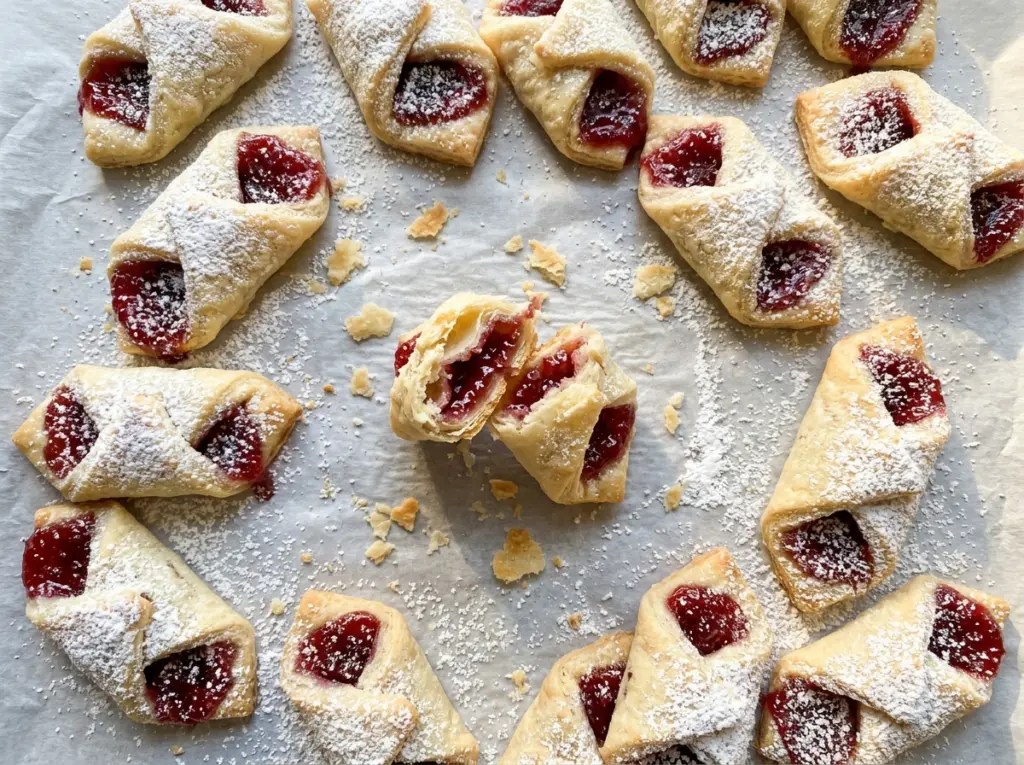
The first cut square feels almost too soft to make a sturdy cookie, but it bakes into a delicate pastry with a bright fruit center. The corners fold over the filling and stay pale while the bottoms pick up a little color. That’s the balance I want in Kolaczki: a buttery bite with apricot or raspberry in every cookie, not a thick layer of dough that hides the fruit.
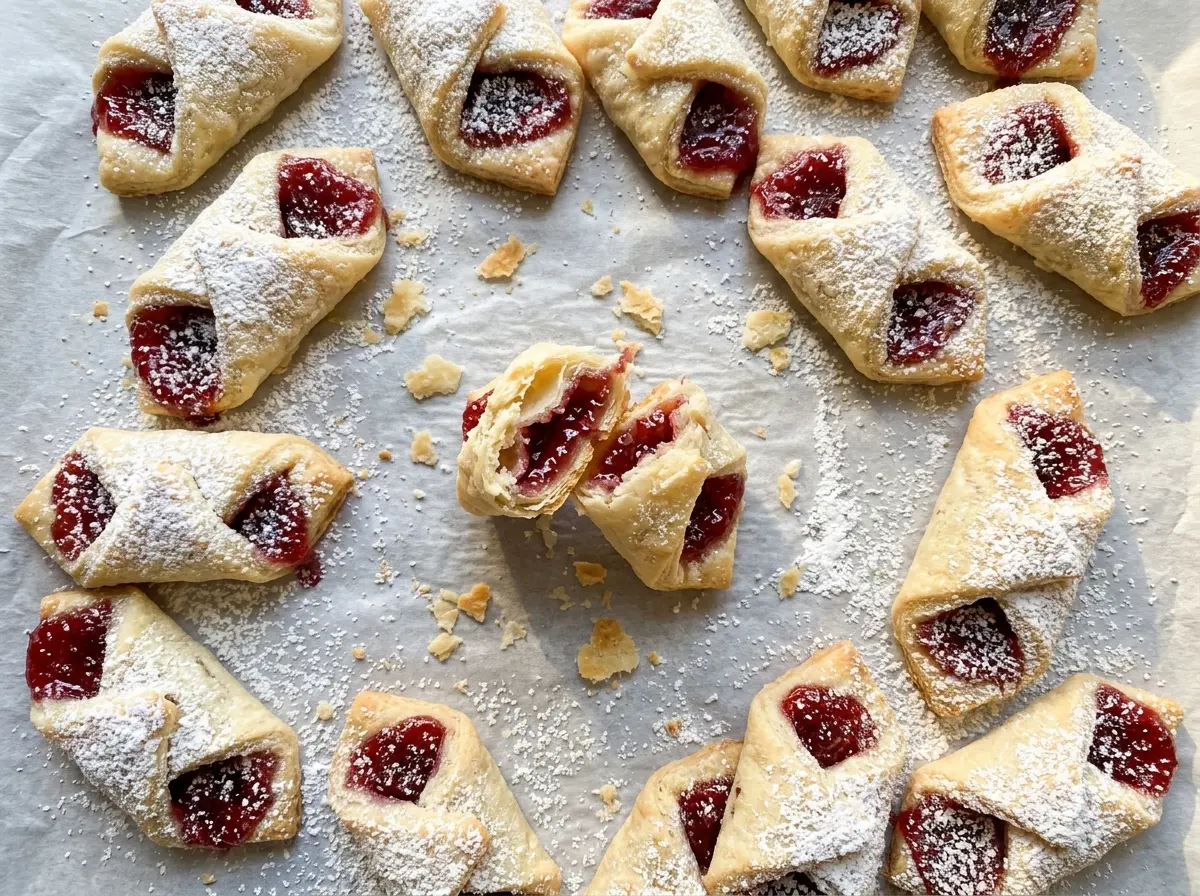
These are small pastries, so the details show. The corners should overlap neatly, the bottoms should be lightly golden, and powdered sugar belongs on only after the cookies cool. I like making a full batch because the 48 cookies fit across two baking sheets, and the contrast of pale pastry, glossy fruit, and a fine sugar dusting makes each one look distinct. That little window of preserves is part of their charm; you can see the filling before you take a bite.
Kitchen Note
Wait until each wrapped disk feels firm all the way through before rolling. A soft center makes the dough drag instead of lifting cleanly, and adding too much flour to the work surface can leave dry patches.
Save these Kolaczki for a bake with tender pastry, glossy fruit centers, and a delicate dusting of sugar.
Why the Two Baking Sheets Need to Trade Places Mid-Bake
Kolaczki are small, and the edges can go from pale to lightly golden in a short window. When two sheets bake on separate oven racks, the heat around them isn’t always identical. One sheet may color faster than the other, or the cookies at the back of a pan may darken before the ones near the door.
Switching the sheets between racks and rotating them halfway through gives both pans a turn in the warmer and cooler spots. That helps the cookies finish closer together instead of leaving one tray pale while the other gets too brown. Keep an eye on the bottoms and edges as the bake approaches its end; the cue is light gold, not deep brown. This matters especially with a fruit-filled pastry, because a darker bottom can taste overbaked before the center has had a chance to set evenly.
The timing gives you a useful range, not a reason to walk away. Start checking at the early end, then use the color on the edges and bottoms to decide when to pull the sheets. A little unevenness between ovens is normal, but moving and turning the pans helps keep the batch consistent.
What the Cream Cheese Dough and Thick Preserves Bring to Kolaczki

- Cream cheese — It gives the dough its soft, tender character and helps it roll into a thin layer. Regular brick-style cream cheese is a better fit than whipped cream cheese, which has a different texture and more air. There isn’t a direct swap that keeps the same dough.
- Unsalted butter — Butter supplies the rich pastry flavor, while using unsalted butter lets the small amount of kosher salt stay balanced. Choose a fresh butter you like the taste of; there’s no need for a specialty brand here.
- All-purpose flour — This gives the dough enough structure to hold the folded shape without making the pastry breadlike. A standard store-brand flour works well. The small amount set aside for dusting is there to keep rolling and cutting manageable, not to work extra flour into the dough.
- Thick fruit preserves — Thick preserves sit in the middle of the square instead of running across the dough. Apricot and raspberry both work; choose the flavor you want to see and taste in the finished cookie. A loose, syrupy filling is more likely to escape while baking.
- Egg white — A light brush on the two corners helps them adhere when they overlap. Beat it lightly so it spreads in a thin film rather than leaving a puddle that can make the dough slippery.
- Powdered sugar — Sifting it over completely cooled cookies gives a fine finish without melting into the warm pastry. Ordinary powdered sugar is all you need; the sifter does the work of keeping the coating light.
From Soft Dough to Neatly Folded Kolaczki
Mix and Chill the Dough Until Firm
Beat the softened cream cheese and butter with an electric mixer on medium speed until smooth, about 1 to 2 minutes. Add the flour and kosher salt, then mix on low just until a soft dough forms; stop when the flour is incorporated rather than beating it further. Divide the dough in half, shape each half into a disk, wrap, and refrigerate until firm for at least 1 hour. Chilling gives the dough enough body to roll without smearing.
Roll Thin Squares Without Overworking the Scraps
Heat the oven to 350°F and line two baking sheets with parchment paper. Work with one disk at a time on a lightly floured surface, rolling it to 1/8-inch thickness and dusting as needed. Cut 2-inch squares, then reroll the scraps once; repeated rerolling can make this tender dough tougher. Keep the squares close to the same thickness so they bake at a similar pace.
Fill the Centers and Press the Corners Together
Place 1/2 teaspoon of thick preserves in the center of each square. Brush two opposite corners lightly with the beaten egg white, then fold those corners over the filling so they overlap. Press the overlap firmly to seal; a loose fold can open as the pastry warms. Keep the filling centered and avoid smearing it onto the edges, where it can interfere with the seal.
Bake to Light Gold, Then Cool Before Sugaring
Arrange the cookies about 1 inch apart on the prepared sheets, with one sheet on each oven rack. Bake for 12 to 15 minutes, switching and rotating the sheets halfway through, until the bottoms and edges are lightly golden. Let the cookies cool on the baking sheets for 5 minutes before moving them to a wire rack; they’re delicate while hot. Wait until they’re completely cool before sifting powdered sugar over the tops.
Two Simple Ways to Change the Filling or Dough
Make a split batch with apricot and raspberry
Use apricot preserves for some cookies and raspberry for the rest, keeping the same filling amount and folding method. The two fruit flavors give the platter a little variety without changing the tender pastry around them.
Use a 1:1 gluten-free baking blend
Replace the all-purpose flour with the same measured amount of a gluten-free 1:1 blend made for baking, including for the flour used to dust the surface. A blend that contains xanthan gum is the best fit for holding the folded cookies together. The dough may feel more delicate, so keep it well chilled and lift the squares carefully.
Storage and Serving
- Room temperature: Store completely cooled cookies in an airtight container for up to 3 days. The powdered sugar may soften as it sits.
- Freezer: Freeze cooled cookies in layers separated with parchment for up to 2 months. For the cleanest finish, freeze them before dusting and sift powdered sugar over after thawing.
- Serving: No reheating is needed. Let chilled or thawed cookies come to room temperature; microwaving can soften the pastry and make the preserves run.
Questions That Come Up When Making Kolaczki
Kolaczki
Ingredients
Equipment
Method
- Beat the cream cheese and butter in a medium bowl with an electric mixer on medium speed until smooth, about 1 to 2 minutes.
- Add the 2 1/4 cups flour and salt; mix on low just until a soft dough forms.
- Divide the dough in half.
- Shape each half into a disk.
- Wrap the disks and refrigerate until firm, at least 1 hour.
- Heat the oven to 350°F.
- Line two baking sheets with parchment paper.
- Working with one disk at a time, roll the dough on a lightly floured surface to 1/8-inch thickness, using the 2 tablespoons flour for dusting as needed.
- Cut the dough into 2-inch squares, rerolling scraps once.
- Place 1/2 teaspoon preserves in the center of each square.
- Brush two opposite corners lightly with egg white.
- Fold the corners over the filling so they overlap.
- Press firmly to seal.
- Arrange the cookies about 1 inch apart on the prepared baking sheets.
- Bake both sheets on separate oven racks for 12 to 15 minutes, switching and rotating the sheets halfway through, until the bottoms and edges are lightly golden.
- Cool the cookies on the baking sheets for 5 minutes.
- Transfer the cookies to a wire rack to cool completely.
- Sift the powdered sugar over the cooled cookies.