
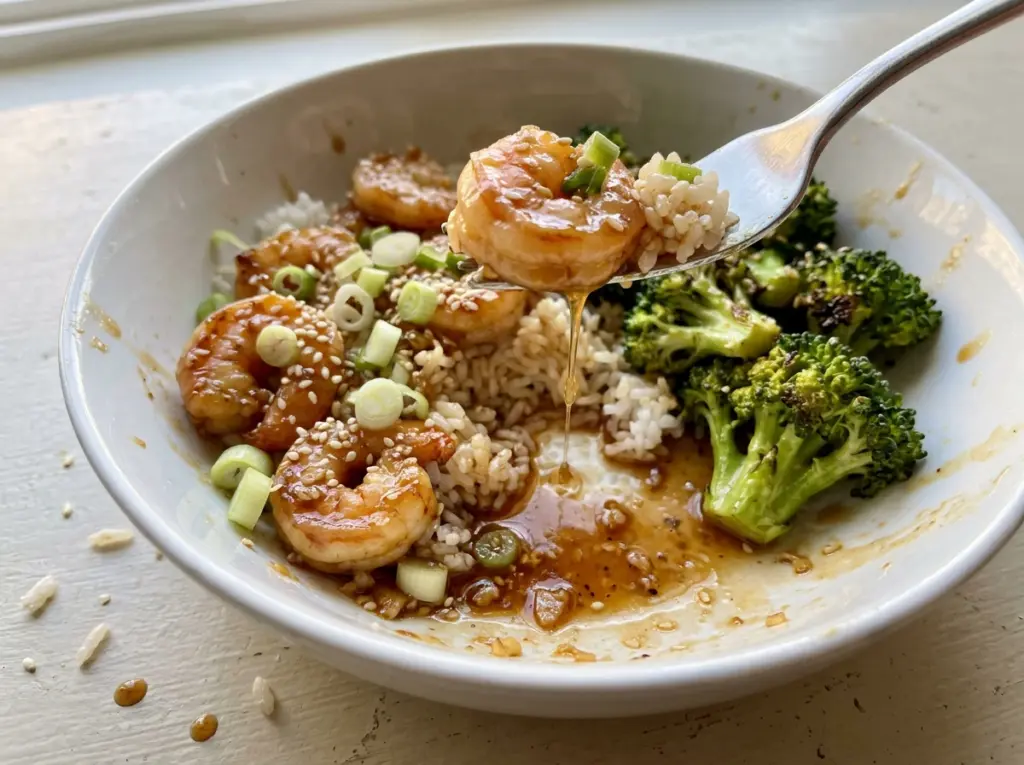
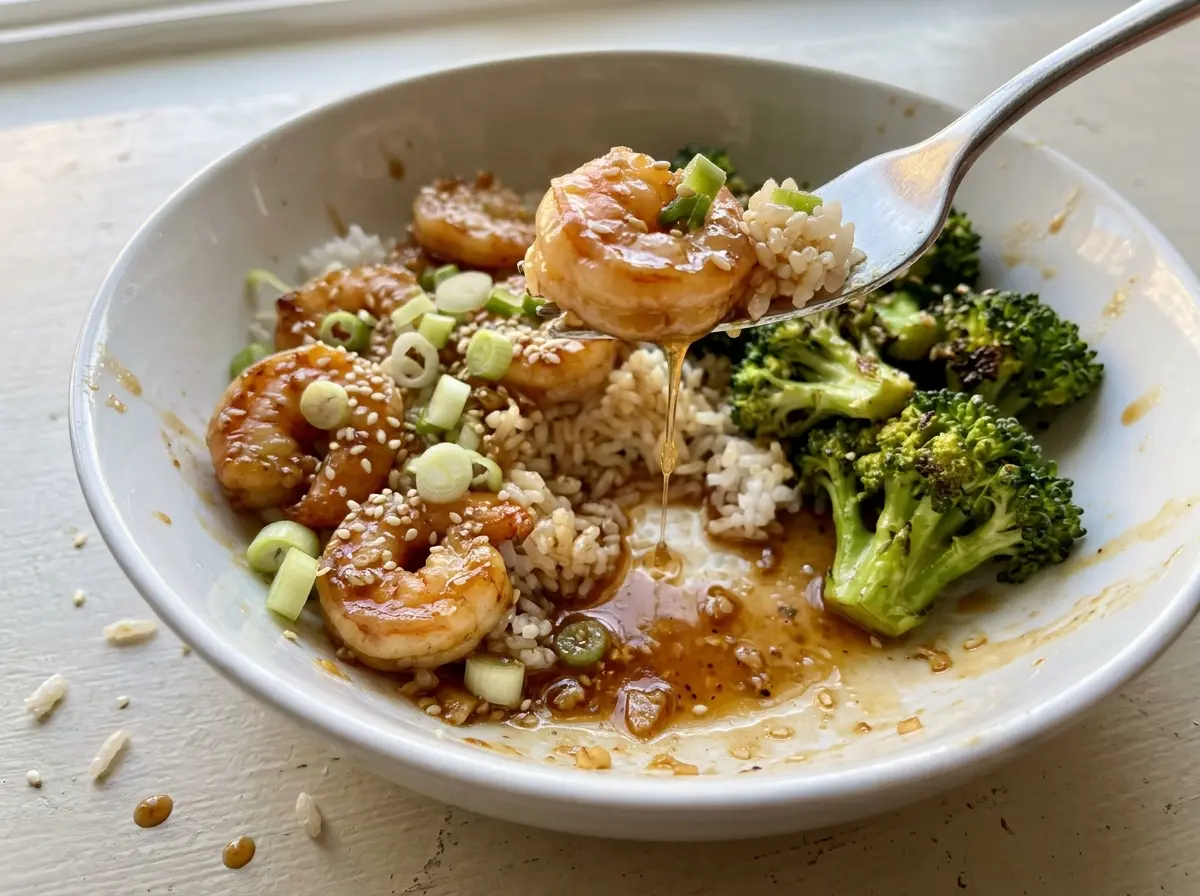
The honey-soy mixture looks thin when it first goes into the skillet, then turns glossy as it simmers. Give it a minute and keep stirring; rushing that part leaves the shrimp sitting in a runny sauce instead of a sticky coating. These honey garlic shrimp rice bowls pair that quick glaze with fluffy long-grain rice and cool, crisp toppings.
I cook the shrimp in two batches so each piece has room to cook evenly, then use the same skillet for the garlic and sauce. That keeps the dinner moving without asking the shrimp to wait around while the glaze thickens. The cucumber and carrots add crunch against the warm rice, and scallions and toasted sesame seeds finish each bowl with a little bite. It’s a balanced weeknight meal with a sauce that clings instead of pooling at the bottom.
Kitchen Note
Let the rice stand off the heat with the lid on for the full 10 minutes. That covered rest lets the last bit of steam finish the grains, so they fluff easily instead of breaking into a sticky clump.
Save these honey garlic shrimp rice bowls for a night when you want a glossy skillet sauce, fluffy rice, and crisp toppings in one meal.
Why the Shrimp Cooks Before the Honey-Garlic Sauce
Honey brings the sweetness that makes this glaze cling, but it also means the sauce needs a shorter, gentler turn in the skillet than the shrimp does. Cooking the shrimp first gives each piece its own quick sear; then the heat comes down before garlic and the honey mixture go in. That order gives the garlic time to soften without leaving the shrimp in the pan while the sauce reduces.
The cornstarch slurry helps the honey, soy sauce, and rice vinegar come together into a coating rather than a thin liquid. Whisk the cornstarch and water smooth before adding the other sauce ingredients; dry pockets of starch are harder to work out once the mixture is in the hot pan. The sauce needs only a brief simmer to turn glossy. The shrimp go back in at the end, just long enough to pick up the glaze and warm through.
What Gives the Bowls Their Sweet-Savory Balance and Crunch

- Long-grain white rice — Its separate, fluffy grains make a light base for the sauce. Rinsing removes excess surface starch; drain it well before it goes into the saucepan. Short-grain rice cooks up stickier, so it won’t give the same texture with these cooking directions.
- Honey, soy sauce, and rice vinegar — Honey supplies body and sweetness, low-sodium soy sauce brings savory depth, and rice vinegar keeps the glaze from tasting flat. A mild honey lets the garlic and soy stay in balance. Gluten-free tamari can replace the soy sauce in the same amount; the sauce will still taste savory, though its exact saltiness depends on the brand.
- Large raw shrimp — Peeled and deveined shrimp make this a quick skillet meal, and the large size is less likely to overcook while you turn each piece. Frozen raw shrimp work too once thawed and patted dry. Wet shrimp release water into the skillet and make it harder to get a good cook.
- Garlic — Fresh minced cloves give the sauce a direct, savory garlic flavor. Mince them before the shrimp go into the pan so they’re ready when the skillet heat is reduced; pre-minced garlic is convenient, but its flavor is usually less bright.
- Cucumber, carrots, scallions, and sesame seeds — These toppings give the bowls their fresh crunch, sharp onion note, and nutty finish. A firm English cucumber slices neatly, while pre-shredded carrots are an easy shortcut. Toasted sesame seeds add more aroma than plain ones, so use toasted if you can find them.
The Short Skillet Sequence That Keeps Shrimp Tender
Rinse and steam the rice
Rinse the rice in a fine-mesh strainer under cold water until the water runs mostly clear, then let it drain. Bring the measured water and kosher salt to a boil in a medium saucepan before stirring in the rice. Cover the pan, lower the heat to low, and cook for 15 to 18 minutes, until the water has been absorbed. Keep the lid closed while it cooks; lifting it lets steam escape before the grains are ready.
Whisk the sauce and dry the shrimp
In a small bowl, whisk the cornstarch with the tablespoon of water until no lumps remain, then whisk in the honey, soy sauce, and rice vinegar. Pat the shrimp dry and season them with black pepper. Drying the shrimp gives the skillet a better chance to cook them cleanly instead of adding extra moisture. Have the sauce and garlic ready before heating the oil, since the skillet stages move quickly.
Cook the shrimp in two batches
Heat the neutral oil in a 12-inch skillet over medium-high heat. Cook the shrimp in two batches for 1 to 2 minutes per side, until opaque and 145°F at the thickest part, transferring each batch to a plate when ready. The shrimp should turn opaque rather than remain glassy in the center. Avoid leaving them in the skillet while the next batch cooks; they’ll return to the pan for the final coating.
Simmer the glaze and finish the bowls
Reduce the heat to medium and stir the garlic in the skillet for 30 seconds. Add the honey mixture and simmer for 1 to 2 minutes, stirring, until it looks glossy and thickened; if it still looks watery, keep stirring through the brief simmer rather than moving on early. Return the shrimp and any juices to the pan and toss for about 30 seconds, until coated and hot. Fluff the rested rice with a fork, divide it among four bowls, and add the shrimp and sauce, cucumber, carrots, scallions, and sesame seeds.
Two Useful Ways to Adapt These Shrimp Bowls
Make the sauce gluten-free
Replace the low-sodium soy sauce with the same amount of gluten-free tamari. The glaze keeps its savory character, though some tamari brands taste a little stronger, so the finished sauce may come across saltier.
Leave off the sesame seeds
Omit the sesame seeds for a sesame-free finish. You’ll lose their toasted, nutty note, but the cucumber, carrots, and scallions still bring plenty of fresh crunch to the bowl.
Storage and Reheating
- Refrigerator: Store the rice and shrimp in airtight containers and keep the fresh toppings separate for up to 3 days. The rice firms as it chills, and cucumber loses some crunch if it sits with warm components.
- Freezer: Freeze the rice and shrimp with sauce in airtight portions for up to 2 months. Leave out the cucumber, carrots, scallions, and sesame seeds; add fresh toppings after thawing overnight in the refrigerator.
- Reheating: Warm the rice and shrimp gently in the microwave, stirring partway through, or heat them in a covered skillet over low heat with a small splash of water. Heat leftovers to 165°F, and add the cold toppings afterward so they stay crisp.
Questions That Come Up With Honey Garlic Shrimp Bowls
Honey Garlic Shrimp Rice Bowls
Ingredients
Equipment
Method
- Rinse the rice in a fine-mesh strainer under cold water until the water runs mostly clear, then drain.
- Bring the water and kosher salt to a boil in a medium saucepan.
- Stir in the rice, cover, and reduce the heat to low; cook for 15–18 minutes, until the water is absorbed.
- Remove the saucepan from the heat and let the rice stand, covered, for 10 minutes.
- Fluff the rice with a fork.
- In a small bowl, whisk the cornstarch with 1 tablespoon water until smooth.
- Whisk in the honey, soy sauce, and rice vinegar.
- Pat the shrimp dry and season with the black pepper.
- Heat the oil in a 12-inch skillet over medium-high heat and cook the shrimp in two batches for 1–2 minutes per side, until opaque and 145°F at the thickest part.
- Transfer the shrimp to a plate.
- Reduce the heat to medium, add the garlic to the skillet, and cook for 30 seconds, stirring.
- Add the honey mixture and simmer for 1–2 minutes, stirring, until glossy and thickened.
- Return the shrimp and any juices to the skillet and toss for about 30 seconds, until coated and hot.
- Divide the rice among four bowls.
- Top with the shrimp and sauce, cucumber, carrots, scallions, and sesame seeds.