
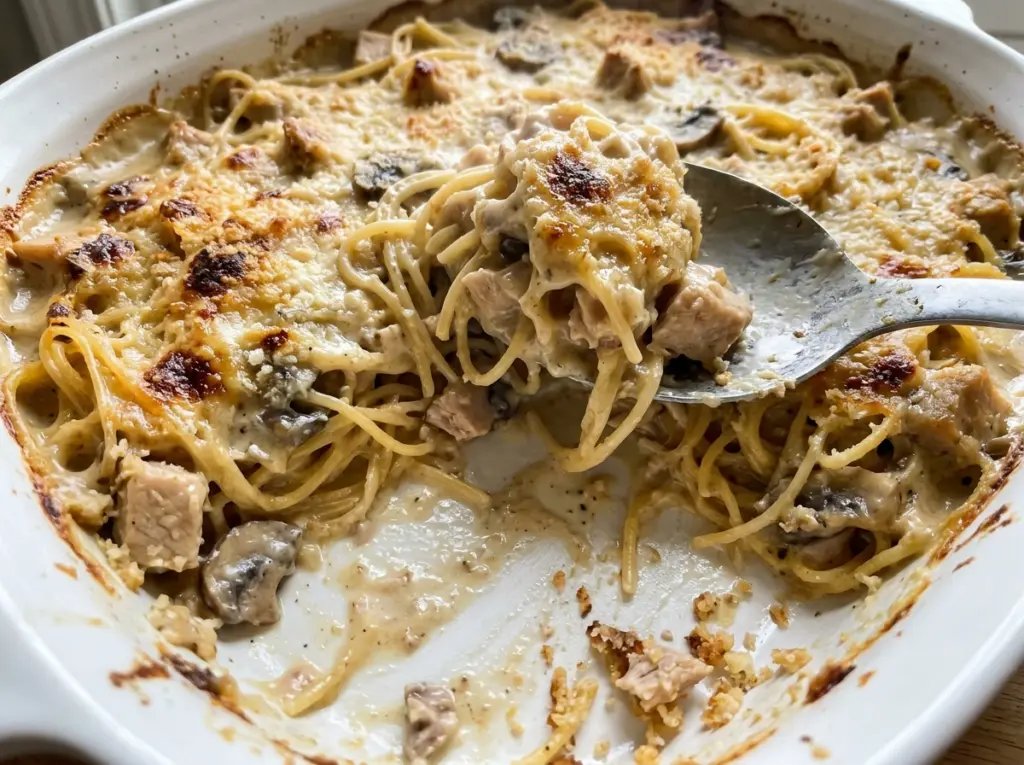
When turkey tetrazzini is too dry, the noodles have usually soaked up more sauce than expected in the oven. I wanted this version to stay creamy from the first scoop to the last, with mushrooms giving the sauce a savory backbone and a crisp panko top to break up all that softness. It’s a cozy way to use cooked turkey without turning it into another plain sandwich.
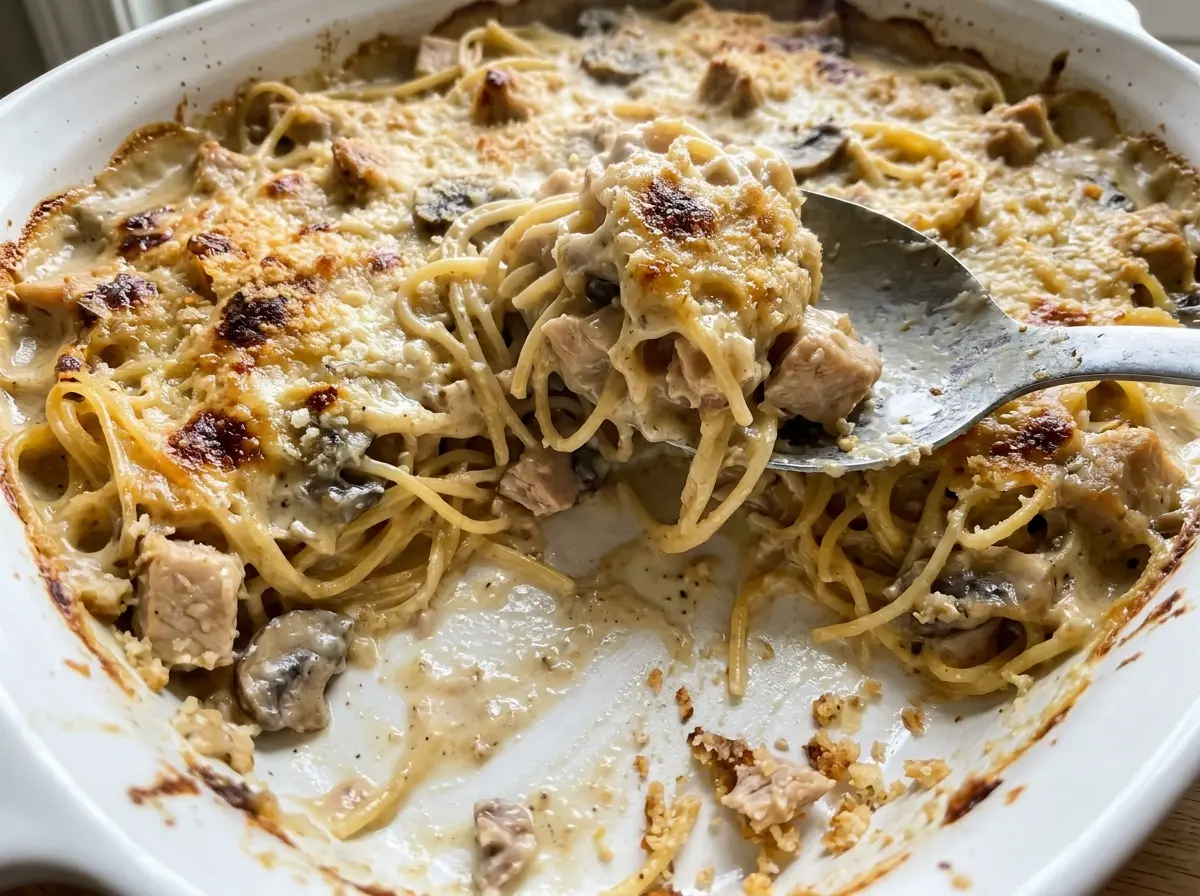
I build the sauce in the same Dutch oven used for the mushrooms, then toss the turkey, peas, and spaghetti right into it. That keeps the noodles coated before they go into the baking dish. After a short rest, the casserole serves neatly, with bubbling edges and a golden top over tender pasta and creamy mushroom sauce.
Kitchen Note
Cut the turkey into bite-size pieces before it goes into the sauce. Large chunks are harder to distribute through the spaghetti, while small pieces give you turkey in more of each serving.
Save this homestyle turkey tetrazzini for its creamy mushroom sauce, tender turkey, and buttery golden panko topping.
Why the Low-Sodium Broth Matters Once Parmesan Goes In
There are several salty ingredients in this casserole, and they don’t all go into the pot at once. Parmesan brings plenty of savory saltiness as it melts into the sauce, while the pasta water gets seasoned separately. Starting with low-sodium broth gives you room to season the sauce without making the finished casserole taste briny.
The divided kosher salt helps, too. A portion goes into the boiling water for the spaghetti; the rest goes into the sauce after it has thickened. That way, the pasta and sauce each get seasoned, instead of relying on a large amount of salt in one place. Keep the Parmesan in mind when tasting the sauce, since its saltiness can vary by brand. The finished mixture should taste well-seasoned before it goes into the baking dish, not aggressively salty.
What Gives This Mushroom Sauce Its Body and Savory Depth
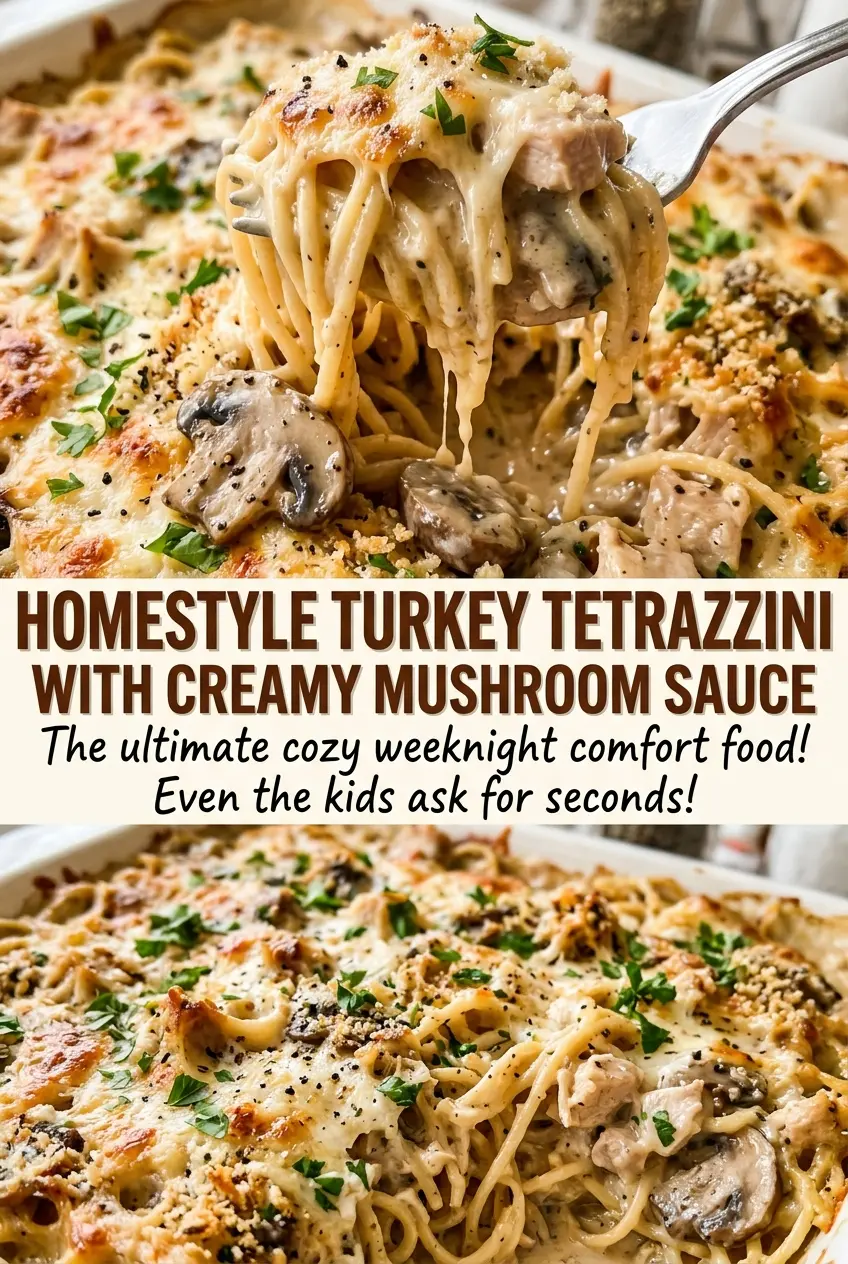
- Cremini mushrooms — They bring a deeper, earthier taste than mild white mushrooms. White button mushrooms work in the same amount if that’s what you have, though the sauce will taste a little less woodsy. Slice them evenly so they soften at the same pace.
- Heavy cream — It gives the sauce richness and helps it stay smooth through baking. Milk isn’t a like-for-like swap here; it makes a thinner sauce that won’t coat the spaghetti as fully.
- Dry sherry — A splash adds a subtle, dry, savory note that keeps the creamy sauce from tasting flat. Use a dry sherry rather than a sweet one; if you’re avoiding alcohol, the variation below uses broth in its place.
- Parmesan — Grated Parmesan melts into the sauce and adds a nutty, salty finish. Finely grated cheese blends in more evenly than coarse shreds. Since the cheese is doing real work here, don’t leave it out.
- Panko breadcrumbs — Their airy, larger flakes make a crisp topping when tossed with melted butter. Regular breadcrumbs can stand in, but the crust will be finer and less crunchy.
- Frozen peas and cooked turkey — Frozen peas are handy because they go straight into the warm sauce, and cooked turkey keeps the casserole practical. Use tender cooked turkey without dry, overcooked edges for the best texture in the finished dish.
Building the Casserole Without Overcooking the Spaghetti
Cook the Spaghetti Just to Al Dente
Bring the water to a boil, season it with part of the kosher salt, and cook the spaghetti according to the package directions until just al dente. The noodles should be tender but still offer a little resistance when you bite one. Drain them well so extra water doesn’t thin the sauce. They’ll soften further while the casserole bakes, so don’t cook them past that point.
Cook Down the Mushrooms Before Making the Sauce
Melt most of the butter in a Dutch oven over medium heat, then add the sliced mushrooms and chopped onion. Cook for 8–10 minutes, until the onion and mushrooms are tender and the mushrooms’ liquid has evaporated. If the pan still looks wet, give it a little more time before moving on; flour added to a watery pan is harder to cook evenly. Stir in the garlic for 30 seconds, then add the flour and cook, stirring, for 1 minute.
Whisk the Creamy Sauce Until It Thickens
Gradually whisk in the broth, heavy cream, and dry sherry so the flour incorporates smoothly. Bring the mixture to a gentle simmer, then cook for 5–7 minutes, stirring, until it thickens. Keep the heat at a gentle simmer rather than a hard boil. Stir in the remaining salt, black pepper, nutmeg, and Parmesan until the cheese melts into the sauce.
Coat, Top, and Bake Until Bubbling
Stir the turkey and frozen peas into the sauce, then add the drained spaghetti and toss until everything is evenly coated. Spread the mixture in the greased 9×13-inch baking dish. Combine the panko with the remaining melted butter and scatter it over the top. Bake at 375°F for 25–35 minutes, until the edges bubble, the topping is golden, and the center reaches at least 165°F. Let the casserole rest for 10 minutes before serving.
Three Practical Ways to Adapt This Turkey Tetrazzini
Skip the Sherry
Replace the dry sherry with the same amount of low-sodium chicken broth. You’ll lose the sherry’s faintly sharp, complex note, but the mushroom sauce will still be creamy and savory.
Make a Gluten-Free Version
Use gluten-free spaghetti, a cup-for-cup gluten-free flour blend, and gluten-free panko in place of their wheat-based counterparts. Cook the pasta to just al dente using its package directions; gluten-free noodles can soften quickly, so check them early. The sauce and topping will have a slightly different texture, but the creamy casserole still holds together.
Leave Out the Peas
Omit the peas if you prefer a more mushroom-and-turkey-forward casserole. No other change is needed; you’ll simply have fewer sweet, tender bites throughout the creamy pasta.
Storage and Reheating
- Refrigerator: Store covered for 3–4 days. The spaghetti will soften as it sits, and the panko topping will lose some crunch.
- Freezer: Freeze cooled portions in airtight containers for up to 2 months. The cream sauce may look a little less smooth after thawing, but it will still be good to eat.
- Reheating: Warm covered in a 350°F oven until hot throughout, then uncover near the end to crisp the topping. Reheating uncovered the whole time can dry out the turkey and pasta.
Questions That Come Up When Making Turkey Tetrazzini
Homestyle Turkey Tetrazzini with Creamy Mushroom Sauce
Ingredients
Equipment
Method
- Heat the oven to 375°F.
- Grease a 9x13-inch baking dish.
- Bring 4 quarts of water to a boil in a large pot, add 2 teaspoons of the salt and the spaghetti, and cook until just al dente according to the package directions; drain.
- Melt 5 tablespoons of the butter in a 6-quart Dutch oven over medium heat, add the mushrooms and onion, and cook for 8–10 minutes until tender and the mushrooms’ liquid has evaporated.
- Stir in the garlic and cook for 30 seconds.
- Sprinkle in the flour and cook, stirring, for 1 minute.
- Gradually whisk in the broth, cream, and sherry, then bring to a gentle simmer.
- Cook for 5–7 minutes, stirring, until the sauce thickens.
- Stir in the remaining 1 teaspoon salt, the pepper, nutmeg, and Parmesan until the cheese melts.
- Stir the turkey and peas into the sauce.
- Add the drained spaghetti and toss until evenly coated.
- Transfer the mixture to the prepared baking dish and spread it evenly.
- Melt the remaining 2 tablespoons butter and combine it with the panko.
- Scatter the panko mixture evenly over the casserole.
- Bake for 25–35 minutes, until bubbling around the edges, golden on top, and at least 165°F in the center.
- Let the casserole rest for 10 minutes before serving.