
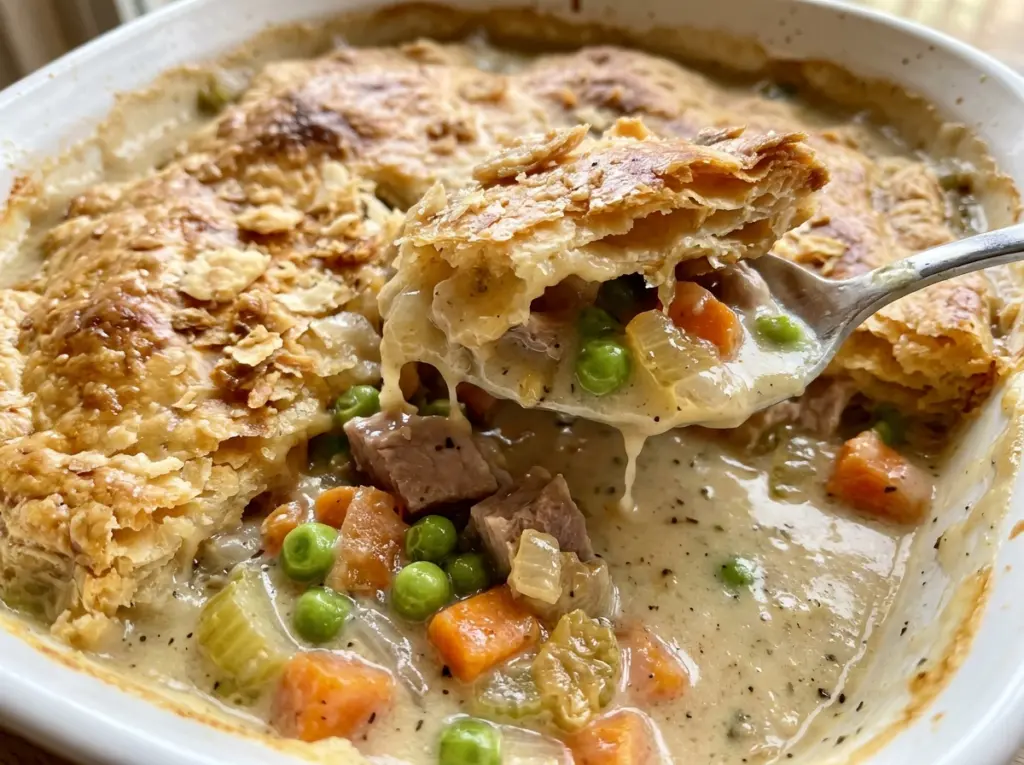
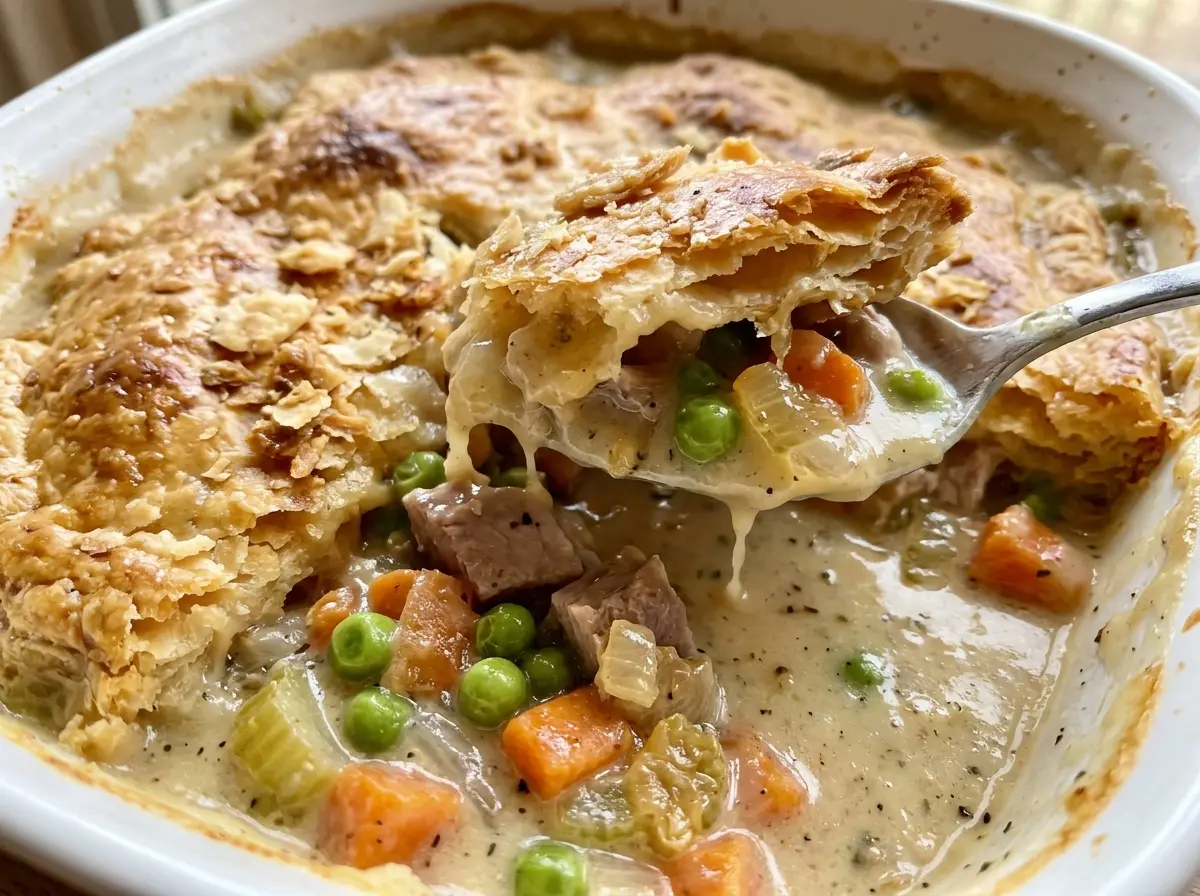
When the broth and milk hit the flour in the saucepan, the filling can look thin at first. Give it a few minutes at a simmer and it turns into a thick, spoonable sauce that holds the turkey and vegetables together instead of running into the crust. That’s what makes this homemade turkey pot pie such a good use for leftover Thanksgiving turkey: it turns a bowl of odds and ends into a proper double-crust dinner.
I keep the crust simple, with cold butter cut into the flour and just enough ice water to bring the dough together. The filling has time to cool while the dough rests, so the pastry is easier to handle and the bottom crust doesn’t meet a steaming-hot filling. The finished pie comes out with a golden top, tender vegetables, and creamy turkey tucked under the crust.
Kitchen Note
Stop cutting in the butter when you still see pea-size pieces. Those little cold bits are what keep the crust from turning dense, so don’t work the dough until it looks like fine sand.
Save this homemade turkey pot pie for the next time you have Thanksgiving leftovers — creamy turkey filling under a golden double crust.
Why the Filling Needs to Cool Before It Goes Into the Crust
A warm filling seems like it would save time, but it softens the butter in the bottom pastry before the pie even reaches the oven. That can leave the base heavy instead of crisp. Letting the filling cool before assembly gives the crust a better chance to bake through while the sauce thickens around the turkey and vegetables.
The other detail that matters is how the sauce behaves before the turkey and peas go in. After the broth and milk come to a simmer, keep stirring until the mixture visibly thickens; it should coat the spoon rather than slosh like broth. If you stop while it’s still loose, the filling has less body once it’s baked and sliced. A short rest after baking helps the filling settle, too, so the first slice doesn’t spill across the plate.
This is a useful rhythm for a pot pie: get the dough chilling, cook the filling, then give the filling its cooling time while the dough stays cold. There’s no need to rush the assembly. Both parts are easier to work with when they aren’t warm.
What Gives This Turkey Pot Pie Its Flaky Crust and Creamy Center

- All-purpose flour — It gives the pastry enough structure to roll and provides the thickening power for the filling. A standard store-brand flour works well here; swapping it for a different flour can change both the dough and the sauce, so I stick with all-purpose.
- Unsalted butter — Cold butter creates the small pockets that bake into a tender crust, while the butter in the saucepan starts the vegetable base. Use it cold for the pastry, cut into cubes, and let the filling butter melt before adding the vegetables.
- Low-sodium broth and whole milk — Broth brings savory flavor, and whole milk makes the sauce creamy without masking the turkey. Either chicken or turkey broth works; turkey broth leans more roasty, while chicken broth keeps the flavor a little more neutral.
- Cooked Thanksgiving turkey — Use leftover turkey cut into bite-size pieces so it’s easy to scoop with the vegetables and sauce. A mix of white and dark meat works nicely, and the sauce helps keep the pieces from feeling dry.
- Frozen peas — They add small, sweet bites and go straight into the filling with the turkey. There’s no need to thaw them first.
- Egg — Whisked with water, it gives the top crust an even golden finish. Brush it across the pastry rather than pouring it into the crimped edges.
How to Build the Pie Without Tough Dough or a Soggy Base
Bring the Dough Together With a Light Hand
Whisk the flour and salt, then cut in the cold butter with a pastry blender or your fingertips until pea-size pieces remain. Toss in 6 tablespoons of ice water with a fork, then press a little dough between your fingers to check whether it holds together. Add more water a tablespoon at a time only if it still crumbles; the full amount may not be needed. Divide the dough into two disks, wrap them, and refrigerate for at least 1 hour.
Soften the Vegetables and Thicken the Sauce
Melt the filling butter in a large saucepan over medium heat, then add the onion, carrot, and celery. Stir occasionally as they cook for about 6 to 8 minutes, until softened; they shouldn’t be browned. Stir in the flour and cook for 1 minute before gradually whisking in the broth and milk. Bring the sauce to a simmer and keep stirring for about 3 to 5 minutes, until it thickens.
Cool the Filling and Fit Both Crusts
Stir the thyme, salt, pepper, turkey, and frozen peas into the thickened sauce, then take the pan off the heat. Let the filling cool for 20 to 30 minutes while you heat the oven to 400°F and set out a 9-inch deep-dish pie plate. Roll one dough disk into a 12-inch round between sheets of parchment, fit it into the plate, and trim the overhang to about 1 inch. Add the cooled filling, cover it with the second disk rolled to an 11-inch round, then trim, fold, and crimp the edges.
Vent, Glaze, and Bake Until the Center Is Hot
Cut several vents in the top crust so steam can escape, then whisk the egg with water and brush it over the pastry. Bake for 45 to 55 minutes, until the crust is golden brown and the center of the filling reaches 165°F. If the edges brown faster than the center, shield them with foil. Let the pie rest for 20 minutes before slicing; cutting too soon makes it harder for the filling to hold its shape.
Two Simple Ways to Change the Filling
Use Turkey Broth for a Deeper Roast Flavor
Choose low-sodium turkey broth in place of chicken broth for a more pronounced roasted-turkey taste. The filling stays creamy, but the savory notes feel closer to the Thanksgiving leftovers tucked inside.
Leave Out the Peas
For a pea-free filling, leave the frozen peas out and keep the rest of the filling the same. You’ll lose their little sweet pops, but the creamy turkey and softened vegetables still make a satisfying pie.
Storage and Reheating
- Refrigerator: Cover leftover pie and refrigerate for 3 to 4 days. The crust softens as it sits, though the filling stays creamy.
- Freezer: Freeze the baked, cooled pie tightly wrapped for up to 2 months. Thaw it in the refrigerator before reheating for more even warming.
- Reheating: Warm slices in a 400°F oven until hot through. The microwave is quicker, but it softens the bottom crust.
Questions That Come Up When Making Turkey Pot Pie
Homemade Turkey Pot Pie with Leftover Thanksgiving Turkey
Ingredients
Equipment
Method
- Whisk the flour and salt in a large bowl.
- Cut in the cold butter with a pastry blender or your fingertips until the mixture has pea-size pieces.
- Drizzle in 6 tablespoons ice water, tossing with a fork.
- Add up to 2 tablespoons more, 1 tablespoon at a time, just until the dough holds together when pressed.
- Divide the dough in half and shape each half into a disk.
- Wrap the disks and refrigerate for at least 1 hour.
- Melt the butter in a large saucepan over medium heat.
- Add the onion, carrot, and celery, and cook, stirring occasionally, until softened, about 6 to 8 minutes.
- Stir in the flour and cook for 1 minute.
- Gradually whisk in the broth and milk.
- Bring to a simmer and cook, stirring, until thickened, about 3 to 5 minutes.
- Stir in the thyme, salt, pepper, turkey, and peas.
- Remove from the heat and let the filling cool for 20 to 30 minutes.
- Heat the oven to 400°F.
- Set out a 9-inch deep-dish pie plate.
- Roll one dough disk into a 12-inch round between sheets of parchment paper.
- Fit it into the pie plate and trim the overhang to about 1 inch.
- Spoon the cooled filling into the crust.
- Roll the other dough disk into an 11-inch round and lay it over the filling.
- Trim, fold, and crimp the edges.
- Cut several vents in the top.
- Whisk the egg and water together.
- Brush the egg wash over the top crust.
- Bake for 45 to 55 minutes, until the crust is golden brown and the center of the filling reaches 165°F; shield the edges with foil if they brown too quickly.
- Let the pie rest for 20 minutes before slicing and serving.