
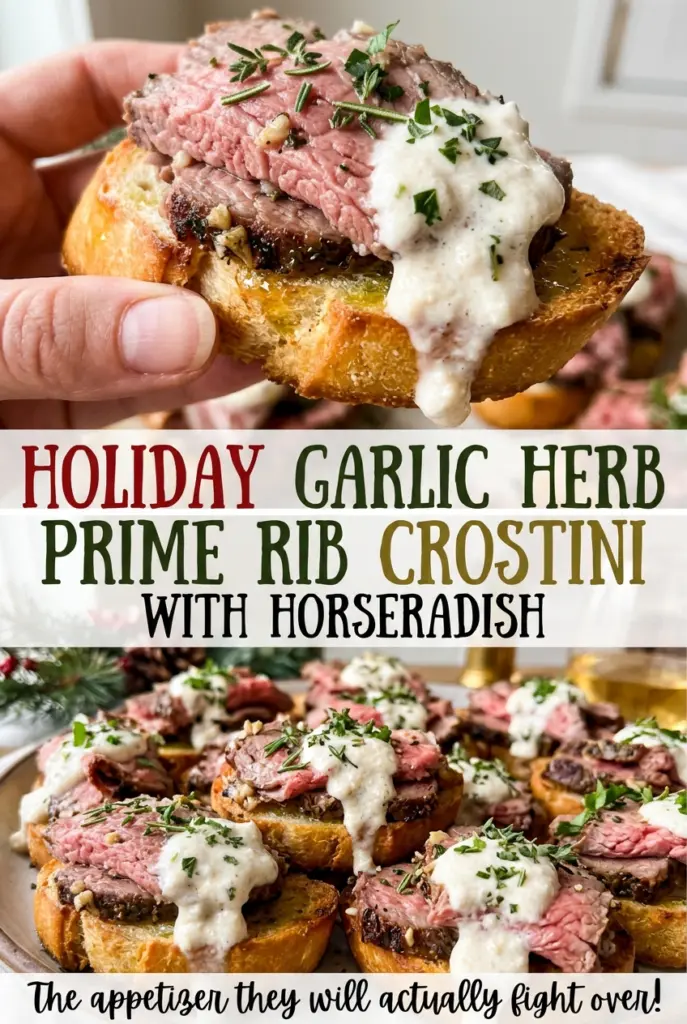
A warm baguette slice picks up the smell of rosemary and thyme before it even leaves the oven. Rub a cut garlic clove over the crisp top, and the aroma gets sharper without adding another layer of oil or a heavy garlic bite. That’s the small detail that makes these Holiday Garlic Herb Prime Rib Crostini with Horseradish feel like more than a stack of leftovers on toast.
I like the balance here: the bread is crisp at the edges, the sour cream keeps the horseradish from overwhelming the beef, and thin slices of chilled prime rib are easy to layer neatly. The crostini are quick to toast, but they need to cool briefly before you add the cream. Assemble them just before serving, while the bread still has its snap and the topping stays tidy.
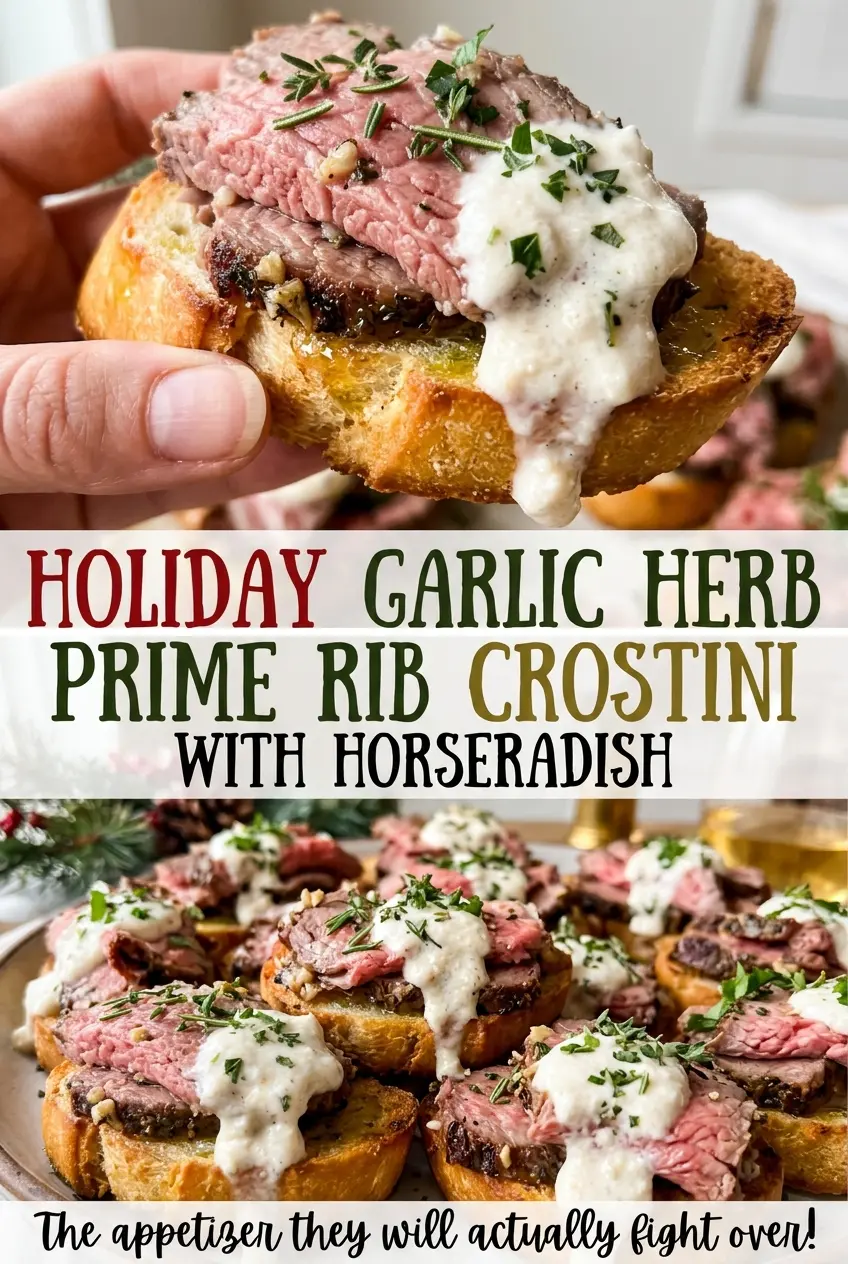
Kitchen Note
Turn the baguette slices halfway through baking so both sides get crisp, then rub on the garlic while the tops are still warm. If the bread has cooled, the garlic won’t scent it as well.
Save these holiday garlic herb prime rib crostini with horseradish for a party spread with crisp, herb-brushed toast and chilled prime rib.
Why Chilled Prime Rib Makes Neater Crostini
Prime rib is the substantial part of each bite, so its temperature and cut affect how easily the crostini come together. Chilled meat is firmer than warm meat, which makes it easier to slice thinly and place on a small piece of bread without tearing or sliding around. Thin slices also let the horseradish cream come through instead of turning each bite into a mouthful of beef.
There’s a useful contrast in temperatures and textures here: cool, tender beef and cream sit on crisp toast. The bread doesn’t need to be hot when you assemble the crostini; in fact, letting it cool for five minutes after the garlic rub gives the cream a steadier surface. Keep the chilled prime rib chilled, slice it thinly, and let each part keep its own texture until the last moment. That restraint is what makes a small appetizer feel balanced rather than crowded.
What the Horseradish, Herbs, and Garlic Each Bring
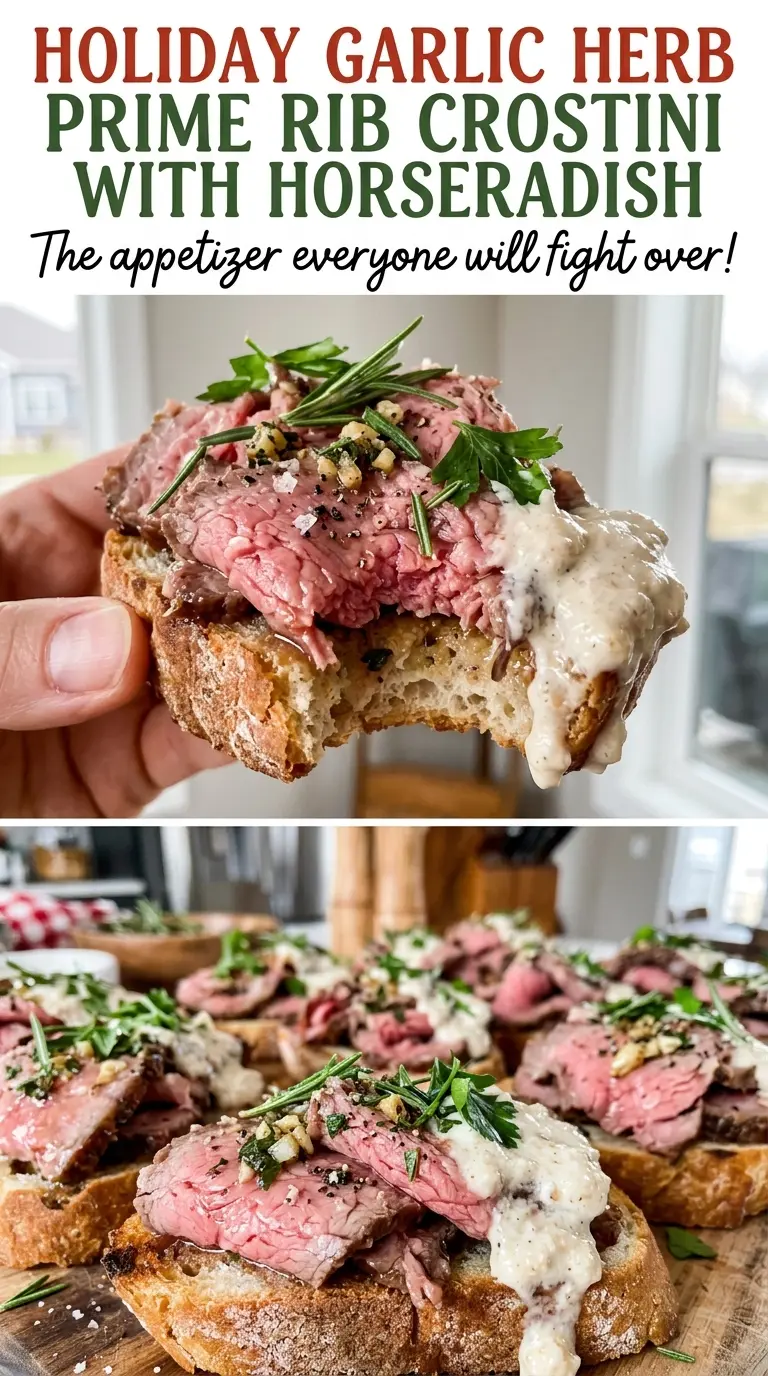
- Prepared horseradish — This gives the cream its direct, peppery bite. It’s different from a creamy horseradish condiment, which is already blended with dairy and won’t bring the same concentrated heat. Use prepared horseradish for the balance in this version.
- Sour cream, Dijon, and lemon juice — Sour cream softens the horseradish, while Dijon and lemon keep the mixture lively against rich beef. Stir until the cream looks even, with no streaks of mustard or horseradish.
- Fresh rosemary and thyme — Their fragrance goes into the olive oil that coats the bread. Fresh leaves are useful here because they stay aromatic in the brief toast; dried herbs won’t give quite the same fresh, herbal lift.
- Olive oil and baguette — A light brush helps the bread toast golden without making it greasy. A standard baguette is a good fit; cut the slices evenly so they crisp at roughly the same pace.
- Garlic — Rubbing the cut clove over the warm crostini gives the toast a fresh garlic aroma without needing chopped garlic on top, where it could distract from the beef.
- Cooked prime rib — Use it chilled and thinly sliced, as that makes it easier to portion across the crostini. The quality of the meat matters most because it’s the main topping; there isn’t a sauce or extra seasoning covering it up.
How to Toast the Bread Before the Beef Goes On
Stir the Horseradish Cream Smooth
Combine the sour cream, prepared horseradish, Dijon mustard, lemon juice, and kosher salt in a small bowl. Stir until the mixture is uniform, scraping the sides so the sharper ingredients don’t sit in a concentrated streak. The finished cream should be thick enough to spread in a small layer, not runny. Set it aside while you toast the baguette.
Brush and Toast the Herb Crostini
Heat the oven to 400°F and set a rimmed baking sheet nearby. Stir the olive oil with the chopped rosemary and thyme, then brush the mixture lightly over both sides of the baguette slices and arrange them on the sheet. Bake for 8–10 minutes, turning the slices halfway through, until the edges are golden and the centers feel crisp. If the slices are crowded or overlap, they won’t toast as evenly, so arrange them with space between.
Rub with Garlic and Let the Toast Set
As soon as the crostini come out of the oven, rub the cut sides of the garlic clove over their warm tops. Use the cut surface of the clove against the bread; the heat brings out its aroma as you rub. Let the crostini cool for 5 minutes before adding the cream. Putting the topping on piping-hot bread can soften the cream and make it harder to spread neatly.
Assemble Just Before Serving
Spread about 1 teaspoon of horseradish cream over each crostini, then top it with a thin slice of chilled prime rib. The cream gives the beef a little grip, so the meat doesn’t have to be pressed down into the bread. There are 24 slices for 8 servings, or 3 crostini per serving. Bring them out as soon as they’re assembled so the bread keeps its crisp edge.
Two Ways to Adapt the Crostini Without Losing Their Balance
A Gluten-Free Crostini
Replace the regular baguette with a gluten-free baguette and cut it into slices about the same thickness. Brush and bake the slices the same way, checking for crisp, golden edges since gluten-free breads can toast at a different pace. Some are more delicate, so lift them carefully when turning.
Fold the Prime Rib for a Taller Bite
Keep the prime rib thinly sliced, but gently fold each slice before setting it on the cream. The crostini look a little more generous without changing the ingredients, and the loose fold keeps the beef tender rather than packed into a dense layer.
Serve the Cream on the Side
For a different build-your-own format, put the cream in a small bowl beside the toasted crostini and sliced prime rib. Each person can add the amount of horseradish cream they like, while the bread stays crisp until it’s topped. Keep the components separate until serving.
Storage and Reheating
- Refrigerator: Store leftover prime rib and horseradish cream in separate covered containers and use within 3–4 days. The assembled crostini soften as the bread sits with the topping.
- Freezer: Freeze leftover prime rib by itself, wrapped airtight, for up to 2–3 months; thaw it in the refrigerator before using. The sour-cream mixture can separate after freezing, and toasted baguette slices lose their crispness, so neither freezes as well.
- Reheating: Don’t reheat assembled crostini; the bread softens and the beef can dry out. This appetizer is best assembled and served immediately, using the prime rib chilled.
Questions That Come Up When Making Prime Rib Crostini
Holiday Garlic Herb Prime Rib Crostini with Horseradish
Ingredients
Equipment
Method
- Stir the sour cream, prepared horseradish, Dijon mustard, lemon juice, and kosher salt together in a small bowl until combined.
- Heat the oven to 400°F.
- Set a rimmed baking sheet nearby.
- Stir the olive oil, rosemary, and thyme together.
- Brush the mixture lightly over both sides of the baguette slices and arrange them on the baking sheet.
- Bake for 8–10 minutes, turning the slices halfway through, until crisp and golden at the edges.
- Rub the cut sides of the garlic over the warm tops of the crostini.
- Let the crostini cool for 5 minutes.
- Spread about 1 teaspoon of horseradish cream on each crostini.
- Top with sliced prime rib and serve immediately.