
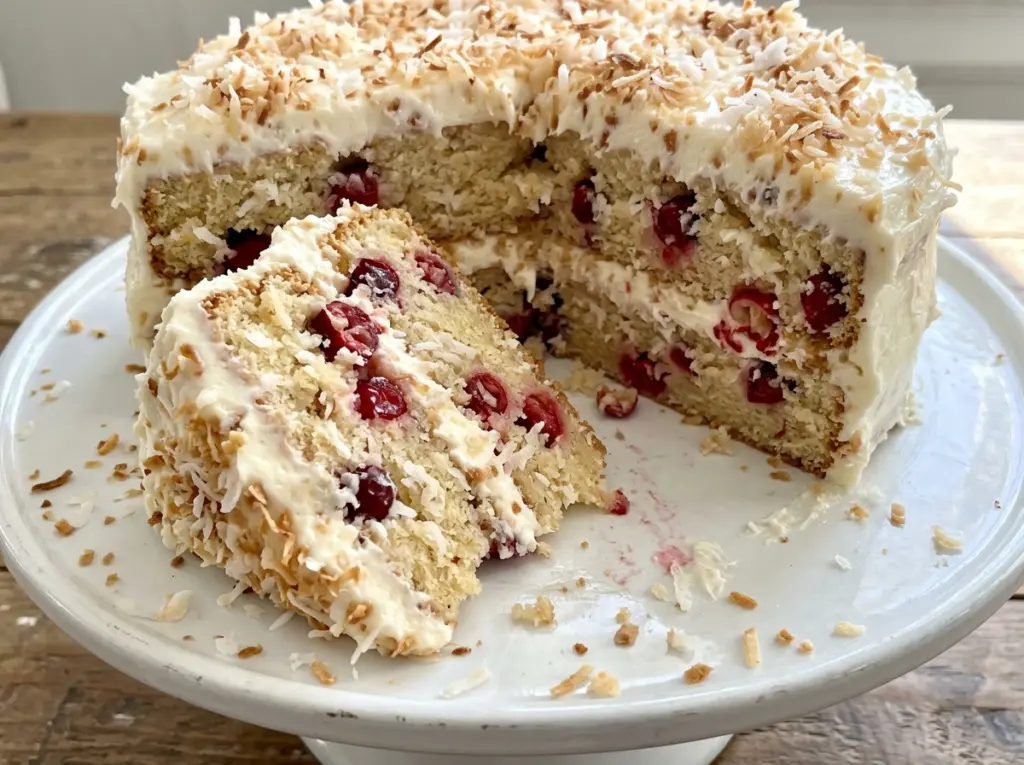
The butter and sugar turn pale and fluffy before the cranberries ever go near the bowl, and that first few minutes of mixing makes a difference in the finished crumb. I like this Holiday Cranberry Coconut Cake for the contrast: the cake is tender and sweet, while fresh cranberries bring a sharp little pop and coconut adds a soft chew. It bakes in one 9×13-inch pan, so there’s no stacking or frosting to fuss with.
Room-temperature eggs and milk blend into the butter mixture more smoothly than cold ones, and adding the dry ingredients in turns with the milk helps the batter come together without a long bout of mixing. I keep the cranberries whole for distinct tart bites, then fold them in gently with the sweetened coconut. The top bakes golden, and the inside stays soft with bright cranberry pockets throughout.
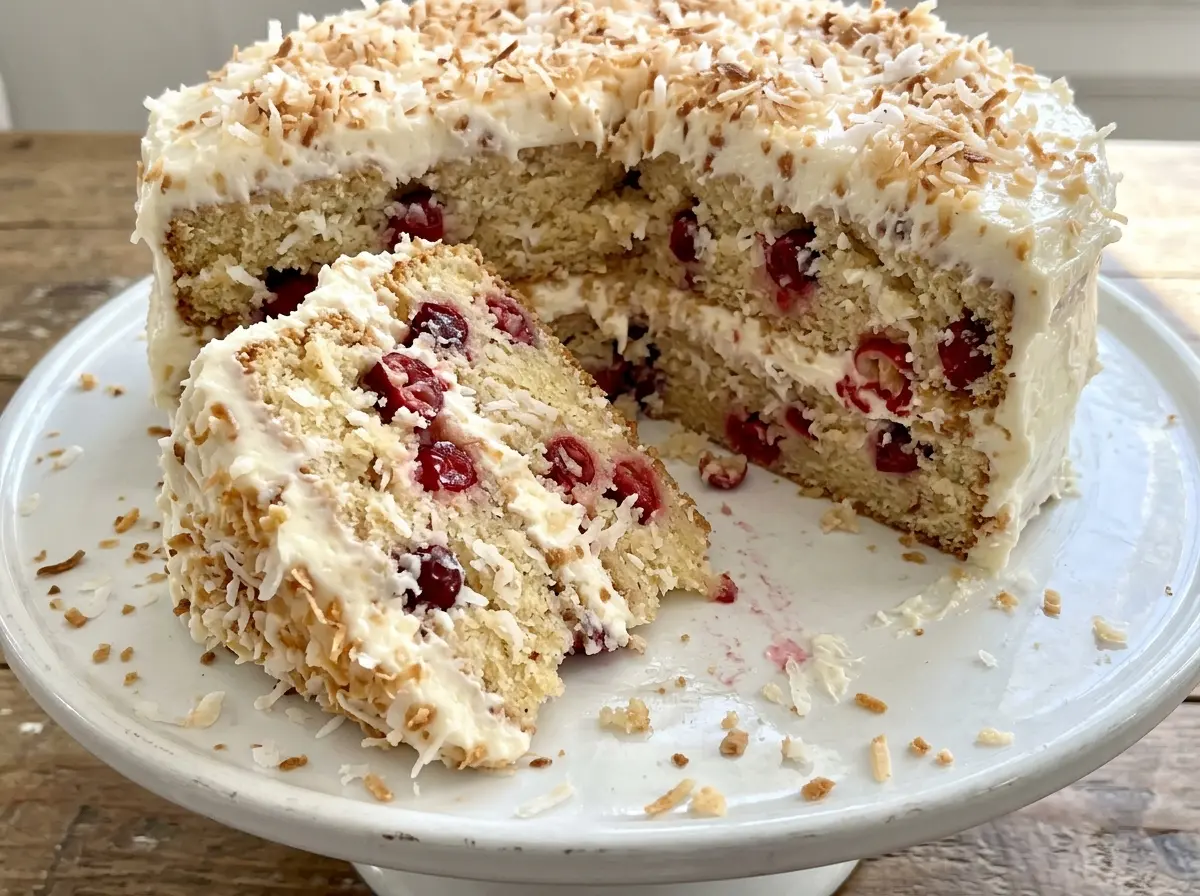
Kitchen Note
Let the cake cool in the pan for at least 30 minutes before slicing. The crumb is still delicate when hot, and a little patience gives you pieces that hold together instead of breaking at the edges.
Save this Holiday Cranberry Coconut Cake for its golden top, soft coconut crumb, and tart whole-cranberry bites.
Why the Butter-and-Sugar Beat Shapes This Cake’s Crumb
The first three minutes in the mixing bowl aren’t busywork. Beating softened butter with granulated sugar until it’s light and fluffy builds air into the base of the batter, which helps this generous pan of cake bake up tender rather than heavy. The change is visible: the mixture looks paler and more aerated than it did at the start.
That aerated base still needs a batter that isn’t worked too hard afterward. Once flour is involved, extended mixing can develop more gluten and leave a tighter, tougher crumb. That’s why I switch to low speed for the flour-and-milk additions and stop when they’re just combined. There may be a few small streaks at first, but they disappear as the final flour addition comes together.
This balance matters especially in a cake with whole cranberries and coconut folded through it. The batter needs enough structure to hold those add-ins, but it shouldn’t be beaten until stiff. A gentle finish keeps the fruit intact and gives each slice a soft, even bite.
What the Cranberries, Coconut, and Cake Base Each Bring

- Fresh cranberries — Their tartness cuts through the sweet cake, and whole berries give you clear bursts of fruit instead of an evenly flavored crumb. Rinse and dry them before using; wet berries can carry excess water into the batter. Fresh cranberries are the choice here, and their quality matters more than choosing a particular brand.
- Sweetened shredded coconut — It brings sweetness and a tender, chewy texture in every slice. Use the sweetened kind for the balance this cake is built around; swapping to unsweetened coconut would make the cake less sweet and change the texture of the coconut bites.
- Unsalted butter — Softened butter creams with the sugar to form the cake’s base. A standard grocery-store butter works well; what matters most is that it’s softened enough to beat smoothly, not melted or greasy.
- All-purpose flour and baking powder — Flour gives the cake its structure, while baking powder supplies lift. All-purpose flour is the right fit for this tender, sliceable crumb, and there’s no need for specialty flour here.
- Whole milk, eggs, and vanilla — The milk and eggs are at room temperature so they incorporate readily into the butter mixture. Vanilla rounds out the sweetness without masking the cranberry’s tart edge. Use the listed whole milk rather than changing the cake’s fat balance.
How to Mix the Batter Without Toughening It
Cream the butter and sugar until airy
Beat the softened butter and granulated sugar with an electric mixer on medium speed for about 3 minutes. The mixture should look light and fluffy, not like dense, damp sand. Scrape the bowl if butter is clinging to the sides so it can mix evenly. Keep the eggs and milk at room temperature, as colder ingredients can make the butter mixture look uneven when they go in.
Alternate flour and milk in measured additions
Whisk the flour, baking powder, and salt together, holding back the tablespoon of flour for the cranberries. Add the remaining dry mixture in three additions, alternating with the milk in two additions, and begin and end with flour. Mix on low speed and stop as soon as the batter comes together. A long, vigorous mix at this point can make the cake firm instead of tender.
Coat the berries, then fold gently
Toss the rinsed, dried cranberries with the reserved flour before adding them to the bowl. That light coating helps the berries stay distributed through the batter rather than clustering in one spot. Fold in the coated cranberries and sweetened coconut gently, using a spatula and turning the batter over itself. Stop when the additions are spread through the batter; crushing the berries can streak it with juice.
Bake until the cake portion tests cleanly
Spread the batter evenly in the sprayed 9×13-inch pan and bake at 350°F for 45 to 55 minutes. Look for a golden top, then insert a toothpick into the cake portion rather than directly into a cranberry. A few moist crumbs are the cue to take it out; wet batter means it needs more time. The berries themselves are juicy, so testing one can make a baked cake seem underdone.
Simple Ways to Change the Cake’s Cut and Keep It Fresh
Cut narrow cake bars
Keep the batter and bake exactly the same, then cut the cooled cake into narrow rectangles instead of broad squares. The thinner pieces make the cranberry and coconut visible along each cut edge and are easier to pick up without changing the cake’s soft crumb.
Make smaller cranberry-coconut bites
For smaller portions, cut the cooled cake into compact squares and keep the original ingredient amounts and pan. Each piece still has the same tender cake and tart fruit, just in a smaller format; this is a cut-size change rather than a different batter or bake.
Storage and Reheating
- Refrigerator: Keep covered for up to 4 days. The chilled crumb will be firmer than it is at room temperature.
- Freezer: Freeze individual pieces in an airtight container for up to 2 months. Separate layers with parchment so the pieces don’t stick together.
- Reheating: Let a piece come to room temperature, or microwave it briefly in 10-second bursts. Long heating can dry out the cake, so stop as soon as it feels warm.
Questions That Come Up When Baking Cranberry Coconut Cake
Holiday Cranberry Coconut Cake
Ingredients
Equipment
Method
- Heat the oven to 350°F and coat a 9x13-inch baking pan with the cooking spray.
- Set aside 1 tablespoon of the flour, then whisk the remaining flour with the baking powder and salt in a medium bowl.
- Beat the butter and sugar in a large bowl with an electric mixer on medium speed until light and fluffy, about 3 minutes.
- Beat in the eggs one at a time, then mix in the vanilla.
- Add the flour mixture in three additions, alternating with the milk in two additions; mix on low just until combined, beginning and ending with the flour.
- Toss the cranberries with the reserved tablespoon of flour, then gently fold them and the coconut into the batter.
- Spread the batter evenly in the prepared pan and bake for 45 to 55 minutes, until golden and a toothpick inserted in the cake portion comes out with a few moist crumbs.
- Cool the cake in the pan for at least 30 minutes before cutting.