
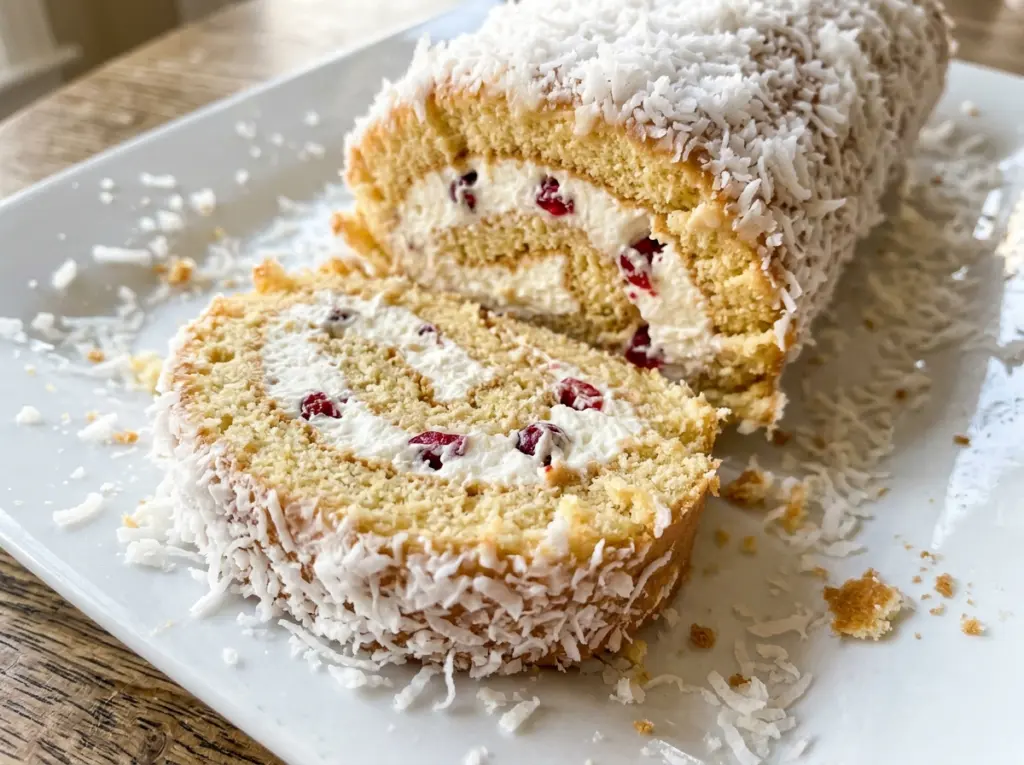
A sponge cake gives you a small window to work with: it comes out of the oven soft and flexible, then starts setting as it cools. For this Holiday Coconut Cake Roll, I roll the warm cake with parchment so it cools in a curve instead of having to be coaxed into one later. It’s a simple move that makes filling and rolling feel much less fussy.
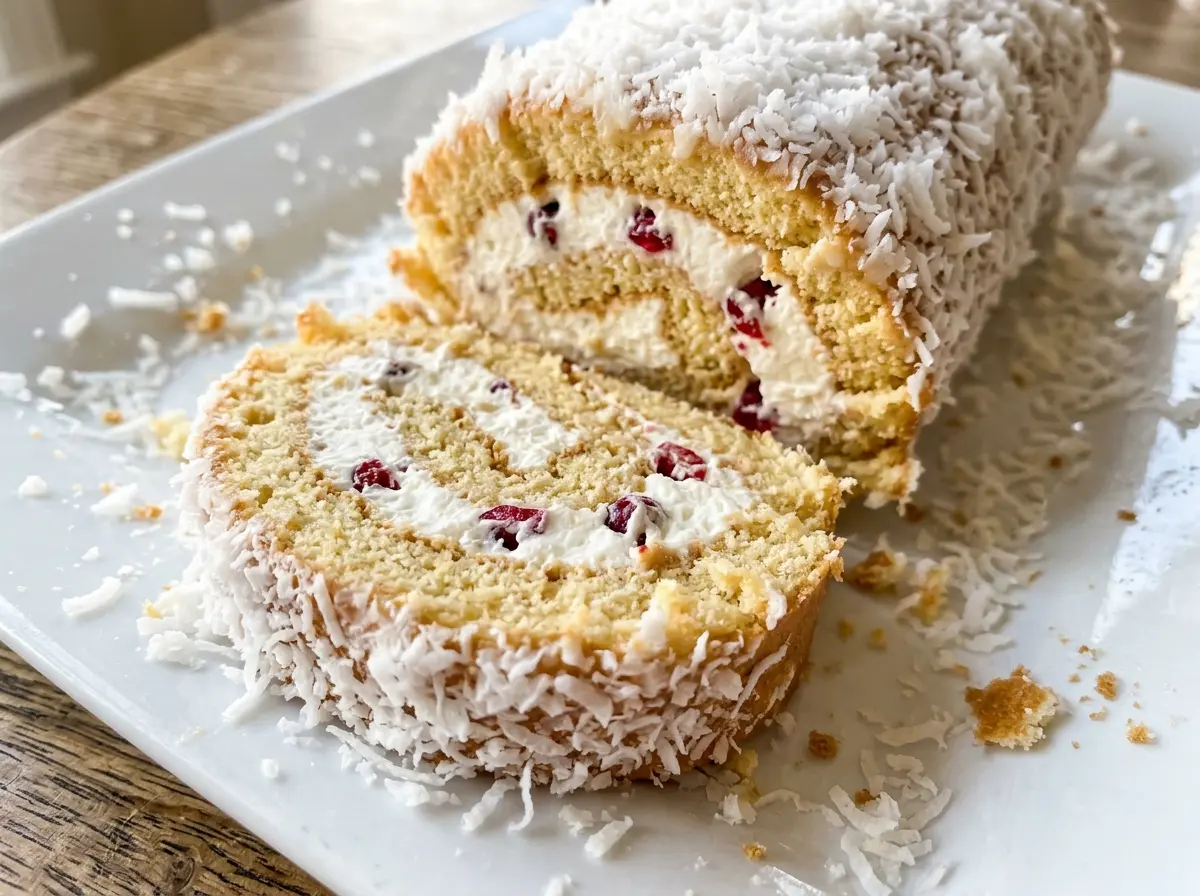
The cake itself is light, while the cream cheese filling brings a gentle tang and plenty of coconut chew. I like that the same smooth mixture works as both the filling and the coating, so there’s no second frosting to make. Once the outside is covered in shredded coconut, each slice shows off a tidy spiral of sponge and creamy filling.
Kitchen Note
Roll the cake while it’s still hot, with the clean parchment tucked inside the spiral. Let it cool seam-side down for the full hour; the parchment supports the curve, so you aren’t trying to force a cooled, flat cake into a roll.
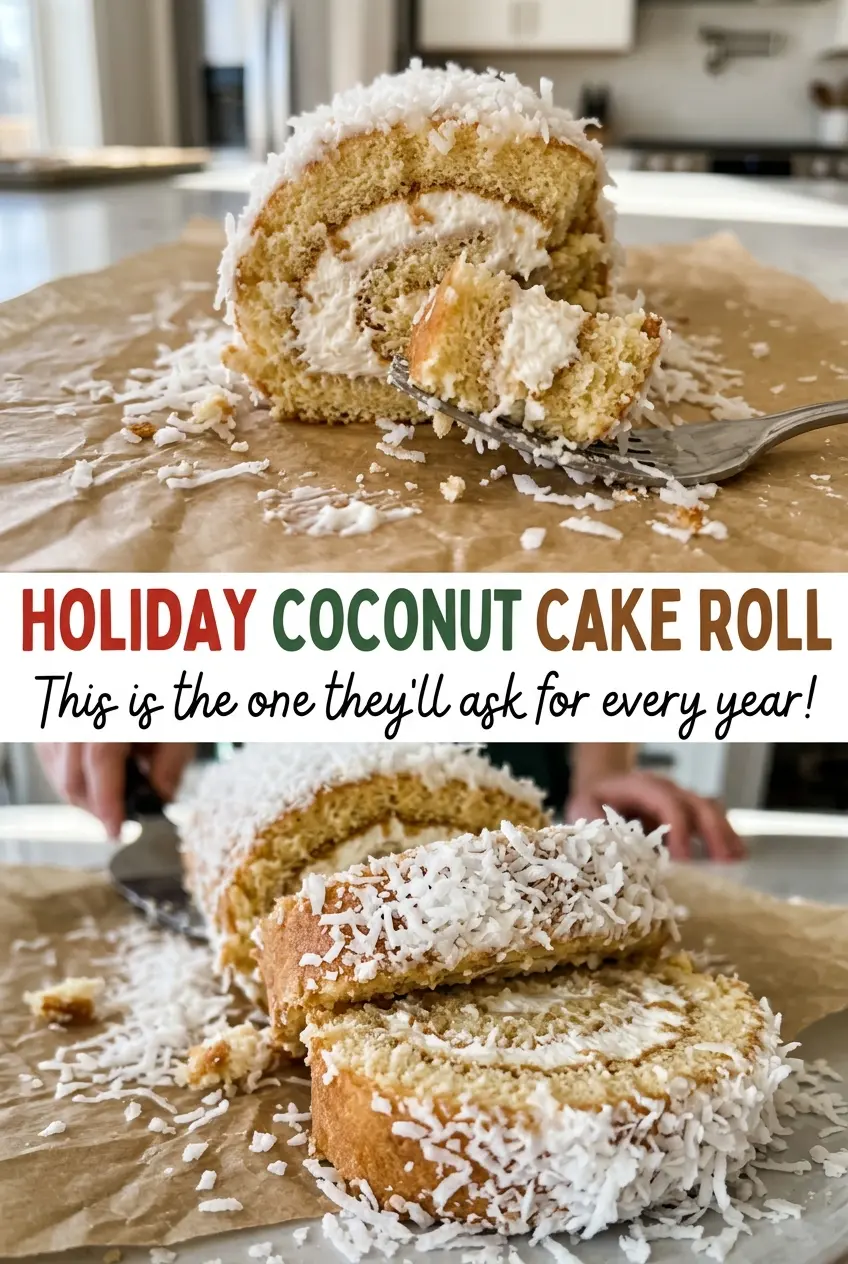
Save this Holiday Coconut Cake Roll for a celebration table — the soft sponge and coconut cream cheese swirl make every slice look special.
Why the 10-by-15-Inch Pan Makes This Cake Rollable
A cake roll needs a thin, even sheet of sponge. The 10-by-15-inch jelly roll pan gives the batter room to spread across a broad surface, so the cake bakes in a flexible layer rather than a thick slab. A smaller pan changes the depth; a larger pan spreads the batter thinner. Either change can make the cake harder to roll on the same schedule.
Evenness matters, too. If the batter is piled higher in the middle or left thicker at the edges, those areas won’t bake at the same rate. Spread it all the way into the corners before it goes into the oven. That little bit of care helps the cake stay uniformly tender, which is what lets it bend around the filling without fighting you.
How the Eggs, Cream Cheese, and Coconut Shape the Texture
- Room-temperature eggs — They beat more readily with the sugar, helping create the pale, thick mixture that gives this sponge its lift. Take them out of the refrigerator ahead of mixing; cold eggs can take longer to reach that fluffy stage.
- All-purpose flour and baking powder — Flour gives the cake enough structure to hold its spiral, while baking powder contributes lift. Sifting them together helps distribute the baking powder, and a light hand when folding keeps the egg mixture from losing all its air.
- Cream cheese and butter — These make a tangy, rich filling that also spreads over the outside. The block-style cream cheese is useful here because it gives the mixture more body than a soft, tub-style spread. Both ingredients should be softened so they beat smoothly instead of leaving little lumps.
- Powdered sugar — Its fine texture blends into the cream cheese and butter without the graininess granulated sugar would leave. Add it gradually to keep the mixture smooth and avoid a cloud of sugar over the counter.
- Sweetened shredded coconut — Coconut adds the chewy texture and sweetness that define the filling and coating. Use shredded coconut rather than large flakes; the smaller pieces fold through the filling and press onto the outside more evenly.
From Egg Foam to a Neat Coconut-Coated Roll
Beat the Eggs Until Thick and Pale
Beat the room-temperature eggs and granulated sugar with an electric mixer on high for 5 to 7 minutes. The mixture should look pale, thick, and noticeably increased in volume, not loose and yellow. Beat in the vanilla after the foam is built. If you stop while the mixture is still thin, the cake won’t have the same airy base.
Fold Gently, Then Bake the Thin Sponge
Heat the oven to 350°F, grease a 10×15-inch jelly roll pan, line it with parchment, and grease the parchment. Sift the flour, baking powder, and salt over the egg mixture in two additions, folding gently each time until no dry streaks remain. Spread the batter evenly in the pan and bake for 10 to 12 minutes. The center should spring back when you touch it lightly; don’t wait for the surface to turn deeply browned.
Shape the Cake Before It Cools
Invert the hot cake onto a clean sheet of parchment and peel away the parchment it baked on. Starting at a short end, roll the cake and the clean parchment together, then place it seam-side down. Leave it to cool for 1 hour. If the cake is allowed to cool flat, it loses the warm flexibility that makes shaping easier.
Fill, Chill, and Finish the Spiral
Beat the softened cream cheese and butter until smooth, then gradually beat in the powdered sugar. Reserve 3/4 cup for the coating and fold 1 cup of the coconut into the remaining mixture. Gently unroll the cooled cake, spread the filling evenly while leaving a 1/2-inch border, then roll it back up without the parchment and set it seam-side down; chill for 30 minutes. Spread on the reserved mixture, press the remaining 1/2 cup coconut onto the coating, and chill for another 30 minutes before slicing.
Two Ingredient Swaps That Change This Coconut Cake Roll
Use Unsweetened Coconut for a Less-Sweet Finish
Replace the sweetened shredded coconut with unsweetened shredded coconut in both the filling and coating, keeping the same divided amounts. The coconut flavor comes through with less sweetness, and the coating may taste a little less candy-like. Press it onto the outside while the cream cheese mixture is still spreadable so it has a chance to cling.
Make the Filling and Coating Dairy-Free
Use block-style dairy-free cream cheese and stick-style plant butter in place of the dairy versions, using the same amounts. The sponge is already made without dairy, so this changes only the filling and coating. The finish may be softer depending on the brands; keep the assembled roll chilled until you’re ready to serve it.
Make-Ahead and Serving
- Make-ahead: Assemble the cake roll, cover it, and refrigerate it overnight. The coconut coating may soften slightly as it sits.
- Refrigerator: Keep leftovers covered in the refrigerator for up to 4 days; the sponge will gradually firm and the coconut may lose some of its chew.
- Freezer: Freeze individual slices until firm, then wrap them well and store in an airtight container for up to 1 month. Thaw in the refrigerator; the cream cheese coating may soften a little.
- Serving: Slice the roll while it’s chilled so the filling stays in place and the coconut coating doesn’t drag across the cut.
Questions About Baking and Serving This Cake Roll
Holiday Coconut Cake Roll
Ingredients
Equipment
Method
- Heat the oven to 350°F.
- Grease a 10x15-inch jelly roll pan, line it with parchment paper, and grease the parchment.
- Beat the eggs and granulated sugar with an electric mixer on high speed for 5 to 7 minutes, until pale and thick.
- Beat in the vanilla.
- Sift the flour, baking powder, and salt over the egg mixture in two additions, folding gently after each until no dry streaks remain.
- Spread the batter evenly in the prepared pan.
- Bake for 10 to 12 minutes, until the center springs back when lightly touched.
- Invert the hot cake onto a clean sheet of parchment and peel away the parchment it baked on.
- Starting at a short end, roll the cake and clean parchment together.
- Cool seam-side down for 1 hour.
- Beat the cream cheese and butter until smooth.
- Gradually beat in the powdered sugar.
- Reserve 3/4 cup of this mixture for coating and fold 1 cup of the coconut into the remainder.
- Gently unroll the cooled cake.
- Spread the coconut filling evenly over it, leaving a 1/2-inch border.
- Roll it back up without the parchment and place seam-side down.
- Chill for 30 minutes.
- Spread the reserved cream cheese mixture over the cake roll.
- Press the remaining 1/2 cup coconut onto the coating.
- Chill for 30 minutes before slicing.