
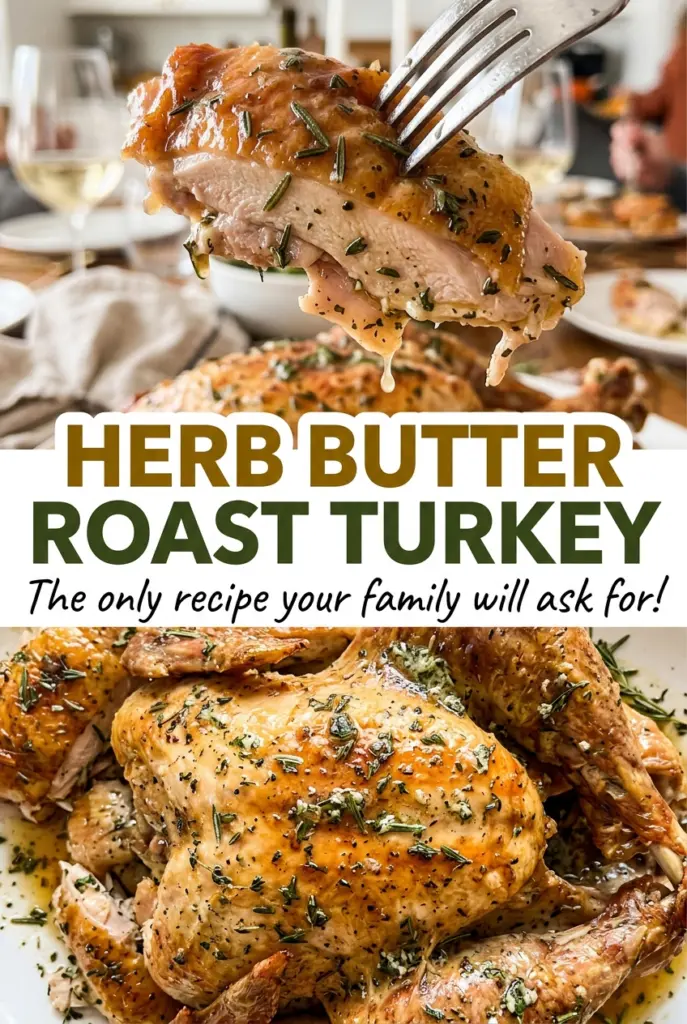
The butter starts to melt almost as soon as the turkey goes into the oven, carrying rosemary, thyme, sage, and garlic across the skin. The first time I made a herb-butter bird, I worried that all that flavor would stay on the outside. Spreading some beneath the skin solved that, and it’s the reason this Herb Butter Roast Turkey tastes seasoned through the breast as well as along the browned surface.
I keep the approach simple: a fully thawed 12- to 14-pound turkey, a soft herb butter, and a steady 325°F oven. Onion, lemon, and thyme go in the cavity, while low-sodium chicken broth goes in the roasting pan. The turkey roasts uncovered, with foil ready for the breast if it starts browning too quickly.
There’s no complicated brine or fussy glaze to manage. The butter does its work while the turkey roasts, and the resting time gives you a calmer moment to get the carving board ready. What comes to the table is a golden-skinned roast with savory herbs in every slice.
Kitchen Note
Use softened butter, not melted butter. It should mash easily with the herbs and stay cohesive enough to spread without running off the turkey.
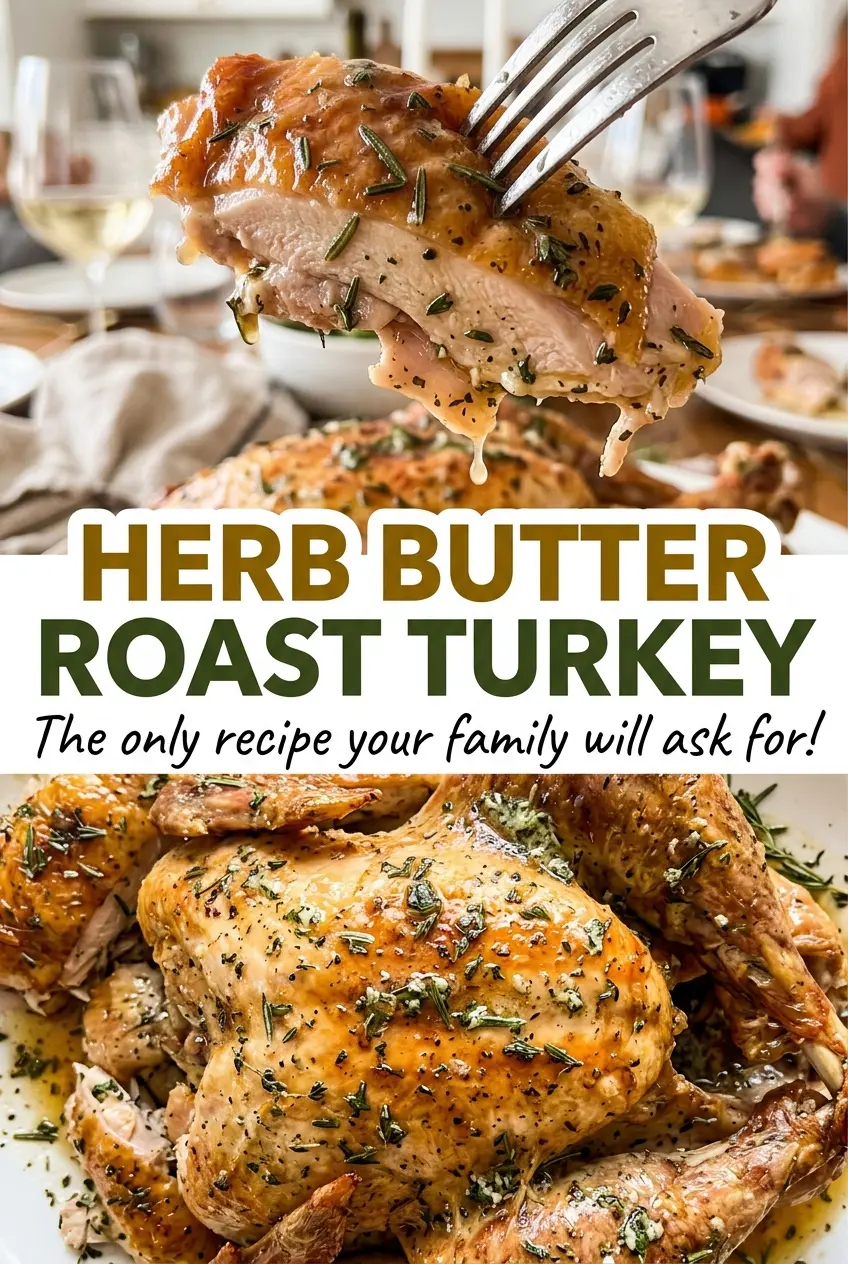
Save Herb Butter Roast Turkey for a centerpiece with savory herbs under the skin and crisp, golden-brown edges.
Why Herb Butter Belongs Beneath the Turkey Skin, Not Just on Top
Butter on the outside helps the skin brown, but the skin forms a barrier between that butter and the meat. Gently loosening the skin over the breast and thighs creates room for the herb mixture to sit closer to the turkey. As it melts, the butter carries the chopped herbs and garlic along the surface of the meat instead of leaving all their flavor on the skin.
That under-skin layer also means you don’t need to keep opening the oven to baste. Basting can wet the skin, and each oven opening lets heat escape. The butter already has a place to go as it melts, while the turkey roasts on a rack above the broth.
Go slowly when loosening the skin; it’s thin and can tear if you tug sharply. A small opening is enough to work your fingers beneath it. Spread the butter gently, then use the remaining herb butter over the outside for color and flavor.
Fresh Herbs, Soft Butter, and the Aromatics That Shape This Roast
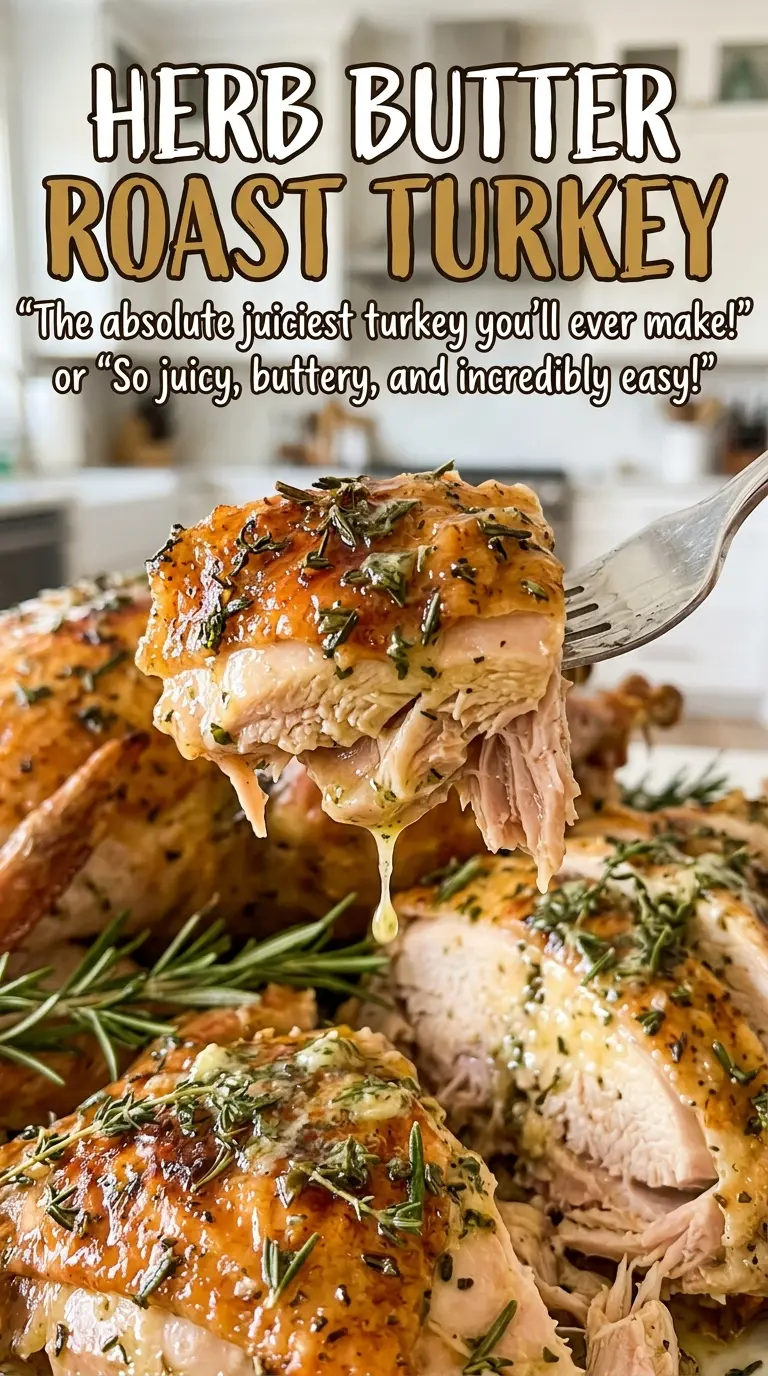
- Fresh rosemary, thyme, and sage — Their chopped leaves give the butter a fragrant, savory character. Fresh herbs blend into softened butter without the dry, dusty texture that dried herbs can leave, so I stick with fresh here.
- Unsalted butter — It carries the herbs and garlic and helps the outside brown. Unsalted butter keeps the seasoning easier to control alongside the kosher salt on the turkey; for a dairy-free approach, see the variation below.
- Garlic and black pepper — Minced garlic disperses through the butter, and black pepper adds a gentle bite. Mince the garlic finely so you don’t end up with large pieces caught in the skin.
- The turkey and kosher salt — The specified turkey size fits the roasting setup and timing. Season both the cavity and the outside so the interior isn’t left unseasoned; kosher salt is easy to distribute over the broad surface.
- Onion, lemon, and thyme sprigs — These aromatics scent the cavity as the bird roasts. Quarter the onion and lemon so they fit comfortably; they’re there to perfume the turkey, not to serve as a dense stuffing.
- Low-sodium chicken broth — It adds liquid to the bottom of the roasting pan without bringing as much salt as regular broth. Use the low-sodium kind so the pan juices don’t become overly salty as they collect drippings.
From Soft Herb Butter to a Properly Rested Roast
Mash the herbs into the butter
Combine the softened butter with the chopped rosemary, thyme, sage, minced garlic, and black pepper in a small bowl. Mash until the mixture looks evenly speckled, with no clumps of one herb or garlic sitting apart. If the butter is cold and stiff, it’s harder to combine and spread smoothly. Keep it soft enough to mash, but don’t melt it.
Season and butter the turkey
Heat the oven to 325°F with a rack in the lower third, and set a rack inside a 16×13-inch roasting pan. Pat the fully thawed turkey dry with paper towels, then season the cavity and outside with kosher salt. Gently loosen the skin over the breast and thighs, spread herb butter underneath, and finish with butter over the outside. If the skin starts to pull, ease your fingers back rather than forcing them farther.
Fill the cavity and set up the pan
Put the quartered onion and lemon, along with the thyme sprigs, in the cavity. Set the turkey breast-side up on the rack and tuck the wing tips under the body so they don’t stick out. Pour the low-sodium chicken broth into the roasting pan, not over the turkey. Check that the bird is sitting securely before sliding the pan into the oven.
Roast, check, and rest
Roast uncovered for 3 to 3 3/4 hours. If the breast browns faster than you want, loosely cover it with foil while the rest of the turkey finishes. Check the thickest part of the breast and the innermost part of the thigh with a thermometer, keeping it clear of bone; both spots should read 165°F. Transfer the turkey to a carving board, tent it loosely with foil, and let it rest for 30 minutes before carving.
Three Small Changes That Give This Roast a Different Spin
Make the herb butter dairy-free
Use an unsalted, firm plant-based butter in place of the dairy butter. Choose one that’s soft enough to mash and spread; the herb mixture still works, though the roast won’t have the same buttery flavor.
Leave out the garlic for a gentler herb flavor
Omit the minced garlic from the butter and keep the rosemary, thyme, sage, and black pepper. The result is less savory and pungent, with the fresh herbs taking the lead.
Skip the lemon in the cavity
Leave out the lemon and keep the onion and thyme sprigs in the cavity. You’ll lose the citrusy lift, but the turkey will still pick up a mellow aroma from the remaining aromatics.
Storage and Reheating
- Refrigerator: Refrigerate carved turkey within 2 hours and use it within 3 to 4 days. The skin will soften once chilled.
- Freezer: Freeze carved portions in airtight packaging for up to 3 months for best quality. Thaw in the refrigerator before reheating.
- Reheating: Arrange slices in an oven-safe dish with a little pan broth, cover, and warm at 325°F until steaming hot throughout. Avoid reheating uncovered, which dries the meat before the center is warm.
Questions That Come Up Before the Turkey Goes in the Oven
Herb Butter Roast Turkey
Ingredients
Equipment
Method
- In a small bowl, mash together the softened unsalted butter, fresh finely chopped rosemary, fresh finely chopped thyme leaves, fresh finely chopped sage, minced garlic, and black pepper until evenly combined.
- Heat the oven to 325°F with a rack in the lower third.
- Set a rack inside a 16x13-inch roasting pan.
- Pat the fully thawed turkey dry with paper towels and season the cavity and outside with the kosher salt.
- Gently loosen the skin over the breast and thighs.
- Spread the herb butter under the skin and over the outside of the turkey.
- Put the quartered yellow onion, quartered lemon, and fresh thyme sprigs in the cavity.
- Set the turkey breast-side up on the rack and tuck the wing tips under the body.
- Pour the low-sodium chicken broth into the pan.
- Roast uncovered for 3 to 3 3/4 hours, loosely covering the breast with foil if it browns too quickly, until a thermometer inserted into the thickest part of the breast and the innermost part of the thigh without touching bone reads 165°F.
- Transfer the turkey to a carving board, loosely tent it with foil, and rest for 30 minutes before carving.