
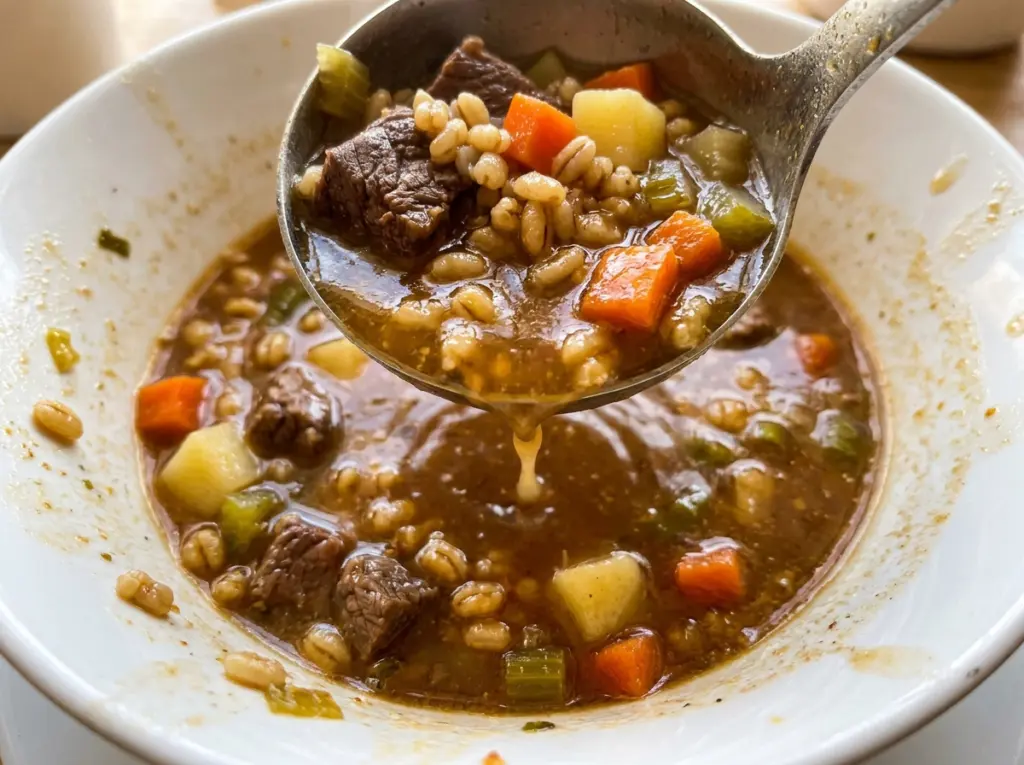
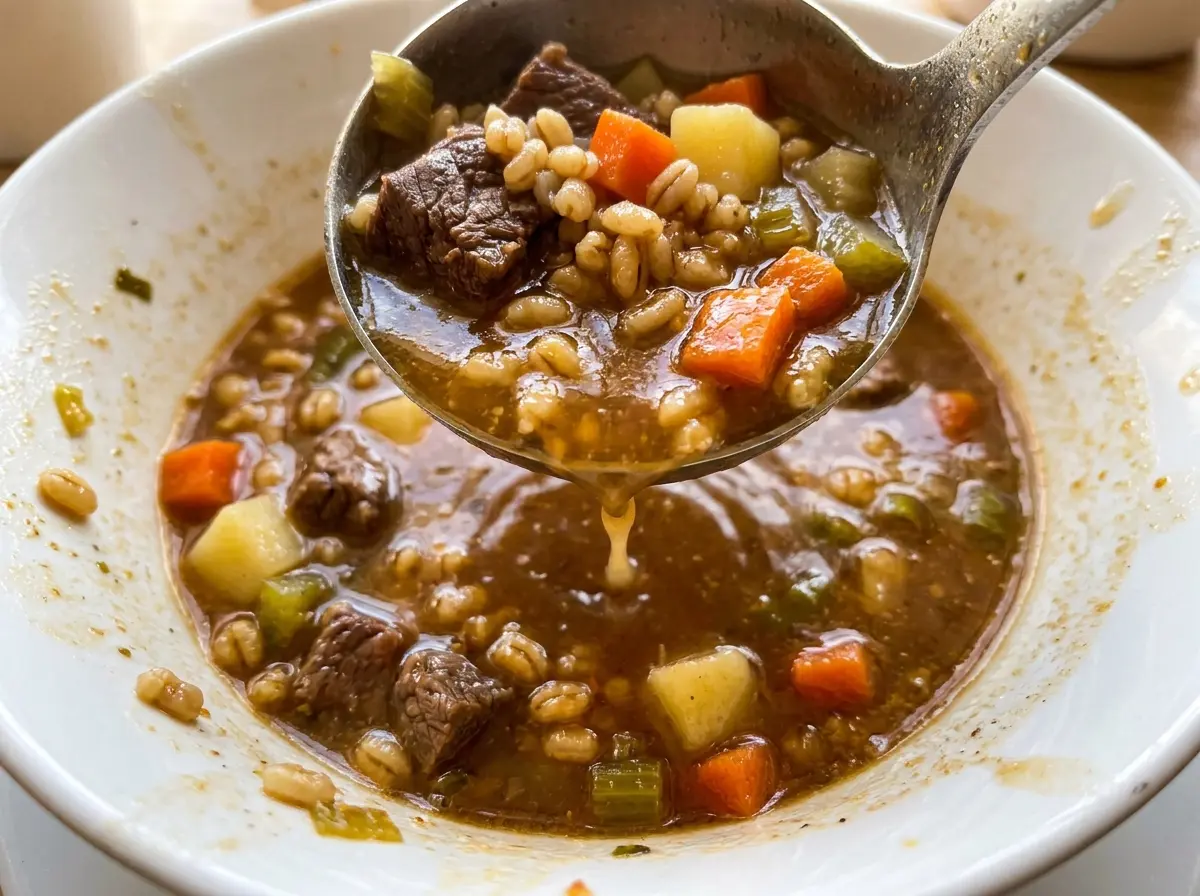
The beef needs a little time before the vegetables go into the pot. Start with a good sear, then let the chuck simmer until it’s beginning to soften; rush that part and you’ll end up with chewy pieces while the potatoes are already falling apart. In this hearty beef and vegetable soup with barley, each ingredient gets its turn, so the beef turns fork-tender and the vegetables keep their shape.
Pearl barley makes the broth feel substantial without turning it into a stew, and the low-sodium beef broth lets the browned beef and tomato paste bring plenty of savory depth. I add the barley and sturdier vegetables after the beef has had a head start, then save the frozen green beans and peas for the finish. The result is a full pot of cozy, spoonable soup with tender beef, soft barley, and a little sweetness from the vegetables.
Kitchen Note
The broth may look a little thin when you first stir in the barley and vegetables. Give the barley time to soften before judging the texture; it absorbs some of the broth as it cooks.
Save this hearty beef and barley soup for a cold evening when you want tender beef, plenty of vegetables, and a broth that eats like a meal.
Why the Vegetables Don’t Go Into the Pot with the Beef
Beef chuck needs a longer, gentler cook than potatoes, carrots, and celery do. If everything goes in at the beginning, the vegetables can lose their shape before the beef has softened. Giving the beef a head start lets it develop tenderness without asking the potatoes to withstand the entire simmer.
The timing also suits the barley. Pearl barley needs room to cook until tender, and it adds body as it takes up some broth. Carrots, celery, and potatoes join it for that stretch, while the frozen green beans and peas wait until near the end. Those last additions need only enough heat to become tender and warm through, so they taste fresh rather than faded. It’s a simple sequence, but it’s what keeps this soup from becoming a pot of overcooked vegetables around still-chewy beef.
Why Pearl Barley and Beef Chuck Belong in This Pot

- Beef chuck stew meat — Chuck has enough connective tissue to become tender during a long, moist simmer and gives the broth a deeper beefy taste. Lean cuts won’t give you quite the same texture, so stick with chuck if you can.
- Pearl barley — Its pleasantly chewy grains make the broth more filling without needing cream or flour. Quick-cooking barley won’t hold up to the same timing; if that’s all you have, leave the barley out rather than cooking it for the full stretch and letting it turn mushy.
- Low-sodium beef broth — It provides the soup’s savory base while leaving room for the kosher salt to season the beef. Regular broth can make the pot saltier, so taste before adding any extra salt at the table.
- Tomato paste and diced tomatoes — The paste gives the base concentrated, rounded tomato flavor, while the canned tomatoes add little bites of acidity. Fire-roasted diced tomatoes work in the same amount if you’d like a more pronounced roasted note.
- Frozen green beans and peas — Frozen vegetables are convenient here and go straight into the pot near the end. The peas bring a gentle sweetness; green beans have a firmer bite and keep their character in the broth.
- Russet potatoes — Russets soften at the edges and add a little starch to the soup. Cut them into even half-inch pieces so they cook at the same pace.
Building the Soup in Stages for Tender Beef and Vegetables
Brown the Beef Without Crowding the Pot
Heat the vegetable oil in an 8-quart pot over medium-high heat. Season the beef with kosher salt and black pepper, then brown it in batches for 6–8 minutes, turning the pieces so several sides develop color. Crowding the pot makes the beef steam instead of brown, so give each batch space and transfer the browned pieces to a plate. Those dark bits left on the pot are part of the flavor base.
Soften the Onion and Toast the Tomato Paste
Add the chopped onion and cook over medium heat for 4–5 minutes, stirring and scraping up the browned bits. The onion should soften and turn glossy, not take on deep color. Stir in the minced garlic and tomato paste and cook for 1 minute. Keep stirring so the garlic doesn’t scorch against the hot pot.
Simmer the Beef Until It Starts to Give
Stir in the beef broth, diced tomatoes, dried thyme, bay leaves, and browned beef, then bring the pot to a boil. Reduce the heat to maintain a gentle simmer, cover, and cook for 60–75 minutes. A gentle simmer means small, steady bubbles rather than a hard boil. At this point the beef should be beginning to become tender, not yet fully fork-tender.
Cook the Barley, Then Finish with the Frozen Vegetables
Stir in the rinsed pearl barley, carrots, celery, and potatoes, cover, and simmer for 30–40 minutes. The barley and potatoes should be tender, and the beef should pull apart easily with a fork. Stir in the frozen green beans and simmer uncovered for 10 minutes, then add the peas and cook for 3–5 minutes, until heated through. Fish out and discard the bay leaves before serving.
Simple Changes That Still Suit This Slow-Simmered Soup
Make It Gluten-Free by Leaving Out the Barley
Omit the pearl barley and use certified gluten-free low-sodium beef broth. The soup will have a looser broth and less chew, while the potatoes still make it filling. Choose gluten-free versions of packaged ingredients if cross-contact is a concern.
Trade the Peas for More Green Beans
Use the same amount of frozen cut green beans in place of the peas. Add them at the same point you’d add the peas and cook until heated through; the finish will be less sweet, with a firmer vegetable bite.
Use Fire-Roasted Diced Tomatoes
Swap in a 14.5-ounce can of fire-roasted diced tomatoes for the regular diced tomatoes. The soup keeps its familiar tomato base but picks up a subtle roasted taste; no other change to the method is needed.
Storage and Reheating
- Refrigerator: Store in a covered container for 3–4 days. The barley will absorb more broth as the soup sits, so it will be thicker the next day.
- Freezer: Freeze in airtight containers for up to 2–3 months. The potatoes and barley may soften after thawing, but the soup is still good to eat.
- Reheating: Warm gently on the stovetop or in the microwave, stirring occasionally, until the soup reaches 165°F. Avoid a hard boil, which can break down the potatoes and make the barley overly soft.
Questions That Come Up While Making Beef and Barley Soup
Hearty Beef and Vegetable Soup with Barley
Ingredients
Equipment
Method
- Heat the vegetable oil in an 8-quart pot over medium-high heat.
- Season the beef with the salt and pepper.
- Brown the beef in batches for 6–8 minutes, turning to brown the pieces on several sides.
- Transfer the browned beef to a plate.
- Add the onion to the pot and cook over medium heat for 4–5 minutes, stirring and scraping up browned bits.
- Add the garlic and tomato paste and cook for 1 minute.
- Stir in the broth, diced tomatoes, thyme, bay leaves, and browned beef.
- Bring the soup to a boil.
- Reduce the heat to maintain a gentle simmer, cover, and cook for 60–75 minutes, until the beef is beginning to become tender.
- Stir in the barley, carrots, celery, and potatoes.
- Cover and simmer for 30–40 minutes, until the barley and potatoes are tender and the beef is fork-tender.
- Stir in the green beans and simmer uncovered for 10 minutes.
- Add the peas and cook for 3–5 minutes, until heated through.
- Remove and discard the bay leaves before serving.