
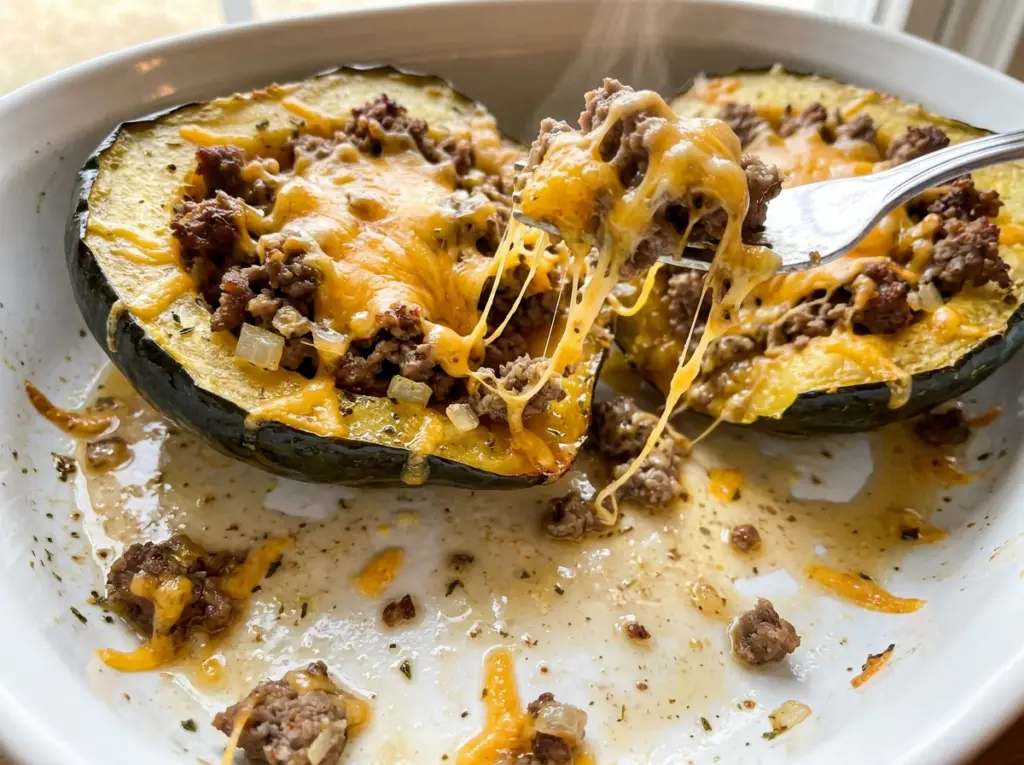
When the squash halves come out of the oven, their edges are tender enough to give under a fork, but the shells still hold their shape. That makes them a natural little bowl for a filling that’s hearty without being heavy. I make these ground beef and cheddar stuffed acorn squash with browned beef, onion, garlic, rice, and drained tomatoes, then finish each half with sharp cheddar.
The timing works because the squash roasts while the beef mixture comes together on the stove. The rice is already cooked, so it only needs a few minutes in the skillet to take on the savory tomato juices. Once the filling is spooned into the squash, a short bake melts the cheese and brings everything together. You get a tender, lightly sweet squash shell with a savory center and a golden blanket of cheddar.
Kitchen Note
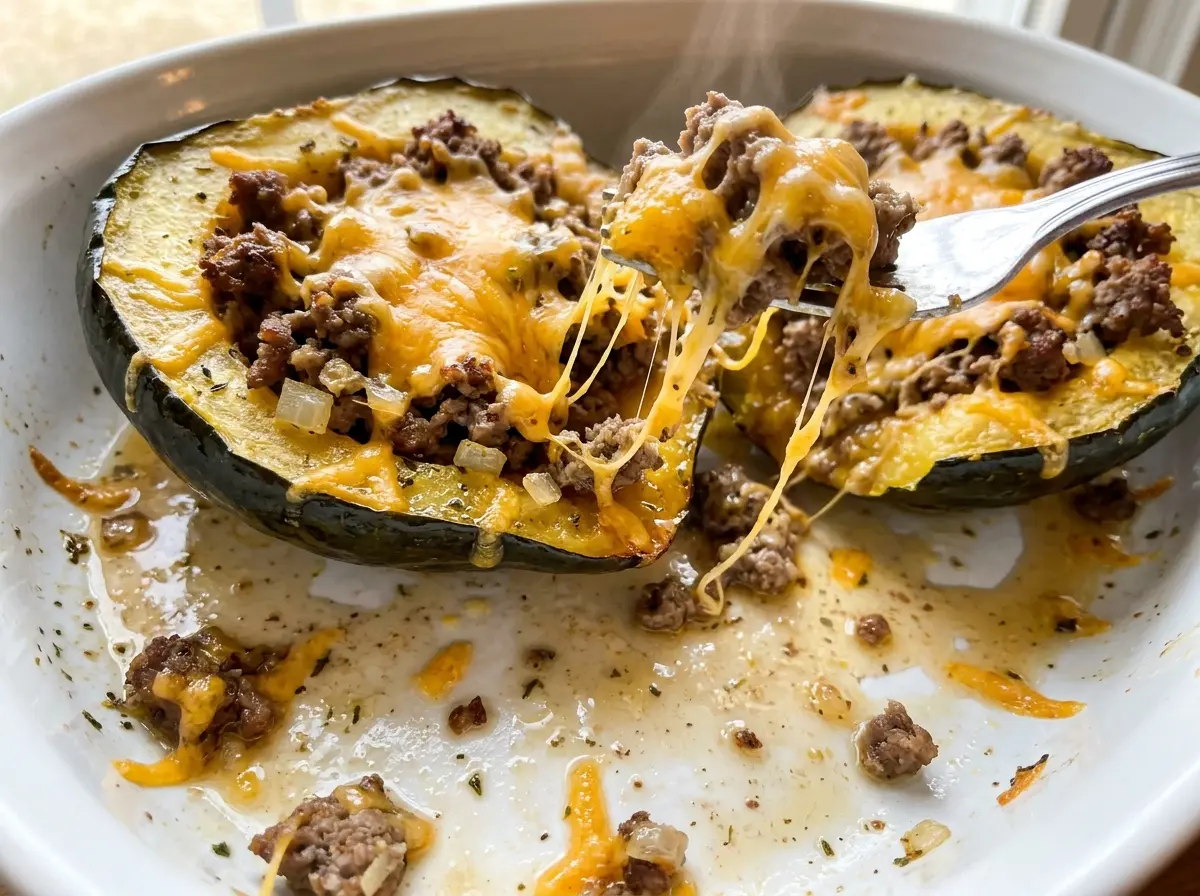
Give the stuffed halves their full five-minute rest before serving. The filling settles into the squash, and the melted cheddar has a moment to stop sliding when you lift a portion.
Save this ground beef and cheddar stuffed acorn squash for a cozy dinner with tender squash, a savory rice filling, and a melted cheddar top.
Why the Rice Keeps the Tomato Filling From Turning Loose
Stuffed squash can go from hearty to watery when the filling has more liquid than the shells can hold. Here, the diced tomatoes are drained before they join the skillet, which gives them room to add tomato flavor without flooding the rice. That small bit of prep matters because the squash also releases moisture as it roasts.
Cooked long-grain rice gives the juices somewhere to go. It stays in separate grains rather than becoming a paste, so the beef mixture remains spoonable and holds together when you serve it. The brief simmer lets the rice take up some of the savory tomato and Worcestershire flavor without needing to cook from raw in the filling.
Keep the filling thick enough to mound gently on a spoon. If it looks soupy in the skillet, let it simmer and stir occasionally until the excess liquid cooks off before dividing it among the squash halves. That way, the filling stays in the bowl instead of running onto the pan.
The Ingredients That Give Each Squash Half Its Shape and Savory Center

- Acorn squash — Its firm, ridged shell becomes tender while still holding a generous scoop of filling. Choose squash that feel heavy and have firm skin; a different shape won’t give you the same individual edible bowls. The olive oil on the cut sides helps them roast without sticking.
- Ground beef — The 85% lean beef brings enough richness for a satisfying filling without leaving a slick of excess fat. A basic grocery-store pack works well here. Ground pork can replace it in the same quantity for a richer, slightly sweeter result, but the finished filling will taste less distinctly beefy.
- Diced tomatoes — A standard canned brand is fine because the tomatoes are cooked into the filling rather than served on their own. Fire-roasted diced tomatoes work as a direct swap if you want a subtle smoky note; drain them just as you would regular diced tomatoes.
- Long-grain white rice — Its distinct, tender grains keep the filling from feeling dense. Use rice that’s fully cooked before it goes into the skillet; short-grain rice tends to make a stickier mixture. Cooked brown rice can stand in for a nuttier, chewier bite.
- Sharp cheddar — Its assertive flavor comes through against the beef and sweet squash. Block cheddar freshly shredded melts smoothly, while pre-shredded cheese is convenient and works here too. Monterey Jack can replace it for a milder, softer-tasting top.
- Yellow onion and garlic — Together they build the savory base before the tomatoes and rice go in. Yellow onion is inexpensive and dependable; white onion can replace it one-for-one, with a sharper edge. Fresh garlic gives the filling a clearer aroma than a jarred version.
Roast the Squash First, Then Finish the Filled Halves
Soften the squash into sturdy little bowls
Heat the oven to 400°F. Halve the squash lengthwise, scoop out the seeds, and brush the cut sides with olive oil. Arrange the halves cut-side down on an 18×13-inch rimmed baking sheet so they roast evenly against the hot pan. Roast for 35–45 minutes, until a fork pierces the flesh easily; if it still feels firm, give it more time rather than trying to fill it early.
Brown the beef before adding the aromatics
While the squash roasts, cook the ground beef in a 12-inch skillet over medium heat for 6–8 minutes, breaking it into small crumbles as it cooks. Look for browned pieces throughout, and check that the beef reaches 160°F. If you leave it in large clumps, the filling will be harder to divide evenly among the squash halves. Once browned, add the diced onion and cook for 4–5 minutes, until softened.
Let the rice and tomatoes come together briefly
Add the minced garlic and cook for 30 seconds, just until fragrant. Stir in the drained tomatoes, cooked rice, Worcestershire sauce, salt, and black pepper. Simmer for 3–5 minutes, stirring occasionally, until the mixture is hot and the rice is coated with the savory juices. Keep the heat moderate; a hard boil can break up the rice and make the filling harder to spoon neatly.
Mound, top, and bake until the cheese melts
Turn the roasted squash halves cut-side up on the baking sheet. Divide the beef mixture among them, keeping the filling inside each shell, then sprinkle the shredded cheddar over the tops. Bake for 10–15 minutes, until the cheese is melted and the filling is hot. Let the halves rest for 5 minutes before serving.
Three Easy Swaps for a Different Stuffed Squash
Use ground turkey for a lighter filling
Replace the ground beef with the same quantity of ground turkey. It gives you a leaner, milder filling; cook it until it reaches 165°F before adding the onion and continuing with the filling.
Make the topping dairy-free
Use dairy-free cheddar-style shreds in place of the cheddar. The flavor will be a little different, and some plant-based shreds melt less smoothly, but they still add a savory topping to the filled squash.
Try cooked quinoa instead of rice
Swap in an equal volume of cooked quinoa for the cooked rice. The small grains give the filling a slightly nuttier taste and a looser, lighter texture, while still catching the tomato juices.
Storage and Reheating
- Refrigerator: Store leftovers covered for 3–4 days. The squash softens more as it sits, but the filling stays hearty.
- Freezer: Freeze cooled stuffed halves individually, wrapped well, for up to 2 months for best quality. Thaw overnight in the refrigerator; the squash will be softer after thawing.
- Reheating: Warm in a 350°F oven until the center reaches 165°F. Cover loosely if the cheese is browning before the filling heats through; microwaving can make the squash soft quickly.
Questions That Come Up When Making Stuffed Acorn Squash
Ground Beef and Cheddar Stuffed Acorn Squash
Ingredients
Equipment
Method
- Heat the oven to 400°F.
- Halve the squash lengthwise, scoop out the seeds, and brush the cut sides with olive oil.
- Arrange the squash cut-side down on an 18x13-inch rimmed baking sheet and roast for 35–45 minutes, until the flesh is easily pierced with a fork.
- While the squash roasts, cook the ground beef in a 12-inch skillet over medium heat for 6–8 minutes, breaking it up, until browned and it reaches 160°F.
- Add the onion and cook for 4–5 minutes, until softened.
- Add the garlic and cook for 30 seconds.
- Stir in the tomatoes, rice, Worcestershire sauce, salt, and pepper; simmer for 3–5 minutes, stirring occasionally.
- Turn the squash cut-side up on the baking sheet and divide the beef mixture among the halves; sprinkle with the cheddar.
- Bake for 10–15 minutes, until the cheese is melted and the filling is hot.
- Let rest for 5 minutes before serving.