

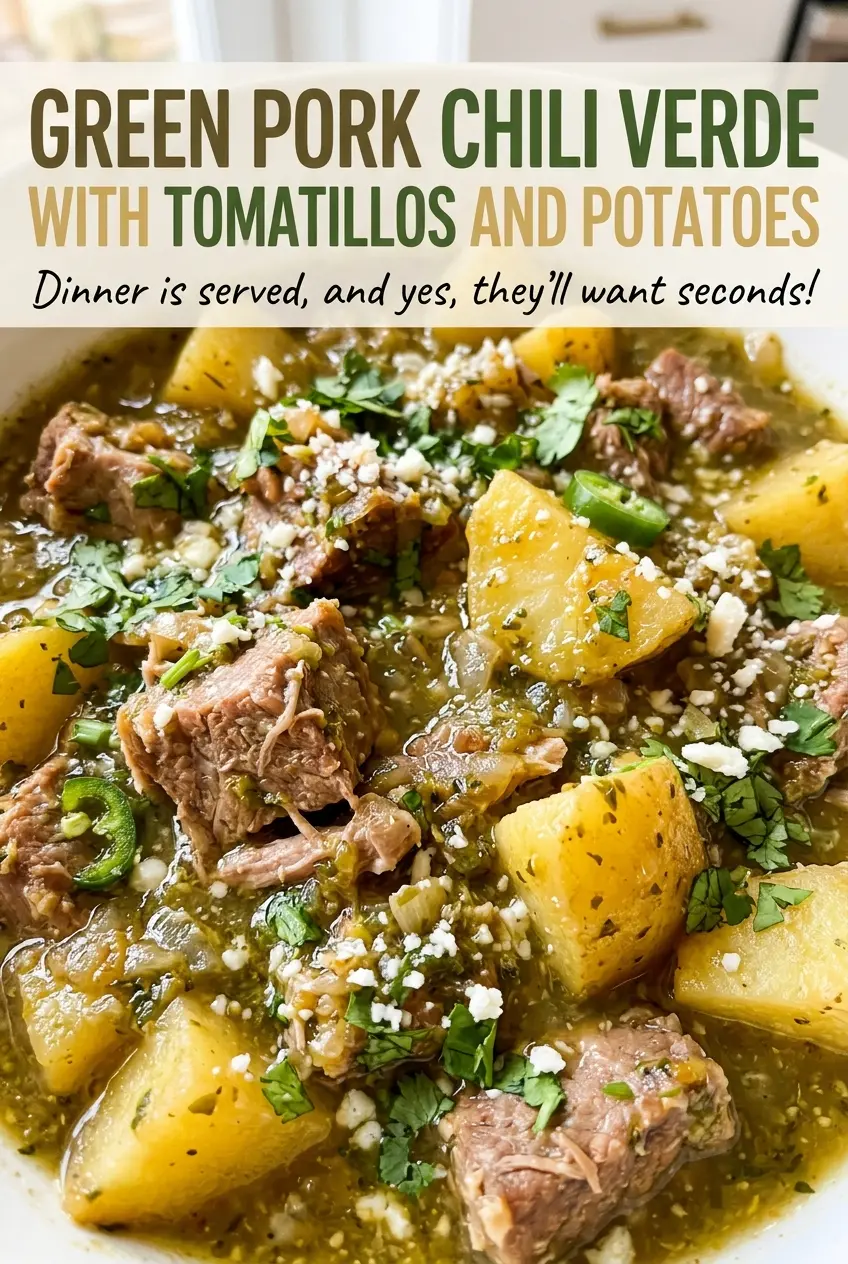
The tomatillos soften and blister in the oven, and their sharp, green smell turns sweeter as they roast. That’s the start of this green pork chili verde with tomatillos and potatoes: a deep, tangy sauce wrapped around tender pork, with Yukon Golds added near the end so they hold their shape.
I like that the sauce comes from the vegetables themselves rather than a long list of extras. Roasted poblanos bring a gentle pepper flavor, jalapeños add heat, and cilantro keeps the finished pot bright. The pork simmers in that blended base until it’s fork-tender, then the potatoes cook right in the same Dutch oven. Each spoonful comes out hearty, silky, and edged with tomatillo tang.
Kitchen Note
Give the pork room in the Dutch oven while it browns. If the pieces touch, they steam instead of developing those browned surfaces that give the finished chili more depth.
Save this green pork chili verde for a slow-simmer day when you want tender pork, roasted tomatillo sauce, and potatoes in one pot.
Why Tomatillos Need the Oven Before They Go in the Pot
Tomatillos bring the tart, fresh backbone of chili verde, but blending them raw into the broth would leave the sauce sharper and less rounded. Roasting gives their skins time to blister and their flesh time to soften, so they blend into a smoother base with a mellowed tang. The onion and garlic roast alongside them, adding sweetness and savoriness without needing another pan.
The peppers benefit from that same concentrated heat, but they need a little extra attention after roasting. Covering them lets their own steam loosen the skins, which makes the peeling easier once they’re cool enough to handle. You don’t need to chase every tiny bit of skin; remove the loose pieces, then pull out the stems and seeds before blending. That small bit of patience keeps the sauce pleasant and lets the roasted pepper flavor shine through.
What the Tomatillos, Pork, and Potatoes Each Bring to the Pot

- Tomatillos — Look for firm fruit with bright green skins beneath the husks. Fresh tomatillos supply the characteristic tartness and body of the sauce; rinse away the slightly sticky coating after husking so it doesn’t carry into the puree.
- Poblano and jalapeño peppers — Poblanos contribute a mild, roasted pepper taste, while jalapeños bring the sharper heat. Fresh peppers with taut skins roast and peel more easily than wrinkled ones, and removing the seeds keeps the heat more controlled.
- Boneless pork shoulder — This cut has enough connective tissue and fat to become tender through a long, gentle simmer. Keep the pieces close to the same size so they cook at a similar pace; a leaner cut won’t give the same plush texture through this braise.
- Yukon Gold potatoes — Their creamy texture suits the green sauce, and they stay more intact than a floury potato when simmered. Choose potatoes that feel firm and cut them into even pieces so they finish together.
- Fresh cilantro and low-sodium chicken broth — Cilantro brings a fresh note to the blended sauce, so use leafy bunches without wilted or blackened leaves. Low-sodium broth gives the pork a savory cooking liquid while leaving room for the measured salt to season the pot.
Roast, Brown, Then Let the Pork Simmer Until Tender
Blister the Vegetables and Steam the Peppers
Heat the oven to 425°F and arrange the tomatillos, poblanos, jalapeños, quartered onion, and unpeeled garlic on a rimmed baking sheet. Roast for 20–25 minutes, turning the peppers and onion once, until the vegetables have softened and their surfaces are blistered. Move the peppers to a bowl, cover it, and let them steam for 10 minutes. Once they’re cool enough to handle, peel off the loose skins, remove stems and seeds, and squeeze the softened garlic from its skins.
Brown the Pork in the Dutch Oven
Season the pork cubes with 1½ teaspoons of the kosher salt and the black pepper. Heat the neutral oil in a 6-quart Dutch oven over medium-high heat, then brown the pork in batches for 3–4 minutes per side. Look for deep golden patches rather than pale gray surfaces, and transfer each batch to a plate as it’s browned. Crowding the pan makes the pork release moisture faster than it can brown, so work in batches.
Blend the Verde Sauce and Braise Low
Blend the roasted tomatillos, peppers, onion, peeled garlic, cilantro, and 1 cup of the broth until mostly smooth, working in batches if needed. Pour the puree and the remaining 2 cups broth into the Dutch oven, then return the pork and any juices from the plate. Stir in the remaining ½ teaspoon salt, bring the pot to a gentle simmer, cover, and reduce the heat to low. Simmer for 1½–2 hours, until the pork is fork-tender and registers at least 145°F.
Simmer the Potatoes and Rest the Chili
Stir the potato pieces into the pot after the pork has become tender, then cover and simmer for 20–25 minutes. A fork should slide into the potatoes without resistance, but the pieces should still hold their edges rather than collapse into the sauce. Take the Dutch oven off the heat and let the chili rest for 10 minutes before serving. That short pause lets the bubbling settle and the sauce gather back around the pork and potatoes.
Three Ways to Adjust the Verde Without Losing Its Character
Make the Heat Milder
Leave out the jalapeños and roast the poblanos as usual. The sauce will keep its roasted green-pepper character, but it’ll have a gentler warmth and less sharp heat.
Keep Some Jalapeño Seeds for More Heat
For a hotter pot, leave some seeds in the jalapeños before blending. The sauce will have a more direct pepper bite, so keep the seeds in just one pepper if you want a modest increase rather than a big jump.
Leave the Sauce a Little Chunkier
Set aside a few roasted tomatillos before blending, chop them, and stir them into the finished puree. You’ll get small soft pieces of tomatillo in the sauce instead of a fully even texture.
Storage and Reheating
- Refrigerator: Store in a covered container for 3–4 days. The potatoes soften a little as they sit in the sauce.
- Freezer: Freeze in airtight containers for up to 3 months. The pork freezes well, though thawed potatoes may be softer; cool the chili before packing and leave a little room for expansion.
- Reheating: Warm gently in a covered saucepan over low heat, stirring now and then, until the chili reaches 165°F. Avoid a hard boil, which can break up the potatoes before the center of the pot is hot.
Questions That Come Up While Making Chili Verde
Green Pork Chili Verde with Tomatillos and Potatoes
Ingredients
Equipment
Method
- Heat the oven to 425°F.
- Arrange the tomatillos, poblano peppers, jalapeño peppers, onion, and garlic on a rimmed baking sheet and roast for 20–25 minutes, turning the peppers and onion once, until softened and blistered.
- Transfer the peppers to a bowl, cover, and let steam for 10 minutes.
- When cool enough to handle, peel off the loose skins, remove the stems and seeds, and squeeze the garlic from its skins.
- Season the pork with 1 1/2 teaspoons salt and the black pepper.
- Heat the oil in a 6-quart Dutch oven over medium-high heat and brown the pork in batches for 3–4 minutes per side, transferring the browned pieces to a plate.
- Blend the roasted tomatillos, peppers, onion, peeled garlic, cilantro, and 1 cup broth until mostly smooth, working in batches if needed.
- Pour the puree and remaining 2 cups broth into the Dutch oven, add the pork and any accumulated juices, and stir in the remaining 1/2 teaspoon salt.
- Bring to a gentle simmer, cover, reduce the heat to low, and simmer for 1 1/2–2 hours, until the pork is fork-tender and registers at least 145°F.
- Stir in the potatoes, cover, and simmer for 20–25 minutes, until the potatoes are fork-tender.
- Remove from the heat and rest for 10 minutes before serving.