
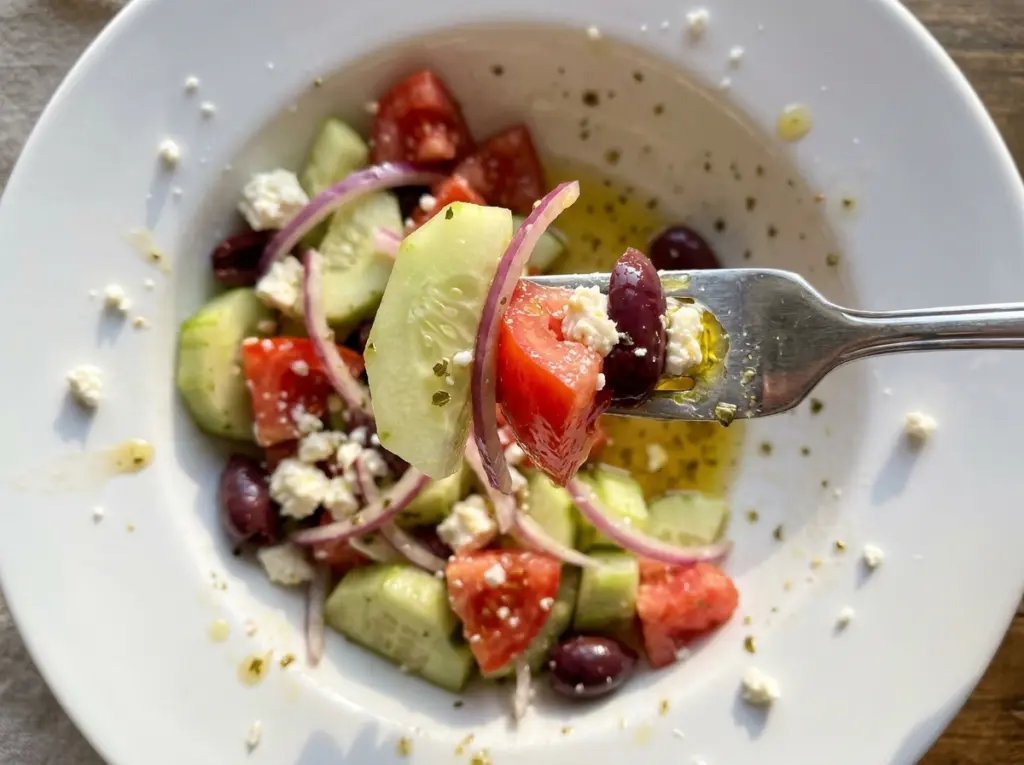
The dressing can look like a thin slick of oil and vinegar before it meets the vegetables, but whisk it right in the serving bowl and those oregano flecks spread through every bite. I make this Greek cucumber salad when ripe tomatoes are too juicy to ignore and I want a crisp, sharp salad without turning on the stove.
The order matters more than it might seem: whisk the dressing first, then add the cucumber, tomatoes, red onion, green bell pepper, and olives. A gentle toss coats the vegetables without crushing the tomatoes, and adding the feta last keeps it distinct instead of blending into the dressing. The result is bright, briny, and full of clean crunch.
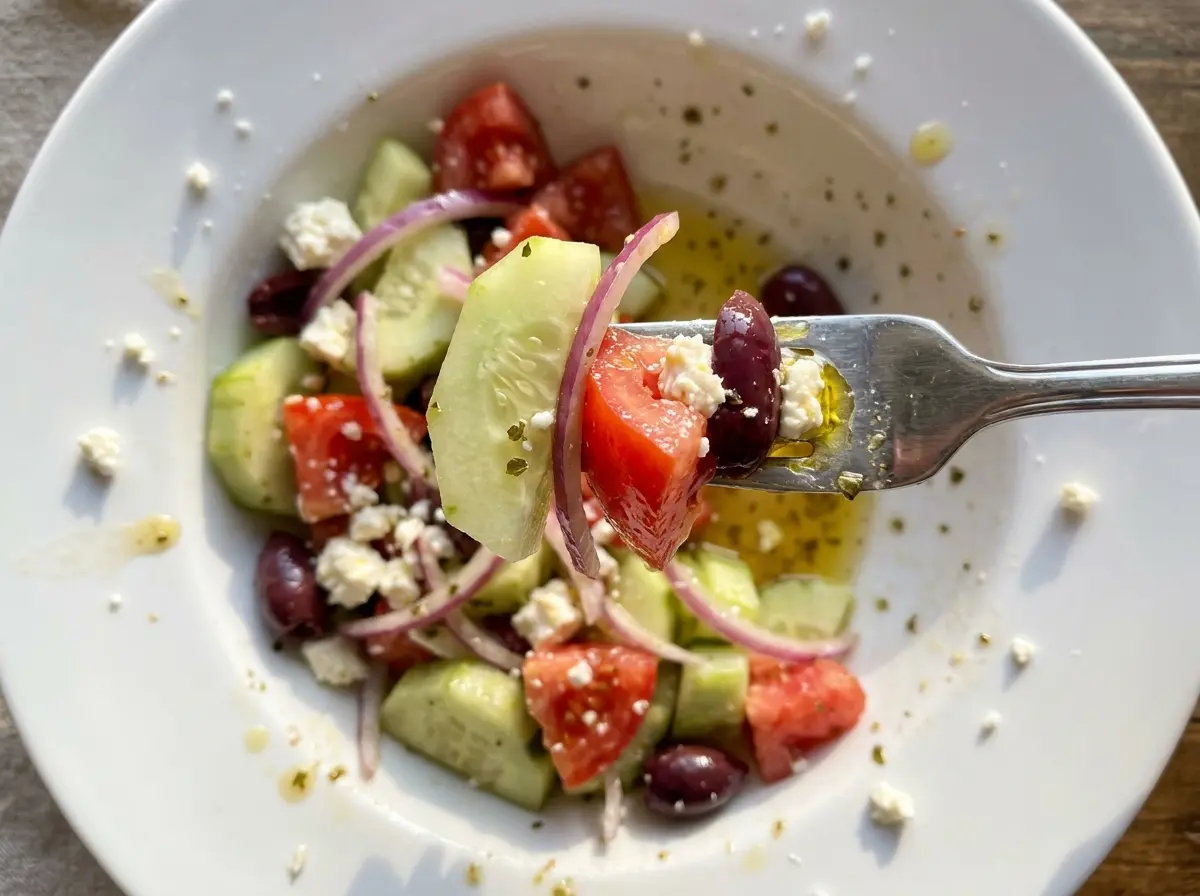
Kitchen Note
Use a roomy serving bowl, not a narrow one. The vegetables need space to turn through the dressing gently, and a crowded bowl makes it harder to coat them without knocking the ripe tomatoes around.
Save this Greek Cucumber Salad for the days ripe tomatoes need a briny, crisp companion and dinner needs a fresh side.
Why the Dressing Belongs in the Bowl Before the Vegetables
It’s easy to drizzle oil and vinegar over a finished pile of vegetables and hope a toss will distribute everything evenly. In practice, the dressing tends to gather at the bottom while the oregano and seasoning land unevenly. Whisking the olive oil, red wine vinegar, dried oregano, salt, and pepper together first gives them a chance to mingle before the cucumber and tomatoes go in.
That small change also helps the first toss do its job: the cucumber, tomato, onion, pepper, and olives all get coated at once. You’re not trying to make a thick, permanent emulsion. You’re bringing the dressing together long enough to spread it around the salad, then serving while the vegetables still have their fresh crunch. A gentle hand matters here; vigorous tossing can break up ripe tomatoes and smear feta through the bowl.
The finished salad should look lightly glossy, not submerged. The tomatoes will contribute some of their own juice, and that mingles with the dressing at the bottom. A little pooled liquid is part of the salad, not a sign that the vinaigrette failed.
What Makes the Simple Ingredients Taste Like Greek Salad
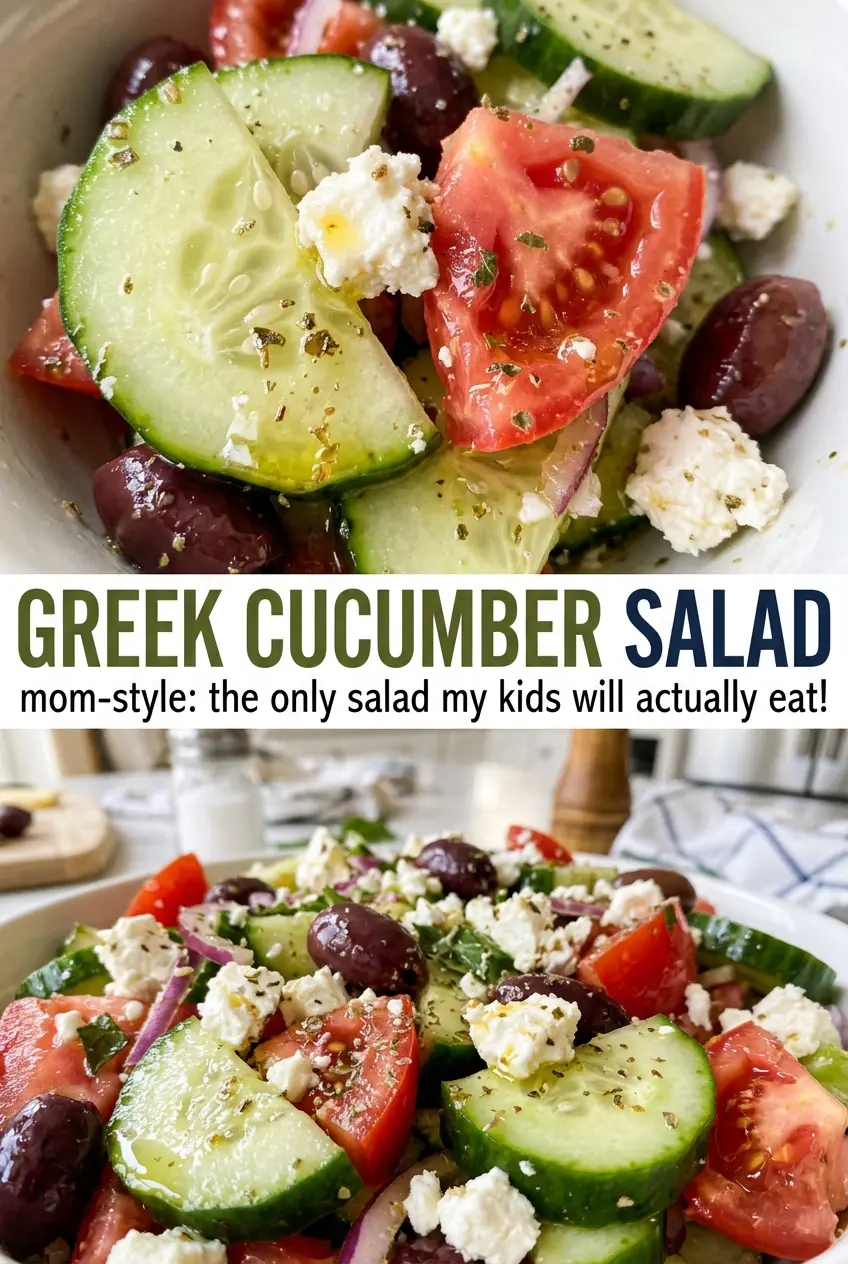
- Extra-virgin olive oil — Its fruity, peppery taste gives the dressing much of its character, so use an oil you enjoy tasting on its own. A lesser oil can still coat the vegetables, but it won’t bring the same rounded olive flavor. There isn’t another listed ingredient that can replace its richness.
- Red wine vinegar and dried oregano — The vinegar supplies the sharp edge that keeps the oil from feeling heavy, while dried oregano gives the salad its familiar savory aroma. Keep both in the dressing; sprinkling oregano on top instead won’t distribute it as evenly. I wouldn’t swap in another vinegar if you want this particular balance.
- Cucumber — Choose one that feels firm, with taut skin and no soft spots. Bite-size pieces give you a cool, crisp contrast to the softer tomatoes and feta. No special prep is needed beyond cutting it into pieces that are comfortable to pick up with a fork.
- Ripe tomatoes — Ripeness matters because the tomatoes bring both sweetness and juice. Pick tomatoes that smell fragrant and yield slightly when pressed, rather than ones that are hard and pale. Cut them into bite-size pieces, and handle them gently once they’re in the bowl.
- Red onion and green bell pepper — The onion adds a sharp bite, and thin slices keep that bite from dominating any forkful. The pepper contributes a fresh, green crunch. Use a crisp pepper and slice both vegetables thinly so they sit comfortably alongside the cucumber and tomato.
- Kalamata olives and feta — Pitted olives bring a concentrated, briny note, so their quality shows up clearly in this short ingredient list. Feta adds a salty, tangy finish; choose slabs when you want substantial bites or crumble it for a little feta in more forkfuls. Either presentation works here.
Whisk, Toss, Then Finish with Feta
Bring the Dressing Together in the Serving Bowl
Whisk the olive oil, red wine vinegar, oregano, salt, and black pepper in a large serving bowl. Keep whisking until the ingredients look evenly blended and the oregano is dispersed through the dressing. The mixture will still be loose, which is right for coating a chopped salad. Starting here also means you won’t have to pour dressing over the finished feta.
Coat the Vegetables Without Crushing Them
Add the cucumber, tomatoes, red onion, green bell pepper, and olives to the bowl. Toss gently until the vegetables and olives are lightly coated. Look for a sheen across the pieces rather than a thick layer of dressing. If the tomatoes start to break apart, ease up on the tossing; they need only a few careful turns.
Set the Feta on Top and Serve
Finish by topping the salad with feta, either in slabs or crumbled. Keeping it on top preserves the contrast between the creamy cheese and crisp vegetables, while crumbling it spreads the tang through more of the salad. Serve after adding the feta so it stays distinct. The tomatoes will release some juice into the dressing as the salad sits.
Small Changes That Keep the Salad in Balance
A Dairy-Free, Vegan-Style Bowl
Leave out the feta and let the Kalamata olives provide the salty, savory contrast. The salad remains crisp and bright, but it won’t have feta’s creamy texture or tang; the olives are a briny stand-in, not a creamy cheese replacement.
A Milder Onion-Free Version
Omit the red onion if you prefer a gentler salad. You’ll lose some of its sharp crunch, but the oregano dressing, olives, and feta still give the vegetables plenty of savory contrast.
A Softer, Less Peppery Salad
Leave out the green bell pepper for a version that leans more heavily on cool cucumber and ripe tomato. The salad loses that crisp green note, but the remaining vegetables still take well to the same dressing.
Making Ahead and Leftovers
- Refrigerator: Keep leftovers covered in the refrigerator and use them within a day for the best texture. The tomatoes will release juice, and the cucumber will soften as it sits.
- Freezer: Freezing isn’t a good fit; the fresh vegetables become soft and watery when thawed.
- Serving: This salad is best served cold or cool, without reheating. For advance prep, keep the dressing and cut vegetables separate in the refrigerator, then toss them together and add the feta just before serving.
Questions That Come Up When Making Greek Cucumber Salad
Greek Cucumber Salad
Ingredients
Method
- In a large serving bowl, whisk together the olive oil, red wine vinegar, oregano, salt, and black pepper.
- Add the cucumber, tomatoes, red onion, green bell pepper, and olives to the bowl.
- Toss gently to coat.
- Top with the feta.
- Serve.