
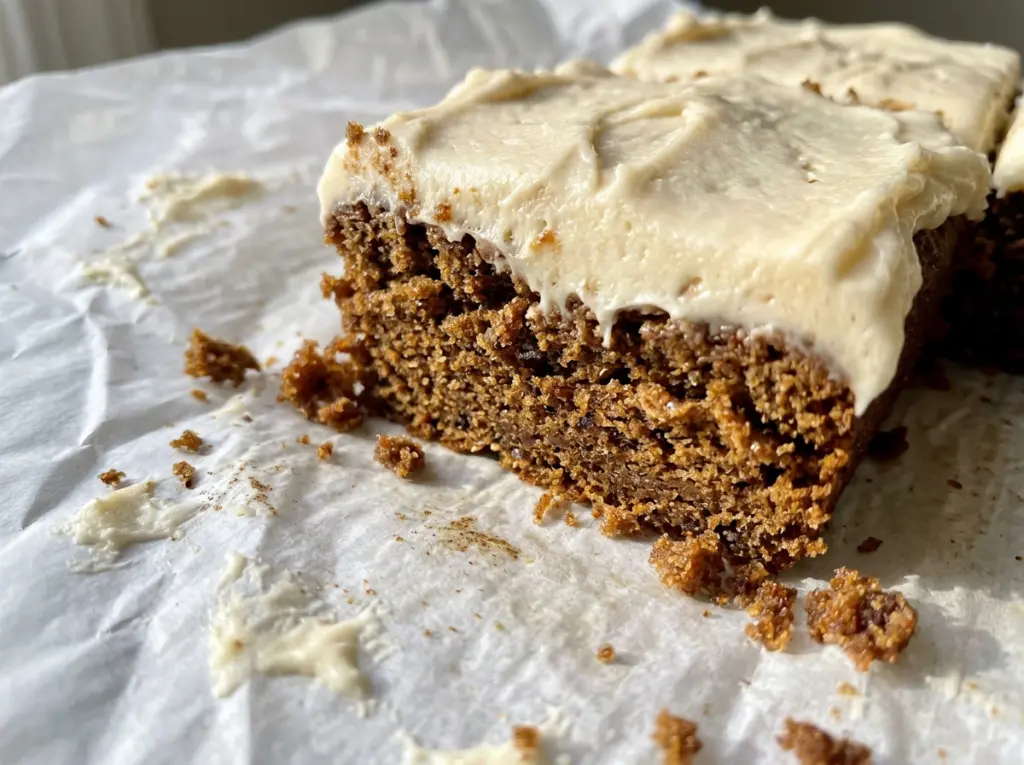
The dough is thick enough to hold the grooves from a spatula, and that’s exactly what I want before it goes into the pan. Gingerbread bars bake as one even layer, so there’s no rolling or waiting for individual cookies to spread. These come out soft and gently spiced, with a cream cheese frosting that gives each square a cool, tangy finish.
Light brown sugar and unsulphured molasses make a rich, moist dough, while ground ginger leads the spice without drowning out the cinnamon and cloves. I mix the flour in on low and stop as soon as the dry streaks disappear; working it longer can make a tender bar tough. The dough won’t pour or settle on its own, so spread it into the corners for an even bake.
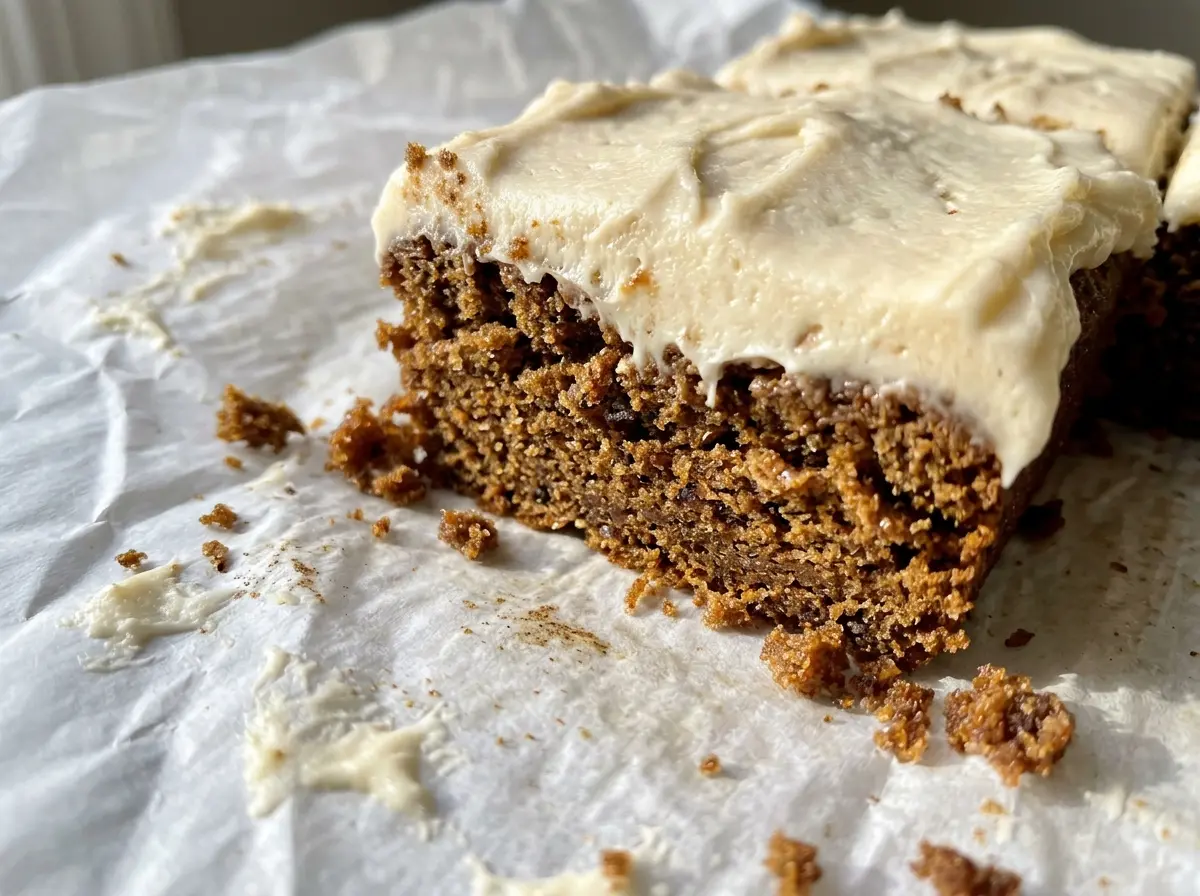
Once the bars have cooled completely, the frosting spreads smoothly over the top and the squares cut neatly. The finished pan makes 24 pieces, just right for a dessert tray or an afternoon coffee break.
Kitchen Note
Don’t frost the bars while they’re even a little warm. Cream cheese frosting softens against a warm surface, so let the pan cool completely before spreading it on.
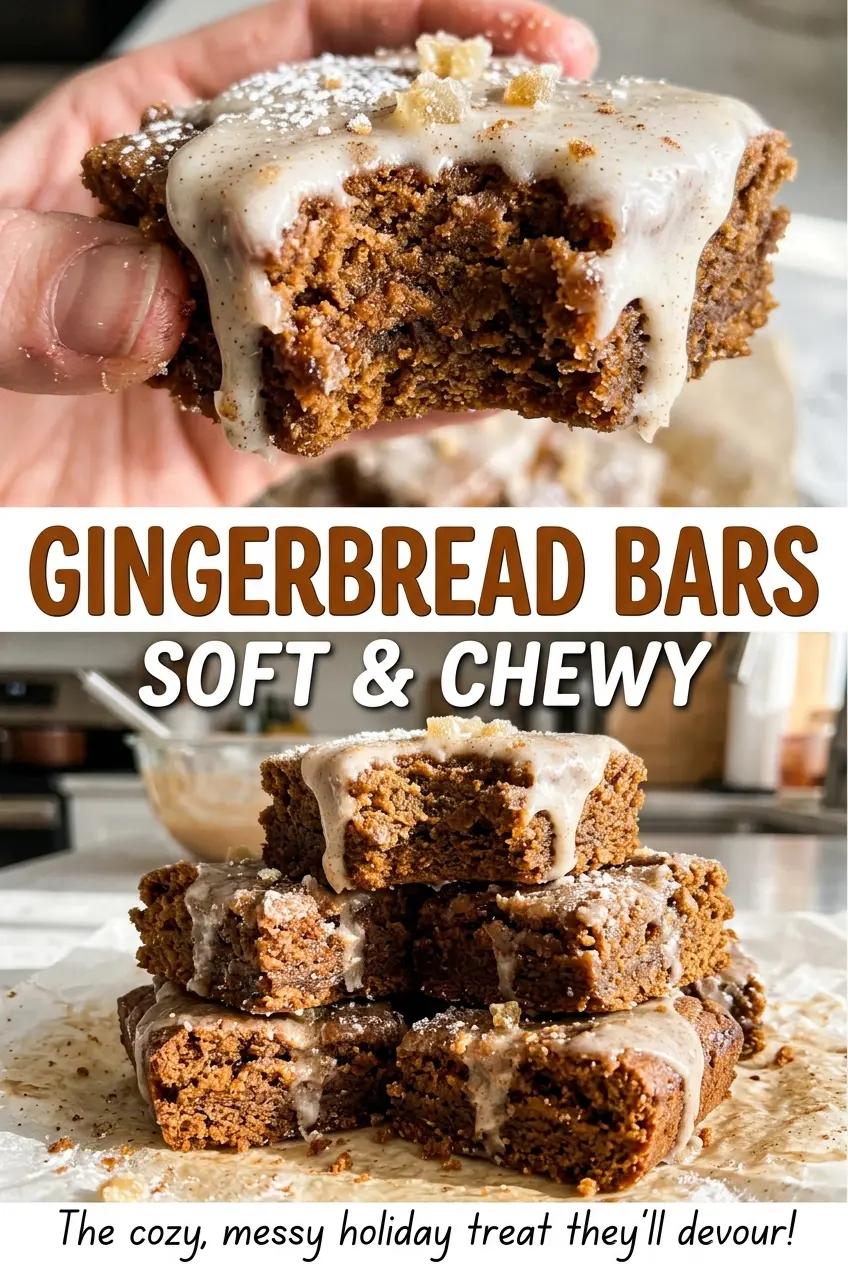
Save these gingerbread bars for a soft, molasses-rich square topped with tangy cream cheese frosting.
Why These Bars Need a Few Moist Crumbs, Not a Clean Toothpick
A pan of gingerbread bars keeps baking for a little while after it leaves the oven. If you wait until a toothpick comes out completely clean, the center has likely spent too long in the heat and can turn dry once it cools. Look for set edges and a few moist crumbs on the toothpick instead; the middle should no longer look like wet batter.
That cue matters because this dough is spread as a single layer rather than divided into small cookies. The edges are thinner and set first, while the center takes longer to finish. Brown sugar and molasses help keep the crumb tender, but they can’t rescue bars that have been baked past the moist-crumb stage. Start checking at the lower end of the baking window, especially if your oven tends to run hot.
The other useful detail is an even layer before baking. A thick mound in the middle and thin corners bake at different rates, leaving you with dry edges before the center is ready. Work the dough into the corners of the 9×13-inch pan, then level the top so the whole sheet has a fair chance to bake together.
What the Molasses and Cream Cheese Bring to These Gingerbread Bars
- Unsulphured molasses — This gives the bars their deep gingerbread character and contributes moisture to the dough. The unsulphured type has a rounded, mellow taste; the quality and type matter more here than choosing a particular brand. It doesn’t have a direct replacement among the other ingredients in this formula.
- Ground ginger, cinnamon, and cloves — Together they make the warm, recognizable spice without any one note taking over. Freshly opened spices tend to smell more vivid when you whisk them with the flour. Keep the measured blend together rather than leaving out one spice; cloves are potent, but the small amount gives the background warmth that balances the ginger.
- Softened butter and light brown sugar — Soft butter can beat with the sugar until light and fluffy, which helps build the dough’s texture before the flour goes in. The brown sugar brings sweetness and a mild caramel note that fits the molasses. If the butter is still firm in the center, it won’t cream evenly with the sugar.
- Block cream cheese and powdered sugar — The softened block cream cheese makes a rich frosting that holds its shape when spread over the cooled bars. Beat it smooth before adding the powdered sugar, and add the sugar gradually so it blends in without leaving pockets. Powdered sugar is the right choice for a smooth frosting; granulated sugar won’t dissolve the same way.
- All-purpose flour — It gives the bars enough structure to slice into squares while keeping the crumb tender. Whisk it with the leavening and spices first, then mix it into the butter mixture only until no dry streaks remain. There isn’t another ingredient in this list that can stand in for the flour and perform the same job.
From Fluffy Butter and Sugar to Frosted, Sliceable Bars
Whisk the dry ingredients together
Whisk the flour, baking soda, ground ginger, cinnamon, cloves, and kosher salt in a medium bowl. Break up any small clumps so the baking soda and spices are dispersed through the flour. This takes a moment now and helps avoid a concentrated pocket of spice or leavening in a finished square.
Cream the butter, sugar, molasses, and egg
In a large bowl, beat the softened butter and packed light brown sugar until the mixture looks light and fluffy. Scrape down the bowl if sugar is clinging around the sides, then beat in the molasses and egg until combined. The mixture will look darker and softer after the molasses goes in; that’s expected.
Mix gently, then spread the dough evenly
Add the flour mixture to the butter mixture and mix on low just until no dry streaks remain. Don’t keep beating once the flour disappears, or the bars can bake up tougher than you want. Coat a 9×13-inch baking pan with nonstick cooking spray, then spread the dough evenly into the corners with a spatula. The dough is thick, so take a little time to level it rather than expecting it to flow across the pan.
Bake, cool, and frost
Bake at 350°F for 22–26 minutes, until the edges are set and a toothpick inserted in the center comes out with a few moist crumbs. Leave the bars in the pan and let them cool completely. Beat the softened cream cheese until smooth, then gradually beat in the powdered sugar and vanilla until the frosting is smooth. Spread it over the cooled bars and cut the pan into 24 pieces.
Two Simple Ways to Change the Finish or Serving Size
Serve them without frosting
Leave off the cream cheese topping for a simpler, less-rich gingerbread bar. The bars still have molasses and brown sugar for a moist, sweet crumb, and skipping the frosting lets the ginger and cloves come through more clearly. This is also the easiest way to make a batch when you’d rather not frost a full pan.
Cut smaller squares for a dessert tray
Make the usual 24 pieces, then halve each square for smaller, two-bite servings. The thinner pieces are easier to arrange on a tray and give you a little frosting and gingerbread in each bite. Use a sharp knife so the cream cheese layer stays tidy.
Storage and Reheating
- Refrigerator: Keep the frosted bars covered in the refrigerator for up to 4 days. The frosting firms when chilled, while the bars stay soft.
- Freezer: Freeze the cut bars in a single layer until firm, then transfer them to an airtight container for up to 2 months. Thaw them in the refrigerator before serving; the cream cheese frosting may be a little softer after thawing.
- Reheating: These are best served chilled or brought briefly toward room temperature, not reheated. Microwaving can soften the frosting unevenly and make it slide off the bars.
Questions I Get Asked About These Gingerbread Bars
Gingerbread Bars – Holiday Recipe
Ingredients
Equipment
Method
- Preheat the oven to 350°F.
- Coat a 9x13-inch baking pan with nonstick cooking spray.
- Whisk the flour, baking soda, ginger, cinnamon, cloves, and salt in a medium bowl.
- Beat the butter and brown sugar in a large bowl until light and fluffy.
- Beat in the molasses and egg until combined.
- Add the flour mixture to the butter mixture and mix on low just until no dry streaks remain.
- Spread the dough evenly in the prepared pan.
- Bake for 22–26 minutes, until the edges are set and a toothpick inserted in the center comes out with a few moist crumbs.
- Cool the bars completely in the pan.
- Beat the cream cheese until smooth.
- Gradually beat in the powdered sugar and vanilla until smooth.
- Spread the frosting over the cooled bars.
- Cut into 24 pieces.