
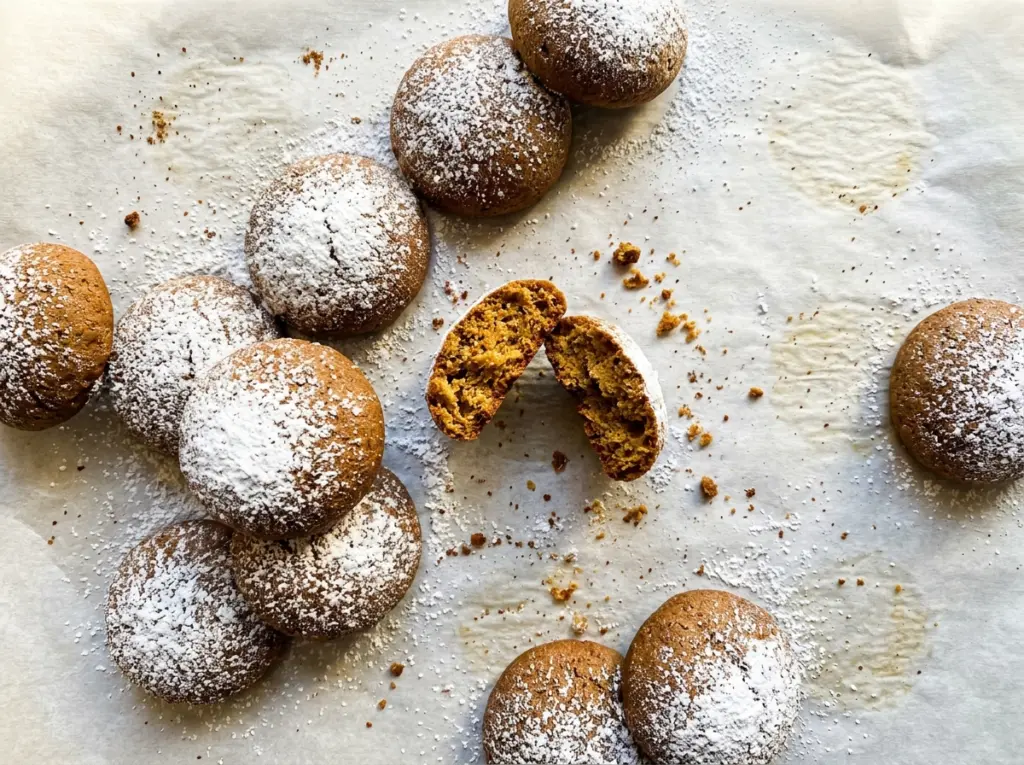
When the dough comes together, it’s soft and fragrant with honey, molasses, and a whole cabinet of warm spices. That richness is what makes German Pfeffernusse Cookies distinctive, but it also means the dough needs a proper chill before it’s easy to portion. I give it at least two hours in the refrigerator, then roll level tablespoons into neat little rounds.
The spice blend has more going on than cinnamon and ginger. Black pepper and anise bring a gentle, savory edge that keeps the cookies from tasting like plain sugar cookies with extra spice. The flavor stays balanced against the honey and molasses, and a thin confectioners’ sugar glaze gives each cookie a crisp, sweet finish.
This batch makes 40 cookies, which is a comfortable number for sharing or keeping in a tin for a few days. The dough is straightforward to mix, and the glaze needs only confectioners’ sugar and water. Once the cookies are cooled and coated, you get a softly spiced bite under a smooth white top.
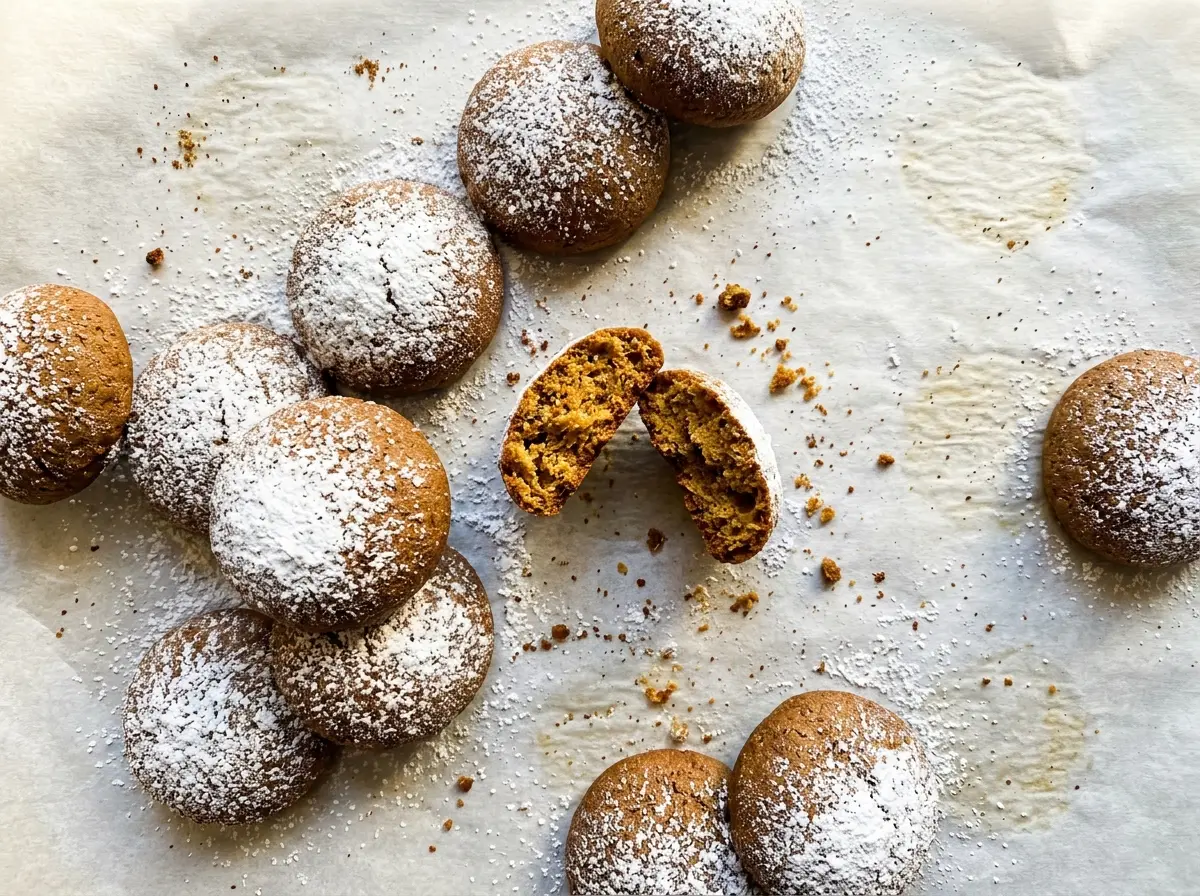
Kitchen Note
The two pans need a coordinated turn halfway through baking: swap their rack positions and rotate each one from front to back. That small bit of attention helps the cookies bake evenly across both sheets.
Save these German Pfeffernusse Cookies for a bake with a warmly spiced dough and a smooth, simple sugar glaze.
Why the Two-Hour Chill Matters More Than Extra Flour
Honey and molasses make this dough softer and tackier than a plain butter cookie dough. After mixing, it can be tempting to work in extra flour just to make rolling easier, but that changes the balance of the dough and can leave the baked cookies dense. The refrigerator does the useful work here: the butter firms, and the dough becomes easier to portion without changing its ingredient balance.
Give the dough at least two hours in the refrigerator before shaping. Once chilled, level tablespoons roll into tidy balls that keep a consistent size on the baking sheets. Consistency matters because the cookies bake together; a sheet of similarly sized rounds is less likely to have some cookies finished while others are still pale. If the dough has warmed while you roll, return it to the refrigerator rather than dusting your hands or counter with more flour. The final cookies should be set with lightly browned bottoms, not pushed until they look deeply browned on top.
How the Spice Blend Keeps Honey and Molasses in Balance

- The ground spices — Cinnamon and ginger provide familiar warmth, while cloves, cardamom, nutmeg, anise, and black pepper fill out the blend. Freshly opened spices have a clearer aroma; if yours have been sitting open for a long time, the cookies may taste muted. There isn’t a single spice that can replace the full blend without changing its character.
- Honey and molasses — These sweeteners bring a deeper taste than granulated sugar alone and contribute to the dough’s soft, tacky feel before chilling. Use honey and molasses with a flavor you enjoy, but there’s no need for premium specialty varieties. Swapping either one for a different sweetener would change both the taste and the dough, so keep them in the amounts listed in the recipe card.
- Butter and light brown sugar — Softened unsalted butter creams with the sugar to create the base of the dough. The brown sugar adds a rounded sweetness that works with the molasses. The butter should be soft enough to beat smoothly, not melted; melted butter won’t cream in the same way.
- All-purpose flour and egg — Flour gives the cookies their structure, and the egg helps bring the dough together. Use all-purpose flour for this formula; a direct flour swap can change how the dough holds its shape and bakes.
- Confectioners’ sugar — This dissolves into a smooth, opaque glaze with water, coating the cooled cookies without needing a cooked icing. A fresh, lump-free bag is easiest to whisk smooth.
From Spiced Dough to Set Glaze: The Stages That Matter
Whisk the dry ingredients evenly
In a medium bowl, whisk together the flour, baking soda, fine salt, and all of the spices. Take a moment to break up any clumps of flour or spice so you don’t end up with a concentrated pocket in one cookie. Even mixing matters here because the seasoning is distributed through the dry ingredients before they meet the butter mixture. Set the bowl aside while you cream the butter and sugar.
Cream, combine, then chill
Beat the softened butter and packed light brown sugar in a large bowl until the mixture looks light and fluffy, about 2 minutes. Beat in the honey, molasses, egg, and vanilla until combined; the mixture may look looser than the creamed butter and sugar, which is expected. Add the dry ingredients in two additions on low speed, stopping as soon as no dry flour remains. Cover the dough and refrigerate it for at least 2 hours.
Portion and bake evenly
Heat the oven to 350°F and line two baking sheets with parchment paper. Roll level tablespoons of dough into balls and arrange them about 2 inches apart so there’s room between the cookies. Bake for 10–12 minutes, switching the sheets’ rack positions and rotating them front to back halfway through. Look for set cookies and lightly browned bottoms; the tops don’t need to darken.
Cool completely before glazing
Leave the cookies on the baking sheets for 5 minutes, then move them to a wire rack to cool completely. Whisk the confectioners’ sugar and water in a small bowl until smooth. Dip the top of each cooled cookie in the glaze and return it to the rack. Let the coating set for about 30 minutes before moving or storing the cookies.
Two Finishes for a Different Pfeffernusse Bite
Leave the glaze off for a less-sweet cookie
Skip the confectioners’ sugar glaze and serve the baked cookies plain. The spice and molasses come through more clearly, and you avoid the extra sweet finish. This is the simplest option if you prefer a less-sweet cookie, though you’ll miss the thin, crisp coating.
Use a lighter glaze coating
For a thinner finish, dip just the top of each cooled cookie and let the excess glaze drip back into the bowl before setting it on the rack. You’ll still get the familiar white top, but with less icing on each bite and a little more of the spiced cookie showing through.
Storage and Reheating
- Refrigerator: Store glazed cookies in an airtight container at room temperature for up to 1 week; refrigeration can make them firm.
- Freezer: Freeze the fully cooled, unglazed cookies in an airtight container with parchment between layers for up to 2 months. Thaw at room temperature, then glaze.
- Reheating: These cookies are best served at room temperature, so reheating isn’t needed. Avoid microwaving glazed cookies, which can soften or melt the coating.
Questions That Come Up While Making Pfeffernusse
German Pfeffernusse Cookies
Ingredients
Equipment
Method
- Whisk the flour, baking soda, salt, cinnamon, ginger, cloves, cardamom, black pepper, nutmeg, and anise in a medium bowl.
- Beat the butter and brown sugar in a large bowl until light and fluffy, about 2 minutes.
- Beat in the honey, molasses, egg, and vanilla until combined.
- Mix the dry ingredients into the butter mixture in two additions on low speed just until no dry flour remains.
- Cover and refrigerate the dough for at least 2 hours.
- Heat the oven to 350°F.
- Line two baking sheets with parchment paper.
- Roll level tablespoons of dough into balls and arrange them about 2 inches apart on the baking sheets.
- Bake for 10–12 minutes, switching the sheets’ rack positions and rotating them front to back halfway through, until the cookies are set and their bottoms are lightly browned.
- Cool the cookies on the baking sheets for 5 minutes.
- Transfer them to a wire rack and cool completely.
- Whisk the confectioners’ sugar and water in a small bowl until smooth.
- Dip the top of each cooled cookie in the glaze and return it to the rack.
- Let the glaze set, about 30 minutes.