
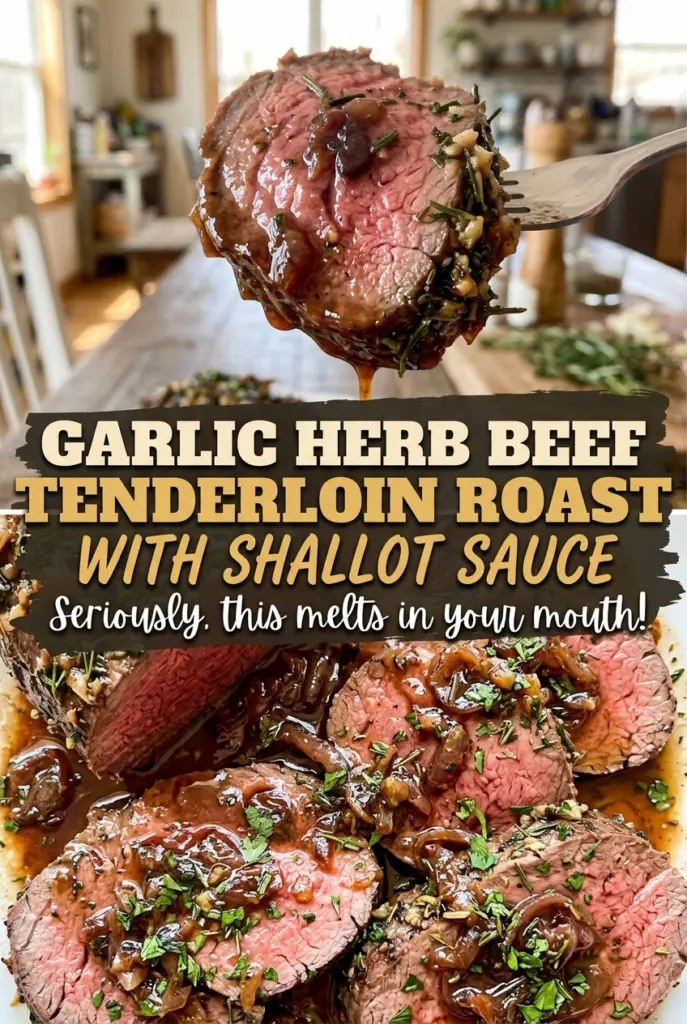
The outside of a tenderloin can look beautifully browned while the thick center is still catching up, which is why I don’t rely on the clock alone for this roast. A thermometer gives me a clear finish line, and the 40-to-55-minute window leaves room for the shape of the beef and the oven to make a difference. The garlic and herbs cling to the oiled surface, making a fragrant crust around the tender center of this garlic herb beef tenderloin roast with shallot sauce.
I keep the sauce simple and give each part time to do its job: shallots soften in butter, red wine reduces, and broth simmers with Dijon until it lightly coats a spoon. The tenderloin rests while that happens, so the cutting board stays calmer and the slices stay juicy. A final whisk of cold butter smooths the sauce into a glossy finish that’s lovely alongside each slice of beef.
Kitchen Note
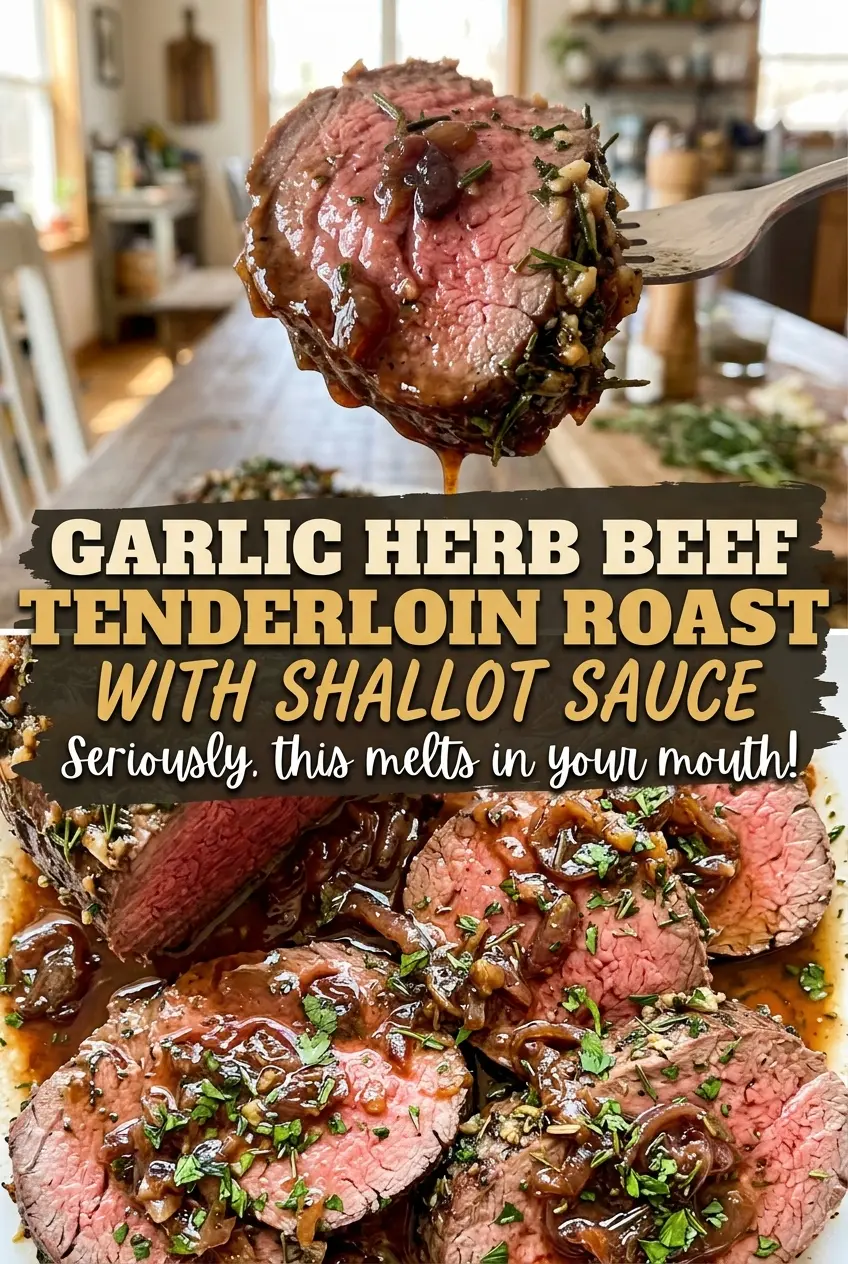
Give the roast its full 10-minute rest before slicing. Cutting too soon lets more of the juices run onto the board instead of staying in the beef.
Save this garlic herb beef tenderloin roast for a dinner built around rosy, tender slices and a rich shallot-red wine sauce.
Why a Tied Tenderloin Gives You More Even Slices
Tenderloin isn’t a uniformly thick cylinder. One end naturally narrows, so an untied roast can cook unevenly: the thinner portion gets ahead while the thick center is still coming up to temperature. A center-cut piece that’s trimmed and tied has a more consistent shape, which helps it roast more evenly and makes the finished slices easier to portion.
That shape also makes the rack useful. Elevating the beef in the roasting pan lets hot air move around it instead of leaving the underside in contact with the pan. The oil-and-herb rub flavors the exterior, while the open space below keeps the roast from sitting in its drippings. It’s a straightforward setup, but it suits this lean cut: you get a seasoned outside without needing to sear it first or build a complicated crust.
When you buy the tenderloin, ask the butcher for a trimmed, tied 3-pound center-cut roast if that’s easier than preparing it yourself. A roast that’s already tied is ready for the rack, and you won’t have to improvise its shape once the garlic and herbs are on.
What the Herbs, Wine, and Butter Each Bring to the Roast
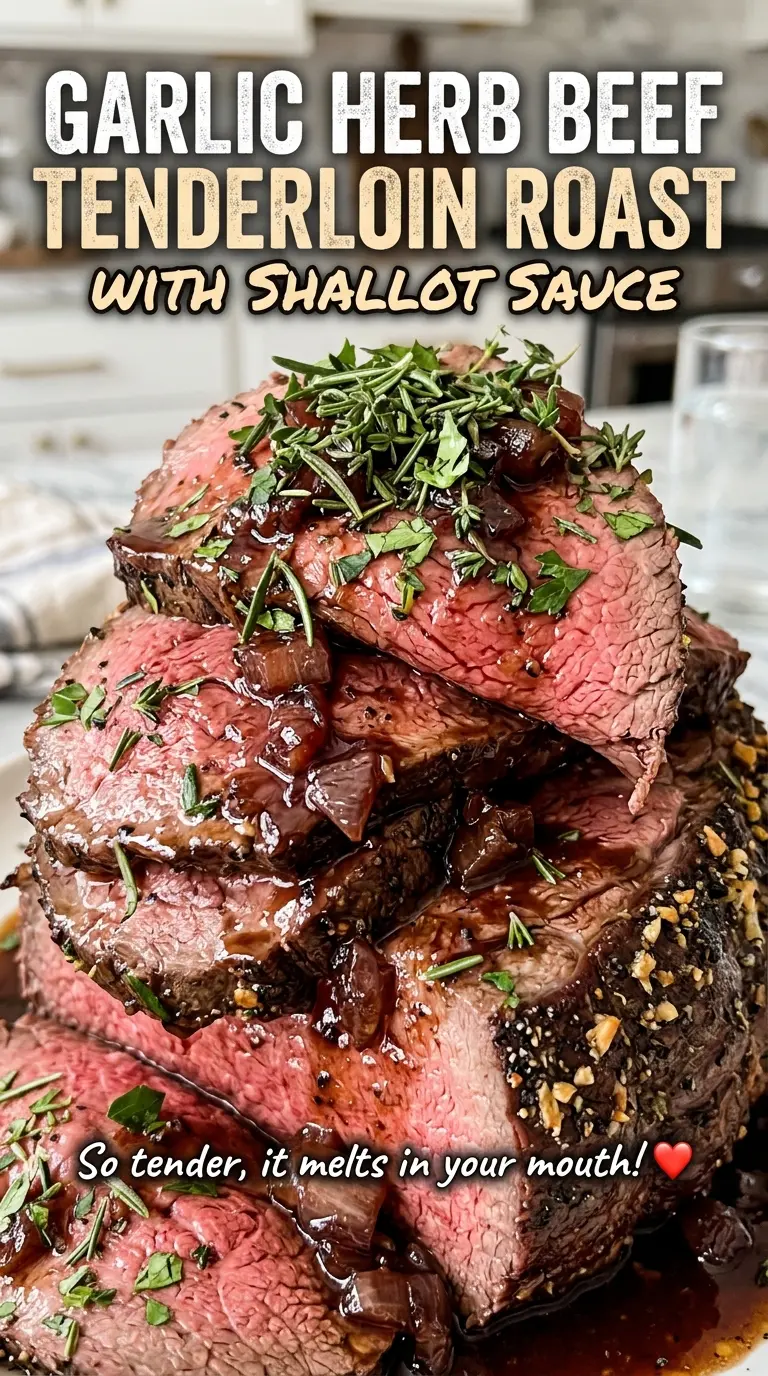
- Beef tenderloin — This cut is prized for its fine texture and tenderness, but it’s lean and doesn’t need a long, slow braise. Choose a trimmed center-cut roast with an even shape; tying helps it cook more consistently. A different cut of beef won’t behave the same way in this quick roast.
- Garlic, rosemary, and thyme — Fresh garlic gives the surface its savory bite, while rosemary and thyme bring woodsy, fragrant notes that suit beef without burying it. Fresh herbs are worth using here because they’re rubbed directly onto the roast; dried herbs will taste more concentrated and won’t make the same fresh, clinging coating. If fresh thyme is unavailable, dried thyme can stand in at a smaller amount.
- Olive oil — Oil helps the minced garlic and chopped herbs spread over the roast and keeps the seasoning from falling away. A basic olive oil is perfectly suitable; there’s no need to use a finishing oil, since its delicate flavor won’t be the point once the beef roasts.
- Shallots — Their mild, sweet allium flavor builds the sauce’s base without the sharper edge a larger onion could bring. Finely chopping them helps them soften evenly in the short cooking time, so take a moment to cut them small rather than leaving large pieces.
- Dry red wine and beef broth — The wine brings acidity and depth; reducing it by about half cooks off some of its raw edge and concentrates its flavor. Low-sodium broth gives the sauce a savory backbone while leaving more control over saltiness as it reduces. For a no-wine version, the wine can be replaced with more beef broth, with a less bright, more savory result.
- Dijon mustard and unsalted butter — Dijon adds a little tang and helps round out the beefy sauce. Unsalted butter keeps the seasoning easier to manage, first softening the shallots and later enriching the finished sauce. For a dairy-free adaptation, olive oil can replace the butter; the sauce will taste less rounded and won’t have the same buttery finish.
From Herb Rub to Spoon-Coating Shallot Sauce
Coat the Beef Without Leaving Dry Patches
Heat the oven to 425°F. Pat the tenderloin dry, then rub it all over with olive oil, minced garlic, rosemary, thyme, kosher salt, and black pepper. Work the seasoning across the sides as well as the top so the roast is covered evenly. A dry surface helps the rub cling instead of sliding around in a slick of moisture.
Roast by Temperature, Not by Appearance
Set a rack in a 16×12-inch roasting pan and place the tenderloin on the rack. Roast for 40–55 minutes, checking the thickest part with a meat thermometer; the roast is ready when it reads 145°F. The outside can brown before the center reaches that reading, so color alone isn’t a reliable cue. Transfer the beef to a cutting board and tent it loosely with foil.
Reduce the Wine Before Adding the Broth
While the roast rests, melt 1 tablespoon of butter in a 2-quart saucepan over medium heat. Add the finely chopped shallots and cook for 3–4 minutes, stirring, until softened; they should look tender rather than browned. Pour in the dry red wine and bring it to a boil, then cook for 5–7 minutes until reduced by about half. Don’t rush this reduction: the sauce gets its concentrated wine flavor here.
Finish the Sauce Smoothly and Slice
Stir the beef broth and Dijon mustard into the reduced wine, then simmer for 8–12 minutes until the sauce has reduced slightly and lightly coats a spoon. If it still runs off like broth, give it more time within the simmering stage rather than trying to thicken it with an extra ingredient. Remove the saucepan from the heat and whisk in the remaining 2 tablespoons of cold butter until smooth. Slice the rested roast and serve it with the sauce.
Three Practical Ways to Adapt the Roast and Sauce
Make the Sauce Without Wine
Replace the red wine with an equal amount of low-sodium beef broth and reduce it before adding the remaining broth and Dijon. The sauce will be less acidic and more purely savory, but it still develops body as it simmers.
Give the Herb Rub a Sage Note
Use finely chopped fresh sage in place of the rosemary for an earthier, slightly sweeter aroma alongside the thyme and garlic. Keep the same amount as the rosemary in the ingredient list, and chop the leaves finely so they distribute over the beef.
Make the Sauce Dairy-Free
Use olive oil in place of the butter for both cooking the shallots and finishing the sauce. The result is dairy-free and savory, though it won’t have the same silky, rounded finish that cold butter gives the original sauce.
Storage and Reheating
- Refrigerator: Store the beef and sauce in separate airtight containers for 3–4 days. The beef will lose some of its just-roasted juiciness as it sits.
- Freezer: The sliced roast freezes well when wrapped tightly and stored in a freezer-safe container for up to 2–3 months. The butter-finished sauce is best refrigerated; freezing may affect its smooth texture.
- Reheating: Reheat only the portions you plan to eat, gently, until leftovers reach 165°F. High heat can dry out the lean beef, so avoid leaving slices in a hot pan longer than needed.
Questions That Come Up When Roasting Beef Tenderloin
Garlic Herb Beef Tenderloin Roast with Shallot Sauce
Ingredients
Equipment
Method
- Preheat the oven to 425°F.
- Pat the tenderloin dry, then rub it all over with the olive oil, garlic, rosemary, thyme, salt, and pepper.
- Set a rack in a 16x12-inch roasting pan and place the tenderloin on the rack; roast for 40–55 minutes, until a meat thermometer inserted into the thickest part reads 145°F.
- Transfer the roast to a cutting board, tent loosely with foil, and rest for 10 minutes.
- While the roast rests, melt 1 tablespoon of the butter in a 2-quart saucepan over medium heat; add the shallots and cook for 3–4 minutes, stirring, until softened.
- Add the red wine and bring to a boil; cook for 5–7 minutes, until reduced by about half.
- Stir in the beef broth and Dijon mustard; simmer for 8–12 minutes, until the sauce is slightly reduced and lightly coats a spoon.
- Remove the saucepan from the heat and whisk in the remaining 2 tablespoons cold butter until smooth; slice the rested roast and serve with the sauce.