
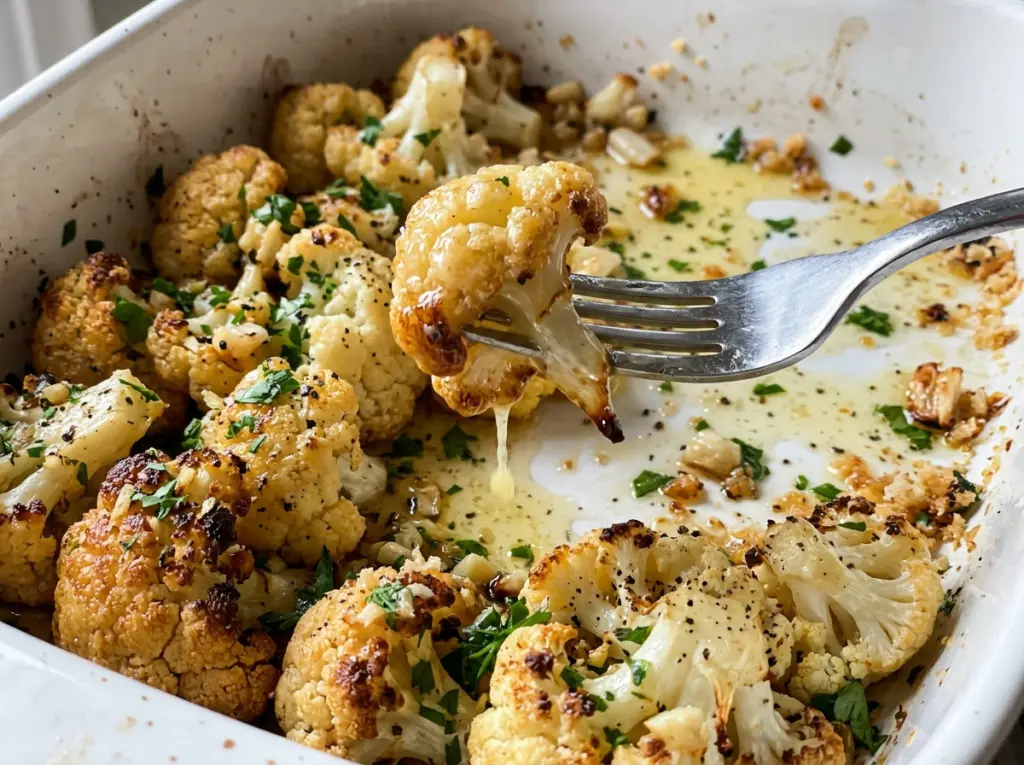
The cauliflower should sizzle a little when it hits the hot baking sheet, then slowly turn golden where each floret touches the pan. Giving the pieces room to roast is what keeps them from steaming in a crowded pile. Garlic butter roasted cauliflower gets two rounds in the oven: first to start softening the florets, then again after the garlic butter coats them.
I like this approach because the garlic doesn’t spend the whole roast in a hot oven, where it could turn bitter before the cauliflower is tender. Instead, it’s warmed briefly in butter on the stovetop, then tossed with the partly roasted florets. You get browned edges, soft centers, and a glossy garlic-butter finish in every bite.
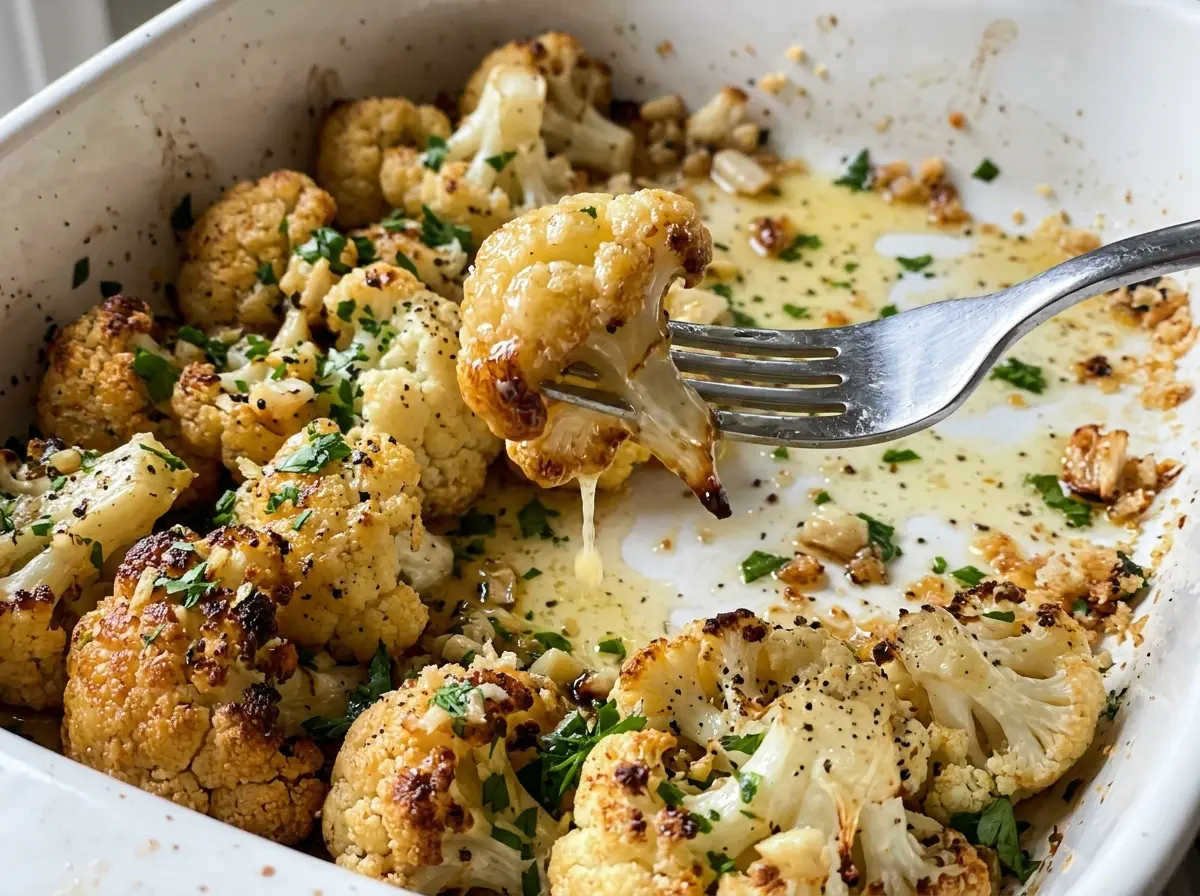
Kitchen Note
The garlic only needs 30 seconds over medium-low heat, with a steady stir. Take it off the heat when it smells fragrant; waiting for it to brown can leave the butter bitter.
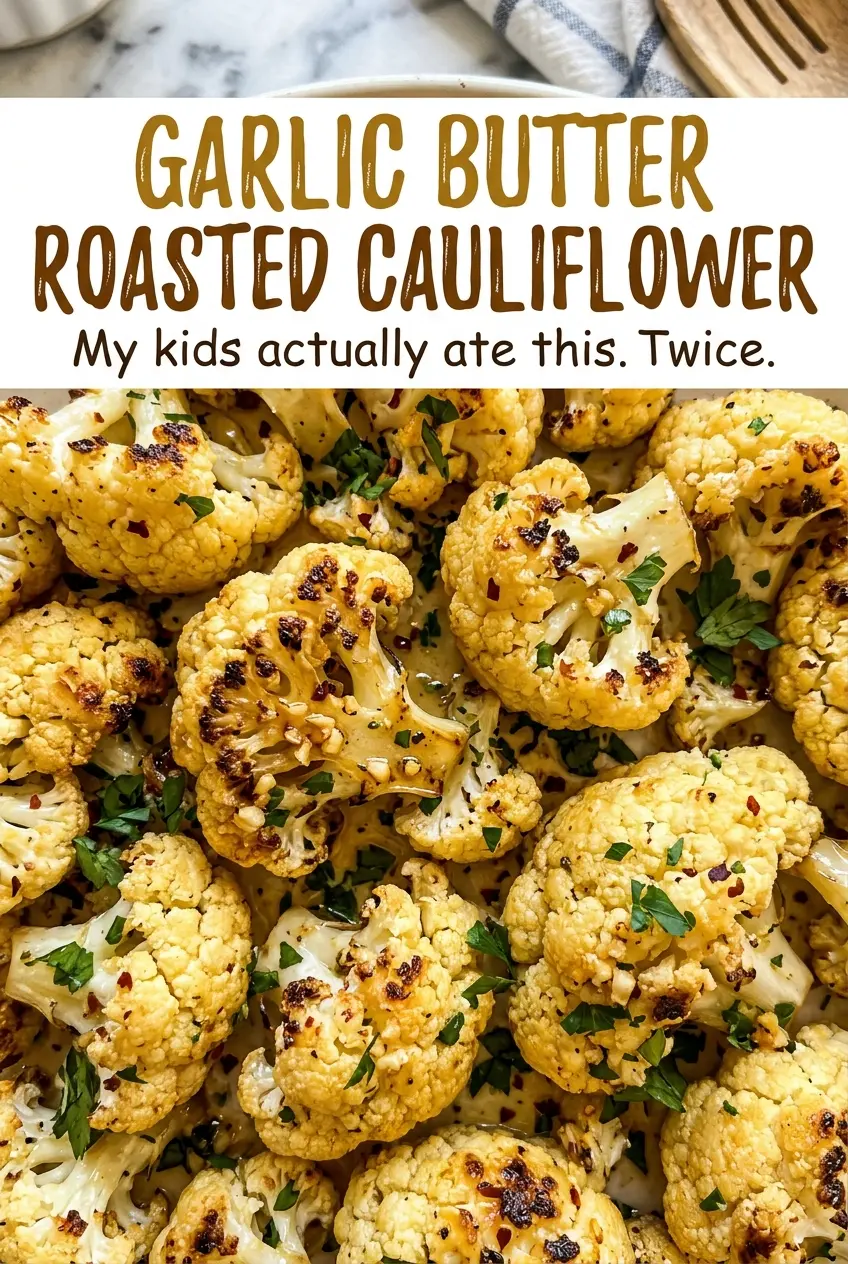
Save this garlic butter roasted cauliflower for a side dish with crisp browned edges and a warm garlic finish.
Why a Crowded Baking Sheet Leaves Cauliflower Pale
Cauliflower releases moisture as it roasts. When florets are packed together, that moisture gets trapped between them, and the pieces soften before their edges have a chance to brown. Spreading them in one layer on a large rimmed baking sheet gives the moisture room to escape and lets the hot air reach more of each floret.
Pay attention to the gaps, not just the total amount on the pan. The pieces can be close, but they shouldn’t be stacked or pressed into a dense patch. If you’ve cut a few florets much larger than the rest, split them so the pieces cook at a similar pace. That little bit of space is what helps the first roast build color instead of leaving you with soft, pale cauliflower.
What the Cauliflower, Oil, Butter, and Garlic Each Bring
- Cauliflower — Choose a firm head with tightly packed florets and no damp, discolored patches. Cutting it into similar bite-size pieces helps the smaller florets avoid getting too soft while the larger ones finish cooking. A fresh head is a better fit than frozen cauliflower for this dry-roasted texture.
- Olive oil — This coats the cauliflower for its first stretch in the oven. A regular everyday olive oil works well; there’s no need to use a special bottle when the garlic butter brings the main finishing flavor.
- Unsalted butter — Unsalted butter lets you control the seasoning alongside the kosher salt. It also gives the finish a rich, smooth feel that olive oil alone won’t quite replicate.
- Fresh garlic — Mince the cloves finely so the garlic disperses through the butter and doesn’t leave large, sharp chunks on a few florets. Fresh garlic has a brighter, fuller taste here than a dried substitute.
- Kosher salt and black pepper — They season the cauliflower before roasting, so the flavor isn’t limited to the butter coating. If you use salted butter instead, keep its extra saltiness in mind as you season.
The Two Roasts That Build Tender Centers and Golden Edges
Season and spread the florets
Heat the oven to 425°F with a rack in the center. Toss the bite-size cauliflower florets on a large rimmed baking sheet with the olive oil, kosher salt, and black pepper. Spread everything into a single layer, leaving space between the pieces rather than piling them up. Those open spots help the florets roast instead of steam.
Give the cauliflower its first 15 minutes
Roast the seasoned florets for 15 minutes before adding the garlic butter. This first stretch starts softening the cauliflower and gives the cut surfaces time to take on color. The pieces don’t need to be fully tender yet; they’ll go back into the oven after the butter is added. Keep the pan on the center rack for even roasting.
Warm the garlic gently in butter
While the cauliflower roasts, melt the unsalted butter in a small saucepan over medium-low heat. Add the minced garlic and stir for 30 seconds, until it smells fragrant. Keep the heat moderate and keep the garlic moving so it doesn’t scorch against the bottom of the pan. If it begins to brown, take the saucepan off the heat rather than letting it darken further.
Toss, return to the oven, and check the edges
Toss the partly roasted cauliflower with the garlic butter, coating the florets as evenly as you can. Return the pan to the oven for 8 to 12 minutes. Look for cauliflower that’s tender when pierced and browned at the edges; the size of the florets affects how quickly they reach that point. Pull the pan once both cues are there, rather than waiting for every piece to become deeply browned.
Two Small Changes for Different Tables
For a dairy-free garlic finish
Use olive oil in place of the butter for the garlic finish. Warm the minced garlic in the oil over medium-low heat, then toss it with the roasted cauliflower as you would the garlic butter. The result is dairy-free and lighter, though it won’t have the same buttery richness.
For more browned edges
Cut the florets a little smaller than bite-size. The extra cut surface gives you more browned edges, but smaller pieces soften sooner, so start checking toward the early end of the final roasting time. Keep the pieces roughly the same size for the most even result.
Storage and Reheating
- Refrigerator: Store cooled leftovers in an airtight container for up to 4 days. The florets will soften in the fridge, and their edges won’t stay as crisp.
- Freezer: Freeze in an airtight container for up to 2 months. The cauliflower will be softer after thawing, so freezing is best when texture matters less.
- Reheating: Spread the leftovers on a baking sheet and warm them in a 425°F oven until hot. Avoid covering the pan, which traps steam and softens the edges further.
Questions That Come Up Before the Cauliflower Hits the Oven
Garlic Butter Roasted Cauliflower
Ingredients
Equipment
Method
- Preheat the oven to 425°F and arrange a rack in the center.
- Toss the cauliflower with the olive oil, salt, and pepper on a large rimmed baking sheet, then spread it in a single layer.
- Roast for 15 minutes.
- While the cauliflower roasts, melt the butter in a small saucepan over medium-low heat, add the garlic, and cook for 30 seconds, stirring, until fragrant.
- Toss the cauliflower with the garlic butter and return it to the oven for 8 to 12 minutes, until tender and browned at the edges.