
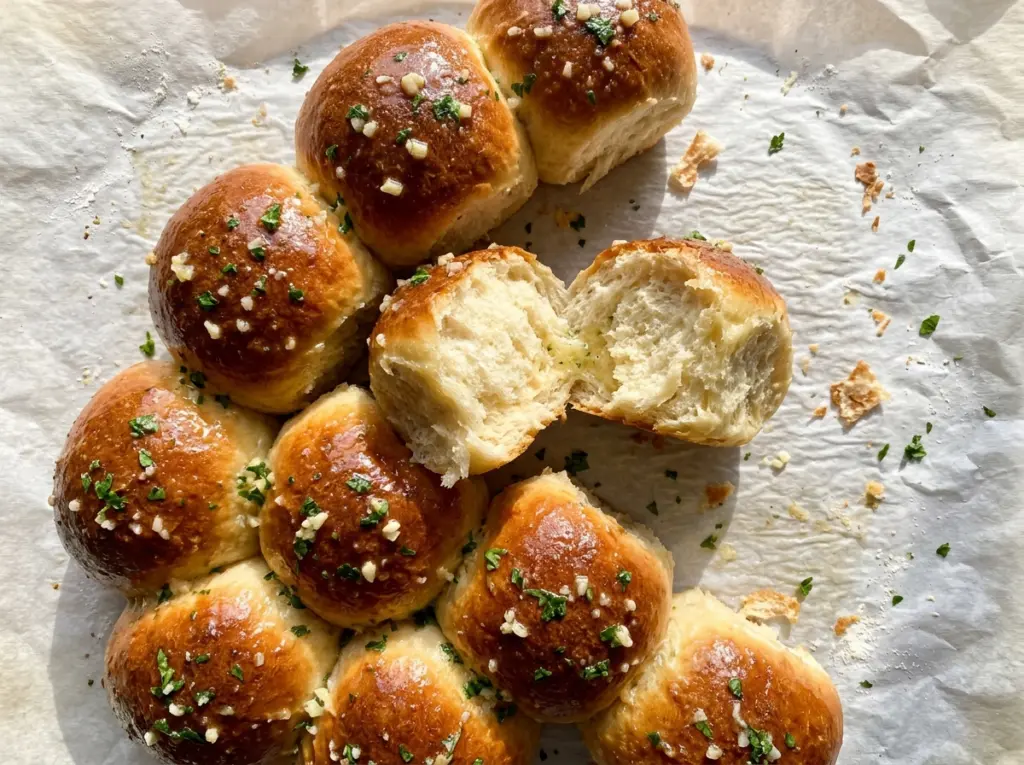
When warm milk hits the right temperature, the yeast turns foamy in a few minutes, and that’s the first sign these rolls are off to a good start. I used to rush past that pause, but giving the yeast 5 to 10 minutes makes it easy to see whether it’s active before the flour goes in. These garlic butter homemade dinner rolls bake up soft inside, with golden tops that soak up the buttery garlic and parsley finish.
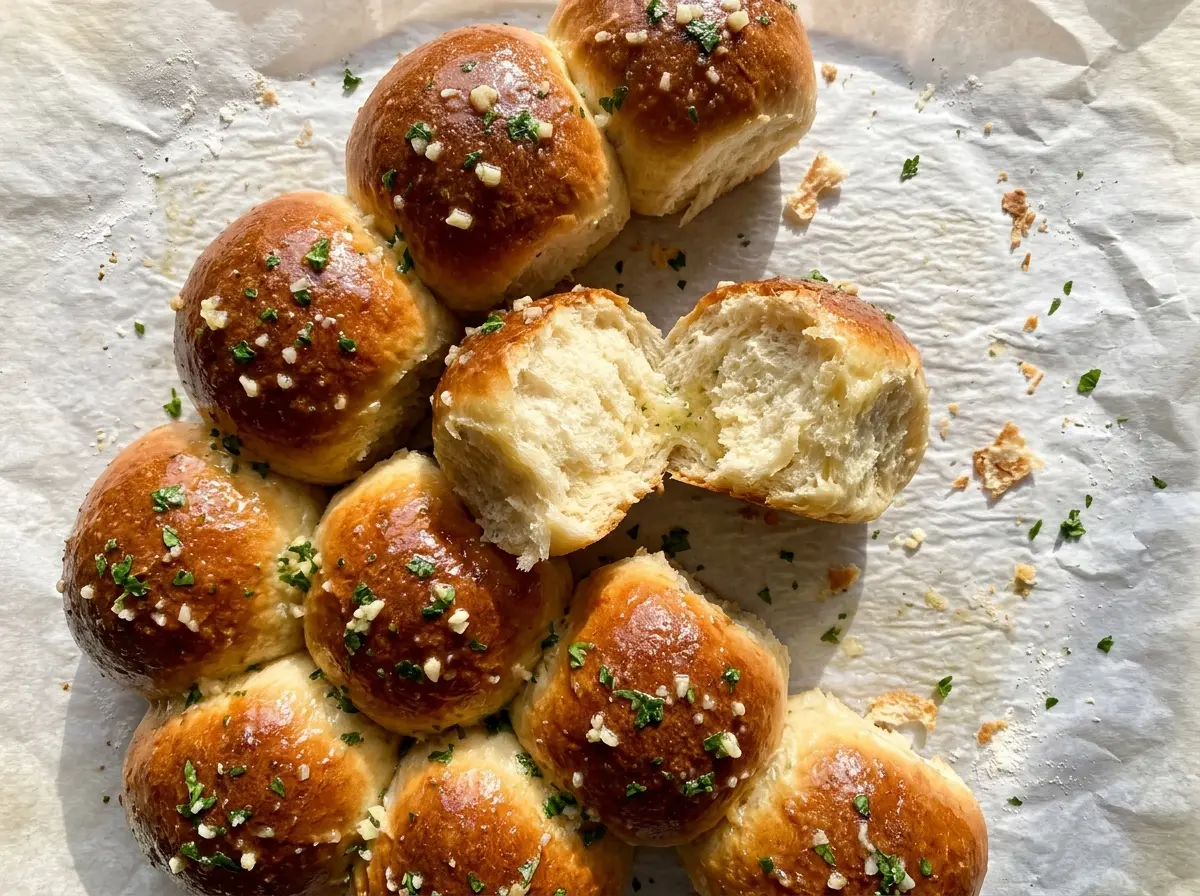
The dough is enriched with whole milk, egg, and softened butter, so it’s tender without needing a complicated technique. Knead it until it feels smooth and elastic, then let the two rises do their work; the first builds the dough’s volume, and the second gives the shaped rolls time to puff together in the pan. Brush on the garlic butter while the rolls are hot, and the tops turn fragrant and glossy. Tear one apart while it’s still warm and you’ll see the soft, fluffy crumb.
Kitchen Note
The dough should feel slightly tacky after kneading, not dry or stiff. Resist adding extra flour just because it clings a little to your fingers; too much flour can make the baked rolls firm instead of tender.
Save these garlic butter dinner rolls for the next time you want soft, pull-apart bread with a fragrant garlic-parsley finish.
That Foamy Yeast Start Is Worth the Wait
Active dry yeast needs a short head start in warm milk before it meets the rest of the dough. Keep the milk between 105°F and 110°F: warm enough to wake the yeast, but not hot. Stir in the sugar and yeast, then leave the mixture alone for 5 to 10 minutes. A foamy surface tells you the yeast is working and ready to help the rolls rise.
If there’s no foam, don’t hope the flour will fix it. The yeast may be inactive, or the milk may have been outside the right temperature range, and either can leave you with dough that barely rises. Checking for foam first gives you a clear signal before you add the egg, butter, salt, and flour. It also helps explain why the rising times are ranges rather than a stopwatch test: dough rises at different speeds depending on the room, but active yeast gives you a reliable start. Once the mixture is foamy, move on to the dough while the yeast is lively.
What Gives These Rolls Their Tender Crumb and Savory Finish

- Whole milk — It brings moisture and richness to the dough. Two-percent milk works in the same amount, though the rolls will be a little less rich; whole milk gives the soft, tender result I prefer. Use milk that’s fresh and warm it gently rather than relying on how warm it feels by touch.
- Active dry yeast — This is the yeast used for the foamy milk step, so choose active dry yeast and give it time to bloom. Check the date on the package if your yeast has been sitting in the pantry. Instant yeast behaves differently in this method, so it isn’t a straight swap without changing how you add it.
- All-purpose flour — It gives these rolls enough structure while keeping the crumb soft. A regular store-brand flour works well; measuring carefully matters more than buying a premium bag. Bread flour can make a chewier roll, so all-purpose is the better pick when you want a tender dinner-roll texture.
- Unsalted butter — The softened portion makes the dough richer, while the melted portion carries the garlic and parsley over the hot tops. Unsalted butter lets the dough’s table salt stay in control. For a dairy-free version, replace the milk and butter with the options in the variation below; the texture will be a little different.
- Egg — A room-temperature egg blends into the dough more evenly than a cold one and contributes to its tender structure. There isn’t a simple swap that keeps this exact texture, so I’d keep the egg in the dough rather than leave it out.
- Fresh garlic and parsley — Freshly minced garlic gives the butter its pungent aroma, while chopped parsley adds a clean, fresh finish. Fresh garlic is worth using here; garlic powder won’t give the same fragrant bits in the butter. Regular fresh parsley is fine—no specialty variety is needed.
From Foamy Milk to Garlic-Glossed Tops
Wake the Yeast and Mix the Dough
Grease a 9×13-inch baking pan with nonstick cooking spray before you start shaping. Warm the milk to 105°F–110°F, stir in the sugar and active dry yeast, and wait until the surface looks foamy. Add the room-temperature egg, softened butter, salt, and flour, then stir until you have a shaggy dough. Don’t expect it to look smooth in the bowl; kneading is what brings it together.
Knead Until the Dough Turns Elastic
Dust a clean work surface with the additional flour and knead for 8 to 10 minutes. At first the dough may look uneven, but it should become smooth and elastic as you work it. If it feels tight and tears easily, keep kneading rather than trying to shape it immediately. Return the dough to the bowl and cover it for the first rise.
Let It Rise, Then Shape Twelve Rolls
Leave the covered dough at room temperature for 1 to 1½ hours, until it has doubled in size. Divide it into 12 equal pieces and shape each piece into a ball, then arrange them in the prepared pan. Cover the pan and let the rolls rise for 30 to 45 minutes, until puffy and touching. Start heating the oven to 375°F during the last 20 minutes of this second rise.
Bake and Brush While the Rolls Are Hot
Bake the rolls for 18 to 22 minutes, watching for golden-brown tops. While they bake, melt the remaining butter in a small saucepan over low heat, add the minced garlic, and cook for 1 minute. The garlic should smell fragrant but stay pale; browned garlic can taste bitter. Take the pan off the heat, stir in the parsley, brush the butter over the hot rolls, and let them rest in the pan for 5 minutes before serving.
Easy Changes for the Garlic Butter Rolls
Make the rolls dairy-free
Use unsweetened plain oat milk or soy milk in place of the whole milk, and use dairy-free butter in place of both portions of butter. Keep the egg; this adaptation removes dairy, not egg. The rolls will still rise and pull apart, but the crumb may be less rich than the version made with whole milk and butter.
Trade parsley for fresh chives
Stir the same amount of chopped fresh chives into the garlic butter instead of parsley. Chives give the finish a gentle onion note and keep the buttery coating fresh-tasting. Add them after taking the pan off the heat, just as you would the parsley.
Add a Parmesan finish
Stir finely grated Parmesan into the garlic butter after you take it off the heat, then brush it over the baked rolls. The cheese adds a salty, savory coating and makes the tops a little richer. Keep the original salt in mind when choosing this variation, since Parmesan brings its own saltiness.
Storage and Reheating
- Refrigerator: Store the cooled rolls in an airtight container for up to 4 days. The crumb will firm up in the fridge, then soften somewhat when warmed.
- Freezer: Freeze completely cooled rolls in an airtight freezer bag or container for up to 2 months. Thaw at room temperature before reheating.
- Reheating: Warm the rolls loosely wrapped in foil at 300°F until heated through, about 8 to 10 minutes. Leaving them uncovered in the oven can dry the tops and edges.
Questions That Come Up While Making These Rolls
Garlic Butter Homemade Dinner Rolls
Ingredients
Equipment
Method
- Grease a 9x13-inch baking pan with nonstick cooking spray.
- Warm the milk to 105–110°F, stir in the sugar and yeast, and let stand for 5–10 minutes, until foamy.
- Add the egg, 4 tbsp softened butter, salt, and 3 1/2 cups flour; stir until a shaggy dough forms.
- Dust a clean work surface with the additional 1 tbsp flour and knead the dough for 8–10 minutes, until smooth, elastic, and slightly tacky.
- Return the dough to the bowl, cover, and let rise at room temperature for 1–1 1/2 hours, until doubled in size.
- Divide the dough into 12 equal pieces, shape into balls, and arrange in the prepared pan.
- Cover and let rise for 30–45 minutes, until puffy and touching, heating the oven to 375°F during the last 20 minutes.
- Bake for 18–22 minutes, until the tops are golden brown.
- Melt the remaining 4 tbsp butter in a small saucepan over low heat, add the garlic, and cook for 1 minute, until fragrant but not browned; remove from the heat and stir in the parsley.
- Brush the garlic butter over the hot rolls.
- Let the rolls rest in the pan for 5 minutes before serving.