
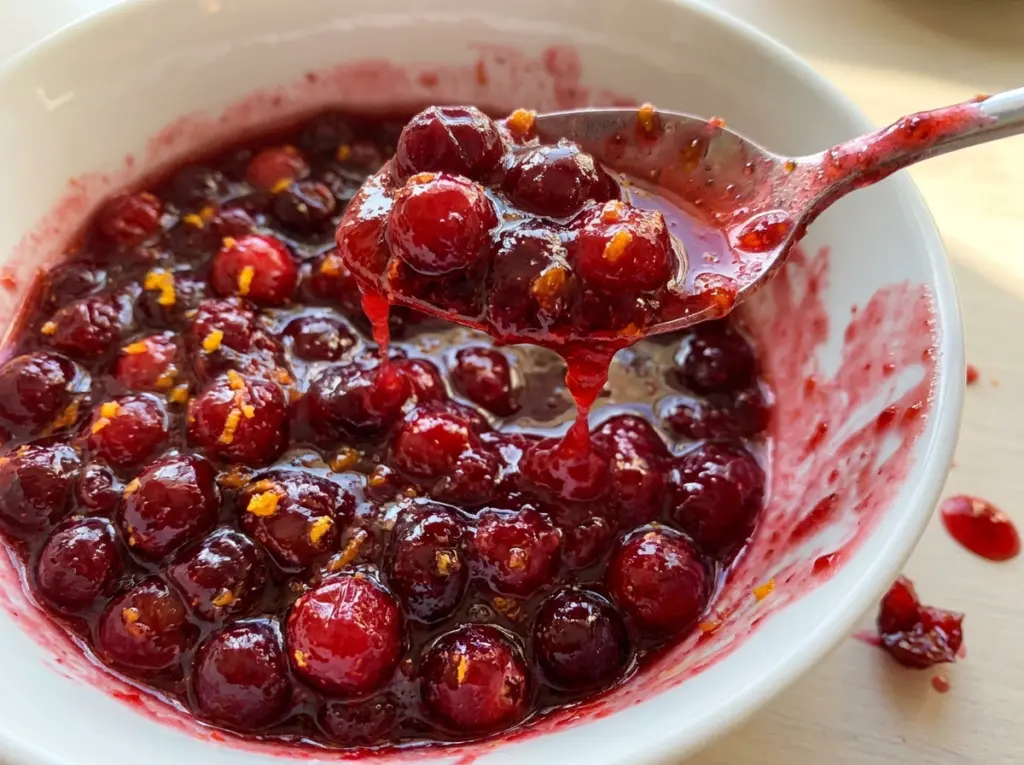
The first cranberries pop with a little snap, then the saucepan turns a deep ruby red as more soften into the syrup. Fresh cranberry orange sauce has a brighter, fruitier taste than the canned kind, and it’s easy to make while the rest of dinner is coming together. I like that the orange shows up in two ways: juice rounds out the cranberries, while a little zest gives the sauce a fresh citrus aroma.
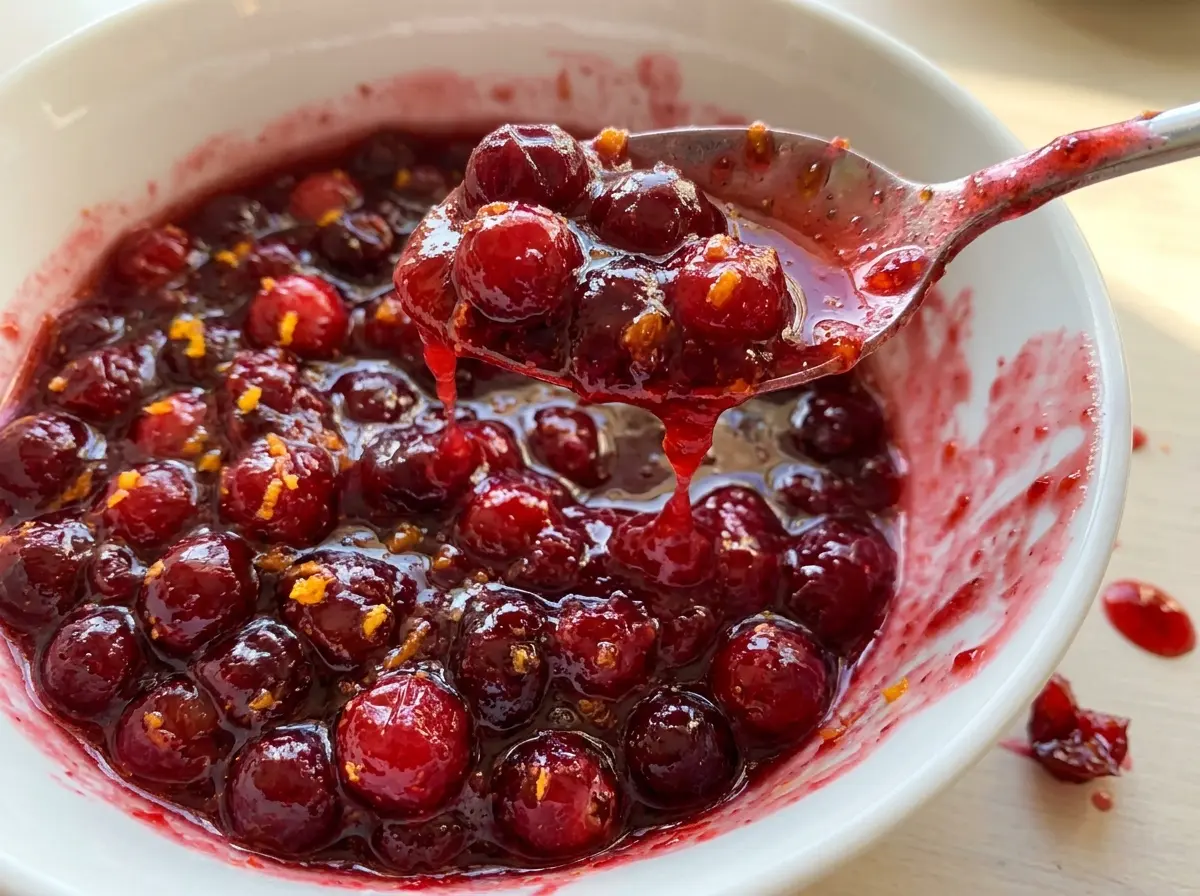
The order matters here. I dissolve the sugar in the water and orange juice before adding the berries, so they simmer in an even syrup instead of sitting in a gritty mixture. Once most of the cranberries have burst, the sauce can look looser than you expect; it thickens as it cools. The finished texture is glossy and spoonable, with a few whole berries tucked among the soft ones.
Kitchen Note
Pick through the cranberries before you start, while they’re still dry and easy to inspect. I also stick with a 2-quart saucepan for this batch; it leaves room to stir without berries crowding the rim.
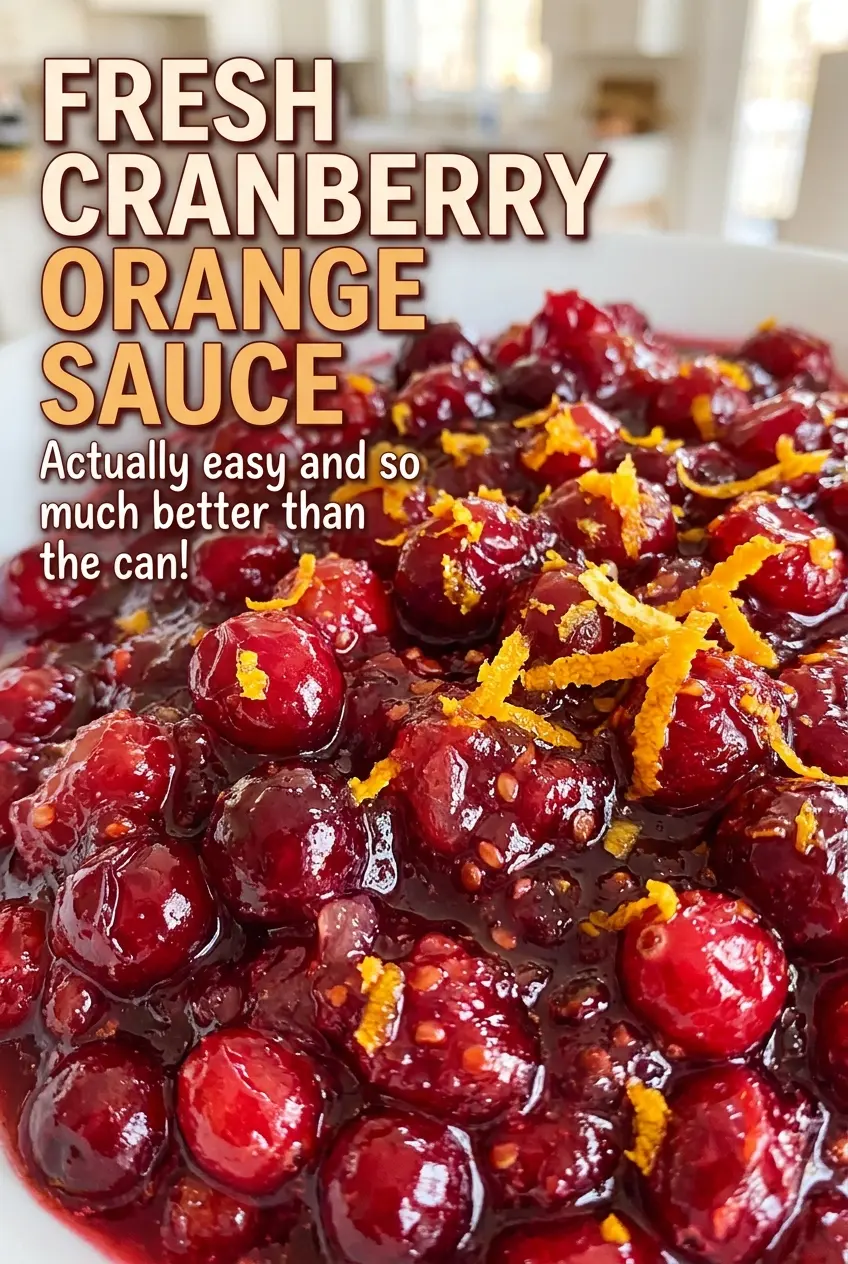
Save this Fresh Cranberry Orange Sauce for a bright, ruby-red side with soft berries and a fresh citrus finish.
Why a Few Whole Cranberries Make the Sauce Better
A cranberry sauce doesn’t need to turn into a perfectly smooth purée. When most of the berries burst, they release their juices and soften into the syrup, while the handful that remain whole give each spoonful a little more shape. That mix keeps the sauce from feeling like jam and makes it easy to serve beside a meal without losing the fresh-fruit character.
It’s also a useful cue while the pot simmers: look for a thickening, jewel-colored liquid and berries that have split open, rather than waiting for every last cranberry to collapse. A few intact berries aren’t a sign that anything went wrong. Pushing the sauce until every berry disappears would trade that pleasant texture for a more uniform, softer finish.
The orange supports the cranberry instead of covering it up. The juice mellows the fruit’s sharp edge, and the finely grated zest contributes a fragrant top note without making the sauce taste like orange marmalade. Keep those two jobs in mind when changing the ingredients; more juice changes the balance, while extra zest makes the citrus aroma more pronounced.
What the Cranberries, Orange, and Sugar Each Bring
- Fresh cranberries — Choose firm berries and pick out any that are shriveled or soft. There’s no need to seek out an expensive variety; a standard bag of fresh cranberries works well. Their naturally tart flavor is what gives the sauce its lively contrast to the sugar.
- Granulated sugar — Regular white sugar dissolves cleanly into the syrup and keeps the orange and cranberry flavors clear. Reducing it makes the sauce more tart and less syrupy, so don’t expect the same balance or thickness as the full-sugar batch.
- Orange juice and water — Using both gives the fruit enough liquid to simmer while keeping the orange flavor present but not overwhelming. If you’re out of orange juice, replace it with the same amount of water; the sauce will still cook, but it will lose some of its citrus character.
- Finely grated orange zest — The zest contributes aromatic oils that juice alone doesn’t provide. Grate only the orange-colored outer peel, not the white pith underneath, which can taste bitter. A fine grater gives the zest a chance to blend into the syrup instead of leaving long strips.
The Three Stages That Build a Glossy Cranberry Sauce
Dissolve the Sugar Before the Fruit Goes In
Combine the sugar, water, orange juice, and finely grated orange zest in a 2-quart saucepan. Bring the mixture to a boil over medium heat, stirring until the sugar dissolves. The liquid should look clear of loose sugar granules before you add the cranberries; stirring at this stage helps the sweetener distribute evenly through the syrup.
Simmer Until Most of the Berries Split
Stir in the rinsed, picked-over cranberries, then reduce the heat to medium-low. Simmer for 10 to 12 minutes, stirring occasionally, until most of the berries have burst. You’ll hear little pops as the skins split, and the syrup will take on a deep red color; don’t chase a perfectly smooth mixture.
Let the Sauce Set Away From the Heat
Remove the saucepan from the heat and leave the sauce to cool for at least 30 minutes. It will thicken as it cools, so judge the final consistency after it has had that time to settle rather than continuing to cook it down. The sauce is ready when it holds softly on a spoon and the berries look glossy rather than watery.
Three Easy Ways to Adjust the Orange and Sweetness
Make It More Orange-Forward
Replace the 1/2 cup of water with another 1/2 cup of orange juice. The sauce will have a more noticeable citrus flavor and a slightly less straightforward cranberry taste, so this is a good choice when you want the orange to stand out.
Dial Back the Sweetness
Use 3/4 cup granulated sugar instead of 1 cup for a sharper, more tart sauce. The reduced sugar also means a little less syrupy body, so expect the cooled sauce to be looser than the standard batch.
Make a Smaller Batch
Halve every ingredient for a smaller amount: use 6 ounces cranberries, 1/2 cup sugar, 1/4 cup water, 1/4 cup orange juice, and 1/2 teaspoon zest. Keep an eye on the berries as they simmer and use the split-berry cue to judge doneness.
Storage and Reheating
- Refrigerator: Store the cooled sauce in a covered container for 3 to 4 days. It will firm up as it chills.
- Freezer: Freeze in an airtight container for up to 2 months for best quality. Thaw it in the refrigerator before serving; the texture may be a little softer after thawing.
- Reheating: It’s easy to serve chilled, but you can warm a portion gently in a small saucepan over low heat, stirring as it loosens. Avoid high heat, which can make the sugary sauce stick to the pan.
Questions That Come Up When Cooking Cranberry Sauce
Fresh Cranberry Orange Sauce
Ingredients
Equipment
Method
- Combine the sugar, water, orange juice, and orange zest in a 2-quart saucepan.
- Bring to a boil over medium heat, stirring until the sugar dissolves.
- Stir in the cranberries, reduce the heat to medium-low, and simmer for 10 to 12 minutes, stirring occasionally, until most of the cranberries have burst.
- Remove the saucepan from the heat and let the sauce cool for at least 30 minutes; it will thicken as it cools.