
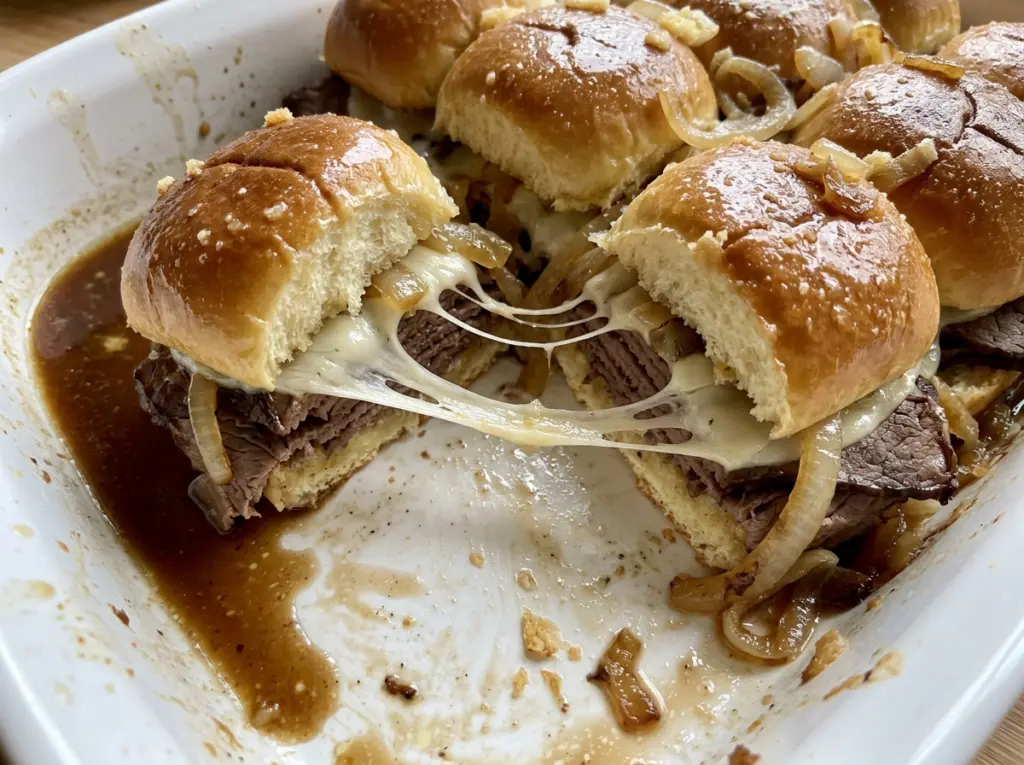
The moment the foil comes off, the tops of these sliders turn lightly golden while the provolone underneath softens around the roast beef. I like that the whole package of rolls stays together for baking, so the filling is easy to layer and the sliders come out of the pan as one warm slab.
For these French Dip Roast Beef Sliders, the au jus simmers on the stove while the rolls bake. Keeping the broth warm and serving it alongside the sandwiches gives you a savory dip without soaking the bread before it reaches the table. Thinly sliced deli roast beef fits neatly into the rolls, and the mild provolone lets the beef stay in front.
After a short rest, the slab cuts into tidy portions with melted cheese tucked around the beef and just enough buttery mustard on top. Bring the warm au jus to the table and let everyone dip each bite.
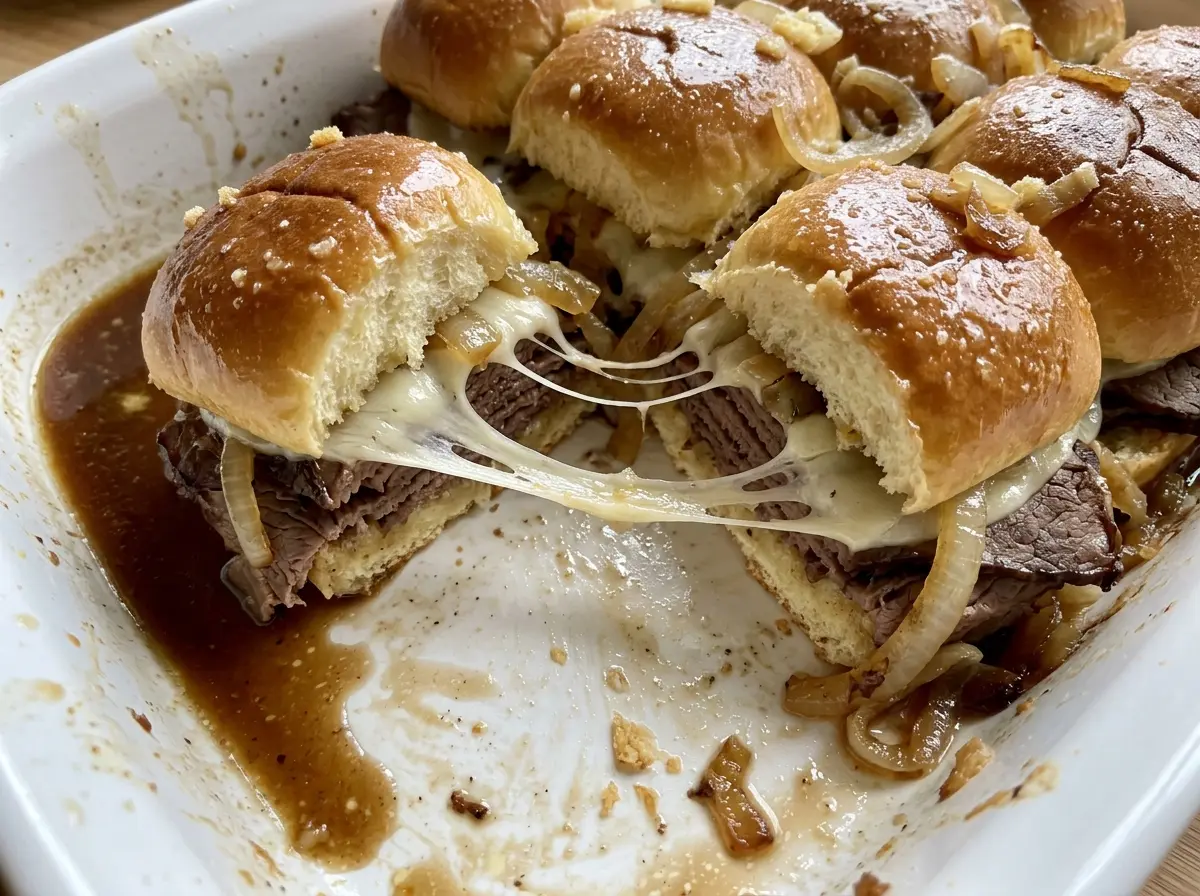
Kitchen Note
Give the baked slab its full 5-minute rest before cutting. The cheese settles around the filling, and the rolls are much less likely to pull apart when you portion them.
Save these French Dip Roast Beef Sliders for a game-day spread or an easy dinner with buttery tops and warm au jus for dipping.
Why the Roast Beef Gets Provolone on Both Sides
Putting cheese beneath and above the roast beef does more than add another layer of melt. The bottom slices soften against the warm rolls, while the top layer melts down over the beef and helps the filling stay together when you lift a slider. With deli meat, that little bit of structure makes each portion easier to pick up than a loose stack of meat alone.
It also keeps the flavor balanced. Provolone is mild enough that it doesn’t take over the beef or the au jus, and using it on both sides gives every bite a consistent amount of cheese. Keep the slices arranged across the rolls rather than piled in the center; an even layer melts more reliably and helps the slab hold its shape. The beef should sit between the cheese layers, not spill over the edges, so every roll gets a fair share of filling.
What Makes the Beef, Cheese, and Rolls Work Together

- Hawaiian dinner rolls — Their soft texture and gentle sweetness pair well with the savory beef and broth. A standard 12-count package is convenient because you can slice the rolls horizontally as one slab; keep them attached while assembling so the layers stay aligned.
- Thinly sliced deli roast beef — Thin slices warm through quickly and are easier to bite than thick pieces. Choose slices that are flexible rather than tightly packed into a dense stack, and spread them evenly so some sliders don’t end up mostly bread.
- Provolone — Its mild taste lets the beef and dipping broth remain prominent, and the slices melt into a cohesive layer. Sliced provolone from the deli counter or a package both work; arrange it across the whole slab instead of concentrating it in the middle.
- Low-sodium beef broth and Worcestershire sauce — The broth gives the dip its beefy base, while Worcestershire adds a savory, tangy edge. Low-sodium broth keeps the finished jus from becoming too salty as it simmers; an inexpensive carton is fine here.
- Butter, Dijon, garlic powder, and poppy seeds — Together, these make a savory coating for the roll tops. Melt the butter before stirring so the mustard and seasonings spread across the surface instead of collecting in one spot. Garlic powder is useful here because it distributes evenly through the butter.
How to Simmer the Jus and Bake the Sliders Without Losing the Layers
Simmer the dipping broth
Heat the oven to 350°F and lightly grease a 9×13-inch baking dish. Whisk the low-sodium beef broth with Worcestershire sauce and black pepper in a small saucepan, then bring it to a simmer over medium heat. Let it simmer for 5 minutes, then cover the pan and keep the jus warm over low heat. A gentle simmer is what you want; a hard boil isn’t needed.
Build an even, contained filling
Slice the package of rolls in half horizontally while keeping the rolls attached as a slab. Set the bottom half in the prepared dish, then arrange 4 slices of provolone across it. Layer the roast beef evenly over the cheese and finish with the remaining 4 slices of provolone; if the beef is bunched up, tease the slices apart so the filling reaches the edges without hanging over them.
Brush the tops and bake in two stages
Set the top half of the rolls over the filling. Stir the melted butter, Dijon mustard, garlic powder, and poppy seeds together, then brush the mixture evenly over the tops so the corners don’t miss out. Cover the dish with foil and bake for 15 minutes. Uncover and bake for another 5 to 8 minutes, until the cheese is melted and the tops are lightly golden.
Rest, cut, and bring the jus to the table
Take the dish out of the oven and let the sliders rest for 5 minutes before cutting them apart. That pause gives the melted cheese time to settle around the beef, so the filling is less likely to slide out as you serve. Keep the au jus warm and serve it alongside the sliders for dipping rather than pouring it over the rolls.
Two Ways to Change the Slider Format Without Changing the Ingredients
Assemble individual sliders
For neater portions at a buffet, separate the rolls before assembling instead of keeping them attached as a slab. Layer the cheese and roast beef over the individual roll bottoms, add the tops, then brush with the same butter mixture and bake in the same dish. The individual edges brown more readily, so use the lightly golden tops and melted cheese as your doneness cues.
Fold the beef for a looser bite
Instead of laying the roast beef in a flat stack, gently fold the slices as you arrange them over the bottom cheese layer. This gives the filling a softer, less compact texture while keeping the same ingredients and cheese layers. Keep the folds low enough that the top half of the rolls sits flat.
Storage and Reheating
- Refrigerator: Refrigerate leftover sliders and au jus within 2 hours, storing them separately in airtight containers. The rolls soften as they sit; eat the leftovers within 3 to 4 days.
- Freezer: The sliders can be frozen, though the rolls may be softer after thawing. Wrap portions tightly and freeze for up to 2 to 3 months; freeze the au jus separately.
- Reheating: Reheat sliders covered in a 325°F oven until the center reaches 165°F, and warm the au jus separately. Leaving the sliders uncovered the whole time can dry the tops before the filling is hot.
Questions That Come Up When Making French Dip Sliders
French Dip Roast Beef Sliders
Ingredients
Equipment
Method
- Heat the oven to 350°F.
- Lightly grease a 9x13-inch baking dish.
- Whisk the beef broth, Worcestershire sauce, and black pepper together in a small saucepan.
- Bring the mixture to a simmer over medium heat.
- Simmer for 5 minutes, then cover and keep warm over low heat.
- Slice the rolls in half horizontally, keeping the rolls attached as a slab.
- Place the bottom half of the rolls in the prepared baking dish.
- Arrange 4 slices of provolone over the rolls, layer on the roast beef, then top with the remaining 4 slices of provolone.
- Place the top half of the rolls over the filling.
- Stir the melted butter, Dijon mustard, garlic powder, and poppy seeds together.
- Brush the mixture evenly over the tops of the rolls.
- Cover the dish with foil and bake for 15 minutes.
- Uncover and bake for 5 to 8 minutes, until the cheese is melted and the tops are lightly golden.
- Rest the sliders for 5 minutes, then cut apart and serve with the warm au jus for dipping.