
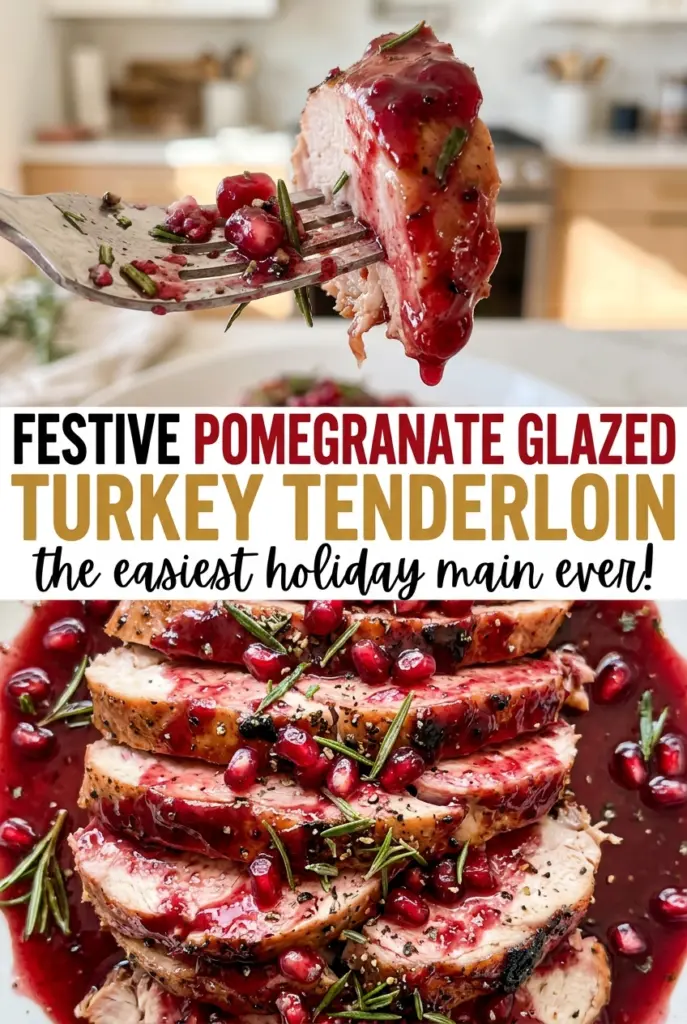
The pomegranate juice bubbles away from a tart, thin liquid into a dark, spoon-coating glaze, and the change happens faster near the end than it does at the start. I keep an eye on the saucepan once it begins to look syrupy; a few extra minutes can take it from brushable to sticky.
For this Festive Pomegranate Glazed Turkey Tenderloin, the glaze gets its sweetness from honey and a little bite from Dijon and balsamic. Rosemary simmers in the mixture, adding an aromatic note without making the finished glaze taste like a bundle of herbs.
The turkey gets browned in an oven-safe skillet before it roasts, then the glaze goes on after the skillet comes out of the oven. A handful of pomegranate arils gives each slice a bright, tart finish against the tender, savory meat.
Kitchen Note
Once the glaze reaches its syrupy point, remove and discard the rosemary sprig. Leaving it in the reduced glaze can push the herbal note too far, especially as the liquid cools and thickens.
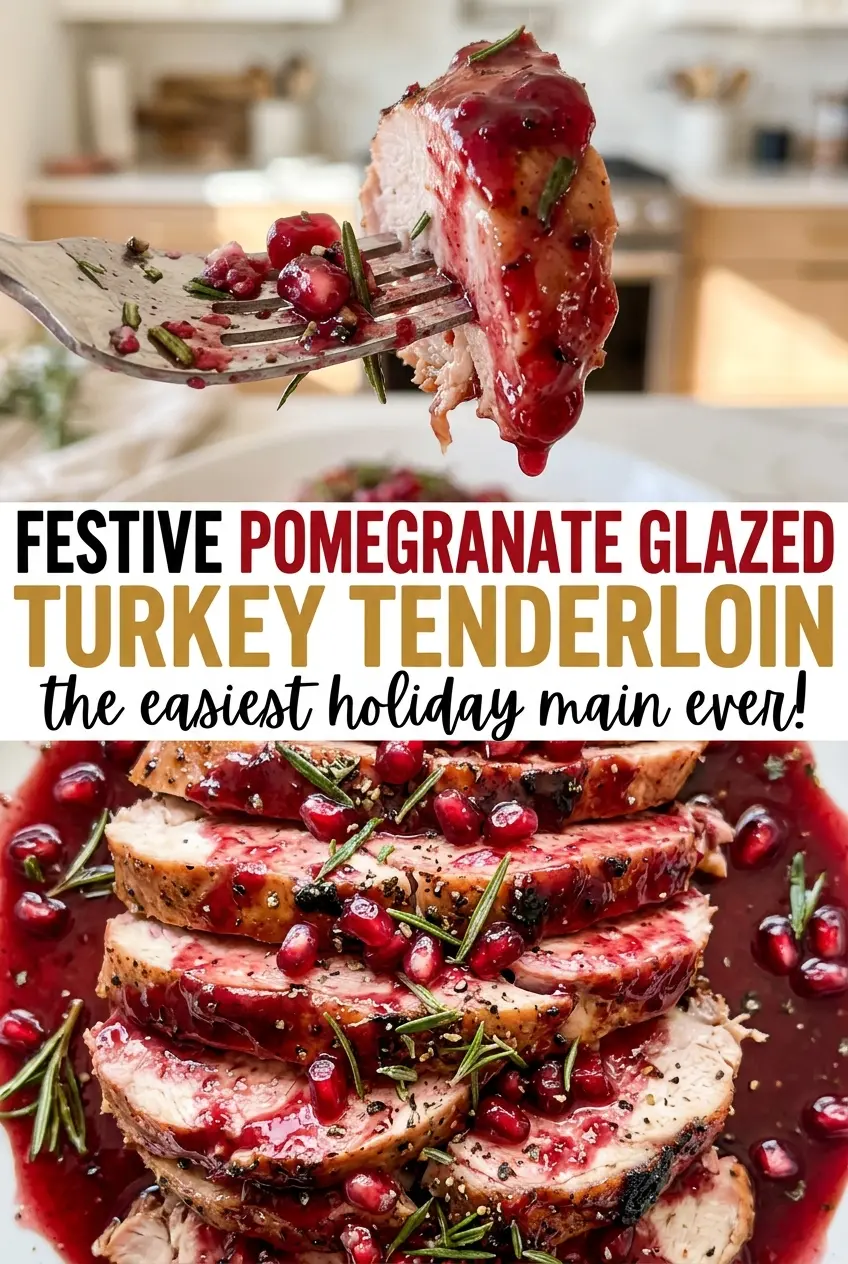
Save this Festive Pomegranate Glazed Turkey Tenderloin for a dinner centerpiece with a glossy fruit glaze and bright pomegranate crunch.
Why the Pomegranate Glaze Goes on After the Turkey Comes Out
This glaze has to simmer until it is concentrated enough to cling to the turkey. That reduction also concentrates the honey and fruit sugars. Put the glaze on before roasting and it would spend the full oven time exposed to high heat, where it could darken or scorch before the center of the tenderloin is cooked through.
Roasting the turkey first gives you control over both parts of the dish. The tenderloins brown in the skillet, then finish cooking in the oven without a sweet coating over the surface. Once they reach temperature, brushing on the syrupy glaze gives it a glossy finish without asking it to withstand the whole roast. The mustard and balsamic keep the sweetness from feeling one-note, while the pomegranate stays front and center. Brush the turkey all over while it is still hot, so the glaze spreads easily and settles into the browned exterior.
What Each Part of the Pomegranate Glaze Adds
- Pomegranate juice — It supplies the fruit’s tartness and the liquid that reduces into the glaze. A regular grocery-store bottle of pure pomegranate juice is fine; juice drinks with added sweeteners can make the finished glaze overly sweet and harder to judge as it reduces.
- Honey — Honey rounds out the juice’s sharp edge and helps the reduced glaze cling. A mild, everyday honey works well here; a strongly flavored one can compete with the pomegranate. There isn’t a direct swap that keeps the same balance, so use honey for the closest result.
- Dijon mustard and balsamic vinegar — Dijon brings a clean, savory tang, while balsamic adds depth and acidity. Standard Dijon and balsamic are all you need; an expensive aged vinegar would be lost in the simmered glaze. Keep both in the mix, since they stop the fruit and honey from tasting flat.
- Fresh rosemary — The sprig gives the glaze a gentle piney aroma as it simmers. Use a fresh sprig for the cleanest flavor. If you don’t have fresh rosemary, leave it out rather than adding dried pieces that can leave the smooth glaze flecked with herbs.
- Turkey tenderloins — Tenderloins are lean and cook quickly, which is why the thermometer matters more than the outside color. Choose pieces that look moist and firm, with as even a thickness as you can find; the timing is written for tenderloins, not a whole turkey breast.
- Olive oil and pomegranate arils — The oil helps the tenderloins brown in the skillet; an everyday olive oil is suitable for this sear. Plump, glossy arils give the finished turkey a fresh tart pop and a little texture, so pick arils that look moist rather than shriveled.
From Syrupy Glaze to Juicy Slices: The Cooking Stages
Reduce the Juice Until It Coats a Spoon
Combine the pomegranate juice, honey, Dijon, balsamic vinegar, and rosemary in a small saucepan. Bring the mixture to a simmer over medium heat, then simmer gently for 12–18 minutes, stirring occasionally. It should reduce to about 1/3 cup and look syrupy rather than watery; keep a closer eye on it toward the end, when the volume drops more quickly. Remove and discard the rosemary sprig.
Season and Brown the Tenderloins
Preheat the oven to 400°F, then pat the tenderloins dry and season all over with kosher salt and black pepper. Heat the olive oil in a 12-inch oven-safe skillet over medium-high heat. Sear the turkey, turning every 2–3 minutes, for 5–7 minutes total. Look for browned patches all over; if the surface is still pale, give it another turn rather than rushing it into the oven.
Roast to Temperature, Not Color
Transfer the skillet to the oven and roast for 12–18 minutes. Check the thickest part of each tenderloin with a thermometer; it should reach 165°F. The two pieces may not finish at the same moment, so check them individually instead of relying on the color of the outside. Take care when handling the skillet, since its handle will be hot.
Brush, Top, and Rest
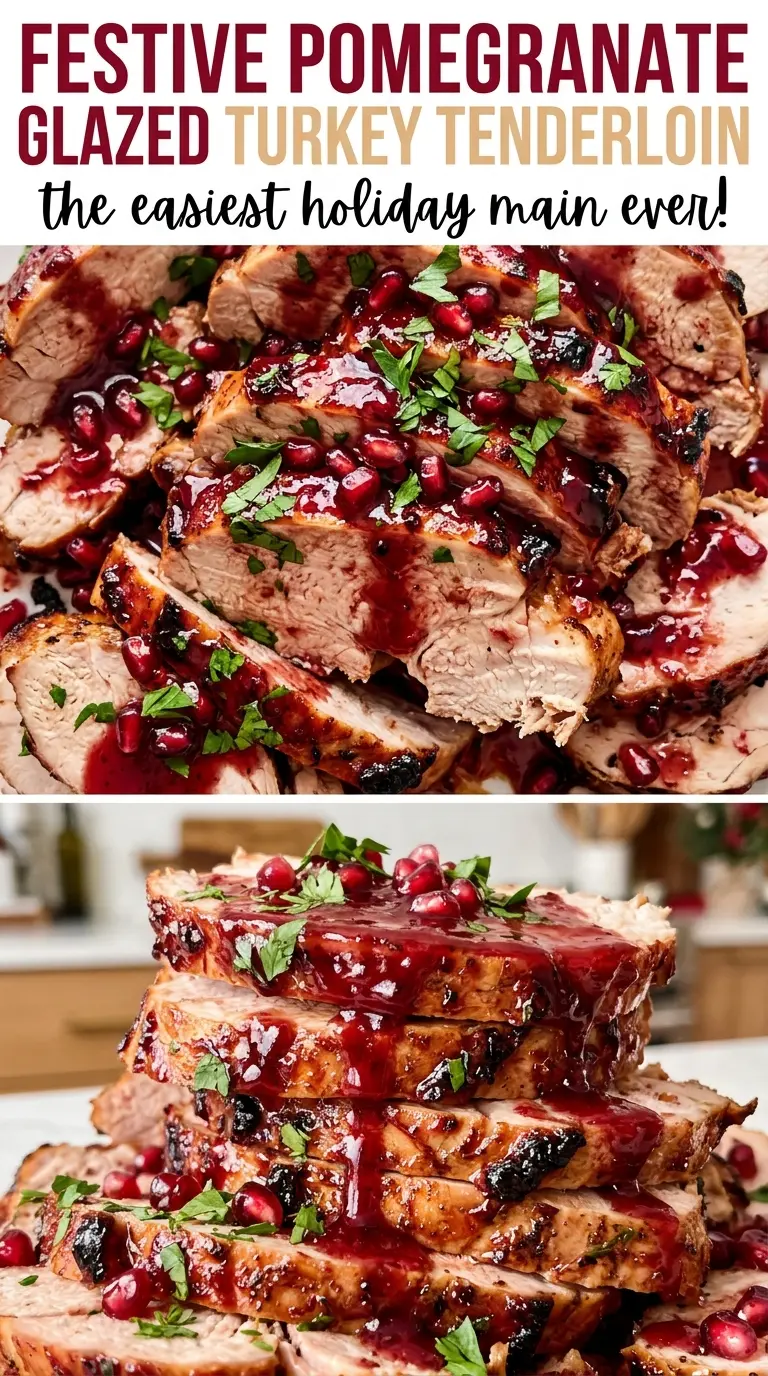
Move the turkey to a cutting board and brush it all over with the pomegranate glaze. Scatter the pomegranate arils on top, then let the tenderloins rest for 5 minutes before slicing. The rest gives the juices time to settle, and the glaze has a moment to cling instead of running straight onto the board. Slice just before serving.
Simple Changes for a Less-Sweet or Lower-Sodium Tenderloin
Make the Glaze Less Sweet
Use 1 tablespoon of honey instead of 2. The pomegranate and balsamic will read a little sharper, and the glaze may feel less rounded, but it will still reduce into a brushable syrup.
Reduce the Salt
For a lower-sodium version, season the turkey with 1/2 teaspoon kosher salt instead of 1 teaspoon. The turkey will taste less seasoned, but the sear, roasting time, and glaze method stay the same.
Leave Off the Pomegranate Arils
Skip the arils if you want a smooth finish without the little bursts of tartness. The glaze still carries the pomegranate flavor, though the top will lose its fresh crunch and jewel-like look.
Storage and Reheating
- Refrigerator: Keep cooked turkey in an airtight container for 3–4 days. The glaze may become tackier as it chills, and the slices won’t be quite as juicy as they were fresh.
- Freezer: Freeze sliced turkey in an airtight container, with parchment between layers, for up to 2–3 months for best quality. Thaw it overnight in the refrigerator.
- Reheating: Cover the slices and warm them in the microwave in short intervals, stopping as soon as they’re hot through. Add a little leftover glaze if you have it; prolonged heating can dry out lean turkey.
Questions That Come Up With Pomegranate-Glazed Turkey
Festive Pomegranate Glazed Turkey Tenderloin
Ingredients
Equipment
Method
- Combine the pomegranate juice, honey, Dijon mustard, balsamic vinegar, and rosemary in a small saucepan.
- Bring to a simmer over medium heat, then simmer gently for 12–18 minutes, stirring occasionally, until reduced to about 1/3 cup and syrupy.
- Remove and discard the rosemary.
- Preheat the oven to 400°F.
- Pat the turkey tenderloins dry and season all over with the salt and pepper.
- Heat the olive oil in a 12-inch oven-safe skillet over medium-high heat.
- Sear the tenderloins, turning every 2–3 minutes, for 5–7 minutes total, until browned all over.
- Transfer the skillet to the oven and roast for 12–18 minutes, until the thickest part of each tenderloin reaches 165°F.
- Transfer the turkey to a cutting board and brush it all over with the glaze.
- Scatter the pomegranate arils on top.
- Rest for 5 minutes before slicing.