
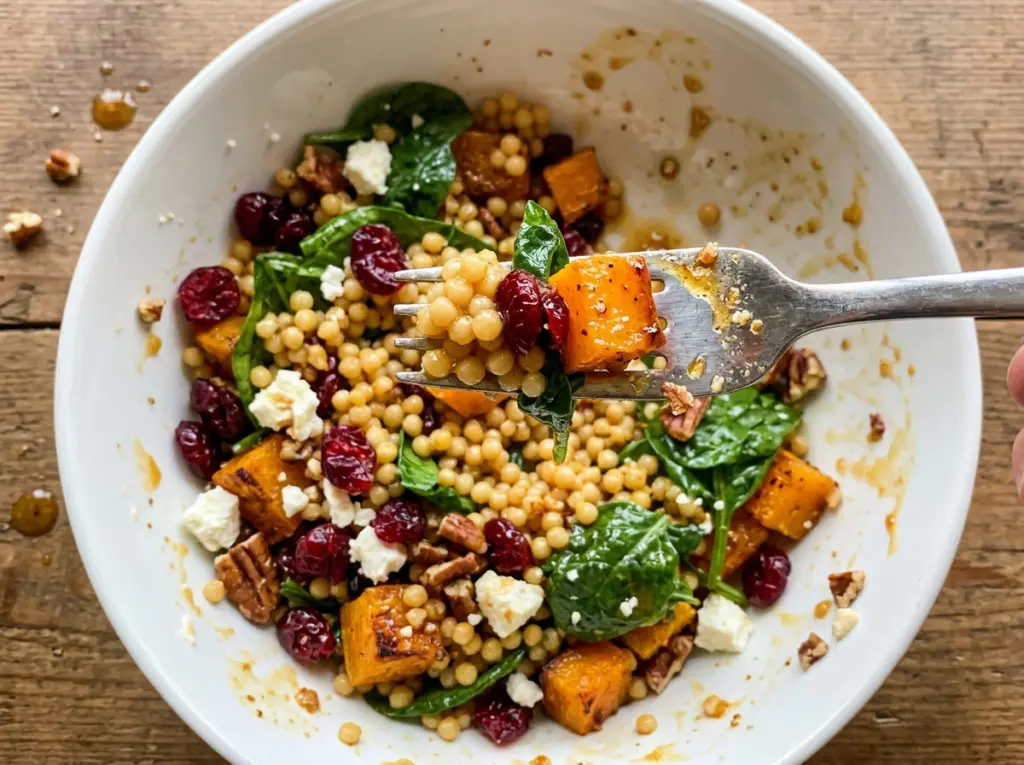
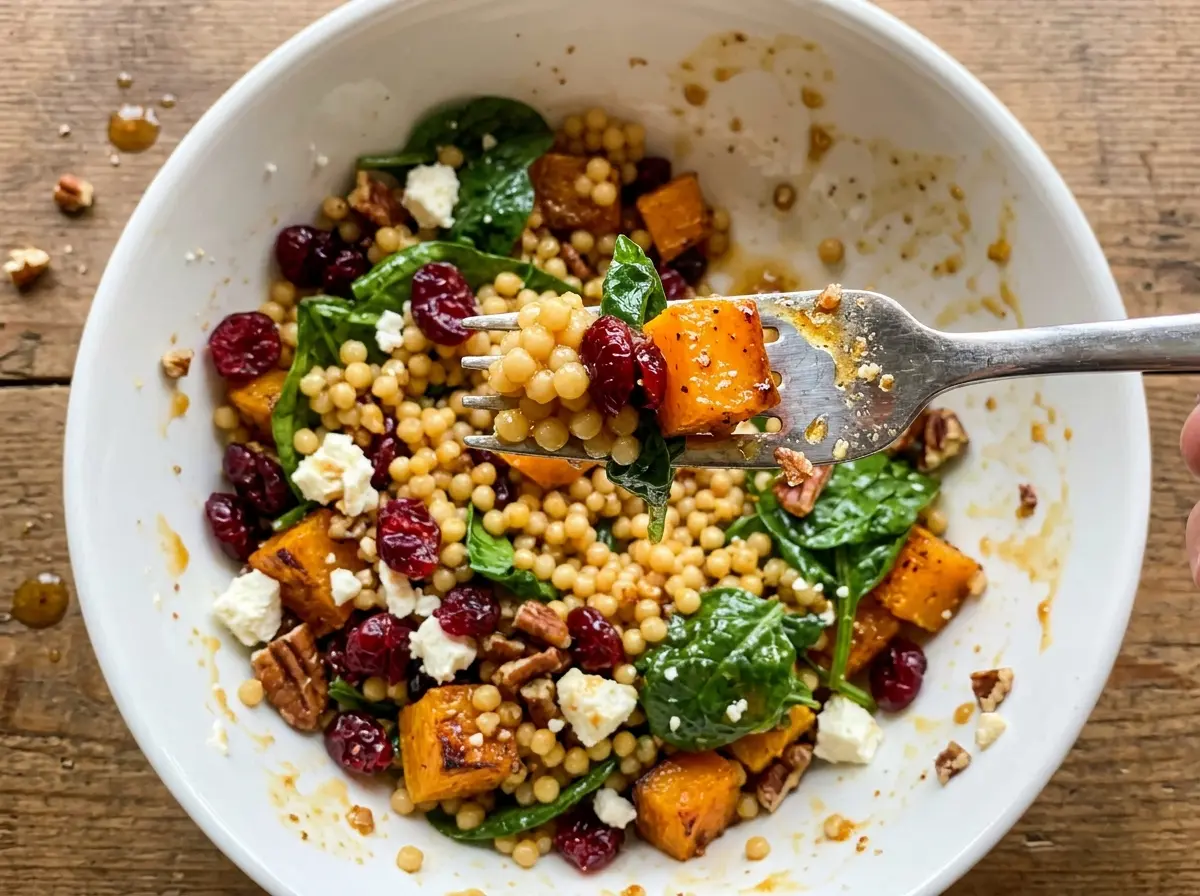
The squash should come out of the oven with browned edges, not pale, soft cubes. I spread it out so the pieces roast instead of steam, then let the couscous and squash cool before they meet the kale. That balance is what makes Fall Harvest Pearl Couscous Salad hearty without turning it into a warm, wilted bowl.
Pearl couscous gives the salad a pleasantly chewy base, while crisp apple and dried cranberries bring tart sweetness against the roasted squash. I like the vegetable broth here because it seasons the couscous from the inside, and a tangy apple cider dressing ties the sweet and savory ingredients together.
The kale gets a short massage with a little dressing before anything else goes in. That quick step softens the leaves, so they’re easier to eat while still holding their shape beside the squash, pecans, and feta.
Kitchen Note
Give the couscous its full cooling time before it goes into the salad. If it’s still steaming, it can warm the kale and soften the apple as soon as you toss everything together.
Save Fall Harvest Pearl Couscous Salad for a hearty bowl with roasted squash, crisp apple, and tangy cider dressing.
Why a Crowded Pan Leaves the Squash Pale
Roasted squash is the salad’s sweet, savory anchor, and browning gives it more character than simply cooking it until soft. When the cubes are packed together, the moisture they release gets trapped between them. They soften, but the surfaces don’t get the same chance to brown. A single layer on a roomy rimmed baking sheet gives the hot oven room to work.
Turn the pieces once as they roast so more than one side gets contact with the hot pan. You’re looking for browned patches and a fork-tender center, not deeply dark edges. The squash doesn’t need to be perfectly uniform, but cutting it into one-inch cubes helps the pieces finish at about the same time. A little patience at this stage pays off in the finished salad: the squash tastes roasted and substantial rather than watery.
What Gives Each Bite Its Sweet, Tangy, and Savory Balance
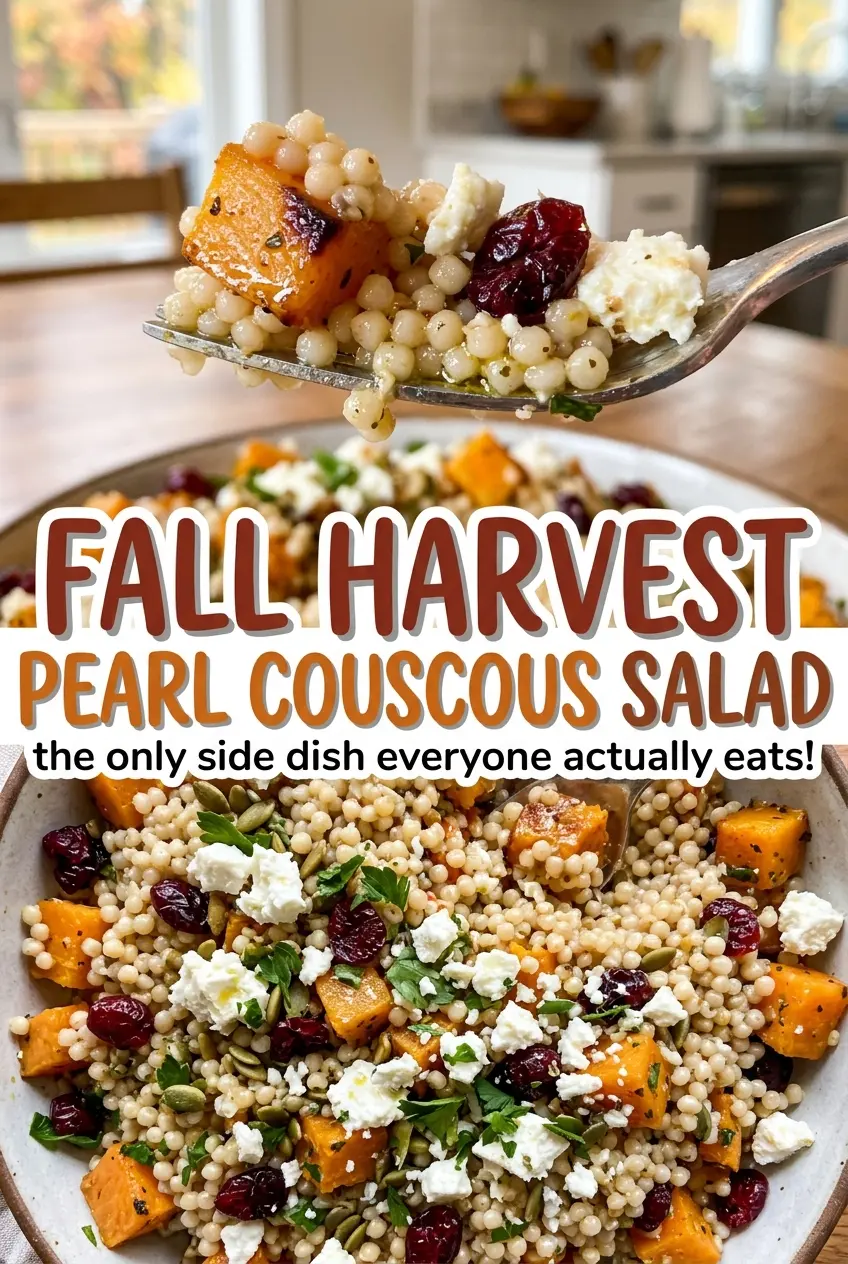
- Butternut squash — Choose squash that feels firm and heavy for its size. Peeling, seeding, and cutting it into even cubes makes the pieces roast at a similar pace; pre-cut cubes are convenient as long as they’re close to the same size.
- Pearl couscous and vegetable broth — Pearl couscous is a small, chewy pasta, not the tiny couscous that cooks almost instantly. The larger pearls hold up among the salad ingredients, and vegetable broth seasons them as they simmer. Regular couscous won’t have the same bite or use the same cooking method.
- Kale — Removing the stems and slicing the leaves thinly makes them easier to massage and eat. Curly or lacinato kale both work; choose leaves that look fresh rather than limp or yellowed.
- Crisp apple and dried cranberries — A firm apple gives you a clean, juicy crunch next to the tender squash. A crisp pear works in its place, though it makes the salad a little softer and sweeter. Dried cranberries add concentrated tartness, so they balance the maple in the dressing.
- Pecans and feta — Fresh pecans contribute a buttery crunch, while feta brings a salty, creamy contrast. Pepitas can replace the pecans for a nut-free version. For a dairy-free salad, use a plant-based feta-style crumble; the flavor will be less tangy than traditional feta.
- Apple cider dressing — Extra-virgin olive oil gives the dressing body, and apple cider vinegar keeps it bright. Use pure maple syrup rather than pancake syrup, whose added flavorings can take the dressing in a different direction. Dijon and minced garlic round out the sharpness.
Roast, Simmer, and Toss Without Losing the Texture
Roast the squash until browned and tender
Heat the oven to 425°F and line a 12×18-inch rimmed baking sheet with parchment paper. Toss the one-inch squash cubes with vegetable oil, 1/4 teaspoon kosher salt, and 1/8 teaspoon black pepper, then spread them in a single layer. Roast for 25–30 minutes, turning once. They’re ready when browned in spots and fork-tender; if the centers still feel firm, give them more time rather than pulling them early.
Let the pearl couscous absorb the broth
Bring the vegetable broth to a boil in a 2-quart saucepan, stir in the pearl couscous, cover, and reduce the heat to low. Simmer for 8–10 minutes, until the liquid is absorbed. Take the saucepan off the heat and let it stand covered for 5 minutes, then uncover and cool the couscous for 10 minutes, fluffing it with a fork. If liquid remains after simmering, keep the pan over low heat until it’s absorbed before moving on.
Whisk a balanced cider dressing
In a small bowl, whisk together the extra-virgin olive oil, apple cider vinegar, pure maple syrup, Dijon mustard, minced garlic, the remaining 1/4 teaspoon kosher salt, and the remaining 1/8 teaspoon black pepper. Keep whisking until the dressing looks evenly blended rather than streaked with oil. Mince the garlic finely so its flavor is spread through the dressing instead of landing in large, sharp bites.
Soften the kale, then fold in the feta
Put the thinly sliced kale in a large serving bowl and add 1 tablespoon of dressing. Massage the leaves for 1–2 minutes, until they feel softer and look slightly darker. Add the cooled couscous and squash along with the thinly sliced apple, dried cranberries, and chopped pecans; pour over the remaining dressing and toss to combine. Fold in the crumbled feta at the end so it stays in distinct pieces instead of disappearing into the dressing.
Easy Swaps That Keep the Salad’s Texture in Balance
Use a crisp pear instead of apple
Swap in a firm pear, cored and thinly sliced. It pairs naturally with the squash and cranberries, but it’s softer and sweeter than a crisp apple, so choose one that still feels firm when pressed.
Trade pecans for pepitas
Use pepitas in place of the chopped pecans for a nut-free version with a similar seed-like crunch. They’re a little less buttery, but still give the tender couscous and squash a crisp contrast.
Make it dairy-free
Replace the feta with a plant-based feta-style crumble. It keeps the creamy, salty element in the salad, though the exact tang and texture vary by brand.
Make-Ahead and Storage
- Make-ahead: Cook the couscous and roast the squash ahead, then store them separately from the sliced apple and kale. Toss the salad close to serving time for the freshest crunch.
- Refrigerator: Store leftovers covered for up to 3 days. The kale softens and the apple loses some of its crispness as the salad sits.
- Freezer: Freezing the assembled salad isn’t recommended; the apple and kale turn limp, and the feta’s texture changes when thawed.
- Serving: Serve chilled or at room temperature. Don’t microwave the assembled salad, since it will wilt the kale and soften the apple.
Questions That Come Up While Making This Salad
Fall Harvest Pearl Couscous Salad
Ingredients
Equipment
Method
- Heat the oven to 425°F.
- Line a 12x18-inch rimmed baking sheet with parchment paper.
- Toss the squash with the vegetable oil, 1/4 teaspoon salt, and 1/8 teaspoon pepper.
- Spread the squash in a single layer on the baking sheet.
- Roast for 25–30 minutes, turning once, until the squash is browned and fork-tender.
- Bring the broth to a boil in a 2-quart saucepan.
- Stir in the couscous, cover, and reduce the heat to low.
- Simmer for 8–10 minutes, until the liquid is absorbed.
- Remove from the heat and let stand covered for 5 minutes.
- Uncover and cool for 10 minutes, fluffing with a fork.
- Whisk together the olive oil, vinegar, maple syrup, Dijon, garlic, remaining 1/4 teaspoon salt, and remaining 1/8 teaspoon pepper in a small bowl.
- Put the kale in a large serving bowl.
- Add 1 tablespoon of the dressing and massage the leaves for 1–2 minutes until softened.
- Add the cooled couscous and squash, apple, cranberries, and pecans.
- Pour over the remaining dressing and toss to combine.
- Fold in the feta.