
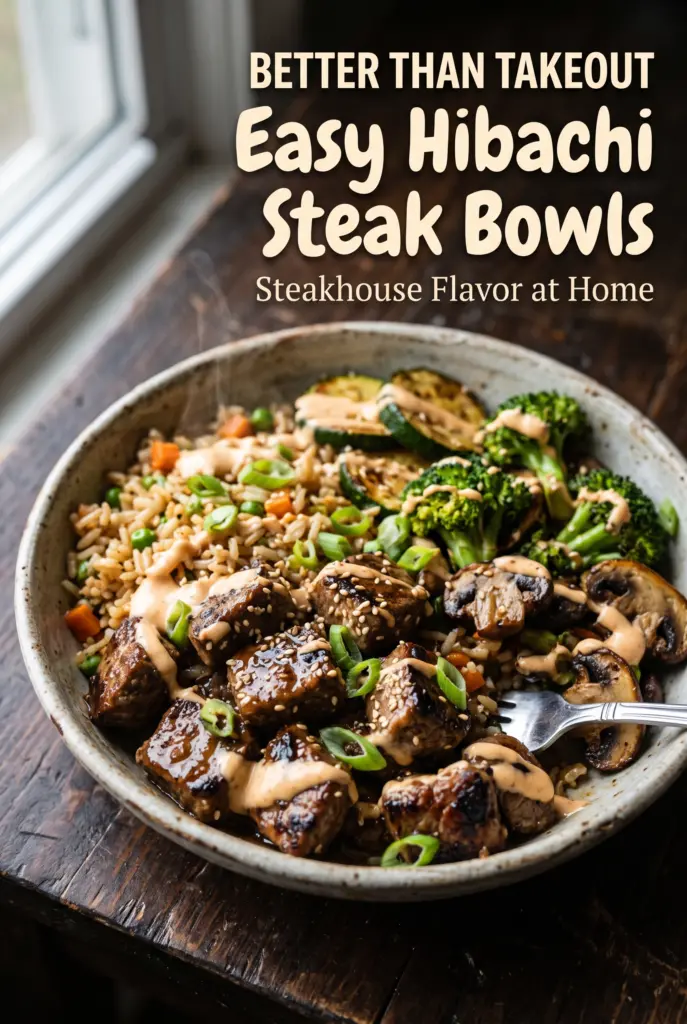
Juicy steak, garlicky fried rice, crisp-tender vegetables, and that creamy, tangy Yum Yum sauce all land in one bowl with the kind of balance that keeps this dinner in regular rotation. The steak stays tender because it gets a hard sear first, then a quick toss in butter and garlic at the end, so the flavor clings without overcooking the meat. The rice brings the savory base, the vegetables add freshness and bite, and the sauce ties everything together instead of drowning it.
The part that matters most is heat management. Cold rice fries up cleanly instead of turning sticky, and a hot skillet gives the steak a proper crust before the butter goes in. The Yum Yum sauce also benefits from a short chill, because the flavors round out once the paprika, garlic, and vinegar have time to settle into the mayo. You don’t need a grill or a teppanyaki setup to get that steakhouse feel at home.
Below, I’ve included the one timing detail that keeps the vegetables from going soft, plus a few smart swaps if you need to work with what’s already in the fridge. The whole meal comes together fast once everything is prepped, so it’s worth reading through before you start cooking.
The steak browned fast and stayed tender, and the Yum Yum sauce tasted even better after it sat in the fridge for a bit. My rice never turns out this good, but keeping it cold first made all the difference.
Save these hibachi steak bowls for the nights when you want tender steak, garlicky rice, and creamy Yum Yum sauce without a takeout wait.
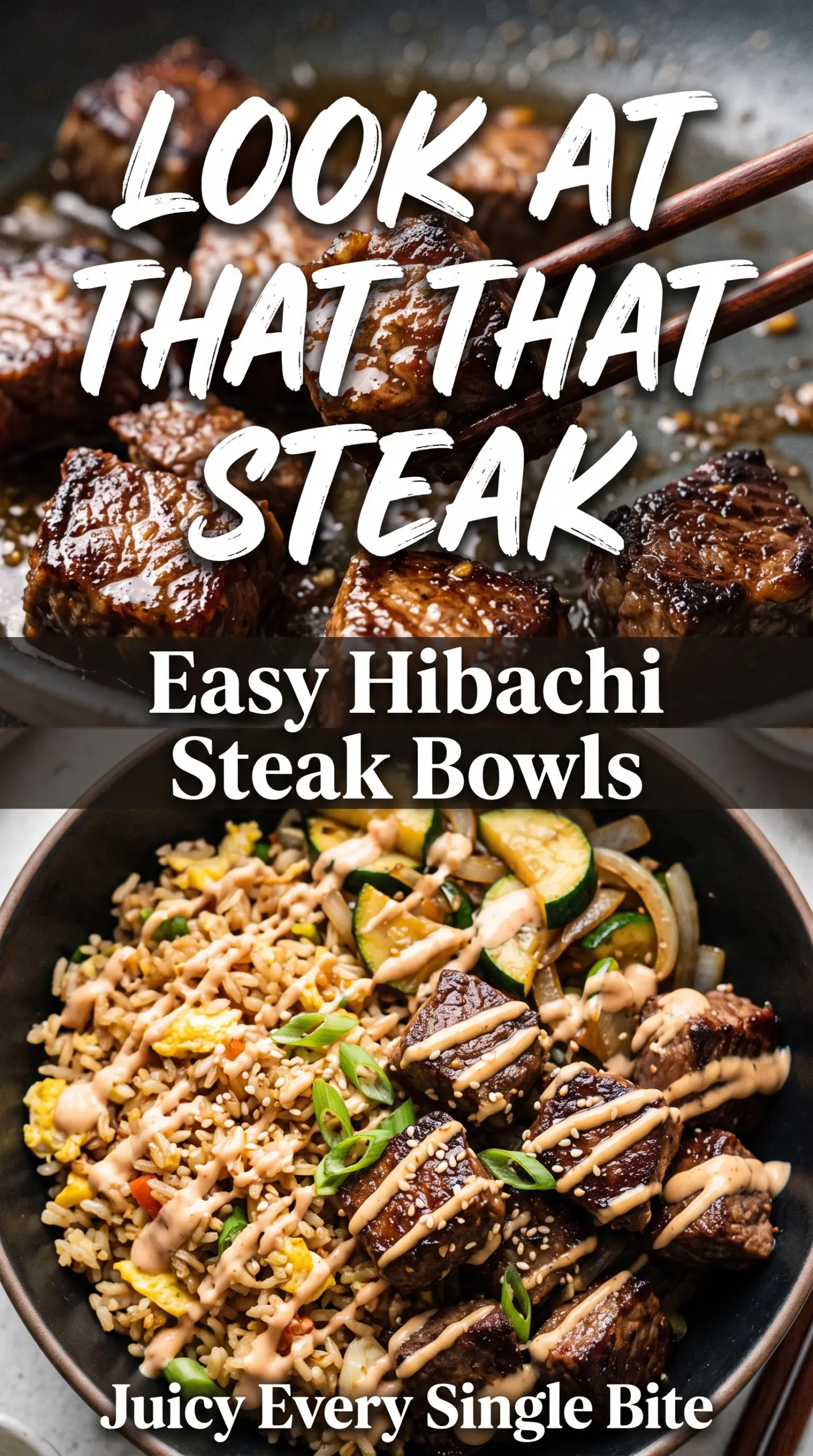
The Secret to Steakhouse-Style Hibachi at Home
The mistake most people make with hibachi-style bowls is crowding the pan. Once the steak starts steaming instead of searing, you lose the browned edges that give the whole dish its steakhouse flavor. A cast-iron skillet or heavy pan helps here because it holds heat when the meat hits the surface, which means you get color fast instead of gray cubes that leak juice.
The other key is finishing the steak after it comes off the hottest part of the heat. Butter, garlic, soy sauce, and sesame oil taste great, but they burn if you let them cook too long over high heat. Add them at the end and toss just until everything is glossy. That keeps the garlic fragrant and the steak coated without turning bitter.
- Sirloin steak — This cut stays tender when it’s cooked quickly over high heat. Ribeye works too if you want a richer bite, while flank steak needs to be sliced thinner and cooked even faster so it doesn’t tighten up.
- Cold cooked jasmine rice — Cold rice fries instead of clumping, which is the whole trick behind good hibachi rice. Fresh rice is too moist and soft; if that’s all you have, spread it on a tray and chill it until it feels dry on the surface.
- Yum Yum sauce ingredients — Mayo gives the sauce body, ketchup adds sweetness and color, and rice vinegar keeps it from tasting flat. The sauce is better after a short chill, so make it first and let the flavors settle while you cook.
- Vegetables — Broccoli, zucchini, and mushrooms each bring a different texture, which keeps the bowl from tasting one-note. Cut the zucchini thick enough that it won’t collapse, and cook the mushrooms until their moisture cooks off before you add the soy sauce.
How to Cook Everything Hot Enough Without Overcooking Anything
Start with the sauce
Whisk the Yum Yum sauce together first and park it in the fridge. That resting time matters because the garlic powder softens, the vinegar rounds out the mayo, and the sauce thickens slightly as it chills. If you taste it right away, it can seem sharp; after 20 to 30 minutes, it tastes more balanced and coats the bowl better.
Build the rice base
Scramble the eggs in butter, then add the cold rice, soy sauce, and green onions. Stir-fry long enough for the rice to heat through and pick up a few toasted spots, which usually takes about 5 minutes. If the rice clumps, break it up with your spatula before it hits the pan; once it warms, those clumps are harder to separate cleanly.
Cook the vegetables until crisp-tender
Use the same pan for the vegetables and keep them moving so they soften without turning limp. Broccoli needs the longest, zucchini goes fast, and mushrooms should lose their raw look before the soy sauce goes in. Stop cooking when the broccoli is bright green and the zucchini still has a little bite at the center.
Sear the steak last
Heat the oil until it shimmers, then add the steak in a single layer. Let the pieces sit untouched for a minute or two so the bottom can brown before you stir. If you keep moving them too early, the pan cools down and the steak starts to gray instead of sear.
Finish with butter and garlic
Once the steak has color, add the butter, garlic, soy sauce, and sesame oil and toss quickly until the meat looks glossy. The garlic should smell nutty and warm, not sharp or burnt. Pull the pan off the heat as soon as everything is coated, because the residual heat is enough to finish the sauce on the steak.
How to Adapt These Hibachi Steak Bowls to What You Have
Make it gluten-free
Swap the soy sauce for tamari or a certified gluten-free soy sauce. The flavor stays savory and salty, and the rest of the dish already works naturally without any other changes.
Skip the dairy
Use a plant-based butter or replace the butter with a neutral oil. You’ll lose a little richness, but the garlic, soy sauce, and sesame oil still carry the same hibachi-style finish.
Turn it into chicken or shrimp bowls
Chicken thighs need a few extra minutes to cook through, while shrimp cook much faster and should go in only until pink and just curled. Keep the sauce and rice the same; the structure of the bowl still works, but the sear time changes.
Use a different vegetable mix
Snap peas, carrots, bell peppers, and onions all work well if that’s what you have. Keep the cut sizes even so the pan finishes them at the same time, and cook harder vegetables first if you’re mixing in carrots.
Storage and Reheating
- Refrigerator: Store the steak, rice, vegetables, and sauce separately for up to 4 days. The rice firms up a little in the fridge, which actually helps with reheating.
- Freezer: The steak and rice freeze well for about 2 months, though the vegetables soften after thawing. Freeze the sauce separately if you want, but expect a slight texture change once it defrosts.
- Reheating: Warm the rice and steak in a skillet with a splash of water or in the microwave covered loosely. Don’t blast the steak too long or it turns dry; reheat just until hot, then add the sauce after warming so it stays creamy.
The Questions That Come Up Before You Make Hibachi Steak Bowls
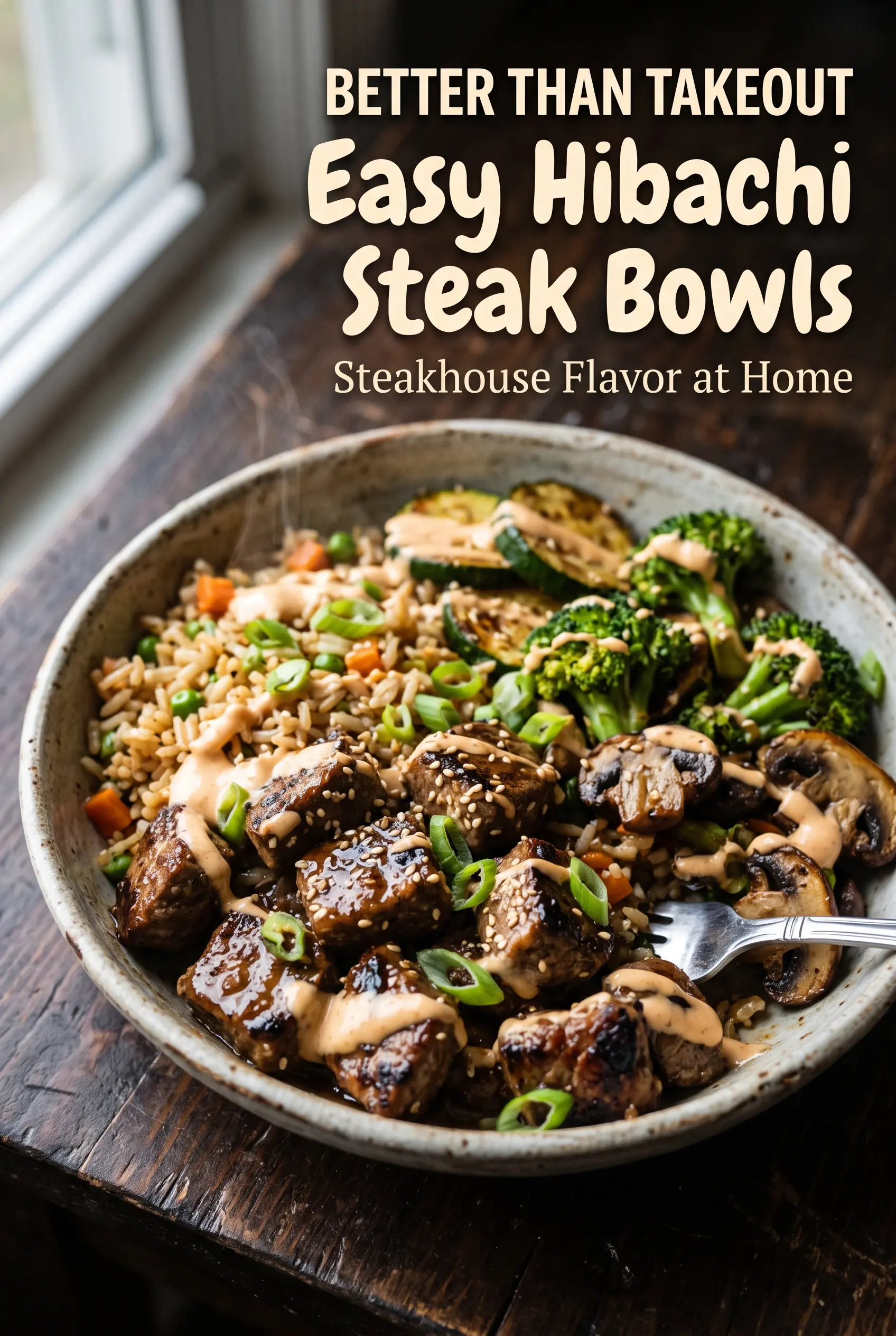
Easy Hibachi Steak Bowls with Yum Yum Sauce
Ingredients
Equipment
Method
- Whisk together mayonnaise, ketchup, melted butter, garlic powder, paprika, sugar, rice vinegar, and water until smooth. Refrigerate for 5 minutes so the sauce thickens slightly.
- Heat 2 tbsp butter in a large skillet over medium-high heat and scramble the eggs. Stir continuously until set, then remove and set aside.
- Add cold cooked jasmine rice, soy sauce, and sliced green onions to the skillet. Stir-fry for 5 minutes until hot and lightly toasted.
- Melt 1 tbsp butter in the skillet over medium-high heat and sauté broccoli florets, zucchini, and mushrooms with soy sauce. Cook until tender-crisp, stirring occasionally.
- Heat vegetable oil in a cast-iron skillet over high heat until shimmering. Sear the steak cubes for 1–2 minutes per side.
- Add butter, minced garlic, soy sauce, and sesame oil to the skillet. Toss until the steak is glossy and evenly coated.
- Arrange the fried rice into serving bowls. Top each bowl with the sautéed vegetables and seared steak.
- Drizzle the Yum Yum sauce generously over the bowls. Sprinkle with sesame seeds and sliced green onions before serving.