

Crispy salmon bites earn their keep fast: crackly edges on the outside, tender flakes in the center, and enough sauce options to keep the same base recipe from feeling repetitive. The salmon sears in a hot skillet instead of steaming in the pan, so you get that deep golden crust that tastes like it took more effort than it did. Cut small and cooked quickly, the bites stay juicy while still picking up plenty of seasoning.
The trick is the cornstarch tossed right onto the dry salmon before it hits the pan. That thin coating helps the surface brown and keeps the cubes from sticking, which matters more than people think when you’re working with delicate fish. Each sauce here leans in a different direction — sweet, spicy, creamy, tangy, or savory — so the same salmon can turn into bowls, tacos, or a quick appetizer without extra work.
Below, you’ll find the pan-searing rhythm that gives you crisp salmon without overcooking it, plus the small sauce details that keep each one tasting fresh instead of flat.
The salmon stayed crisp even after I tossed it in the honey garlic sauce, and the cornstarch coating made a big difference. I served it over rice with green onions and my husband said it tasted like takeout, but better.
Crispy Salmon Bites with 5 easy sauces is the kind of dinner that gives you one solid method and five different directions to take it.
The Secret to Crispy Salmon That Doesn’t Fall Apart in the Pan
Salmon cubes can go wrong fast if the pan isn’t hot enough or the fish goes in wet. Moisture turns the surface soft, and soft salmon sticks before it has a chance to sear. Drying the fish well and tossing it with cornstarch gives the exterior a thin shield that browns quickly instead of clinging to the skillet.
The other mistake is overcrowding. If the pan is packed, the salmon steams and the coating turns patchy instead of crisp. Give the cubes space and let them sit long enough to form a crust before you turn them. If they release cleanly, they’re ready. If they tug, they need another minute.
What Each Ingredient Is Doing in This Dish
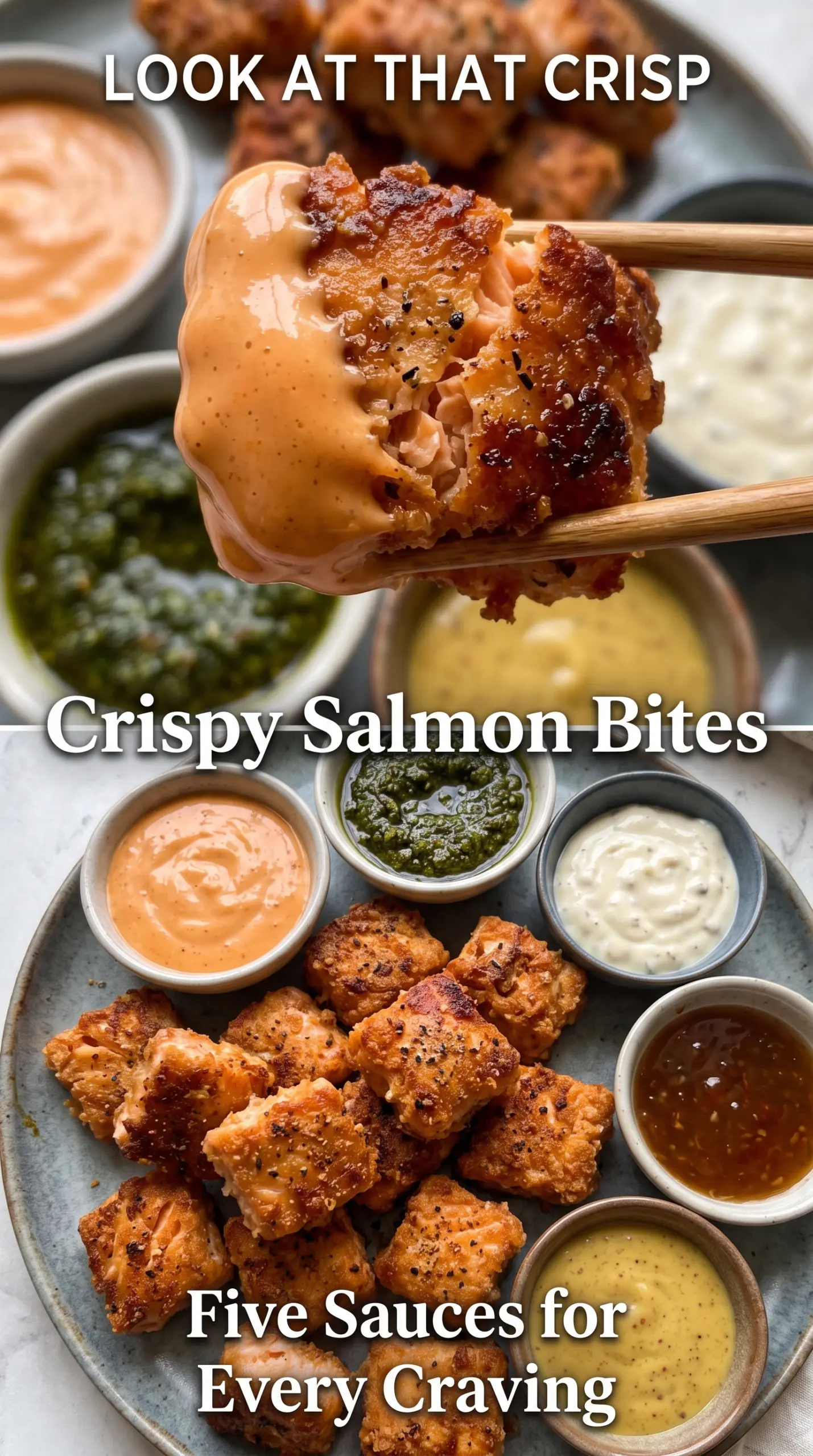
- Skinless salmon fillets — Skinless pieces cook more evenly in bite-size form and give you more surface area for crisping. Cut the cubes close to the same size so they finish at the same time.
- Olive oil — It helps the seasoning cling and keeps the salmon from grabbing the pan before the crust sets. A neutral oil works too, but olive oil adds a little extra flavor.
- Cornstarch — This is the small step that changes the texture. It dries the surface just enough to promote browning and gives the bites that light, crisp shell.
- Smoked paprika, garlic powder, and onion powder — These build a savory base that still works with all five sauces. You can swap in regular paprika if that’s what you have, but the smoked version gives the salmon a deeper edge.
- Cayenne — Optional, but useful if you want the salmon itself to carry a little heat even before sauce goes on. Skip it if you’re using a spicy sauce like bang bang and want more control.
- Honey, mayo, cream, butter, Parmesan, teriyaki, and soy sauce — These are the backbone of the sauces, and each one brings a different finish: glossy, creamy, tangy, or savory. Use good-quality butter and Parmesan in the cream sauce, since those flavors stand out more than the others.
How to Sear the Salmon and Build the Sauces Without Rushing Either Part
Dry, Season, and Coat
Pat the salmon dry first, then toss it with the oil, spices, and cornstarch until every cube has a thin, even coating. You don’t want clumps of starch sitting in the bowl, because those turn pasty instead of crisp. The fish should look lightly dusted, not breaded. That thin layer is enough to change the texture without weighing the salmon down.
Get the Pan Hot Before the Salmon Goes In
Heat the skillet over medium-high until the oil shimmers. If the salmon lands in a lukewarm pan, the seasoning sticks to the bottom before the crust forms. Place the cubes in a single layer and leave space between them. They need direct contact with the pan, not a crowded pile.
Let the Crust Form, Then Turn
Cook the salmon for 2 to 3 minutes on the first side and watch for the edges to turn opaque. When the cubes lift cleanly, flip them. If they stick, give them another 20 to 30 seconds. Pull them once they’re just cooked through and still juicy in the center; if you wait until they look dry in the pan, they’ll be overdone by the time they hit the plate.
Build or Choose the Sauce
Mix or simmer the sauce while the salmon cooks so everything finishes together. The honey garlic and teriyaki sauces should be glossy and slightly thickened, not boiling hard, or the sugars can turn bitter. For the cream sauce, keep the heat low when the Parmesan goes in so it melts smoothly. If the sauce looks split or grainy, the pan was too hot and it needs to come off the burner before you stir again.
How to Change These Salmon Bites Without Losing the Crunch
Gluten-Free Salmon Bites
The salmon itself is already easy to keep gluten-free. Use tamari instead of soy sauce in the honey garlic sauce and check your teriyaki and sweet chili sauces for hidden wheat. The cornstarch stays the same and still gives you that crisp exterior.
Dairy-Free Sauce Choices
Skip the butter-based lemon garlic and Cajun cream sauces, then use the honey garlic, bang bang, or teriyaki sesame versions instead. If you want a buttery finish without dairy, use a plant-based butter in the lemon sauce, but keep the heat low so it doesn’t separate.
Air Fryer Salmon Bites
Air frying works when you want less stovetop attention. Lay the seasoned salmon in a single layer and cook at 400°F until the outside is lightly crisp and the centers flake easily, flipping once if needed. The crust won’t be quite as deep as the skillet version, but the salmon stays tender and the cleanup is easier.
Make It Into Bowls or Tacos
Serve the salmon over rice with vegetables for a fast bowl, or tuck it into warm tortillas with shredded cabbage and a drizzle of bang bang sauce. The bites hold up well because they’re cut small, but add the sauce right before serving if you want the crust to stay sharp.
Storage and Reheating
- Refrigerator: Store the cooked salmon bites in an airtight container for up to 3 days. The coating softens a bit, but the flavor stays good.
- Freezer: Freeze the plain cooked salmon bites on a tray first, then transfer to a bag for up to 2 months. Sauced salmon doesn’t freeze well, so freeze the bites before tossing them in any sauce.
- Reheating: Reheat in a skillet over medium heat or in a 375°F oven until just warmed through. The biggest mistake is blasting them in the microwave, which turns the salmon dry and kills the crust.
Answers to the Questions Worth Asking
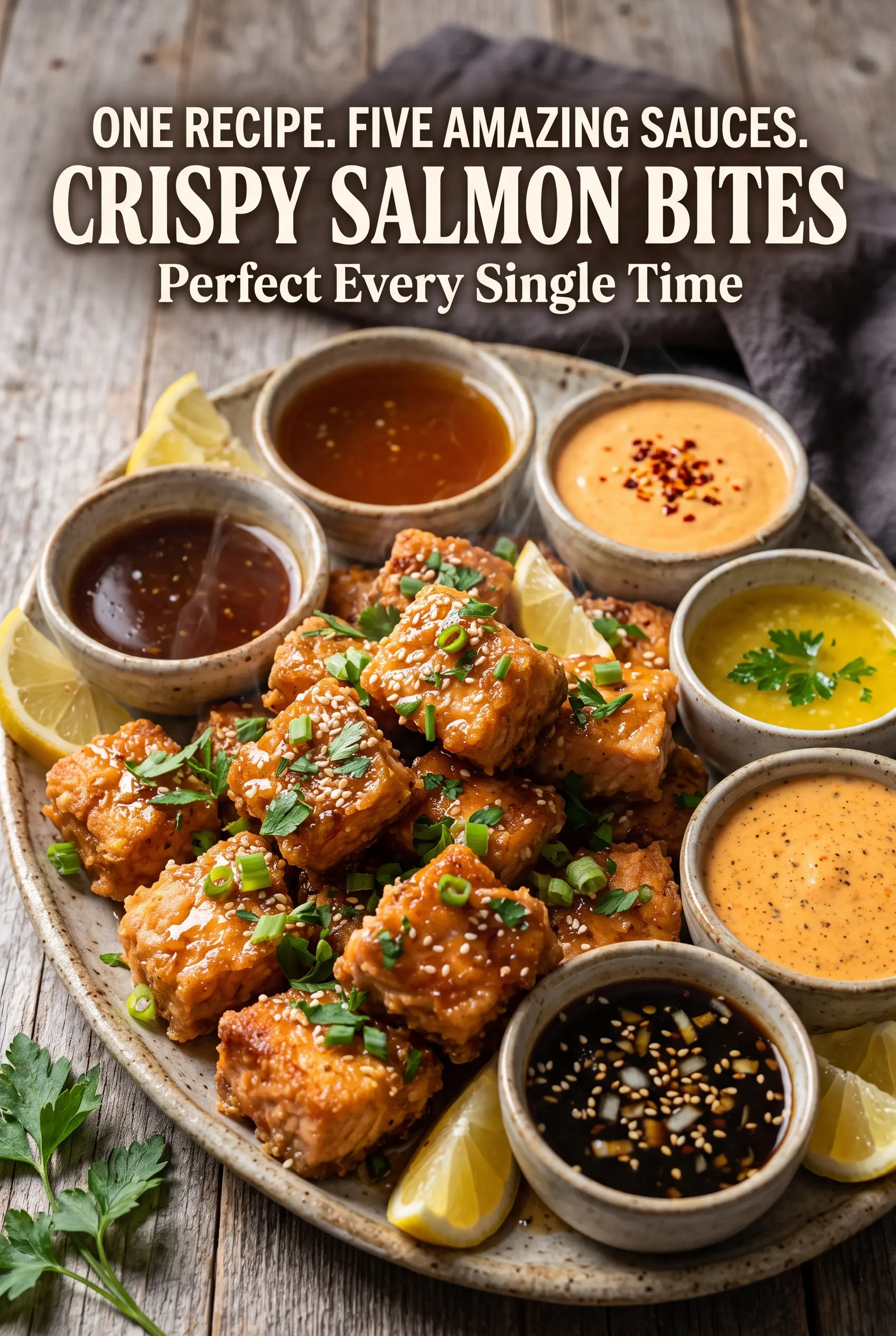
Crispy Salmon Bites with 5 Easy Sauces
Ingredients
Equipment
Method
- Pat the salmon dry with paper towels, keeping the cubes roughly 1 inch so they sear evenly.
- Toss the salmon cubes with olive oil, smoked paprika, garlic powder, onion powder, kosher salt, black pepper, cayenne pepper, and cornstarch until evenly coated and lightly dusted.
- Heat a large skillet over medium-high heat until hot and shimmering.
- Cook the salmon bites for 2–3 minutes per side until crispy and cooked through, flipping once for even browning.
- Prepare your preferred sauce while the salmon cooks, so it’s ready to toss or dip immediately after searing.
- Toss the cooked salmon with the desired sauce or serve sauces on the side for dipping.
- Garnish with parsley, sesame seeds, green onions, or lemon wedges to brighten the flavor right before serving.
- Serve over rice, pasta, salad, roasted vegetables, or in tacos as desired.