
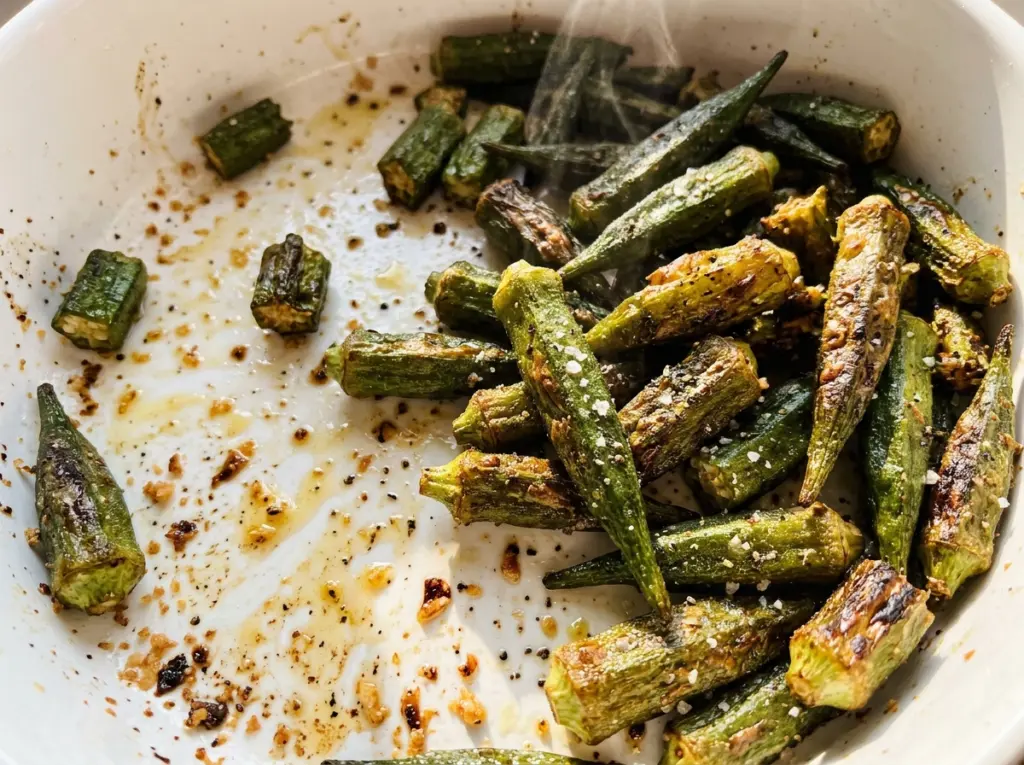
The okra starts to brown at the edges before the middle looks ready, and that’s the moment to trust the pan instead of reaching for more oil. I learned that with this crispy oven roasted okra: a dry surface and a thin coating do more for crunch than a heavy layer ever could. The pieces roast up with tender centers and browned, crisp edges.
Fresh okra can turn soft if moisture gets trapped around it, so I wash it and dry it thoroughly before cutting. Fine cornmeal adds a light, toasted crust, while cornstarch helps that coating crisp rather than feel gritty. Halving the pods lengthwise also gives the cut sides a broad surface to brown.
Spread the pieces out with their cut sides against the pan, and give them room to roast instead of steam. Once they’re browned and crisp at the edges, they’re ready to eat straight from the sheet while the coating still has its crunch.
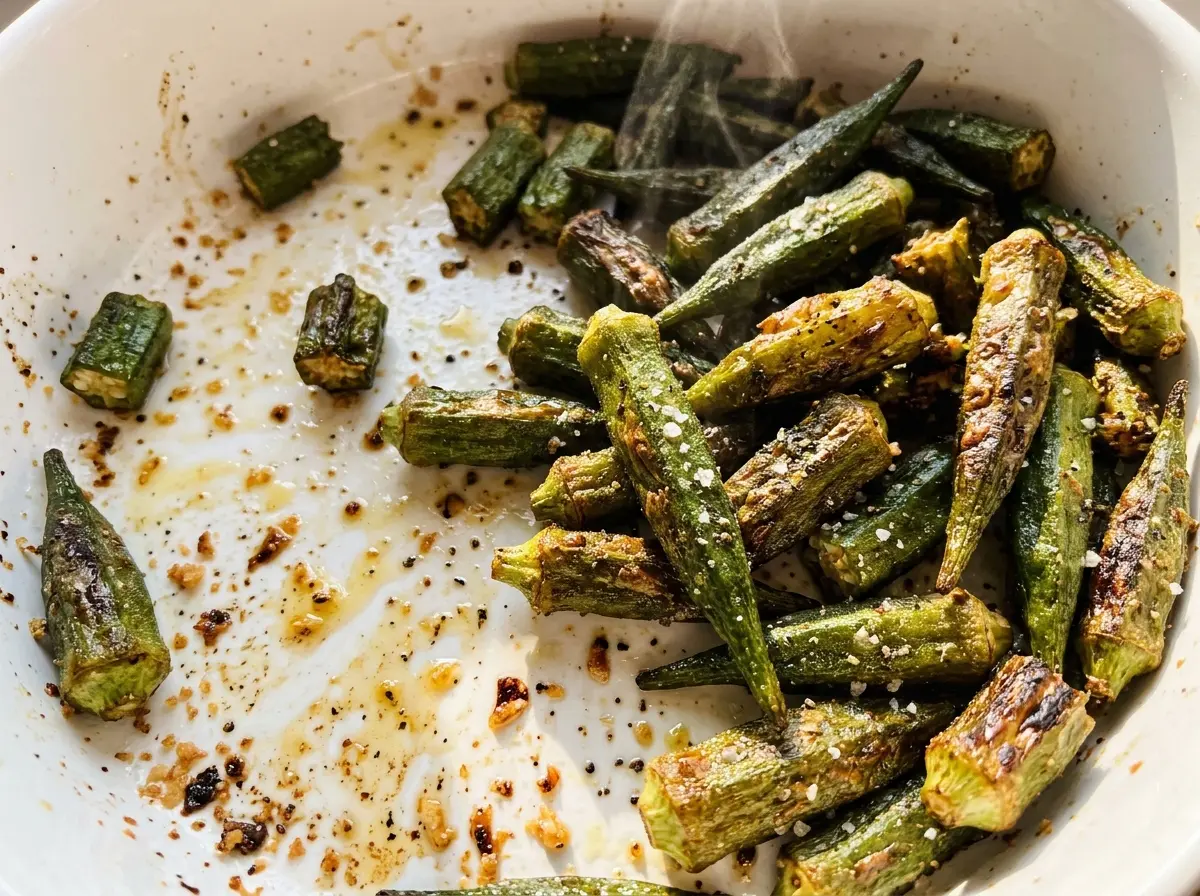
Kitchen Note
Use the unlined baking sheet here. The okra makes direct contact with the hot metal, and parchment between the two can get in the way of the browned underside you’re after.
Save this crispy oven roasted okra for a simple side with browned edges and a light cornmeal crust.
Why Okra Turns Soft Instead of Crisp in the Oven
Okra has a naturally moist interior, and wet surfaces make it easy for the pieces to steam before their edges have a chance to brown. That’s why thoroughly drying the washed pods matters before they’re cut and coated. It isn’t a fussy extra; it gives the oil and dry coating a chance to cling to the outside instead of sliding around on water.
There’s another common culprit: crowding. When pieces overlap, the moisture they release hangs around the neighboring pods, and you get soft patches instead of even browning. A single layer on the full baking sheet gives hot air room to move around each piece.
Finally, don’t expect every pod to look identical. Larger pieces need more cut surface exposed to cook evenly, which is why especially large pods get quartered lengthwise. Look for deep golden-brown spots and crisp-looking edges, not a uniform color on every side. Those signs tell you the coating has browned even if the centers remain tender.
What the Cornmeal, Cornstarch, and Oil Each Bring to Okra

- Fresh okra — Choose firm, unblemished pods that feel fresh rather than limp. Smaller pods are naturally easy to halve; quarter especially large ones so they don’t stay disproportionately thick. Frozen okra isn’t a close stand-in for this method because the extra surface moisture makes crisping harder.
- Fine yellow cornmeal — Fine grains cling more evenly than a coarse grind and make a delicate, toasted coating. Coarse cornmeal gives a grittier bite and doesn’t coat the cut surfaces as smoothly, so stick with fine-ground cornmeal for this texture.
- Cornstarch — This is the lighter partner to the cornmeal, helping the coating crisp without turning the outside into a thick breading. It has a different texture from cornmeal, so swapping in more cornmeal won’t give quite the same delicate finish.
- Olive oil — The oil helps the dry coating adhere and encourages browning in the oven. A fresh bottle with a clean, mild taste is a good choice; there’s no need to use an expensive finishing oil because the coating and roasting are the focus.
- Kosher salt and black pepper — These season the coating without competing with the grassy flavor of the okra. Freshly ground pepper has a more pronounced aroma, but pre-ground pepper works just fine here.
From Dry Pods to Crisp, Browned Edges
Heat the oven and prepare the pods
Heat the oven to 450°F with a rack in the center, and start with okra that has been washed and thoroughly dried. Trim off the stem ends, then halve each pod lengthwise. Quarter any especially large pods so thick pieces aren’t left with a soft center while smaller ones brown.
Coat in two passes
Toss the cut okra with the olive oil first, then add the cornmeal, cornstarch, kosher salt, and black pepper. Keep tossing until you don’t see loose, dry pockets of coating and the pieces look evenly covered. Adding the dry ingredients after the oil helps them cling; dumping everything in at once can leave some pieces bare while others collect a thick patch.
Arrange the cut sides against the pan
Set the coated okra in a single layer on an unlined 18×13-inch rimmed baking sheet, with the cut sides down. Leave space between pieces wherever you can, and check that none are sitting on top of another. If the sheet is crowded, the overlapping spots will soften instead of browning.
Roast until the edges crisp
Roast for 20 to 25 minutes, flipping the pieces halfway through. The finished okra should be well browned, with crisp edges and some darker golden patches where the cut surface touched the pan. If it still looks pale and soft at the edges, give it the remaining roasting time rather than pulling it early.
Two Ways to Change the Shape Without Changing the Coating
Quarter every pod for smaller wedges
For more narrow, crisp-edged pieces, quarter all the pods lengthwise instead of only quartering the especially large ones. The smaller wedges have more exposed edges in each bite, so watch their browning closely as they roast and take them out when well browned and crisp at the edges.
Make a smaller batch for one meal
Halve the ingredient quantities when you want less okra, but keep the pieces spread in one layer on the 18×13-inch baking sheet. The thinner layer still roasts properly, though it may brown sooner, so use the browned edges and crisp texture as your cue rather than assuming the full batch’s timing will be exact.
Storage and Reheating
- Refrigerator: Store leftovers covered for up to 3 to 4 days. The coating softens in the refrigerator, so it won’t have the same crisp edges as it did fresh.
- Freezer: Freezing isn’t recommended; thawing makes the okra and coating softer, and reheating won’t restore the original texture.
- Reheating: Spread the pieces back out on a baking sheet and warm them in a hot oven until heated through and the edges crisp again. Skip the microwave, which tends to soften the coating further.
Questions I Get Asked About Roasted Okra
Crispy Oven Roasted Okra
Ingredients
Equipment
Method
- Heat the oven to 450°F.
- Position a rack in the center.
- Trim the stem ends from the okra and halve each pod lengthwise; quarter any especially large pods.
- Toss the okra with the olive oil.
- Add the cornmeal, cornstarch, salt, and black pepper and toss until evenly coated.
- Arrange the okra in a single layer on an unlined 18x13-inch rimmed baking sheet, cut sides down.
- Roast for 20 to 25 minutes, flipping halfway through, until well browned and crisp at the edges.