
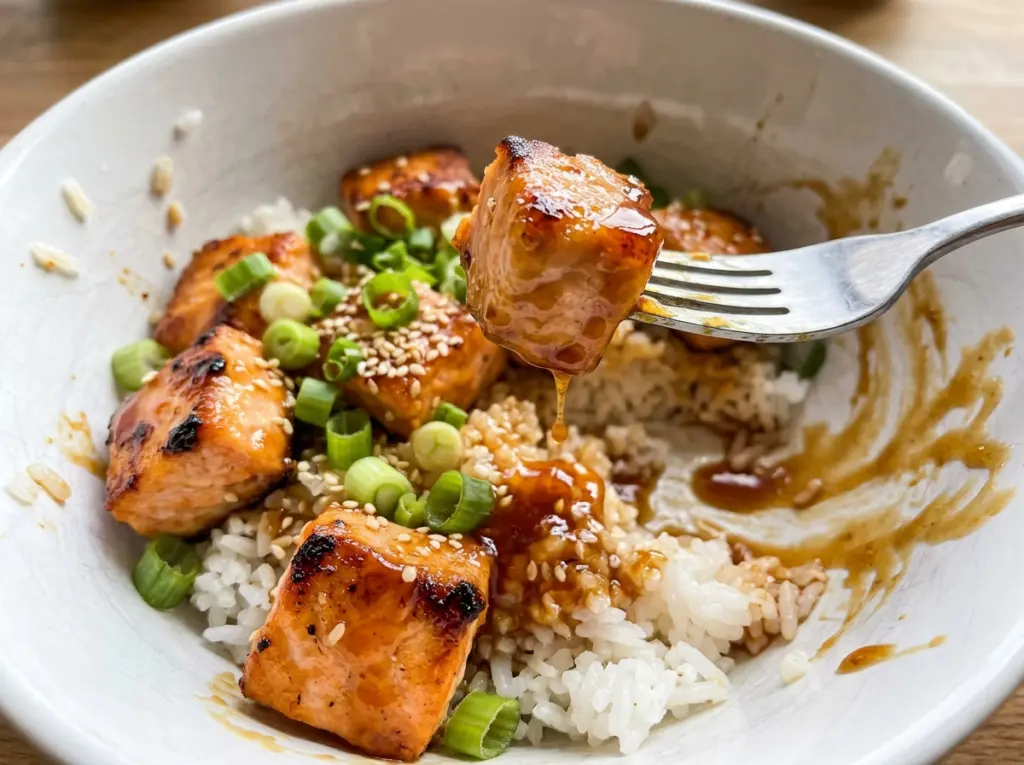
When the salmon hits the hot skillet, listen for a steady sizzle and leave the pieces alone long enough to form a crust. That’s the difference between browned cubes and salmon that steams in its own moisture. For this Crispy Honey Ginger Salmon Bowl, I coat the salmon lightly with cornstarch and cook it in two batches, then spoon a quick, glossy ginger glaze over the top.
The bowl works because the hot, sweet-savory salmon meets cool cucumber and carrots over fluffy rice. I rinse the rice first, then let it rest covered after cooking; that gives the grains time to settle before I fluff them. The glaze goes into the same skillet after the salmon is cooked, where it bubbles gently instead of scorching over high heat. Each bowl gets a little of everything, with green onions and sesame seeds to finish.
Kitchen Note
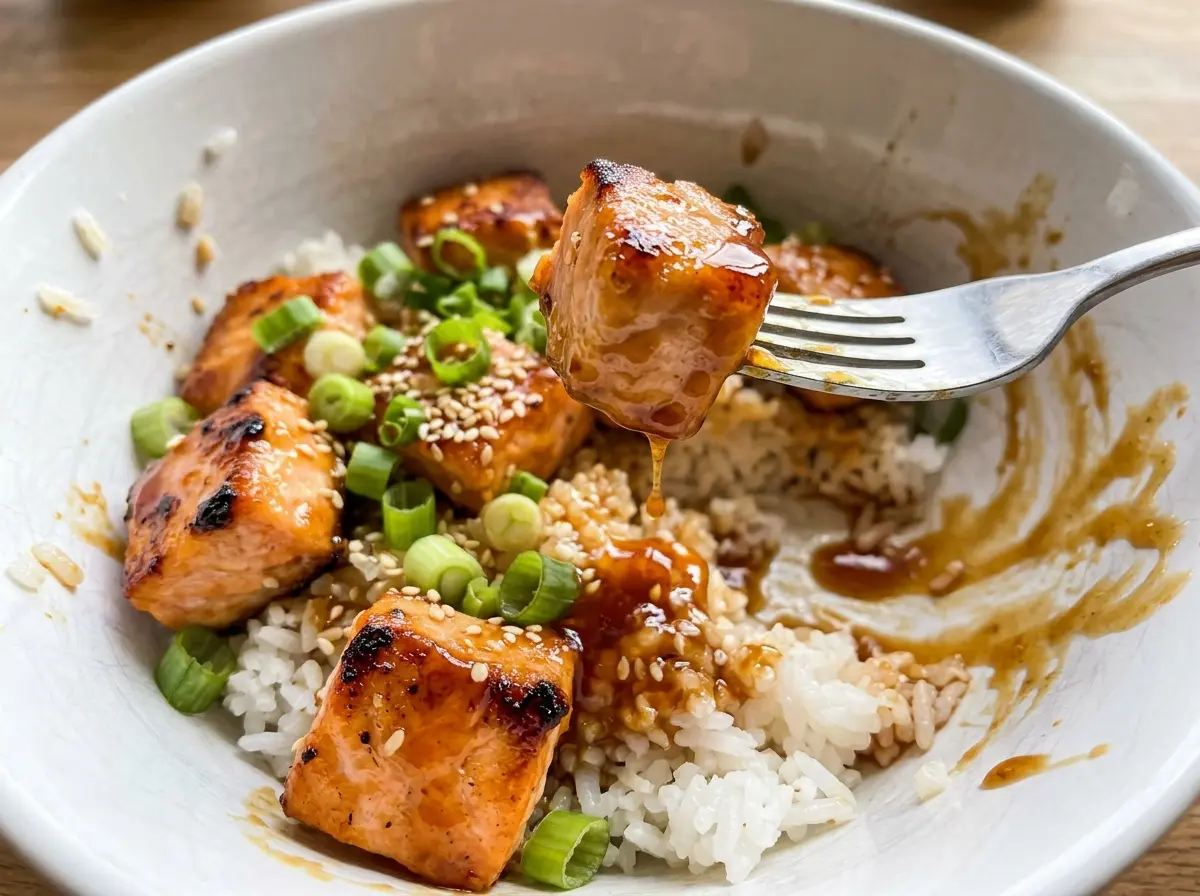
Give the first side time to brown before turning the salmon. If you move the cubes too soon, the coating can stick to the skillet instead of staying on the fish.
Save this Crispy Honey Ginger Salmon Bowl for a night when you want browned salmon, a quick ginger glaze, and crisp vegetables over rice.
Why the Honey Glaze Goes In After the Salmon
Honey gives the glaze its sweetness and helps it cling to the salmon, but it needs gentler heat than the fish does. The salmon browns over medium-high heat; honey exposed to that same heat for too long can darken and turn bitter before the fish is ready. Cooking the glaze after the salmon comes out lets me lower the skillet heat first.
The glaze only needs a short turn in the pan. As it bubbles gently, it thickens slightly and picks up the flavor left behind from searing the fish. Keep it moving with a whisk, and take the pan off the heat once it has thickened enough to spoon over the salmon. It should coat the cubes, not cook down into a sticky candy-like layer.
What Gives This Bowl Its Crisp, Bright Contrast

- Long-grain white rice — Its separate, fluffy grains make a good base for the glaze without turning the bowl heavy. Rinsing away excess surface starch helps; ordinary long-grain white rice works well here, so there’s no need to seek out a specialty variety.
- Skinless salmon — Skinless pieces are easy to cut into even cubes and coat on all sides. Choose salmon that looks moist and fresh, and keep the pieces close to the same size so they cook at a similar pace.
- Cornstarch — This creates the thin coating that browns around the salmon. Flour won’t produce quite the same light, crisp shell, so I stick with cornstarch for this method.
- Honey and soy sauce — Honey gives the glaze body and sweetness, while soy sauce brings a savory, salty base. For a gluten-free bowl, use certified gluten-free tamari in place of the soy sauce; it keeps the glaze savory, with a slightly different depth.
- Fresh ginger and garlic — Finely grating the ginger helps it disperse through the glaze instead of leaving large fibrous pieces. Fresh garlic also gives the short-cooked glaze a clean, aromatic flavor.
- Toasted sesame oil — Its nutty aroma is more pronounced than that of neutral oil, so it belongs in the glaze rather than in the skillet for searing. Use a fresh bottle if yours has been sitting open for a long time.
- Cucumber, carrots, green onions, and sesame seeds — Cucumber and carrots bring a cool crunch that balances the warm rice and glazed salmon. Pre-shredded carrots are convenient; thin cucumber slices and freshly sliced green onions give the bowl a fresher texture.
How to Cook the Rice, Sear the Salmon, and Finish the Glaze
Rinse the rice and let it steam undisturbed
Rinse the rice in a fine-mesh sieve under cool running water until the water runs mostly clear, then drain it well. Combine it with the water in a 2-quart saucepan and bring it to a boil over high heat. Cover the pan, turn the heat to low, and simmer for 15–18 minutes, until the water is absorbed. Take it off the heat and leave it covered for 10 minutes before fluffing with a fork.
Coat the salmon in a thin layer
Pat the salmon dry, then cut it into 1-inch cubes if it isn’t already cut. Toss the cubes with the cornstarch, kosher salt, and black pepper until each piece has an even coating. A thin, dry-looking layer is what you want; clumps of starch won’t brown as evenly in the skillet.
Sear in two batches for browned sides
Heat a 12-inch skillet over medium-high heat and add 1 tablespoon of the neutral oil. Cook half the salmon in a single layer for 2–3 minutes on the first side, then turn and cook for 2–4 minutes more, rotating as needed so several sides become crisp and browned. Check the thickest piece with an instant-read thermometer; it should reach 145°F. Transfer that batch to a plate, then repeat with the remaining oil and salmon.
Whisk the glaze in the warm skillet
Reduce the skillet heat to medium-low before adding the honey, soy sauce, rice vinegar, grated ginger, minced garlic, and toasted sesame oil. Whisk and stir for 1–2 minutes, until the glaze bubbles gently and looks slightly thickened. If it starts bubbling hard, lower the heat; a gentle simmer is all it needs. Spoon the glaze over the salmon rather than returning the fish to the hot skillet.
Build the bowls while the rice is warm
Divide the rice, cucumber, and carrots among four bowls. Add the salmon on top, then spoon over the glaze so it reaches the fish rather than soaking the vegetables. Finish each bowl with green onions and sesame seeds.
Two Smart Swaps for This Honey Ginger Salmon Bowl
Make the glaze gluten-free with tamari
Replace the soy sauce with certified gluten-free tamari. The glaze will still be savory and cling to the salmon, though tamari can taste a little richer than standard soy sauce.
Use maple syrup instead of honey
Maple syrup can replace the honey in the glaze for a more woodsy sweetness. The finished glaze will be a little less thick and will taste less floral, but it still pairs well with the ginger and soy sauce.
Storage and Reheating
- Refrigerator: Store the salmon, rice, and vegetables separately in airtight containers for 3–4 days. The cucumber may soften if it sits against warm rice or glazed salmon.
- Freezer: Freeze the cooked salmon and rice separately in airtight containers for up to 2 months for best quality. Cucumber and carrots are better fresh and don’t freeze well.
- Reheating: Warm the rice and salmon separately until steaming hot; a small splash of water helps loosen the rice. Don’t microwave the cucumber with the hot components if you want to keep its crunch.
Questions That Come Up While Making This Salmon Bowl
Crispy Honey Ginger Salmon Bowl
Ingredients
Equipment
Method
- Rinse the rice in a fine-mesh sieve under cool running water until the water runs mostly clear, then drain well.
- Combine the rice and water in a 2-quart saucepan and bring to a boil over high heat.
- Cover, reduce the heat to low, and simmer for 15-18 minutes, until the water is absorbed.
- Remove the pan from the heat and let the rice stand, covered, for 10 minutes.
- Fluff the rice with a fork.
- Pat the salmon dry, then toss it in a bowl with the cornstarch, salt, and pepper until evenly coated.
- Heat a 12-inch skillet over medium-high heat and add 1 tablespoon oil.
- Cook half the salmon in a single layer for 2-3 minutes on the first side.
- Turn and cook 2-4 minutes more, rotating as needed, until crisp and browned on several sides and the thickest piece reaches 145°F.
- Transfer the salmon to a plate, then repeat with the remaining oil and salmon.
- Reduce the skillet heat to medium-low and whisk in the honey, soy sauce, rice vinegar, ginger, garlic, and sesame oil.
- Cook for 1-2 minutes, stirring, until the glaze is bubbling gently and slightly thickened.
- Divide the rice, cucumber, and carrots among four bowls.
- Top with the salmon and spoon the glaze over the salmon.
- Finish with the green onions and sesame seeds.