
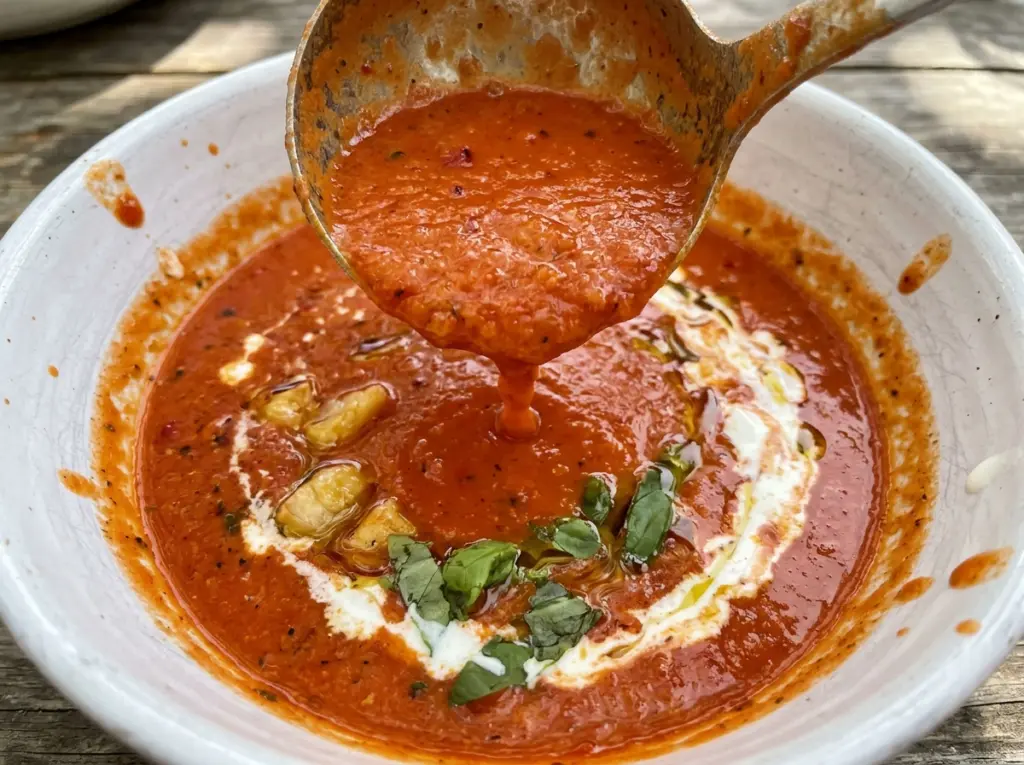
When ripe tomatoes come out of the oven with browned edges, the whole kitchen smells sweeter and deeper than it did when they went in. I use that roast to build this creamy roasted tomato soup with garlic and basil, so the finished bowl tastes like tomatoes first, not just broth and cream.
The tomatoes and onion roast together while a whole head of garlic softens in its own foil packet. After everything goes into the pot, the roasted garlic squeezes out easily and blends right into the soup. A quick simmer brings the vegetables and broth together; cream and fresh basil go in at the end, leaving the soup smooth, rich, and fragrant. It makes six generous servings, with enough body to feel comforting without hiding the roasted tomato flavor.
Kitchen Note
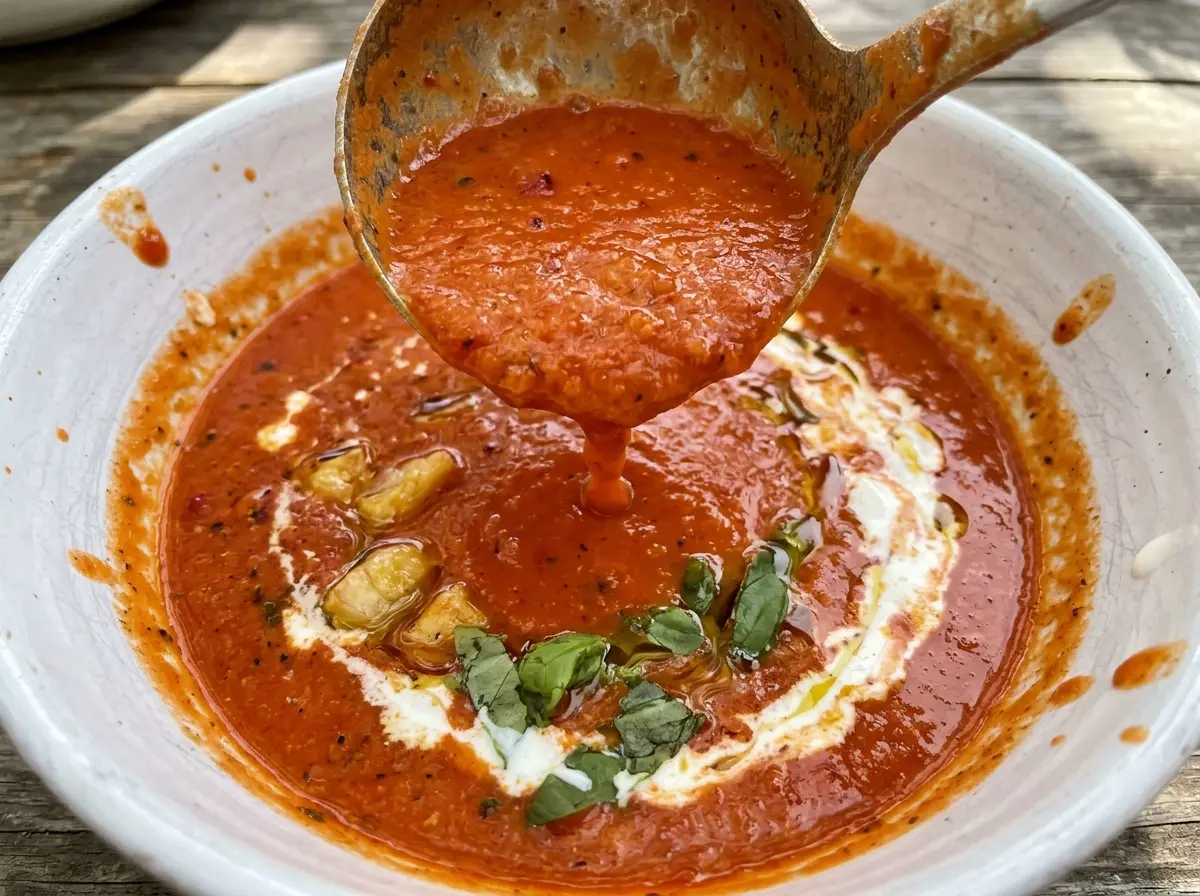
The garlic is ready when the cloves are soft enough to squeeze from their skins without a fight. Unwrap it carefully, since the packet and cloves will be hot, and press the garlic straight into the pot.
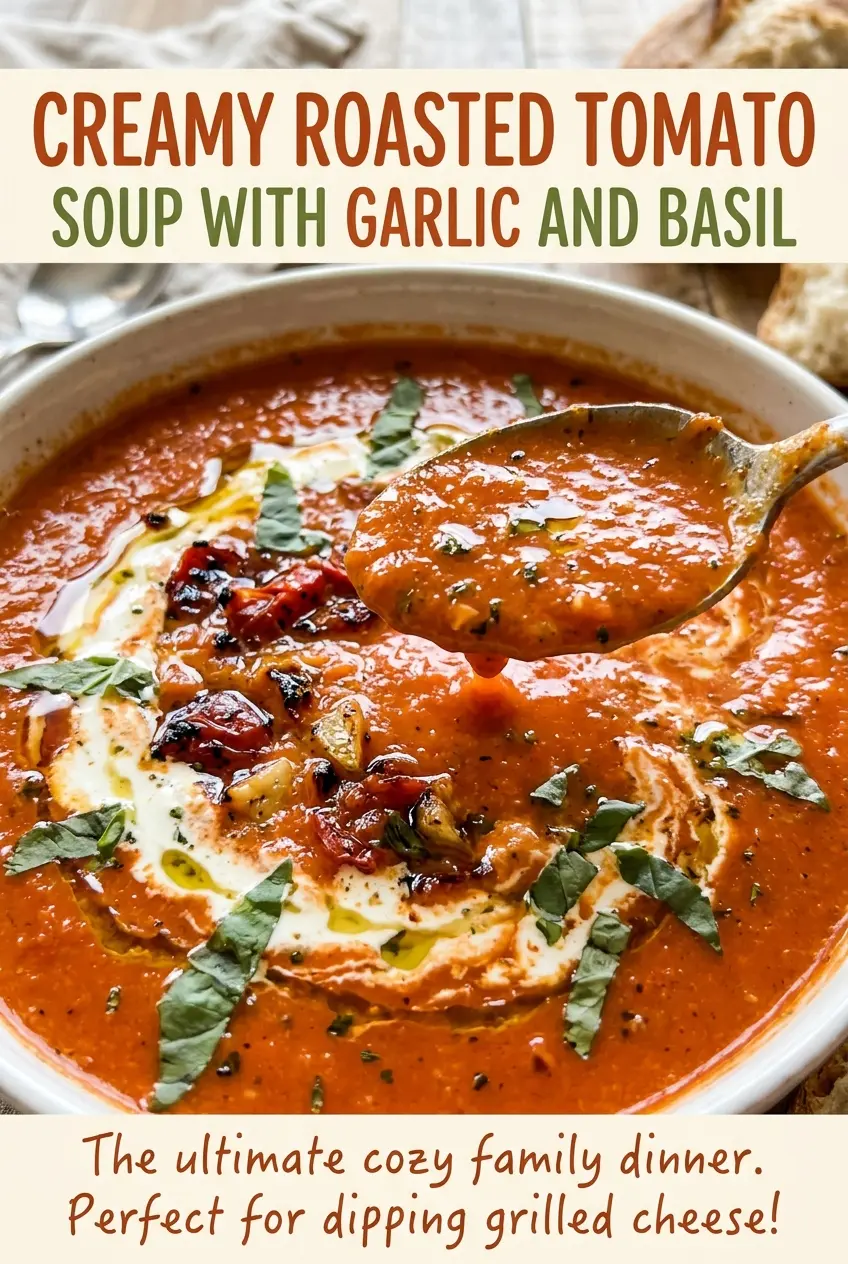
Save this creamy roasted tomato soup with garlic and basil for a cozy bowl built on browned, oven-roasted tomatoes.
Roasting the Tomatoes Is What Keeps This Soup From Tasting Thin
Tomatoes release plenty of liquid as they cook, and a soup made by simmering them straight in broth can taste watery even after blending. Roasting changes the balance: moisture escapes from the cut surfaces, while the edges brown and the tomato flavor becomes more concentrated. The onion softens alongside them, picking up some of that roasted flavor without needing a separate pan.
Use a rimmed baking sheet so the juices stay contained, and don’t discard those juices when you transfer the vegetables. They carry concentrated tomato flavor into the pot. Browning at the edges is the cue to look for, not a dark, dried-out tomato; the centers should be soft, and the onion should be tender. The tomatoes don’t need to be perfectly uniform in size, but very different sizes may soften at slightly different rates, so judge the whole tray by those visual cues. Once blended with broth, the roasted vegetables make a fuller base before the cream ever goes in.
Why Ripe Tomatoes and Fresh Basil Matter More Than Fancy Broth
- Ripe tomatoes — They bring the sweetness and acidity that define the soup, and roasting gives their flavor room to deepen. Choose tomatoes that yield slightly when pressed and smell like tomatoes; firm, pale ones won’t give the same result. Halving them exposes the cut sides to the heat.
- Yellow onion — Onion wedges roast into a soft, savory base and blend into the tomatoes rather than leaving a sharp raw-onion bite. Keep the pieces in wedges so they can roast alongside the tomato halves without disappearing too quickly.
- Whole garlic — Roasting a whole head mellows the cloves and makes them soft enough to squeeze into the pot. The cut top exposes the cloves to the olive oil and heat; fresh, firm garlic is the best choice here.
- Low-sodium vegetable broth — It loosens the roasted vegetables into a soup while keeping the tomatoes and garlic in front. Low-sodium broth gives you more control over the final seasoning, and a basic store-brand broth works well.
- Heavy cream — Cream gives the blended soup its round, velvety finish. Since it is stirred in only after blending, it softens the tomato’s acidity without taking over the roasted flavor.
- Fresh basil — Chopped fresh leaves bring a bright, green note that dried basil won’t quite reproduce at the finish. Pick leaves that look perky rather than bruised, and chop them shortly before stirring them in.
From Roasted Tray to Smooth, Creamy Soup
Set Up the Tomatoes and Garlic
Heat the oven to 425°F and set out an 18×13-inch rimmed baking sheet. Arrange the halved tomatoes and onion wedges on the sheet, then drizzle them with olive oil and season with kosher salt and black pepper. Put the garlic cut side up on a piece of foil, drizzle it with the remaining olive oil, and wrap it securely. Set the packet on the baking sheet beside the vegetables.
Roast Until the Edges Brown
Roast the tray for 35 to 45 minutes. Look for soft tomatoes with browned edges, tender onion, and garlic that has softened inside the foil. If the vegetables still look firm and pale, they need more time; don’t pull them just because the timer reaches the first mark. Keep the juices on the pan, since they belong in the soup.
Simmer the Roasted Vegetables in Broth
Transfer the tomatoes, onion, and all the pan juices to a 5-quart pot. Unwrap the garlic, squeeze the cloves into the pot, and add the vegetable broth. Bring everything to a simmer over medium heat, then simmer for 10 minutes so the roasted vegetables and broth come together. Keep it at a simmer rather than a hard boil.
Blend, Then Finish Gently
Blend the soup with an immersion blender until smooth, moving the blender through the pot so you don’t leave chunks at the bottom. Stir in the heavy cream and chopped basil after blending. Heat gently for 2 to 3 minutes without letting the soup boil; boiling at this point can make the cream lose its smooth texture. The basil should stay green and fragrant, not cook down into the soup.
Three Smart Ways to Adapt the Tomato, Cream, or Basil
Make It Dairy-Free with Coconut Milk
Replace the heavy cream with the same amount of unsweetened full-fat coconut milk and stir it in after blending. It keeps the soup creamy, though the coconut adds a gentle flavor of its own and makes the finish less traditionally rich.
Use Half-and-Half for a Lighter Finish
Use the same amount of half-and-half in place of heavy cream. The soup will still feel creamy, but it won’t have quite the same plush body. Keep the gentle finishing heat so the dairy stays smooth.
Go Cream-Free for a More Tomato-Forward Bowl
Leave out the heavy cream for a dairy-free version without a replacement ingredient. The blended soup will be lighter and sharper, with the roasted tomatoes and garlic taking center stage.
Storage and Reheating
- Refrigerator: Cool promptly, transfer to an airtight container, and refrigerate within 2 hours. It keeps for 3 to 4 days; the soup may thicken as it chills.
- Freezer: Freeze in airtight containers for up to 2 to 3 months. Cream-based soup can separate slightly after thawing, but stirring as it warms brings it back together.
- Reheating: Warm it slowly on the stovetop over low to medium-low heat, stirring often. Don’t let it boil, which can make the cream separate.
The Questions That Come Up When Roasting Tomatoes for Soup
Creamy Roasted Tomato Soup with Garlic and Basil
Ingredients
Equipment
Method
- Preheat the oven to 425°F and set out an 18x13-inch rimmed baking sheet.
- Arrange the tomatoes and onion on the baking sheet, drizzle with 2 tablespoons olive oil, and season with the salt and pepper.
- Set the garlic cut side up on a piece of foil, drizzle with 1 teaspoon olive oil, and wrap it in the foil.
- Place the wrapped garlic on the baking sheet.
- Roast for 35 to 45 minutes, until the tomatoes are soft with browned edges, the onion is tender, and the garlic is soft.
- Transfer the tomatoes, onion, and pan juices to a 5-quart pot.
- Unwrap the garlic and squeeze the cloves into the pot.
- Add the broth and bring to a simmer over medium heat; simmer for 10 minutes.
- Blend the soup with an immersion blender until smooth.
- Stir in the heavy cream and basil.
- Heat gently for 2 to 3 minutes without boiling.