
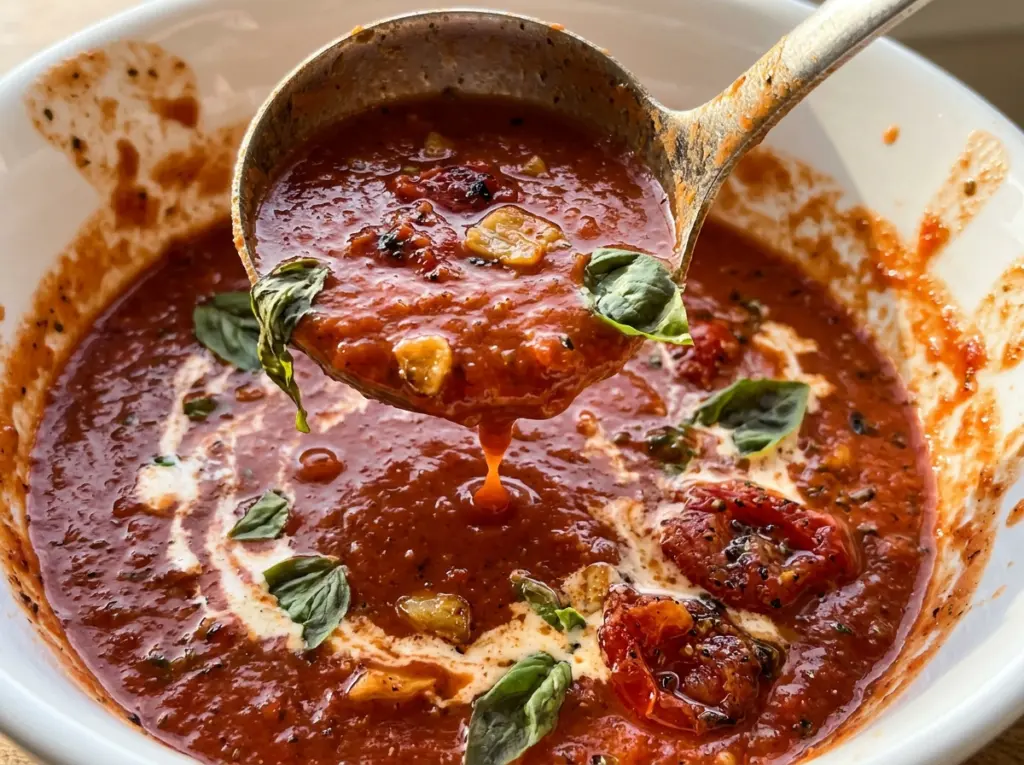
The tomatoes start to slump on the baking sheet, and then their edges turn dark and a little sticky. That’s when this soup gets its deep, roasted flavor; pale, barely softened tomatoes won’t give you the same result. I roast the onion and garlic right alongside them, so the whole base is ready to slide into the pot at once.
Creamy Roasted Tomato Basil Soup gets its richness from heavy cream, but the flavor doesn’t rely on cream alone. Tomato paste gives the broth a fuller tomato backbone, while fresh basil brings a bright note that keeps each spoonful from tasting heavy. Once blended, the soup is smooth, savory, and still unmistakably tomato-forward, with those browned pan juices folded in.
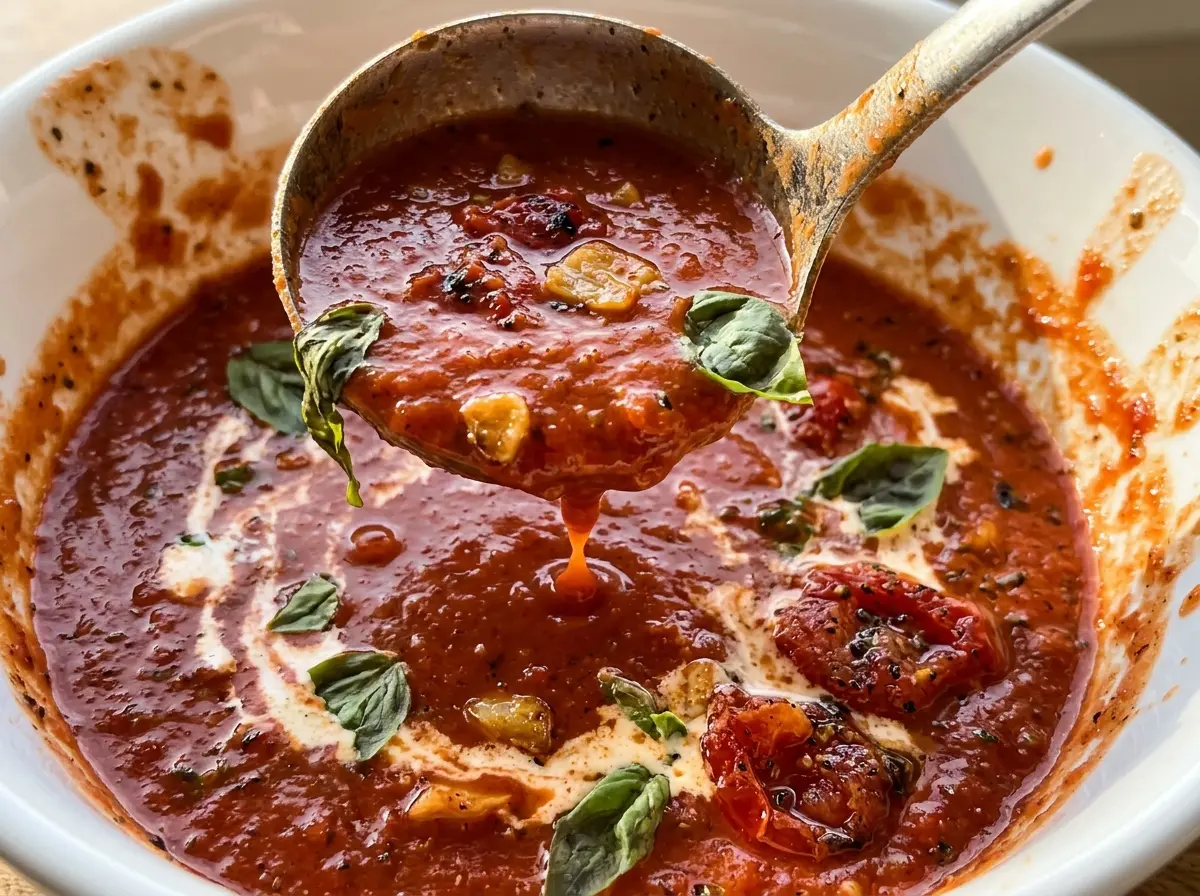
Kitchen Note
Keep the immersion blender head below the soup’s surface as you blend. It helps prevent splashes, and moving the blender steadily through the pot makes it easier to catch the tomato pieces around the edges.
Save this creamy roasted tomato basil soup for a night when you want a smooth, deeply tomato-forward bowl with fresh basil and cream.
Why Roma Tomatoes Need Brown Edges Before They Become Soup
Roasting does more here than soften the tomatoes. As their cut surfaces sit in the oven, moisture cooks off and the edges brown, concentrating the tomato flavor before anything goes into the pot. The onion softens alongside them, and the garlic loses its raw bite. Those changes give the soup depth without a long stovetop simmer.
That browning depends on giving the vegetables room. Spread the tomatoes, onion, and garlic in a single layer on a large rimmed baking sheet rather than piling them together. Crowded vegetables release moisture into the pan and tend to soften before their edges can brown. When the tomatoes have collapsed and their edges are browned, tip everything into the pot with the juices left on the sheet. Those juices carry plenty of the roasted flavor, so don’t leave them behind.
Tomato paste builds on that roasted base. A brief cook in the pot deepens its flavor before the vegetable broth goes in, and the fresh basil joins only after the roasted vegetables are added. The result has a round, concentrated tomato taste with a fresher finish than roasted tomatoes alone.
What Roma Tomatoes, Tomato Paste, and Basil Each Bring to the Pot

- Ripe Roma tomatoes — Their firm, meaty flesh holds up well on the baking sheet, then breaks down into a substantial soup when blended. Choose tomatoes that are ripe and fragrant rather than hard or pale; their flavor is the center of the bowl.
- Tomato paste — A quick cook in the pot gives the soup a concentrated tomato note that supports the roasted vegetables. Either canned or tube tomato paste works; use what’s fresh and convenient, and stir it so it doesn’t sit in one spot.
- Fresh basil — Packed fresh leaves bring a bright, herbal flavor that dried basil can’t quite reproduce here. Pick leaves that look green and lively; limp or darkened leaves won’t give the same clean finish.
- Heavy cream — Cream softens the tomato’s sharper edges and gives the blended soup its silky feel. Keep it cold until you’re ready to stir it in, and use heavy cream rather than a thinner dairy option for the richness this soup is built around.
- Yellow onion and garlic — Both roast with the tomatoes and become part of the blended base. Peeled garlic cloves go onto the pan whole, so there’s no need to mince them before roasting.
- Olive oil and vegetable broth — Oil helps coat the vegetables as they roast, while the broth loosens the tomato paste and brings the soup together. A broth you enjoy sipping is a good choice because it becomes part of the finished flavor.
From a Hot Sheet Pan to a Silky Pot of Soup
Roast the tomatoes, onion, and garlic
Heat the oven to 425°F. Arrange the halved Roma tomatoes, onion wedges, and peeled garlic cloves in a single layer on a large rimmed baking sheet, then drizzle with olive oil and sprinkle with kosher salt and black pepper. Roast for 35 to 45 minutes, until the tomatoes have collapsed and their edges are browned. If the tomatoes still look firm and pale, give them more time in the oven rather than relying on the pot to create that roasted flavor.
Cook the tomato paste in the pot
Set a 5-quart pot over medium heat and stir the tomato paste as it cooks for 1 minute. Keep it moving so it warms evenly instead of sticking in a thick patch on the bottom. Pour in the vegetable broth and bring it to a simmer. The paste should disperse into the broth as you stir.
Simmer with the basil
Add the roasted vegetables and any pan juices to the pot, then add the packed fresh basil leaves. Let everything simmer for 10 minutes so the roasted vegetables soften further and the basil’s flavor works through the broth. Keep the pot at a gentle simmer rather than a hard boil. You want the ingredients to meld, not splash up the sides.
Blend smooth, then finish with cream
Blend the soup with an immersion blender until smooth, sweeping through the pot so no large pieces remain. Stir in the heavy cream after blending. Warm the soup over low heat without letting it boil; a steady, gentle warming keeps the finished texture smooth. Take the pot off the heat once it’s warmed through.
Two Simple Ways to Change the Finish
Leave out the cream for a dairy-free bowl
Skip the heavy cream and serve the soup after blending. It will be less rich and a little sharper, with the roasted tomato and basil taking the lead. The texture will also be less creamy than the finished version.
Make the soup without basil
Leave out the fresh basil if you want a more straightforward roasted tomato soup. The bowl will lose the herbal lift that balances the cream, but the roasted tomatoes, onion, garlic, and tomato paste still make a full-flavored base.
Storage and Reheating
- Refrigerator: Store the soup in an airtight container for 3 to 4 days. The texture may thicken as it chills.
- Freezer: For the best texture, freeze the blended soup before adding the cream. Cool it, pack it in airtight freezer-safe containers, and freeze for up to 3 months; thaw in the refrigerator and stir in the cream as you warm it.
- Reheating: Warm leftovers gently in a pot over low heat, stirring as they heat. Avoid bringing the soup to a boil, which can make the creamy texture less smooth.
Questions That Come Up While Making This Tomato Basil Soup
Creamy Roasted Tomato Basil Soup
Ingredients
Equipment
Method
- Heat the oven to 425°F.
- Arrange the tomatoes, onion, and garlic in a single layer on a large rimmed baking sheet.
- Drizzle the vegetables with the olive oil.
- Sprinkle with the salt and pepper.
- Roast for 35 to 45 minutes, until the tomatoes have collapsed and their edges are browned.
- Cook the tomato paste in a 5-quart pot over medium heat for 1 minute, stirring.
- Pour in the vegetable broth and bring it to a simmer.
- Add the roasted vegetables and any pan juices to the pot along with the basil.
- Simmer for 10 minutes.
- Blend the soup until smooth with an immersion blender.
- Stir in the heavy cream.
- Warm over low heat without letting it boil.