

Thick, velvety, and packed with tender chicken, nutty wild rice, and vegetables that melt into the broth, this creamy chicken and wild rice soup earns its spot in the regular dinner rotation fast. It eats like a full meal, with enough body to feel substantial and enough balance to keep every spoonful from getting heavy.
What makes this version work is the order. The vegetables soften first, the mushrooms cook until they give up their liquid, and the flour gets a minute or two to lose its raw edge before the broth goes in. That keeps the soup smooth instead of chalky. The wild rice blend simmers until some grains split open, which is what gives the broth that hearty, almost rustic texture without needing extra thickeners.
Below, I’ve laid out the part that matters most when you make this at home: how to keep the dairy from curdling, how to know when the rice is actually done, and what to change if you want to use what you already have in the kitchen.
The broth turned out silky and the wild rice stayed tender without getting mushy. I was worried about the cream breaking, but following the low simmer at the end kept it perfectly smooth.
Save this creamy chicken and wild rice soup for a hearty one-pot dinner with tender chicken, split wild rice, and a silky broth.

The Step That Keeps the Soup Creamy Instead of Grainy
The biggest mistake with a soup like this is rushing the base. If the flour doesn’t cook for at least a minute or two before the broth goes in, the soup can taste dusty. If the broth goes in too fast, the flour clumps and you spend the next ten minutes chasing lumps around the pot.
The other place people run into trouble is the finish. Heavy cream and milk don’t like a hard boil. Once they’re in, the heat should stay low enough that the surface barely trembles. That’s how you keep the soup smooth and prevent the dairy from separating after all that work.
- Mushrooms — They add a deep, savory base that the broth alone can’t give you. Let them cook until their liquid evaporates and the edges start to brown; that’s where the flavor comes from.
- Wild rice blend — A blend cooks more evenly than 100% wild rice and still gives you that nutty chew. If you use straight wild rice, expect a longer simmer and a firmer result.
- Heavy cream — This is what gives the soup its body at the end. Lower-fat dairy can work in a pinch, but it won’t give you the same velvety finish and it’s more likely to separate.
- Chicken breasts — They shred cleanly and stay mild, which lets the wild rice and mushrooms stand out. Thighs work too, and they’ll give you a richer, slightly more savory soup.
Building the Broth in Layers, Not All at Once
Softening the vegetables first
Start with the onion, carrots, and celery in the butter and olive oil and cook them until they’ve lost their raw edge and the onion looks translucent. This is not the moment to brown them hard. You want them softened so they melt into the soup instead of staying chunky and sharp-tasting.
Cooking the mushrooms until they collapse
Add the mushrooms after the base vegetables have started to soften. They’ll release a lot of liquid at first, and that’s normal. Keep cooking until that liquid cooks off and the mushrooms start to turn lightly golden, because that’s when they stop tasting watery and start adding real depth.
Thickening the broth without lumps
When the flour goes in, stir constantly and let it cook briefly before pouring in the broth. Add the broth slowly while whisking so the flour disperses into the pot instead of forming paste pockets. If you dump it all in at once, the outside of the flour hydrates faster than the center and you end up with stubborn lumps.
Simmering the rice and chicken together
Nestle the chicken into the pot and keep the heat at a gentle boil before dropping it to low. The rice needs that steady simmer to soften and split open, and the chicken needs enough heat to cook through without drying out. Pull the chicken once it reaches 165°F, then let the rice keep going until it’s tender and the broth has taken on more body.
Finishing with dairy
Shred the chicken and return it to the pot only after the rice is done. Stir in the cream and milk at the end and keep the soup just below a boil. If the soup starts bubbling hard after the dairy goes in, turn the heat down immediately; that’s the point where the texture can turn from silky to broken.
What to Change When You’re Missing an Ingredient
Dairy-free version
Use full-fat coconut milk or an unsweetened dairy-free cooking cream in place of the heavy cream and milk. The soup will still be rich, but the flavor shifts slightly sweeter and less neutral, so keep the thyme, pepper, and salt on the bolder side.
Using rotisserie chicken instead of raw chicken breasts
Shred cooked chicken and stir it in during the last 10 minutes, after the rice is tender. This saves time and keeps the chicken from overcooking, but the broth will be a little less deeply flavored than if the chicken simmers in the pot from the start.
Gluten-free version
Swap the all-purpose flour for a gluten-free 1:1 blend or thicken the broth with a cornstarch slurry at the end. A gluten-free flour blend gives the closest texture, while cornstarch makes the soup glossy but slightly less creamy-looking.
Using plain wild rice instead of a blend
You can use straight wild rice, but it needs a longer simmer and more liquid. Expect a firmer bite and a darker, more pronounced nutty flavor. Check the pot often so the broth doesn’t reduce too far before the rice softens.
Storage and Reheating
- Refrigerator: 3 to 4 days. The rice keeps absorbing liquid, so the soup gets thicker as it sits.
- Freezer: It freezes, but the dairy can separate a little when thawed. For the best result, freeze before adding the cream and milk, then stir them in after reheating.
- Reheating: Warm gently on the stove over low heat, adding a splash of broth or milk to loosen it. Don’t boil it hard, or the cream can split and the rice can turn gummy.
Questions I Get Asked About This Recipe
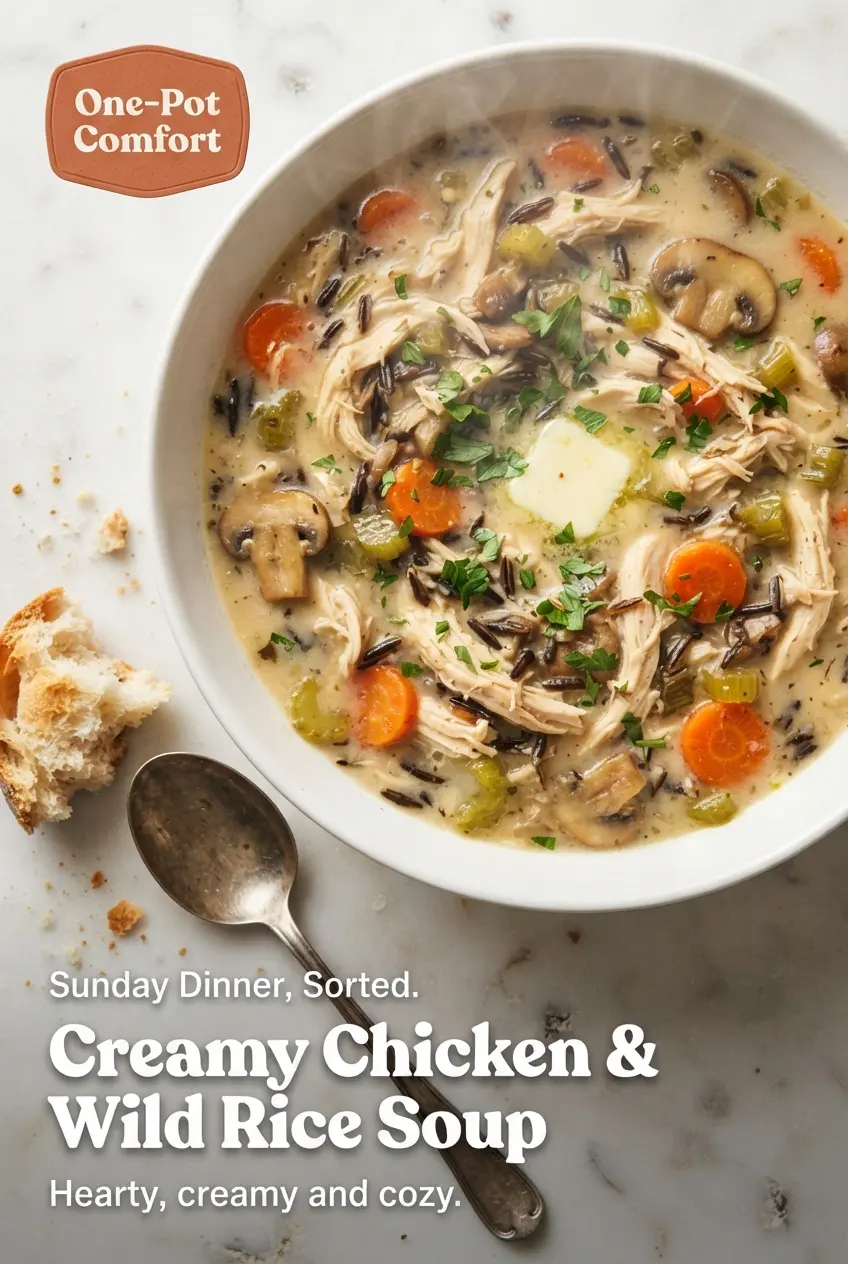
Creamy Chicken and Wild Rice Soup
Ingredients
Equipment
Method
- Melt the butter with the olive oil in a large Dutch oven over medium heat, swirling until fully combined and glossy.
- Add the onion, carrots, and celery and cook for 6–8 minutes, stirring often, until softened and beginning to smell sweet.
- Add the mushrooms and cook for 5 minutes, stirring occasionally, until they release their juices and turn lightly golden.
- Stir in the garlic and dried thyme and cook for 1 minute until fragrant, scraping the bottom so nothing sticks.
- Sprinkle the all-purpose flour over the vegetables and stir constantly for 1–2 minutes to cook out the raw flour taste until the mixture looks smooth and slightly thick.
- Slowly pour in the low-sodium chicken broth while whisking until smooth with no lumps.
- Stir in the wild rice blend, bay leaf, kosher salt, and ground black pepper, making sure the rice is evenly distributed.
- Nestle the boneless skinless chicken breasts into the pot, submerging them so they cook evenly.
- Bring to a boil, then reduce the heat to low, cover, and simmer for 25 minutes until the chicken reaches 165°F (74°C).
- Transfer the chicken to a cutting board and shred it with two forks while it’s warm.
- Cover the pot again and keep simmering on low for 20–25 minutes, stirring occasionally, until the wild rice is tender and some grains have split open (visual cue: creamy rice with burst grains).
- Stir in the heavy cream, whole milk, and shredded chicken, then simmer gently for 5 minutes without boiling, until creamy and heated through.
- Remove the bay leaf, taste, adjust the salt and pepper, and stir in the chopped fresh parsley to brighten the flavor.
- Ladle into bowls and serve hot, with a velvety texture clinging to the spoon.