
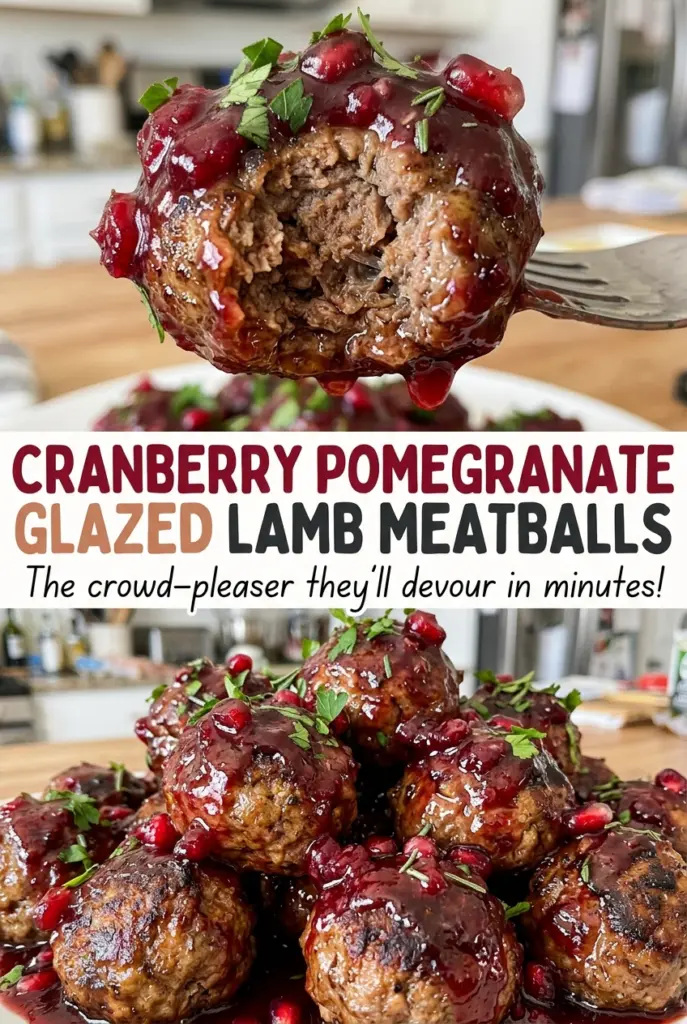
As the cranberries simmer, they soften and pop against the skillet, turning the pomegranate juice into a deep ruby glaze. I cook the lamb meatballs separately, so they get a browned exterior before that tart-sweet finish goes on. The contrast is what makes these cranberry pomegranate glazed lamb meatballs feel special without asking much more of you than two pans and a little timing.
Gently mixing the lamb keeps the meatballs tender, and the glaze gets its body from simmering and mashing the berries rather than from a thickener. I let the meatballs bake while the cranberries cook, then give them just a brief turn in the skillet. Each one comes to the table coated in glossy fruit glaze with a bright pop of pomegranate on top.

Kitchen Note
Mix the lamb only until the breadcrumbs and seasonings are evenly distributed. If you keep working the mixture after it comes together, the meatballs can turn firm instead of tender.
Save these cranberry pomegranate glazed lamb meatballs for a dinner that deserves a glossy, tart-sweet finish and a little crunch on top.
Why These Lamb Meatballs Get Browned Before They Meet the Cranberry Glaze
The glaze and the meatballs need different kinds of cooking. Cranberries need a steady simmer to soften and thicken their liquid, while lamb meatballs benefit from baking on a sheet pan where hot air can brown their outside. Keeping those jobs separate gives you control over both textures: the berries become spoon-coating and the meatballs keep their roasted surface.
If the meatballs simmered in the fruit mixture from the start, they’d spend that whole time cooking in liquid instead of browning, and their juices would mingle with the glaze before it had reached its texture. Baking first also lets you check the lamb’s doneness on its own. Once the glaze is ready, the meatballs need only a short turn in the skillet to pick up a shiny coating. That order is especially helpful with a fruit glaze, which can go from loose to thick as its liquid cooks away.
Why Tart Cranberries Need Both Pomegranate Juice and Brown Sugar
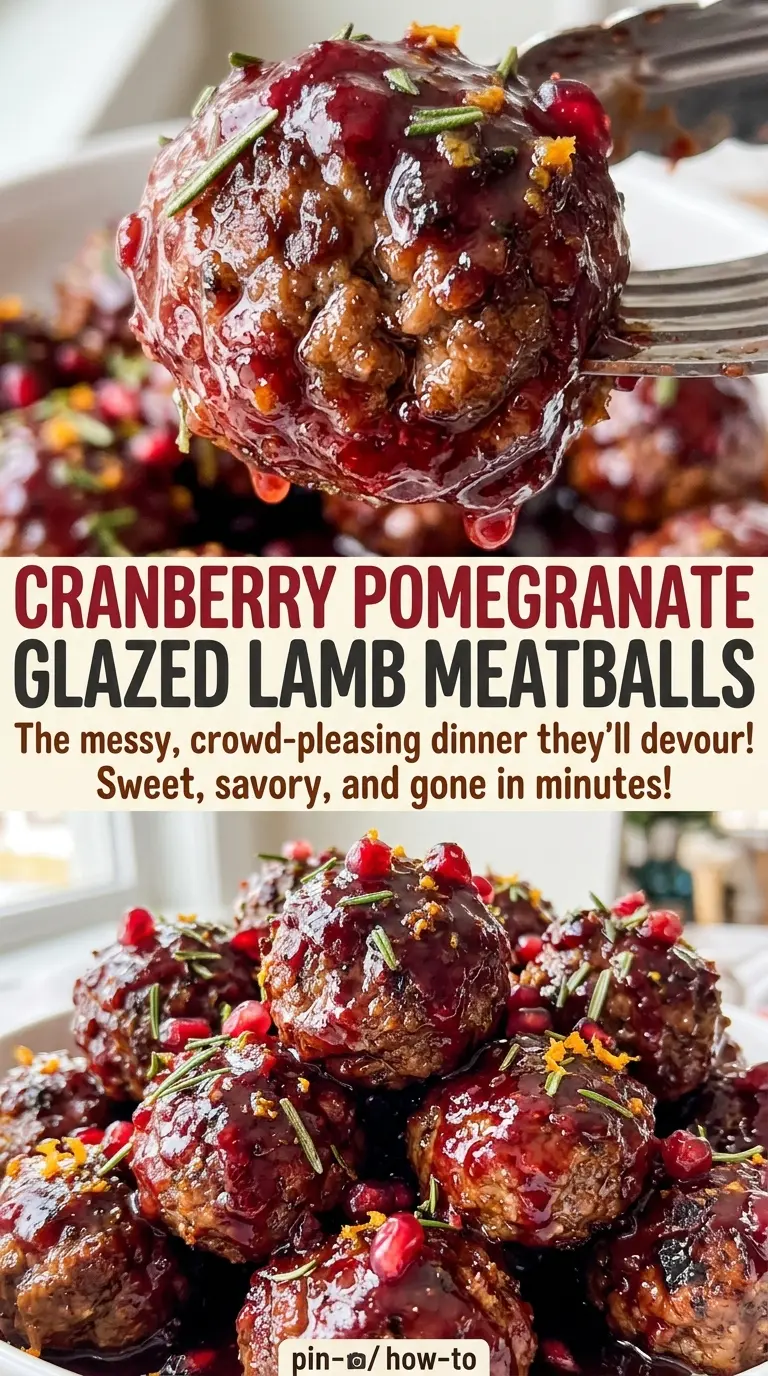
- Ground lamb gives the meatballs their rich, savory base, which stands up to the sharp fruit glaze. Choose fresh ground lamb from a store with good turnover; a ground beef swap works if you want a milder, less earthy result.
- Breadcrumbs and egg help the mixture hold together without making the meatballs dense. Plain breadcrumbs are fine here; for a gluten-free version, replace them with the same amount of plain gluten-free breadcrumbs.
- Finely grated onion, garlic, parsley, and cumin spread seasoning through each bite. Grating the onion finely helps it blend into the lamb rather than leaving large pieces, and fresh parsley gives the mixture a clean herbal note.
- Cranberries and 100% pomegranate juice bring the glaze’s tart fruit flavor and liquid. Fresh or frozen cranberries work; use unsweetened 100% pomegranate juice rather than a juice drink, which can change the glaze’s sweetness.
- Light brown sugar and balsamic vinegar round out the berries’ tartness while keeping the glaze bright. The sugar dissolves as the mixture simmers, and balsamic brings a deeper tang than plain vinegar.
- Pomegranate arils add a fresh, crisp finish against the soft meatballs and thick glaze. Keep them for serving rather than simmering them into the sauce.
How to Time the Oven and Skillet So Both Finish Together
Mix and Shape the Lamb
Heat the oven to 400°F and line a rimmed baking sheet with parchment paper. In a large bowl, gently mix the lamb with the breadcrumbs, egg, grated onion, garlic, parsley, salt, pepper, and cumin. Stop once everything is evenly combined; a few gentle turns are better than pressing the mixture into a paste. Shape about 20 meatballs, each around 1 1/2 inches wide, so they cook at a similar rate.
Bake Until Browned and Cooked Through
Arrange the meatballs on the lined sheet with a little space around each one, then bake for 18–22 minutes. Look for browned surfaces rather than expecting every side to brown evenly on the pan. Check the center of a meatball with an instant-read thermometer; it should read 160°F. If the center hasn’t reached that temperature, keep baking and check again.
Simmer the Cranberry Mixture to a Spoon-Coating Glaze
While the meatballs bake, combine the cranberries, pomegranate juice, brown sugar, and balsamic vinegar in a 12-inch skillet. Bring the mixture to a simmer over medium heat, stirring often as the berries soften. Gently mash the cranberries while they cook so they release into the liquid, but leave some pieces for texture. The glaze is ready when it thickens and coats the back of a spoon.
Coat the Meatballs and Finish with Arils
Add the baked meatballs to the skillet once the glaze has thickened. Gently turn them in the sauce for 1–2 minutes, just until the coating clings to their browned surfaces. Take the skillet off the heat before sprinkling the pomegranate arils over the top. Turning them gently keeps the meatballs intact and the glaze on each one.
Easy Ways to Adapt These Lamb Meatballs
Make Them Gluten-Free
Use plain gluten-free breadcrumbs in place of the regular breadcrumbs, keeping the amount the same. The lamb mixture stays tender and holds together, though the exact crumb texture will depend on the brand you use.
Use Ground Beef Instead
Replace the lamb with the same amount of ground beef and keep the meatball size and remaining ingredients unchanged. The finished meatballs will taste milder and less earthy, while the cumin and tangy cranberry glaze still suit them.
Make the Glaze Smoother
For a more uniform sauce, mash the cranberries more thoroughly as they soften in the skillet. You’ll get fewer whole berry pieces and a smoother coating, with the same tart cranberry flavor.
Storage and Reheating
- Refrigerator: Store cooled meatballs and glaze in an airtight container for 3–4 days. The glaze will thicken as it chills.
- Freezer: Freeze cooled meatballs with the glaze in a freezer-safe container for up to 3 months. Freeze before adding the pomegranate arils so they keep their fresh crunch.
- Reheating: Thaw overnight in the refrigerator, then warm gently in a covered skillet over low heat until the centers reach 165°F. Avoid high heat, which can scorch the sugary glaze before the meatballs are hot.
Questions That Come Up When Making Cranberry Lamb Meatballs
Cranberry Pomegranate Glazed Lamb Meatballs
Ingredients
Equipment
Method
- Heat the oven to 400°F.
- Line a rimmed baking sheet with parchment paper.
- In a large bowl, gently mix the ground lamb, breadcrumbs, egg, onion, garlic, parsley, salt, pepper, and cumin.
- Shape the mixture into about 20 meatballs, each about 1 1/2 inches wide.
- Arrange the meatballs on the baking sheet and bake for 18-22 minutes, until browned and an instant-read thermometer inserted into a meatball reads 160°F.
- While the meatballs bake, combine the cranberries, pomegranate juice, brown sugar, and balsamic vinegar in a 12-inch skillet.
- Bring to a simmer over medium heat and cook for 12-15 minutes, stirring often and gently mashing the berries, until the glaze thickens and coats a spoon.
- Add the baked meatballs to the skillet and gently turn them in the glaze for 1-2 minutes.
- Remove from the heat and sprinkle with the pomegranate arils.