
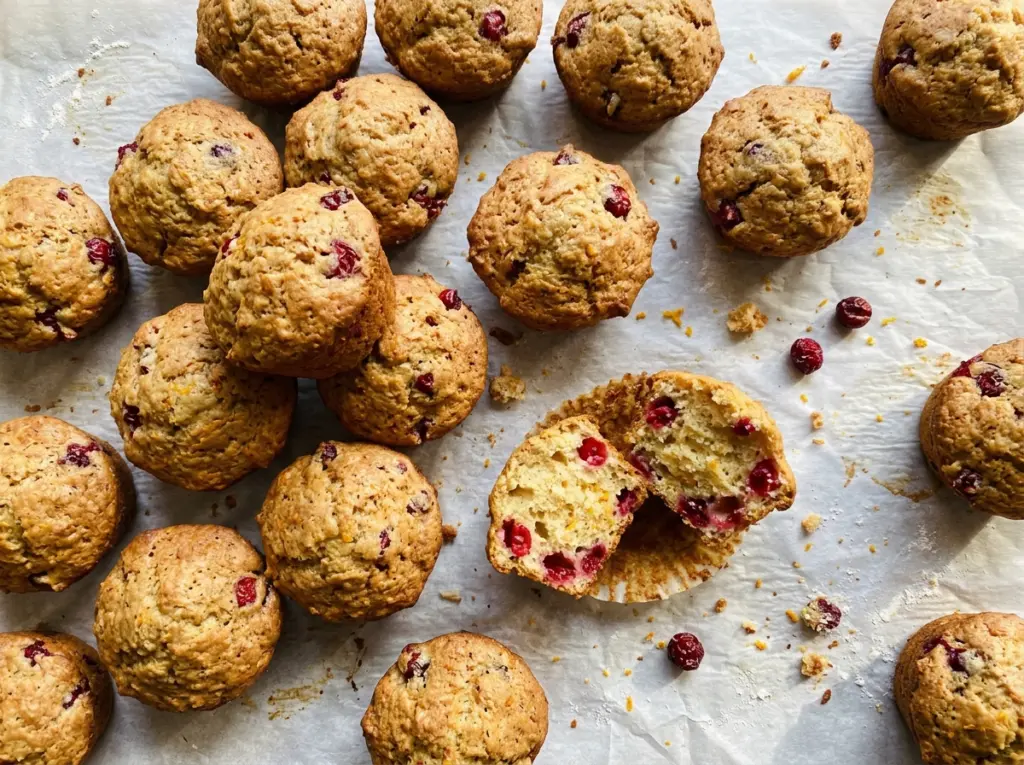
The knife meets the cranberries with a soft crunch, and the orange zest perfumes the bowl before the batter even comes together. These cranberry orange muffins have a tender, lightly sweet crumb that lets the berries stay tart instead of turning the whole muffin sugary. I chop the fruit roughly so some bites get a bright cranberry hit while the orange stays present in the background.
Neutral oil and whole-milk yogurt give the crumb moisture without asking you to cream butter and sugar. Orange juice carries the citrus through the batter, while the finely grated zest adds its fragrant edge. The batter comes together in two bowls, then gets folded only until the flour disappears; that restraint keeps the muffins tender. They bake in a hot oven, so the tops turn golden while the centers stay soft. They’re a good fit for breakfast or an afternoon coffee when you want something bright rather than dessert-sweet.
Kitchen Note
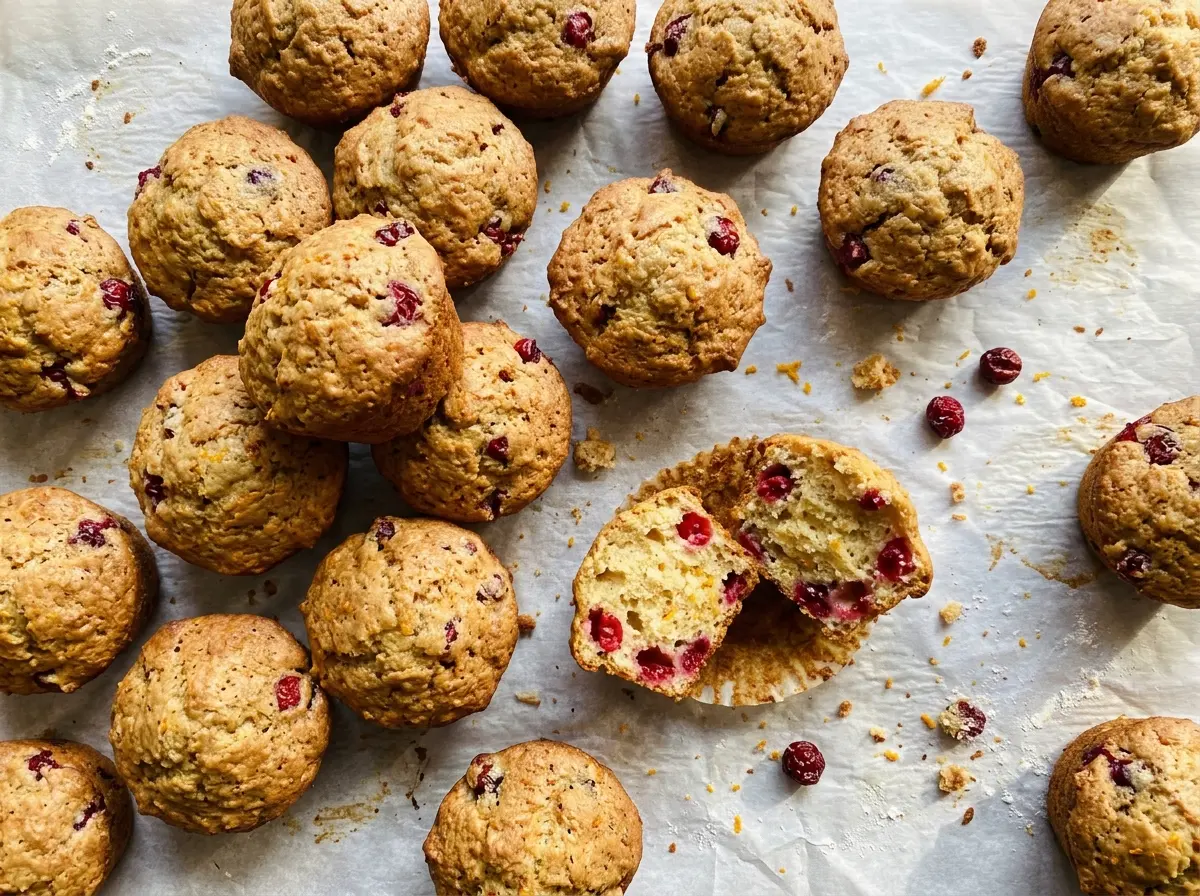
Golden tops can fool you, so I check a muffin in the center of the pan with a toothpick. A clean pick or one with a few moist crumbs means they’re ready; wet batter needs more oven time.
Save these cranberry orange muffins for a bake with tart berries, tender centers, and a bright citrus crumb.
Why Cranberry Orange Muffins Use Both Baking Powder and Baking Soda
Baking powder and baking soda do different jobs here. Baking powder supplies lift, while baking soda reacts with the acidity in the yogurt or sour cream and orange juice. Using both gives the batter more than one source of leavening, which helps it rise into a soft muffin rather than baking up heavy.
That balance is also why I keep the listed acidic ingredients in the batter instead of casually swapping them for something less tangy. Yogurt and sour cream both bring acidity, and the orange juice adds more while carrying the citrus flavor. The soda amount is modest, so the muffins don’t taste soapy; too much baking soda can leave that unpleasant alkaline edge. Keep the leaveners measured level, and whisk them thoroughly with the flour so they’re spread through the batter instead of concentrated in a few bites.
The orange flavor comes from two places, but they aren’t interchangeable. Juice adds liquid and a gentle citrus note, while zest contributes the fragrant oils that make the orange noticeable as soon as you open the oven. Together, they keep the cranberries from being the only thing you taste.
What the Cranberries, Orange, and Yogurt Each Bring to the Batter

- Cranberries — Their tartness gives the muffins contrast against the lightly sweet crumb. Fresh or frozen fruit both work; choose firm fresh berries, or frozen ones when that’s what you have. Roughly chopping them helps distribute the fruit without turning the batter into a cranberry mash.
- Orange zest and juice — The zest delivers the fresh, fragrant orange aroma, and the juice adds citrus flavor along with liquid and acidity. Finely grated zest disperses better than large strips. Fresh juice is a nice choice when you’re already zesting an orange, but ordinary orange juice works too.
- Whole-milk yogurt or sour cream — Both add moisture and acidity, and either works in the same amount. Yogurt gives a mild tang; sour cream makes the flavor a little richer and more pronounced. Use plain, unsweetened yogurt so it doesn’t add extra sweetness or competing flavors.
- Neutral oil — Oil helps keep the crumb tender after the muffins cool, and canola is an easy, inexpensive option. Any neutral-tasting oil works; a strongly flavored oil would compete with the orange and berries.
- Flour and leaveners — All-purpose flour gives the muffins their structure, while baking powder and baking soda provide lift. Store-brand flour is fine, but check that your leaveners are fresh; old ones can leave the muffins short and dense.
How to Mix and Bake the Muffins Without Losing Their Tender Crumb
Get the pan hot and ready
Heat the oven to 400°F and line a standard 12-cup muffin pan with paper liners. Starting with a fully heated oven gives the batter the conditions it needs to rise as it bakes. Set the lined pan aside while you mix, so it’s ready as soon as the batter comes together.
Distribute the cranberries through the dry mix
Whisk the flour, sugar, baking powder, baking soda, salt, and finely grated orange zest in a large bowl. Break up any small clumps as you whisk, especially around the leaveners. Stir in the roughly chopped cranberries until they’re scattered through the flour mixture. This gives you fruit in more than just the first few muffin cups.
Whisk the wet ingredients, then fold
In a medium bowl, whisk the eggs, oil, yogurt or sour cream, and orange juice until the mixture looks smooth. Pour it into the dry ingredients and fold until no dry flour remains. A few small lumps are fine; if you keep stirring to make the batter perfectly smooth, the muffins can turn tough. Divide the batter evenly among the lined cups so they bake at a similar pace.
Bake until golden, then let them set
Bake for 18 to 22 minutes, until the tops are golden and a toothpick inserted in the center comes out clean or with a few moist crumbs. If the pick shows wet batter, give the pan a little more time and test again. Leave the muffins in the pan for 5 minutes after baking, then transfer them to a wire rack. Moving them straight from the oven can make the tender sides more likely to break.
Three Practical Ways to Adapt These Cranberry Orange Muffins
Use sour cream for a richer tang
Replace the plain whole-milk yogurt with the same amount of sour cream. The muffins keep their moist crumb, with a slightly richer, more pronounced tang behind the orange.
Make a dairy-free batch
Use an equal amount of thick, plain, unsweetened dairy-free yogurt in place of the yogurt or sour cream. The flavor will be a little less rich, and a thin yogurt can make the batter looser, so choose a spoonable style.
Bake with frozen cranberries
Use frozen cranberries in place of fresh ones, roughly chopping them while still frozen and stirring them into the flour mixture. There’s no need to thaw them first; thawed fruit releases extra liquid into the batter.
Storage and Reheating
- Refrigerator: Keep the muffins in an airtight container for up to 4 days; the chilled crumb will feel firmer. For the softest texture, enjoy them within 2 days at room temperature.
- Freezer: Freeze completely cooled muffins in an airtight freezer bag or container for up to 2 months. Thaw at room temperature before reheating.
- Reheating: Warm a muffin in the microwave for about 10 to 15 seconds. Longer heating can dry out the crumb, so start briefly and add a few seconds only if needed.
Questions That Come Up When Baking Cranberry Orange Muffins
Cranberry Orange Muffins
Ingredients
Equipment
Method
- Heat the oven to 400°F and line a standard 12-cup muffin pan with paper liners.
- Whisk the flour, sugar, baking powder, baking soda, salt, and orange zest in a large bowl, then stir in the cranberries.
- In a medium bowl, whisk the eggs, oil, yogurt, and orange juice until smooth.
- Pour the wet mixture into the flour mixture and fold just until no dry flour remains; divide the batter evenly among the muffin cups.
- Bake for 18 to 22 minutes, until the tops are golden and a toothpick inserted in the center of a muffin comes out clean or with a few moist crumbs.
- Cool the muffins in the pan for 5 minutes, then transfer them to a wire rack.