
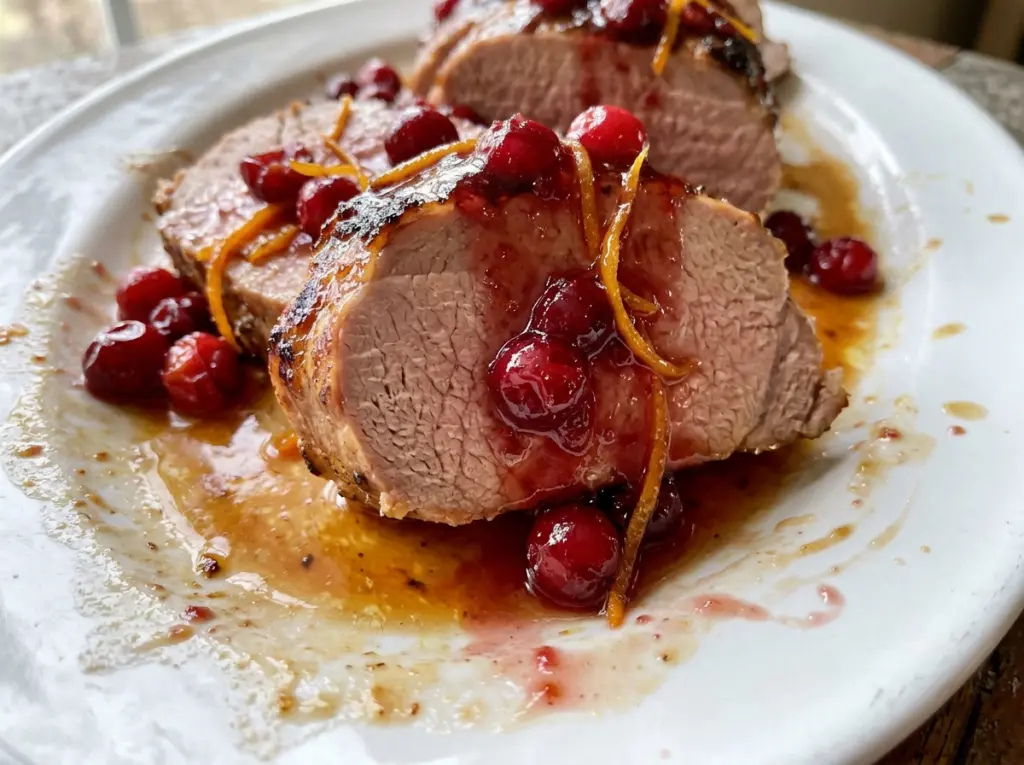
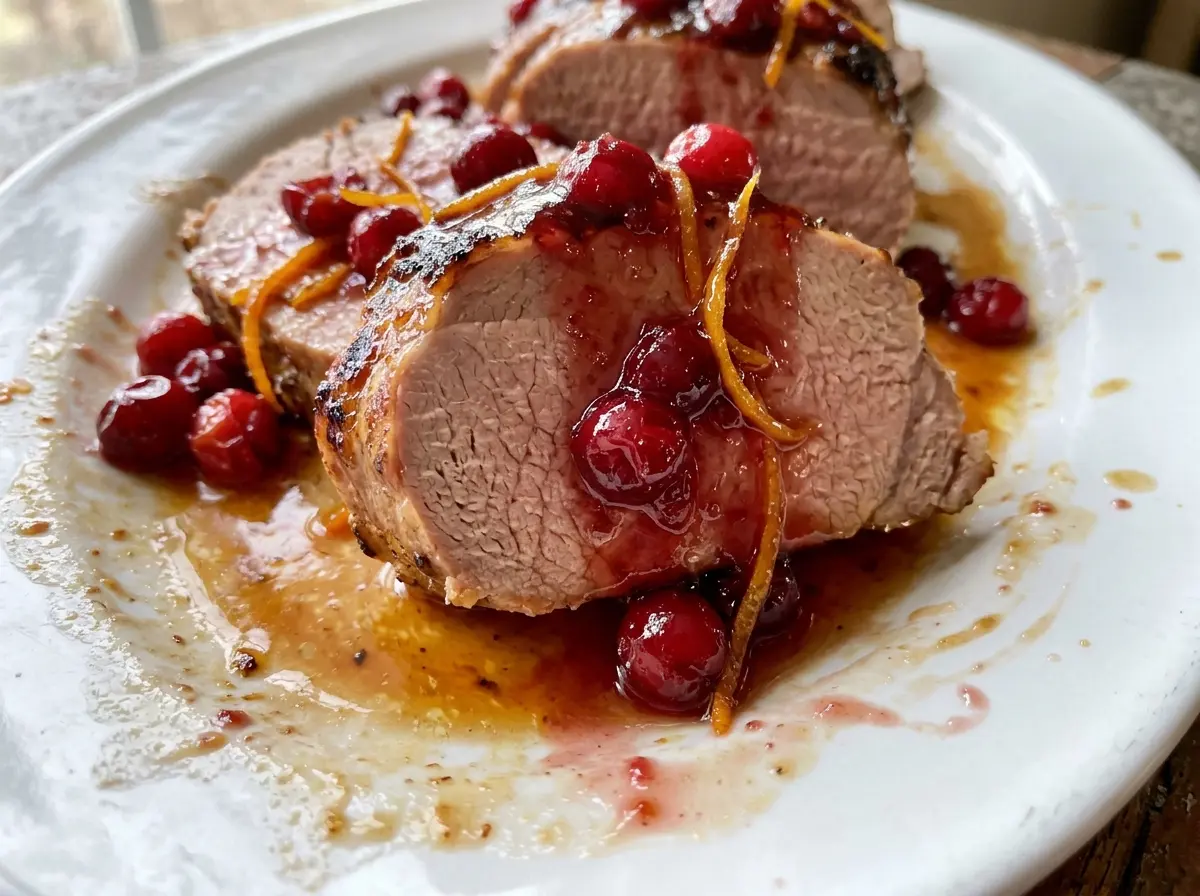
The cranberries stay whole for a moment, then pop and turn the orange juice into a thick, ruby-colored glaze. I like that this sauce tastes bright and tart before the brown sugar softens it, with Dijon keeping it from becoming candy-sweet. It gives a simple oven-roasted tenderloin a festive-looking finish without asking you to fuss over a pan sauce while the pork cooks.
For this cranberry orange glazed pork tenderloin, I cook the glaze on the stovetop while the oven heats, then brush it onto the pork near the end of roasting. That timing lets the glaze cling to the meat without leaving its sugars in the hot oven for the full cook. The pork stays the centerpiece: tender slices with a glossy cranberry coating and extra glaze alongside.
Kitchen Note
Stir the butter into the glaze after you take the saucepan off the heat. It melts in smoothly and rounds out the tart cranberry flavor without cooking away its richness.
Save this cranberry orange glazed pork tenderloin for a dinner where a tart, glossy fruit glaze does the work of a special-occasion sauce.
Why the Cranberry Glaze Goes on Near the End
Brown sugar helps the cranberry glaze thicken, but it also means the sauce can darken quickly under direct oven heat. Brushing it onto the pork only after the first stretch of roasting gives the tenderloin time to cook before the sweet coating goes on. The final few minutes let the glaze warm and cling to the surface instead of baking for the entire roast.
There’s a second advantage to keeping some glaze off the pork. The half you brush on becomes a shiny coating, while the rest stays in the saucepan for serving. That gives you a choice at the table: a light cranberry layer on each slice, or another spoonful for a sharper, fruitier bite. The glaze is meant to stay visibly cranberry-rich, not turn into a smooth, syrupy candy coating.
Keep the pork on a rimmed baking sheet lined with foil, and use the thickest part to judge doneness rather than the color of the glaze. The coating can look ready before the center of the tenderloin is. Taking those cues separately gives you a browned-looking finish without relying on appearance to tell you whether the pork is cooked through.
What Makes the Cranberry, Orange, and Dijon Glaze Work

- Fresh cranberries — Their tartness keeps the glaze lively, and the berries break down as they simmer to give it body. Choose firm berries; frozen cranberries also work in the same volume, though they may need a little longer to burst and thicken.
- Orange juice and zest — Juice provides the liquid that cooks the cranberries, while finely grated zest brings a fragrant orange note that juice alone won’t give you. Plain bottled orange juice works; zest only the colored peel, since the white pith tastes bitter.
- Brown sugar — Its sweetness balances the fruit’s sharpness, and its molasses notes suit the warm, savory pork. Packed light or dark brown sugar works here, with dark sugar giving the glaze a deeper caramel note.
- Dijon mustard — Dijon adds a savory tang that keeps the sweet-tart sauce from tasting one-dimensional. If you need a gluten-free version, use gluten-free Dijon in the same amount; the glaze keeps its mustard bite.
- Pork tenderloin — This lean, narrow cut roasts quickly, which is why it fits the glaze’s short oven finish. Buy it trimmed of silverskin when available; the tough membrane won’t soften during roasting.
- Olive oil, kosher salt, black pepper, and butter — Oil helps the seasoning coat the pork, salt and pepper give the meat a straightforward savory base, and butter softens the glaze’s sharper edges. Unsalted butter lets the glaze’s seasoning stay balanced.
Build the Glaze First, Then Roast and Finish the Pork
Simmer the Cranberries Until They Burst
Combine the cranberries, orange juice, brown sugar, Dijon, orange zest, and salt in a small saucepan. Bring the mixture to a simmer over medium heat, stirring occasionally, and cook for 8–10 minutes. Look for the cranberries to burst and the liquid to thicken into a spoonable glaze. Take the pan off the heat and stir in the butter.
Season the Tenderloin Evenly
Heat the oven to 400°F and line a rimmed baking sheet with foil. Pat the pork dry so the oil and seasoning coat the surface instead of sliding over moisture. Rub it all over with olive oil, then season all sides with kosher salt and black pepper. Keep the tenderloin whole for roasting; cutting it into pieces would change the cooking time.
Roast, Then Brush on the Glaze
Set the pork on the prepared baking sheet and roast for 18–24 minutes, until the center reaches 125–130°F. Brush half of the cranberry glaze all over the tenderloin. Return it to the oven for 5–8 minutes more, until the thickest part reaches 145°F. Check the center rather than judging by the color of the glaze, which can look finished before the pork is.
Rest Before Slicing
Move the pork to a cutting board and let it rest for 3 minutes before slicing. That short pause gives the juices a moment to settle, so they’re less likely to run across the board as you cut. Slice across the tenderloin and serve with the remaining glaze. If the glaze has cooled while the pork roasted, warm it gently in its saucepan before serving.
Simple Swaps for a Different Cranberry Orange Finish
Use Frozen Cranberries
Swap in the same volume of frozen cranberries without thawing them first. They may take a little longer to burst and for the glaze to thicken, but they keep the same tart, fruit-forward character.
Make the Glaze Less Tangy
Leave out the Dijon for a sweeter, more fruit-forward sauce. You’ll lose the mustard’s savory edge, so this version suits anyone who prefers the cranberry and orange to lead.
Make It Gluten-Free
Replace the Dijon with gluten-free Dijon mustard in the same amount. The rest of the ingredients stay the same, and the glaze retains its tangy balance.
Storage and Reheating
- Refrigerator: Refrigerate leftovers within 2 hours and use them within 3–4 days. The pork will firm up as it chills, and the glaze will thicken.
- Freezer: Freeze the pork and any remaining glaze in separate airtight containers for up to 2–3 months. Thaw them in the refrigerator before reheating.
- Reheating: Warm sliced pork covered in the microwave or a low oven, with a little reserved glaze if you have it, until it reaches 165°F. High heat can dry out this lean cut, so avoid reheating it uncovered for a long stretch.
Questions I Get Asked About This Pork Tenderloin
Cranberry Orange Glazed Pork Tenderloin
Ingredients
Equipment
Method
- Combine the cranberries, orange juice, brown sugar, Dijon, orange zest, and salt in a small saucepan.
- Bring to a simmer over medium heat and cook for 8–10 minutes, stirring occasionally, until the cranberries burst and the glaze thickens.
- Remove from the heat and stir in the butter.
- Heat the oven to 400°F.
- Line a rimmed baking sheet with foil.
- Pat the pork dry and rub it with the olive oil.
- Season it all over with the salt and pepper.
- Place the pork on the baking sheet and roast for 18–24 minutes, until the center reaches 125–130°F.
- Brush all over with half the glaze and roast for 5–8 minutes more, until the thickest part reaches 145°F.
- Transfer the pork to a cutting board and rest for 3 minutes before slicing.
- Serve with the remaining glaze.