
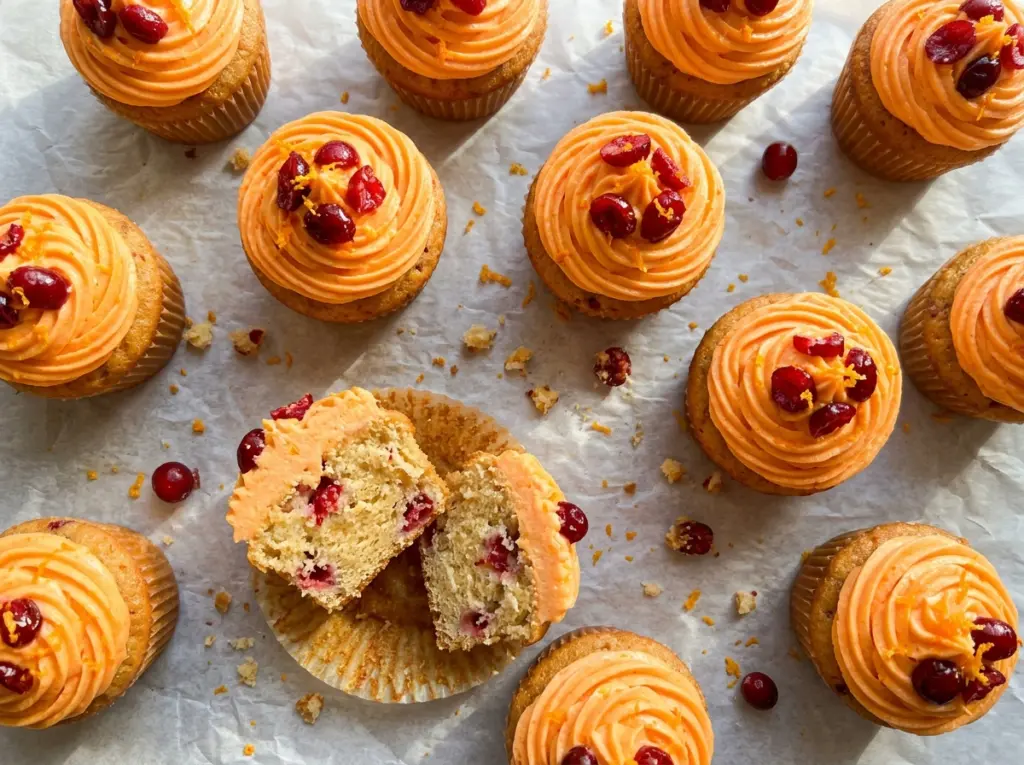
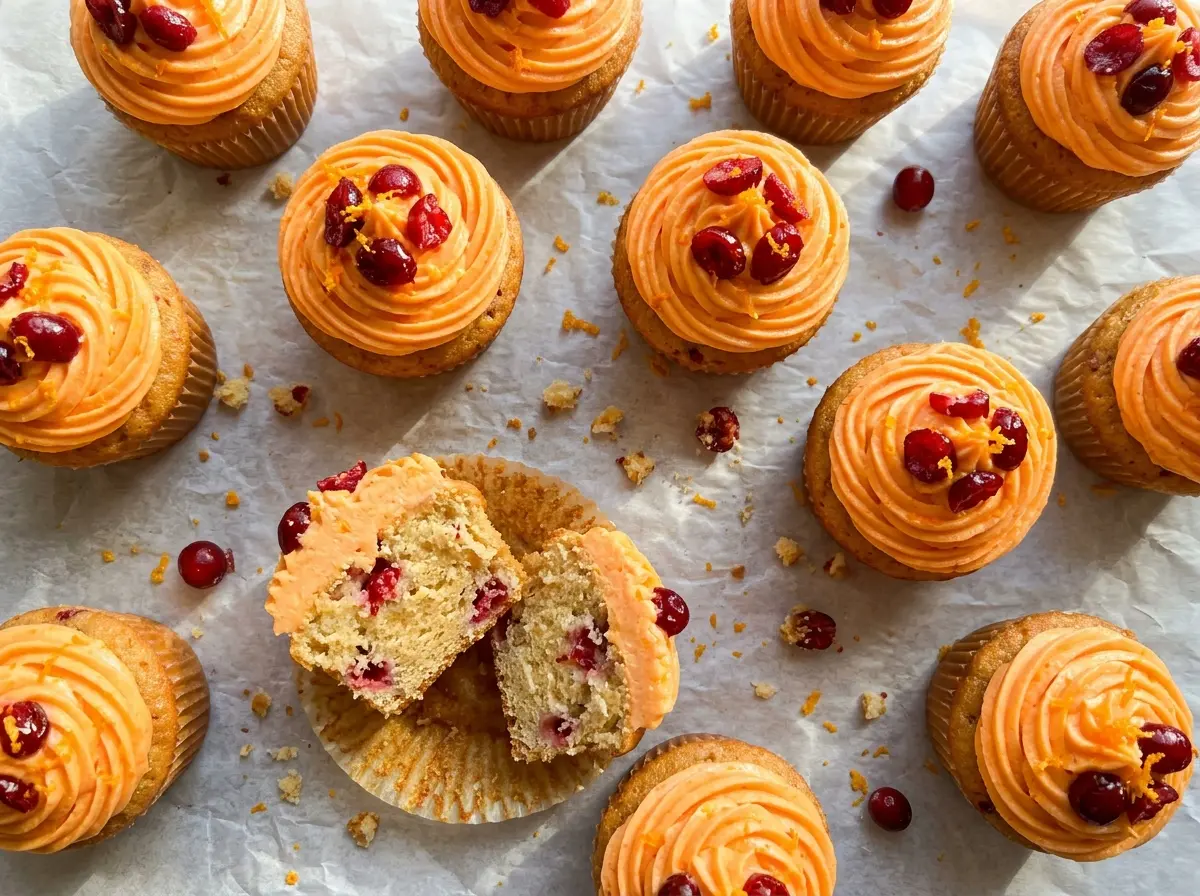
A chopped cranberry can turn a neat scoop of cupcake batter streaky if the fruit gets crushed instead of folded in. These cranberry orange cupcakes keep the berries in tart little pockets, with a soft sour-cream crumb and citrus in both the cake and frosting. I like how each bite moves from buttery cake to a bright cranberry pop, then finishes with smooth orange buttercream.
Room-temperature eggs and sour cream blend into the creamed butter more easily than cold ingredients, so the batter stays cohesive as you mix. Once the flour goes in, I stop as soon as the dry streaks disappear; a few quick folds are all the cranberries need. The finished cupcakes are tender, fragrant with orange, and dotted with juicy fruit.
Kitchen Note
Let the eggs and sour cream come to room temperature before you start. Cold ingredients can make the creamed butter look curdled when they go in, and room-temperature ingredients blend into a smoother batter.
Save these cranberry orange cupcakes for tender cake, tart cranberry pockets, and a smooth citrus buttercream.
Why Orange Juice Alone Won’t Make These Taste Orange
Orange juice gives the cupcake batter liquid and a gentle citrus tang, but its aroma fades as the cupcakes bake. The zest carries aromatic oils that stay noticeable in the finished cake. That’s why the batter uses both: juice contributes to the texture, while zest brings the unmistakable fresh-orange scent.
Adding extra juice to chase a stronger orange flavor changes the amount of liquid in the batter, which can affect the crumb. Keep the juice where it is and grate the zest finely so it disperses through the cake instead of gathering in long strips. The result is a clear orange note that still leaves room for the tart cranberries. The orange buttercream carries that citrus through the last bite.
What Each Ingredient Brings to the Cranberry-Orange Balance

- All-purpose flour and baking powder — Flour gives the cakes their structure, while baking powder lifts the batter. A standard all-purpose flour is right here; swapping in a gluten-free blend is covered below. If your baking powder has been open for a long time, check that it still produces an even rise.
- Unsalted butter and granulated sugar — These are creamed together to add air and give the cupcakes a fine, tender crumb. Use softened butter, not melted butter; melted butter won’t cream with the sugar in the same way.
- Sour cream — Its richness keeps the crumb moist and adds a gentle tang that sits well beside the fruit. Plain, full-fat Greek yogurt can stand in at the same amount, though the cakes will taste a little tangier and may have a slightly firmer crumb.
- Fresh cranberries — Their sharpness keeps the cupcake from tasting sugary, and coarsely chopping them makes the tart fruit easier to find in each bite. Choose berries that look firm and glossy rather than soft or shriveled.
- Orange zest and juice — Use a fine grater and stop before you reach the white pith, which can taste bitter. Fresh zest gives the cake its most vivid aroma; the juice is there for balance and moisture.
- Orange extract and heavy cream — Orange extract gives the buttercream a focused citrus note, while heavy cream loosens it into a spreadable frosting. Extracts vary in strength by brand, so start with the stated amount rather than adding a free pour.
From Fluffy Batter to Spreadable Orange Buttercream
Cream the Butter and Sugar Until Pale
Beat the softened butter and granulated sugar with an electric mixer on medium speed for 2 to 3 minutes. The mixture should look pale and fluffy, not like a dense paste. Scrape down the bowl if butter is clinging to the sides so it creams evenly. This aerated base helps the cupcakes rise with a soft crumb.
Blend in the Wet Ingredients, Then the Flour
Beat in the eggs one at a time, then mix in the sour cream, orange juice, orange zest, and vanilla until combined. Add the flour mixture on low speed and stop when no dry streaks remain. A few streaks are easier to finish by hand than by running the mixer longer; overmixing can make the cakes tough. Fold in the cranberries gently so they stay in pieces.
Bake Until the Centers Spring Back
Heat the oven to 350°F and line a 12-cup muffin pan with paper liners. Divide the batter among the liners and bake for 18 to 22 minutes. The tops should spring back when lightly pressed, and a toothpick inserted into the cake should come out clean. Cool the cupcakes in the pan for 5 minutes, then move them to a wire rack and let them cool completely.
Beat the Buttercream Light and Spreadable
Beat the softened butter in a medium bowl until smooth, then gradually beat in the powdered sugar. Add the orange extract and heavy cream, and beat for about 2 minutes until the frosting looks light and spreads easily. If the frosting feels too soft to hold its shape, chill the bowl briefly before frosting. Spread it only over fully cooled cupcakes.
Easy Ways to Adapt These Cranberry Orange Cupcakes
Use Frozen Cranberries
Swap in the same volume of frozen cranberries. Thaw them completely, pat them dry, then coarsely chop and fold them into the batter. They’ll give the cupcakes the same tart fruit flavor, though frozen berries can make the batter look more streaked if they’re wet.
Make Them Gluten-Free
Replace the all-purpose flour with an equal amount of a cup-for-cup gluten-free baking blend that includes xanthan gum. Mix just until the flour disappears, as the crumb can turn firm if the batter is worked too long. The texture may be a little more delicate than the wheat-flour version.
Give the Frosting a Softer Citrus Note
Replace the orange extract in the buttercream with vanilla extract. The frosting will taste milder and more buttery, while the orange zest and juice still keep the cupcakes citrus-forward.
Make-Ahead and Storage
- Refrigerator: Store frosted cupcakes in an airtight container for up to 3 days. The cake will feel firmer when cold; let it come closer to room temperature before serving.
- Freezer: Freeze unfrosted cupcakes, wrapped individually and placed in a freezer-safe container, for up to 2 months. Thaw them in the refrigerator, then frost once they’re fully thawed and no longer cold.
- Reheating: These are best served at room temperature, not reheated. Let refrigerated cupcakes sit out until the cake softens; microwaving can melt the buttercream.
Questions That Come Up While Baking These Cupcakes
Cranberry Orange Cupcakes
Ingredients
Equipment
Method
- Heat the oven to 350°F and line a 12-cup muffin pan with paper liners.
- Whisk the flour, baking powder, and salt together in a medium bowl.
- Beat the butter and granulated sugar in a large bowl with an electric mixer on medium speed until pale and fluffy, about 2 to 3 minutes.
- Beat in the eggs one at a time.
- Mix in the sour cream, orange juice, orange zest, and vanilla extract until combined.
- Mix in the flour mixture on low speed just until no dry streaks remain.
- Fold in the cranberries.
- Divide the batter among the liners.
- Bake for 18 to 22 minutes, until the tops spring back when lightly pressed and a toothpick inserted in the cake comes out clean.
- Cool the cupcakes in the pan for 5 minutes.
- Transfer the cupcakes to a wire rack and cool completely.
- Beat the butter in a medium bowl until smooth.
- Gradually beat in the powdered sugar.
- Beat in the orange extract and heavy cream until the buttercream is light and spreadable, about 2 minutes.
- Frost the cooled cupcakes.