
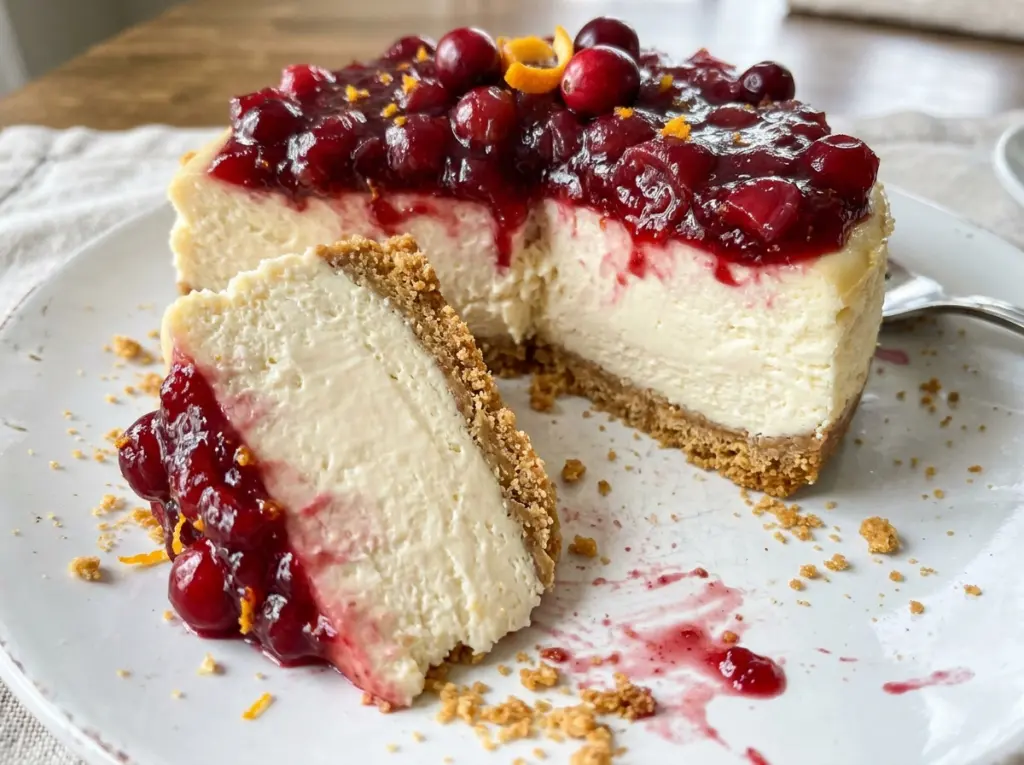
The center of a cheesecake should still wobble a little when you nudge the pan; waiting for it to look completely firm is how a creamy filling turns dry. I watch the edges first, then give the pan a gentle shake. For this cranberry orange cheesecake, that small movement is the cue to stop baking, even when the middle looks softer than you expect.
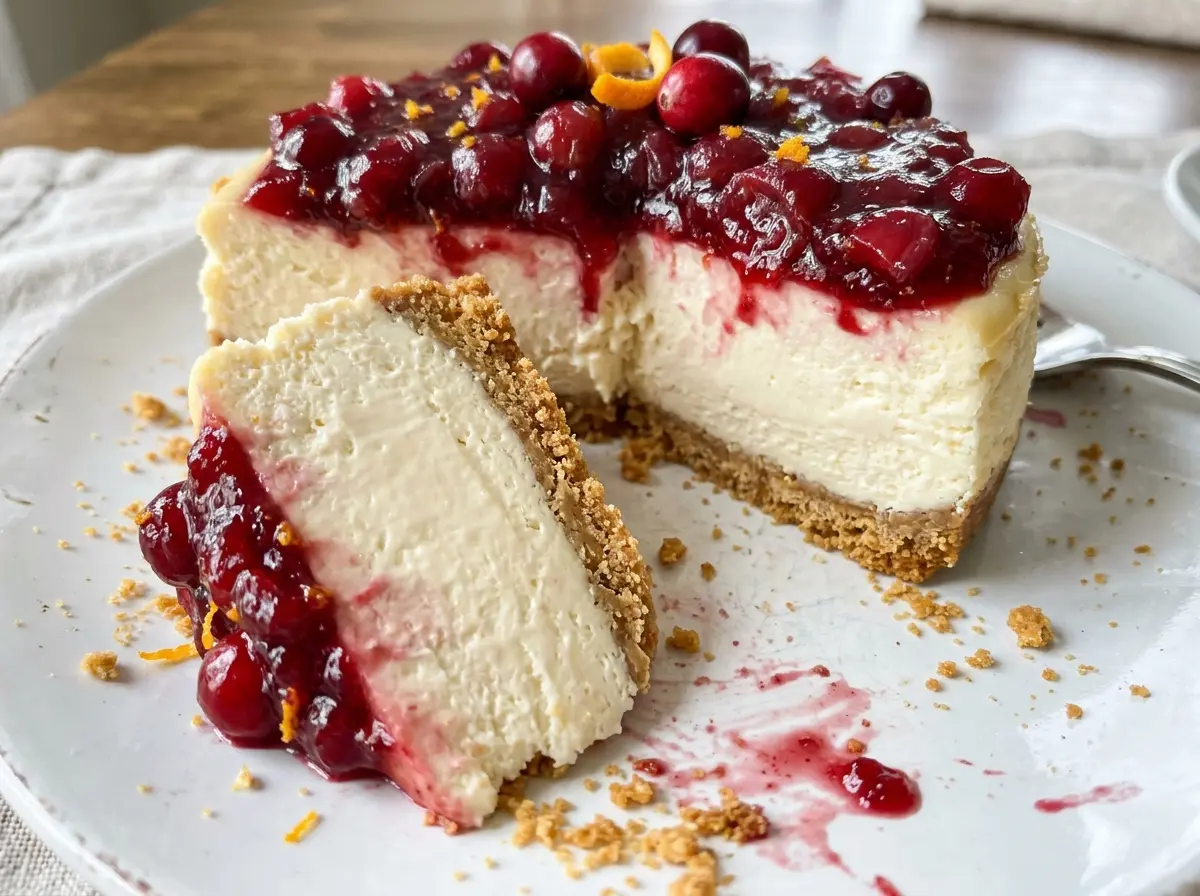
I keep the filling smooth by starting with softened cream cheese and adding the eggs one at a time on low speed. Orange zest brings a fragrant lift to the tang of sour cream, while the cranberry topping cooks down into a bright, tart layer. After a slow cool and a long chill, each slice has a firm graham cracker base, a smooth center, and enough cranberry to cut through the richness.
Kitchen Note
Press the crumb mixture firmly into an even layer, especially where the base meets the sides of the pan. A loose, uneven crust is more likely to crumble when you cut the chilled cheesecake.
Save this cranberry orange cheesecake for its silky filling, fragrant citrus, and tart cranberry topping.
Why the Water Bath Does More Than Guard Against Cracks
Cheesecake is dense, so the outside can heat and set before the center has time to catch up. A water bath softens that direct oven heat and helps the filling bake more evenly from edge to middle. That gentle heat is especially useful in a tall cheesecake, where the center needs time to set without the edges getting tough.
The foil around the springform pan has a separate job: it keeps water from seeping through the removable base and soaking the crust. Two layers of heavy-duty foil are more dependable than a single thin layer, which can tear while you move the pan. Keep the boiling water in the roasting pan, not in the cheesecake, and take care as you pour. Together, the water bath and foil make a steady bake possible without changing the rich texture of the filling.
The Ingredients That Build the Tangy Orange Balance

- Graham cracker crumbs — Fine, even crumbs make a base that presses together cleanly. If you need a gluten-free adaptation, use gluten-free graham-style crumbs in their place; the crust may have a slightly different texture depending on the brand.
- Unsalted butter — Melted butter binds the crumbs so the base holds when sliced. Unsalted butter keeps the crust’s seasoning predictable alongside the kosher salt in the filling.
- Cream cheese — Use softened blocks rather than whipped or tub-style cream cheese. The block form gives the filling the dense, smooth body a baked cheesecake needs.
- Eggs and sour cream — Room-temperature eggs and sour cream blend into the filling more readily than cold ingredients. Sour cream brings a gentle tang that keeps the cream cheese from tasting flat.
- Orange zest and vanilla — Finely grated zest gives the filling a fresh orange aroma without adding liquid. Grate only the colored outer peel; the white pith underneath can taste bitter.
- Cranberries and orange juice — Cranberries bring the sharp, fruity contrast, and orange juice helps them cook into a spoonable topping. Fresh or frozen cranberries both work here; choose berries without visible damage if you’re buying fresh.
The Order That Keeps the Filling Smooth and the Center Tender
Press and prebake the graham crust
Heat the oven to 325°F and line the bottom of a 9-inch springform pan with parchment, then coat the pan lightly with nonstick cooking spray. Stir the crumbs with the crust sugar and melted butter until everything looks evenly moistened. Press the mixture over the pan bottom, then bake for 10 minutes. Set the crust aside to cool slightly while you make the filling.
Mix the filling without rushing the eggs
Beat the softened cream cheese until smooth before adding the filling sugar, flour, and salt. Add the eggs one at a time on low speed, scraping down the bowl as needed so no thick streaks of cream cheese remain. Mix in the sour cream, orange zest, and vanilla just until combined. Stop when the mixture looks uniform, then pour it over the crust.
Seal the pan and bake to a gentle wobble
Wrap the outside of the springform pan tightly with two layers of heavy-duty foil and set it in a large roasting pan. Carefully pour 8 cups of boiling water into the roasting pan, avoiding splashes into the cheesecake. Bake at 325°F for 65 to 75 minutes. The edges should look set while the center still wobbles slightly when you gently nudge the pan.
Let the cheesecake cool gradually
Turn off the oven and carefully lift the springform pan out of the water bath. Remove the foil, then set the cheesecake on a rack inside the oven with the door ajar for 1 hour. This gradual transition gives the filling time to settle instead of moving straight from oven heat to a cooler room. Afterward, cool it on a rack until it reaches room temperature.
Cook the topping, then chill before finishing
Combine the cranberries, orange juice, and topping sugar in a 2-quart saucepan. Simmer over medium heat for 10 to 12 minutes, stirring occasionally, until most of the berries have burst and the sauce has thickened; cool it separately to room temperature. Cover the cooled cheesecake and refrigerate it for at least 6 hours. Run a thin knife around the edge, release the springform ring, and spread the cooled cranberry topping over the top.
Three Ways to Adapt the Cranberry Topping and Crust
Make the crust gluten-free
Replace the standard graham cracker crumbs with gluten-free graham-style crumbs, keeping the same volume and using the same butter-and-sugar method. The crust may be a little more delicate, so press it firmly and let it cool before adding the filling.
Choose fresh or frozen cranberries
Frozen cranberries make this cheesecake easy to bake outside fresh-cranberry season, while fresh berries are a good choice when they’re in the market. Either option cooks into the same tart style of topping; simmer until most berries burst and the sauce thickens.
Serve the topping by the slice
Instead of spreading the cranberry sauce over the whole cheesecake, spoon it over individual slices. This keeps the top of the cheesecake plain until serving and lets everyone choose how much fruit they want with each bite.
Storage and Reheating
- Refrigerator: Keep the cheesecake covered and refrigerated for 3 to 4 days. The crust may soften slightly as it sits under the topping.
- Freezer: Freeze the cheesecake without the topping, wrapped tightly, for up to 2 months. Thaw it overnight in the refrigerator and add the topping once it’s thawed.
- Reheating: This cheesecake is served chilled, so don’t reheat it. Warm heat can soften the filling and make the topping runny.
Questions That Come Up While Baking This Cheesecake
Cranberry Orange Cheesecake
Ingredients
Equipment
Method
- Heat the oven to 325°F.
- Line the bottom of a 9-inch springform pan with parchment paper.
- Lightly coat the pan with nonstick cooking spray.
- Stir the graham cracker crumbs, 1/4 cup of the divided sugar, and melted butter together until evenly moistened.
- Press the crumb mixture firmly over the pan bottom.
- Bake for 10 minutes, then set the pan aside to cool slightly.
- In a large bowl, beat the cream cheese until smooth.
- Beat in 1 cup of the divided sugar, the flour, and salt.
- Beat in the eggs one at a time on low speed, scraping down the bowl as needed.
- Mix in the sour cream, orange zest, and vanilla just until combined.
- Pour the filling over the crust.
- Wrap the outside of the springform pan tightly with two layers of heavy-duty foil.
- Set the springform pan in a large roasting pan.
- Carefully pour the 8 cups of boiling water into the roasting pan, avoiding splashes into the cheesecake.
- Bake for 65 to 75 minutes, until the edges are set and the center still wobbles slightly when the pan is gently nudged.
- Turn off the oven.
- Carefully lift the springform pan out of the water bath and remove the foil.
- Set the cheesecake on a rack inside the oven with the door ajar for 1 hour.
- In a 2-quart saucepan, combine the cranberries, orange juice, and remaining 3/4 cup of the divided sugar.
- Simmer over medium heat for 10 to 12 minutes, stirring occasionally, until most cranberries have burst and the sauce has thickened.
- Cool the cheesecake on a rack until it reaches room temperature.
- Cover and refrigerate for at least 6 hours.
- Cool the cranberry topping to room temperature separately.
- Run a thin knife around the cheesecake edge.
- Release the springform ring.
- Spread the cooled topping over the cheesecake.