
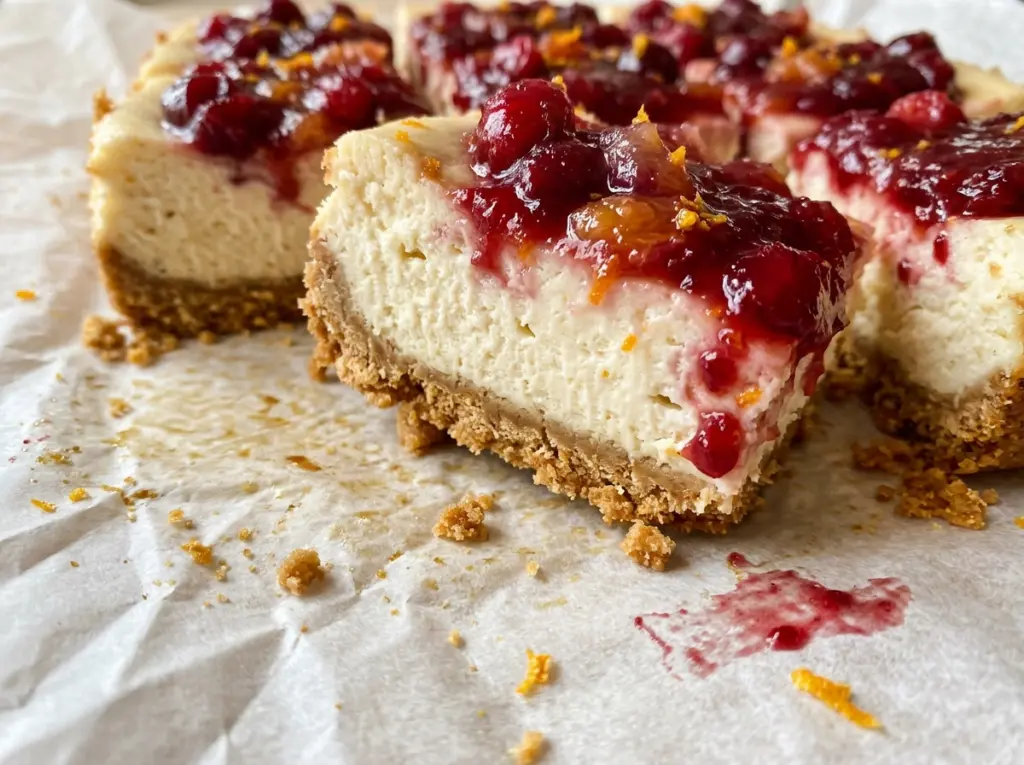
The cranberries begin to pop as they simmer, and the sharp, bright smell of orange rises from the saucepan. I like that little moment because it tells me the topping is turning into something thick enough to ribbon through the cheesecake, not just a puddle of juice. These cranberry orange cheesecake bars have a buttery graham cracker crust, a smooth orange-scented filling, and tart berries in every slice.
Cooking the cranberries before they go on top makes a real difference. The berries soften and the juices reduce first, so the topping stays concentrated against the creamy filling. I also bake the crust before adding the cheesecake; it gives the crumb layer a head start and helps it hold together beneath the filling. Once the bars are thoroughly chilled, each square has a clean contrast of crisp-tender crust, creamy cheesecake, and tangy cranberry.
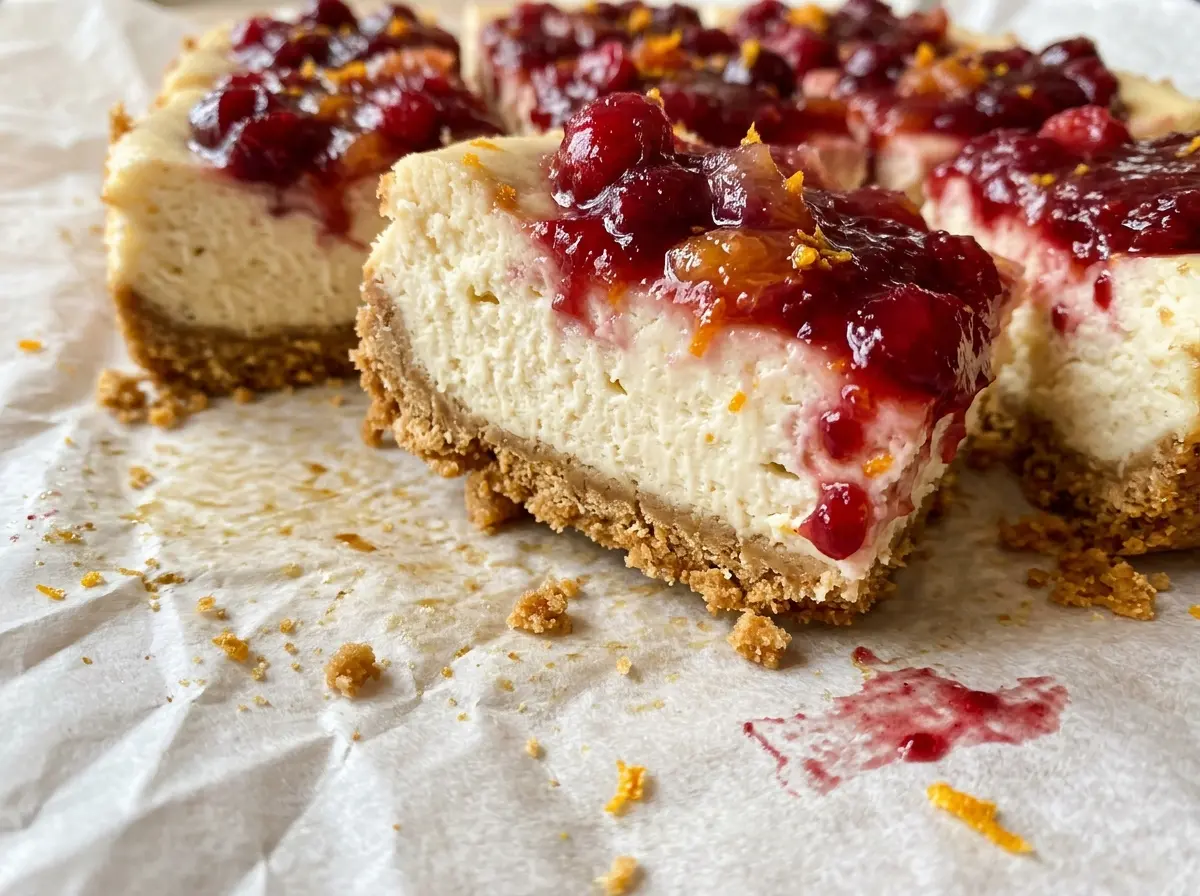
Kitchen Note
Leave enough parchment overhang on the long sides to grip once the bars are cold. Lifting the cheesecake out in one piece is much easier than trying to pry neat squares from the pan.
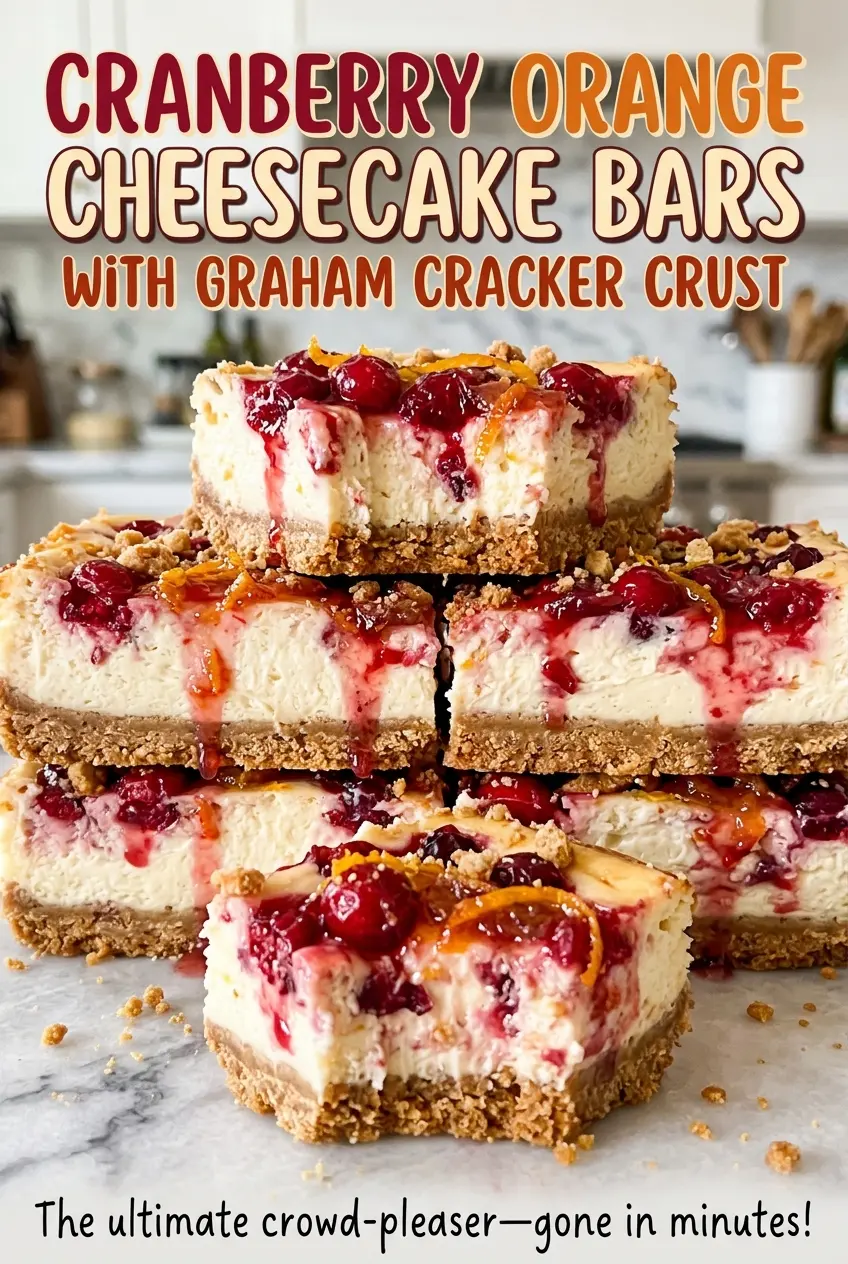
Save these cranberry orange cheesecake bars for a make-ahead dessert with a tangy cranberry swirl and buttery graham crust.
Why the Cranberries Need to Thicken Before They Meet the Cheesecake
Fresh cranberries bring plenty of tartness, but they also release a lot of liquid as they soften. Putting them straight onto cheesecake batter would leave more juice to spread through the filling during the bake. Simmering them first gives that liquid time to cook down, while the sugar rounds off the berries’ sharp edge and the orange lifts their flavor.
Look for a topping that has visibly thickened and mostly burst berries, rather than a loose, glossy pool. It should still be spoonable after cooling, but it shouldn’t run across the bowl. That thicker consistency helps the cranberry stay in distinct ribbons when you drag a knife through the filling. The orange zest belongs in both parts for a reason: a little in the berries brightens the fruit, while the larger amount in the cheesecake carries that citrus aroma through every bite.
What the Cream Cheese, Sour Cream, and Citrus Each Bring
- Cranberries — Fresh or frozen berries both work for the cooked topping. Choose firm fresh berries when you have them; frozen are a practical option when fresh ones aren’t available. The simmer softens either kind, so there’s no need to hunt for a particular brand.
- Orange zest and juice — The juice brings citrus acidity and liquid to the cranberry mixture, while the finely grated zest supplies the more fragrant orange character. A fresh orange gives you both in one go; grate only the colored peel, since the white pith tastes bitter.
- Block cream cheese — The dense texture of block cream cheese gives the filling its structure. Tub-style whipped cream cheese has extra air and a looser texture, so it won’t behave the same way here. Let the blocks soften before mixing; cold, firm pieces are much harder to beat smooth.
- Eggs and sour cream — The eggs help the filling set, and using them at room temperature makes them easier to blend into the cream cheese without overworking the batter. Sour cream adds a gentle tang and keeps the filling from tasting heavy. Full-fat plain Greek yogurt can replace the sour cream in the same amount; expect a slightly tangier finish.
- Graham cracker crumbs and butter — Fine, evenly sized crumbs pack into a more cohesive crust than large, uneven pieces. Press the mixture into a firm, level layer so it doesn’t crumble away when you lift and cut the bars. Regular graham crackers are fine; the crumbs don’t need to be a specialty product.
Building the Bars in Four Stages
Simmer the cranberry topping until it holds together
Combine the cranberries, sugar, orange juice, and orange zest in a 2-quart saucepan, then bring the mixture to a simmer over medium heat. Cook for 8 to 10 minutes, stirring occasionally, until most of the berries have burst and the mixture has thickened. If the berries are still mostly whole and the juices look thin, give them the full time to soften and reduce. Transfer the topping to a bowl and let it cool completely before using it.
Set the graham crust before adding the filling
Heat the oven to 350°F and line a 9×13-inch baking pan with parchment, leaving an overhang on the long sides; lightly coat the parchment with cooking spray. Stir together the graham cracker crumbs, sugar, melted butter, and salt, then press the mixture into an even layer. Press firmly across the corners as well as the middle so the base doesn’t have loose patches. Bake the crust for 10 minutes, then reduce the oven temperature to 325°F.
Mix gently, then make the cranberry swirl
Beat the softened cream cheese and sugar with an electric mixer on medium speed for 2 to 3 minutes, scraping down the bowl as needed, until smooth. Add the room-temperature eggs one at a time on low speed, then mix in the sour cream, orange zest, and vanilla just until combined. Extra mixing after the eggs go in can work more air into the batter, so stop when you no longer see streaks. Pour the filling over the warm crust, spoon the cooled cranberry topping in small dollops, and gently swirl it through the filling with a knife.
Bake to a slight wobble, then chill until firm
Bake for 40 to 50 minutes, until the edges are set and the center still has a slight wobble. The middle shouldn’t look liquid, but it also shouldn’t be completely rigid in the oven; it firms as the bars cool. Cool the pan on a rack for 1 hour, then cover and refrigerate for at least 6 hours until thoroughly chilled and set. Lift the slab out by the parchment and cut it into 24 pieces.
Two Simple Ways to Adapt the Cranberry Swirl
Make the crust gluten-free
Replace the graham cracker crumbs with gluten-free graham cracker crumbs, using the same amount. Keep the sugar, butter, and salt as they are. The crust may have a slightly different crunch depending on the crumbs, but the cheesecake filling and cranberry topping stay unchanged.
Leave the cranberry in bolder pockets
For a more distinct cranberry bite, place the small dollops farther apart and make only a few shallow passes with the knife. You’ll get larger pockets of tart fruit instead of fine ribbons throughout the cheesecake, with no change to the ingredients.
Storage and Serving
- Refrigerator: Keep the bars covered and refrigerated for 3 to 4 days. The crust softens a little as it sits, but the chilled filling stays sliceable.
- Freezer: Freeze the chilled bars in a tightly covered container, separating layers so the pieces don’t stick together. They keep well for up to 2 months; thaw them in the refrigerator before serving.
- Serving: Serve cold from the refrigerator. These cheesecake bars don’t need reheating, and warming them will soften the filling and crust.
Questions That Come Up While Making These Cheesecake Bars
Cranberry Orange Cheesecake Bars with Graham Cracker Crust
Ingredients
Equipment
Method
- Combine the cranberries, sugar, orange juice, and orange zest in a 2-quart saucepan.
- Bring the mixture to a simmer over medium heat and cook for 8 to 10 minutes, stirring occasionally, until most of the berries have burst and the mixture has thickened.
- Transfer the topping to a bowl and let it cool completely.
- Preheat the oven to 350°F.
- Line a 9x13-inch baking pan with parchment paper, leaving an overhang on the long sides, and lightly coat the parchment with nonstick cooking spray.
- Stir together the graham cracker crumbs, sugar, melted butter, and salt.
- Press the mixture firmly into an even layer in the pan.
- Bake for 10 minutes.
- Reduce the oven temperature to 325°F.
- Beat the cream cheese and sugar in a large bowl with an electric mixer on medium speed for 2 to 3 minutes, scraping down the bowl as needed, until smooth.
- Beat in the eggs one at a time on low speed.
- Mix in the sour cream, orange zest, and vanilla just until combined.
- Pour the filling over the warm crust.
- Spoon the cooled cranberry topping over the filling in small dollops.
- Gently swirl the topping through the filling with a knife.
- Bake for 40 to 50 minutes, until the edges are set and the center still has a slight wobble.
- Cool in the pan on a rack for 1 hour.
- Cover and refrigerate for at least 6 hours until thoroughly chilled and set.
- Lift the bars from the pan using the parchment overhang.
- Cut into 24 pieces.