

The Bundt pan is the nerve-racking part: the cake looks beautiful in the oven, then you have to trust that it’ll release in one piece. I give the pan a thorough coat of butter and flour, and I let the cake rest before turning it out. That little bit of patience makes a big difference with this cranberry orange Bundt cake, especially around the ridges.
Orange zest goes straight into the butter and sugar, so its fragrant oils get worked through the batter before the cranberries go in. Sour cream keeps the crumb tender, while a little fresh orange juice brings a brighter citrus note. The cranberries add tart pockets in every slice, and the cream cheese icing finishes the cake with a smooth, lightly tangy drizzle.
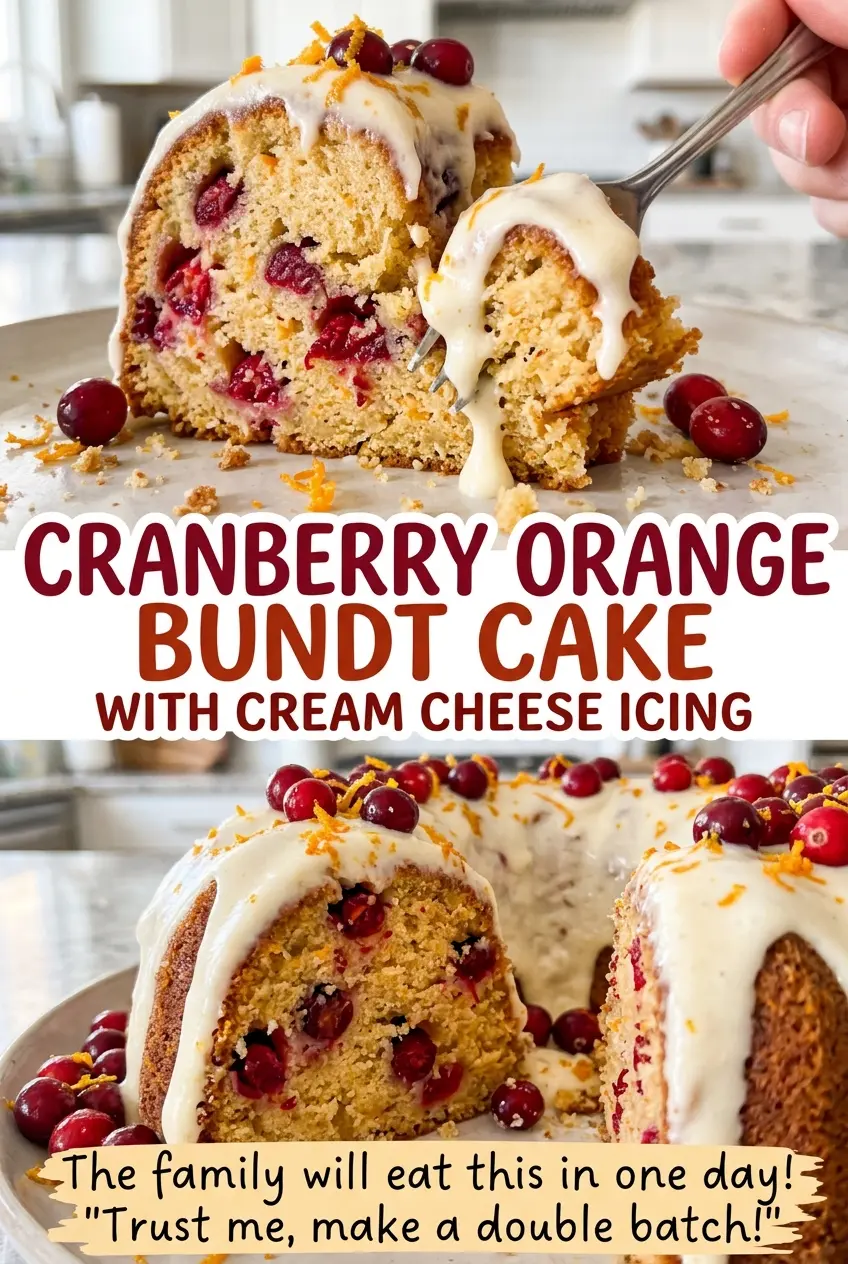
Kitchen Note
I let the cake rest in the pan for the full 15 minutes before turning it out. It has time to settle into its shape, but it’s still warm when it goes onto the rack.
Save this cranberry orange Bundt cake for a bake with tart berries, fragrant orange zest, and a tangy cream cheese drizzle.
Why the Sour Cream and Orange Juice Go In Between the Flour
A thick cake batter can turn tough if it’s mixed for too long after the flour is added. Here, the sour cream and orange juice are whisked together first, then alternated with the dry ingredients. That gives the butter mixture a chance to take in the additions gradually instead of being flooded with liquid or loaded with flour all at once.
Starting and ending with the flour mixture matters, too. The first flour addition gives the batter structure before the wet mixture goes in; the last addition brings it back together without leaving a puddle of liquid at the bottom. Keep the mixer on low and stop as soon as the streaks of flour disappear. A few seconds of extra beating won’t make the cake more even—it can make the crumb tight.
This is also why I whisk the sour cream and orange juice together in their own bowl before mixing. They’re ready to pour in as one smooth addition, and you can focus on alternating rather than measuring or stirring while the mixer is running. The batter should look cohesive when you fold in the cranberries, not glossy from prolonged mixing.
What the Cranberries, Orange, and Sour Cream Each Bring

- Cranberries — Their tartness cuts through the sweet cake and icing, and the berry size gives the crumb little bright bursts. Fresh and frozen both work; frozen cranberries go in without thawing. Choose firm fresh berries when you have them, but frozen berries are a handy option that doesn’t need special prep.
- Orange zest and juice — The finely grated zest carries much of the orange aroma, while the juice adds citrus to the wet ingredients. Use a fine grater and take only the colored outer peel; the white pith underneath tastes bitter. Fresh juice gives the cake its clean citrus flavor, and the zest is worth grating fresh rather than relying on dried orange peel.
- Sour cream — It contributes richness and moisture while keeping the crumb soft. Room-temperature sour cream blends more easily into the butter mixture than a cold scoop straight from the refrigerator. Its thickness is useful here, so a thinner liquid isn’t a like-for-like swap.
- Butter, sugar, and eggs — Softened butter can trap air as it’s beaten with the sugar, which helps build the cake’s texture. Room-temperature eggs blend into that mixture more evenly; cold eggs can make the butter look lumpy. Unsalted butter lets the measured salt stay in balance.
- Cream cheese icing — Softened cream cheese beats smooth before the powdered sugar and milk go in. Powdered sugar dissolves into a pourable icing without the graininess granulated sugar would leave. Use the milk gradually to control the drizzle instead of pouring it all in at once.
- Flour and leaveners — All-purpose flour gives the Bundt enough structure to hold its shape, while baking powder and baking soda help lift the rich batter. Whisk them with the salt before they meet the wet ingredients so the leaveners aren’t concentrated in one spot.
Building the Batter and Getting a Clean Bundt Release
Prepare the pan and dry ingredients
Heat the oven to 350°F and thoroughly grease and flour a 10- to 12-cup Bundt pan, reaching into the center tube and every ridge. Missed patches are where a cake is most likely to cling. In a medium bowl, whisk the flour, baking powder, baking soda, and salt until evenly combined. Set that bowl aside before you start creaming.
Cream the butter, sugar, and orange zest
Beat the softened butter, granulated sugar, and finely grated orange zest in a large bowl with an electric mixer on medium speed for 3 to 4 minutes. Look for a mixture that’s pale and fluffy rather than dense and yellow. Scrape down the bowl if butter is collecting along the sides, then beat in the eggs one at a time. Mix in the vanilla after the eggs are incorporated.
Alternate the flour and sour cream mixtures
Whisk the sour cream and fresh orange juice together in a small bowl. With the mixer on low, add the flour mixture and sour cream mixture in alternating additions, beginning and ending with flour. Pause to scrape the bowl if you see unmixed batter at the bottom. Stop mixing as soon as everything is combined, then fold in the cranberries.
Bake until the center is set
Spread the batter evenly in the prepared pan, nudging it into the ridges so there aren’t large gaps. Bake for 55 to 65 minutes, until the cake is golden and a toothpick inserted into the cake portion comes out with a few moist crumbs. If the pick comes out coated in wet batter, give the cake more time and check again. Let it cool in the pan for 15 minutes, then invert it onto a wire rack.
Mix and drizzle the icing
Wait until the cake is completely cool before icing it; warmth softens cream cheese icing and makes the drizzle run off. Beat the softened cream cheese in a medium bowl until smooth, then beat in the powdered sugar and 2 tablespoons of milk. Add the remaining milk as needed until the icing is thick but pourable. Drizzle it over the cake and let it set for 15 minutes before serving.
Two Simple Ways to Adjust the Cake’s Finish
Use frozen cranberries when fresh aren’t available
Fold the cranberries into the batter while they’re still frozen; don’t thaw them first. This keeps the prep simple and gives you the same tart berry contrast in the finished cake. The berries may make the batter feel a little firmer as you fold, so use a gentle hand and stop once they’re distributed.
Choose a fine drizzle or a fuller ribbon of icing
For icing that sits in thicker ribbons, begin with the smaller amount of milk. Add more gradually when you want a looser drizzle that runs farther over the ridges. The icing stays cream-cheese-forward either way; the difference is how boldly it coats each slice.
Storage and Serving
- Refrigerator: Cover the cake and refrigerate it for up to 4 days because of the cream cheese icing. The crumb will feel firmer when cold.
- Freezer: Freeze the cake without icing, wrapped tightly, for up to 2 months. Thaw it in the refrigerator, then add the icing once it’s completely cool.
- Serving: Let a chilled slice stand at room temperature for about 20 minutes. Don’t warm an iced slice; heat will soften the icing and make it slide.
Questions That Come Up Before You Slice the Bundt Cake
Cranberry Orange Bundt Cake with Cream Cheese Icing
Ingredients
Equipment
Method
- Preheat the oven to 350°F.
- Thoroughly grease and flour a 10- to 12-cup Bundt pan.
- Whisk the flour, baking powder, baking soda, and salt together in a medium bowl.
- Beat the butter, sugar, and orange zest in a large bowl with an electric mixer on medium speed for 3-4 minutes, until pale and fluffy.
- Beat in the eggs one at a time.
- Beat in the vanilla.
- Whisk the sour cream and orange juice together in a small bowl.
- With the mixer on low, add the flour mixture and sour cream mixture to the butter mixture in alternating additions, beginning and ending with the flour mixture; mix just until combined.
- Fold in the cranberries.
- Spread the batter evenly in the prepared pan.
- Bake for 55-65 minutes, until golden and a toothpick inserted into the cake portion comes out with a few moist crumbs.
- Cool the cake in the pan for 15 minutes.
- Invert it onto a wire rack.
- Cool completely.
- Beat the cream cheese in a medium bowl until smooth.
- Beat in the powdered sugar and 2 tablespoons of the milk until smooth, adding the remaining milk as needed for a thick, pourable icing.
- Drizzle the icing over the cooled cake.
- Let it set for 15 minutes before serving.